Luxembourg 2025

Training
Training Seminar on the
"Cultural Route of the Council of Europe" certification
for candidates applying for certification
Luxembourg, 19-20 June 2025
Following the Council of Europe Committee of Ministers Resolution CM Res(2023)2, the certification “Cultural Route of the Council of Europe” may be granted to projects which deal with a theme that complies with the eligibility criteria in part I of the Resolution, involve priority actions as indicated in part II and are presented by a single network meeting the criteria in part III.
Every year, networks interested in applying for the "Cultural Route of the Council of Europe" certification can submit an application to the Secretariat of the Enlarged Partial Agreement on Cultural Routes (EPA). These applications shall reply to a set of questions developed by the EPA Secretariat, based on the criteria outlined in the rules for the award of the “Cultural Route of the Council of Europe” certification [Res(2023)2].
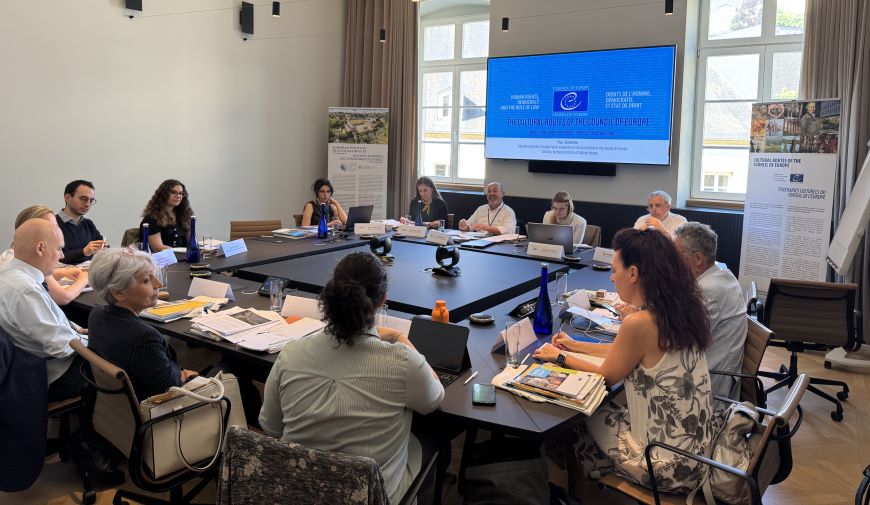
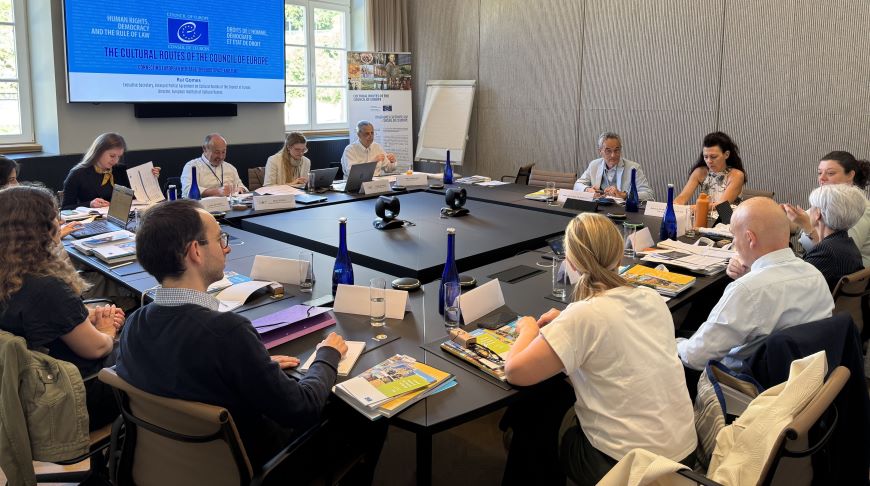
In order to provide information and assistance to cultural routes projects prior submission of an application for certification, the Secretariat of the Cultural Routes of the Council of Europe programme organised a dedicated training seminar in Luxembourg on 19-20 June 2025.
- OBJECTIVES
This training seminar provided an overview of the main characteristics of the Cultural Routes of the Council of Europe programme, serving as an essential reference for representatives of cultural routes willing to apply for the “Cultural Route of the Council of Europe” certification in the framework of the 2025-2026 Certification Cycle. It addressed aspects concerning the Cultural Routes certification cycle, certification criteria and preparation of applications for certification.
The aim of the seminar was to provide candidate routes’ representatives with an exhaustive overview of the certification procedure and requirements, in order to facilitate the preparation of their applications.
- EXPECTED RESULTS
At the end of the seminar, participants were expected to:
- Have acquired a theoretical basis on the Cultural Routes of the Council of Europe programme and its methodology.
- Have acquired a thorough understanding of the Cultural Routes certification cycle, certification criteria and added value of the “Cultural Routes of the Council of Europe” certification.
- Have learnt how to prepare and submit an application for the “Cultural Routes of the Council of Europe” certification.
- Be able to identify and reflect upon network aspects to be strengthened before submission of an application.
- Share and exchange experiences with other participants and trainers.
- METHODOLOGY
The seminar was delivered by representatives of the Secretariat of the Cultural Routes of the Council of Europe programme and counted the participation of experts and representatives of certified Cultural Routes. The audience was composed of representatives of cultural routes projects interested in applying for certification by 31st July 2025.
The seminar was structured around a series of modules in which theoretical principles were presented in an accessible and simple way in order to illustrate how the Cultural Routes methodology is applied in practice. During the seminar, participants had the opportunity to clarify any doubts regarding the submission of an application for certification in the framework of the 2025-2026 Certification Cycle.
To this regard, the seminar sessions focused on the certification cycle, the highlights and the core activities of the Cultural Routes of the Council of Europe Programme, were delivered by Rui GOMES, Executive Secretary of the Enlarged Partial Agreement on Cultural Routes of the Council of Europe and Director of the European Institute of the Cultural Routes.
The modules centered on the Five priority fields of action, Governance, Communication, Branding and Sustainable Development of the Cultural Routes were delivered by Prof. Mike Robinson, Chair of Cultural Heritage, Nottingham University, United Kingdom.
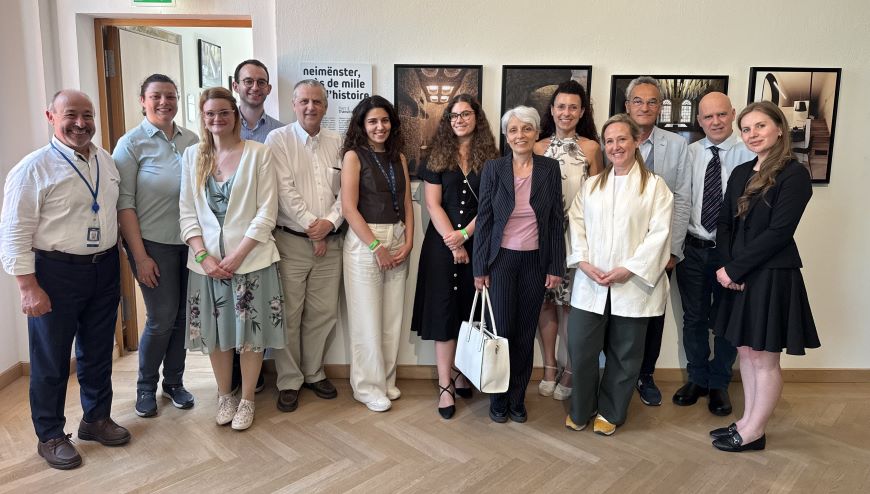
Five networks interested in the certification participated in the training: The Columban Way, The Cultural Route of Falconry, “Saint Michael Way” Rural Territories and Ancestral Cultures, Grimaldi de Monaco Historic Sites and Via Querenissima.
Representatives of two certified Cultural Routes of the Council of Europe participated in this seminar by sharing their experiences and good practices in managing Cultural Routes with potential candidates: Miguel Ángel Martín Ramos, President of the Cooperation Network of Routes of Emperor Charles V, and Sara Ferrari, Vice Director of The Phoenicians' Route.
During the second day of the Training Seminar potential candidates had the opportunity to attend individual advisory meetings with the Secretariat in order to present their networks and receive feedback on their draft applications.