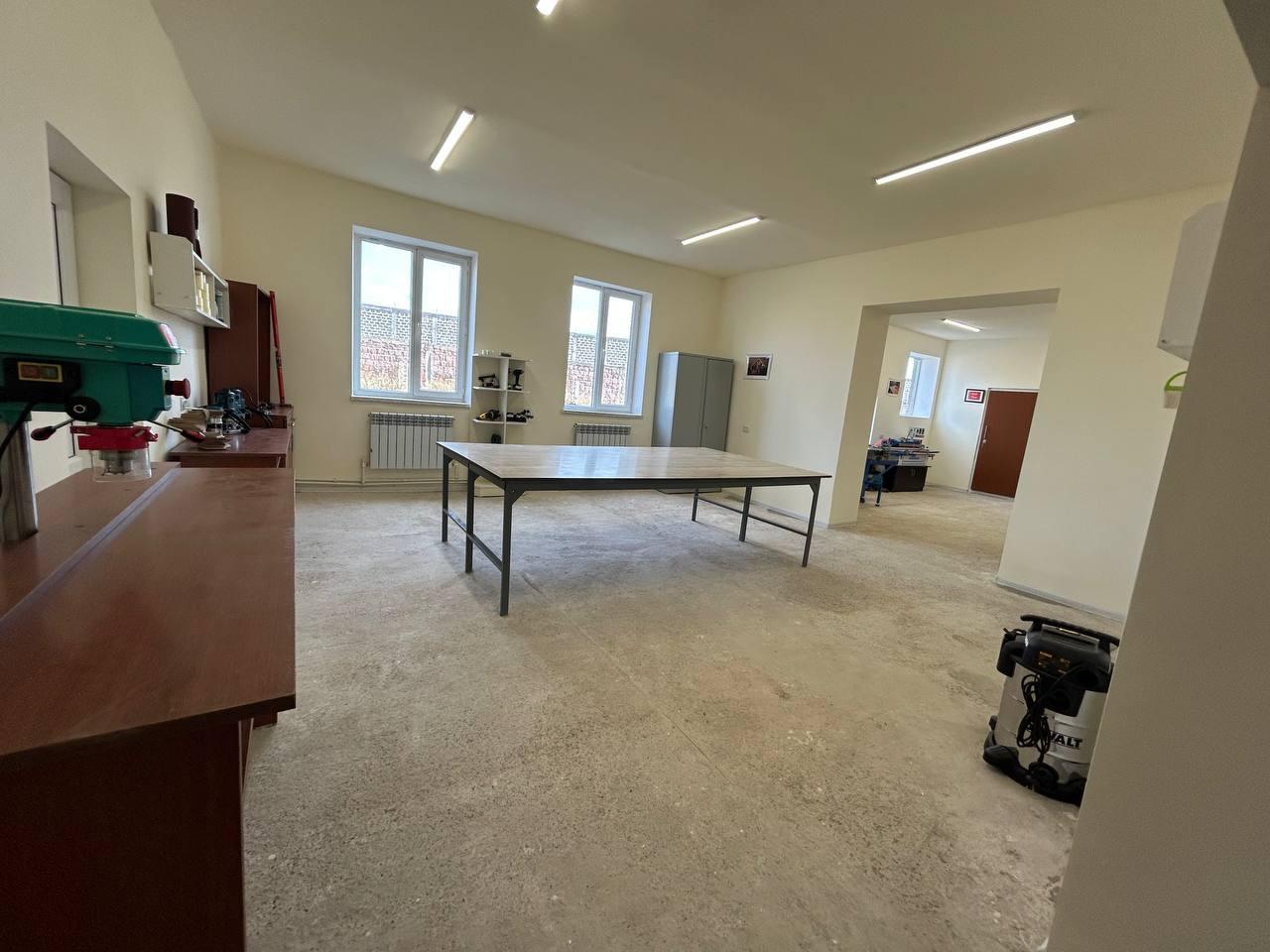
Inmates at Sevan penitentiary will soon be employed at a woodworking shop opened on January 21, 2025 with funds provided by the Council of Europe grant.
First Deputy Head of Armenia's Penitentiary Service Sahak Grigoryan says Armenia's correctional facilities haven't had production workshops since the 1990s. The Council of Europe grant is part of its "Implementation of the Resocialisation Programme for Persons Deprived of Liberty, Strengthening the Protection of Rights" programme.
The workshop is part of a broader programme aimed at involving convicts and probation beneficiaries in resocialisation efforts. Armenia's new Penitentiary Code, which came into effect in June 2022, is grounded in the ideology of resocialisation. The law mandates the creation of educational spaces, gyms, libraries, and employment zones to enable convicts to work, train, and successfully reintegrate into society.
The “Legal Education and Rehabilitation Programmes Implementation Center” SNCO of the Ministry of Justice of Armenia has been offering furniture-making and pottery courses at Sevan penitentiary institution for approximately two years. Funded by the Council of Europe grant, this year’s courses included beginners as well as convicts who had previously completed the programmes and received certificates. The latter group participated to further refine their skills. In total, sixty convicts took part in the courses between 2022 and 2024.
This year, with the continued support from the Council of Europe, the penitentiary saw the renovation of 190 square meters of space, along with the purchase of modern machines, tools, and equipment for the workshop. Construction works concluded on October 5, 2024.
“Now we have a large workshop that can accommodate about thirty forty inmates in shifts. They will gain employment, earn a salary while serving their sentence, and support themselves and their families,” says Grigoryan.
The workshop was established at the Sevan penitentiary insitution because it houses convicts in a medium-security zone. Convicts live under a relatively open regime, and many have previously participated in furniture-making courses, already mastering key woodworking skills and the operation of tools.
Participation in the courses is voluntary.
“Initially, we had to persuade convicts to join, but that has changed. Interest has grown so much that we now face oversubscription and must select participants,” says Tsovinar Tadevosyan, who heads the Penitentiary Service of Armenia.
While most participants are middle-aged, there are no age restrictions or limitations based on the crimes committed. “Resocialisation is a process aimed at behavioral change. Therefore, the resocialisation committee does not exclude anyone based on their record or behavioral issues,” - adds Tsovinar Tadevosyan.
Notably, inmates with life sentences have also participated and achieved remarkable success. Mr. Grigoryan emphasized that with positive behaviour over time, even those convicted of serious crimes can progress to medium-security conditions and take part in rehabilitation.
The Penitentiary Service, in collaboration with the SNCO, conducted market research and identified a high demand for skilled furniture craftsmen.
“Our goal is to equip convicts with skills that will help them stabilise their financial situation upon release and become valuable members of society. Years of experience gained here will make them sought-after specialists,” notes Grigoryan.
Additionally, the workshop will meet internal needs within penitentiary institutions. Many facilities require new furniture—tables, cabinets, and hangers - to replace outdated equipment. “Through this workshop, we can produce what we need in-house and reduce the costs of procurement,” says Grigoryan.
Armenia has 2,711 inmates, 1,274 of which have been convicted of various crimes. Grigoryan says 60% have expressed a willingness to work if employment opportunities exist.
The SNCO plans to expand resocialisation programmes to include leatherworking, sewing, welding, and other trades. New workshops will be established at the Artik and Vanadzor penitentiary institutions due to the overwhelming success of the Sevan model.
At Artik, for instance, inmates participated in decoration courses by painting the walls of their living spaces, effectively combining skill-building with practical outcomes.
The growing demand for builders and skilled workers in Armenia’s active construction sector has further motivated inmates.
These trades are expensive to learn from outside. By providing skills here, we can ensure they do not return to prison after release,” Grigoryan says.
“The professional skills of convicts must be elevated to a level where they can produce competitive products and earn wages within our workshops. This will pave the way for a successful reintegration into society, " emphasizes SNCO Director Hayk Sanoyan
Thus, officials across state structures firmly believe that teaching crafts in prisons is the cornerstone of convict resocialisation. The skills acquired in the woodworking workshop at the Sevan Penitentiary, funded by the Council of Europe, provide convicts with the means to secure a stable income upon release. This, in turn, serves as a strong safeguard against reoffending and returning to prison.
Author: Sara Petrosyan, HETQ