Intercultural learning in formal and non-formal education
Formal education
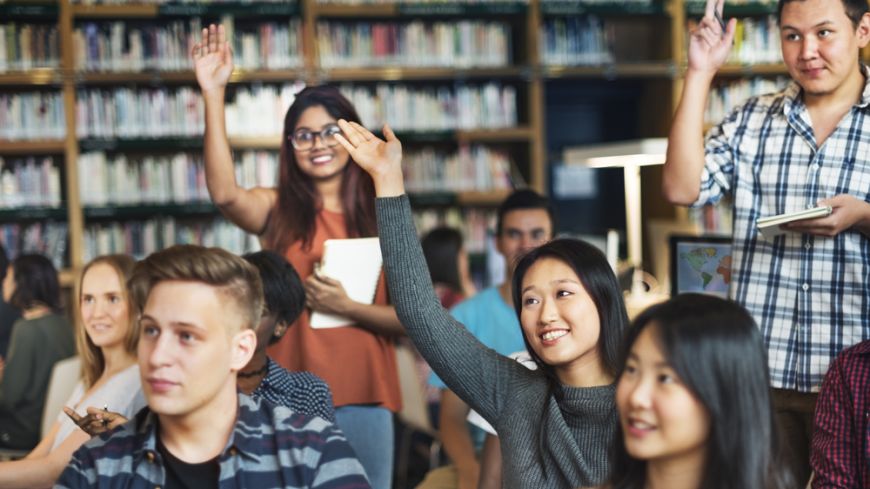
Formal intercultural education includes academic programmes and initiatives that are developed and led by schools. School is, alongside family, one of the principal agents of socialisation through which children receive not only an academic education, but also learn much of their own cultural codes. These cultural codes need to be open to other cultures, religions and lifestyles.
Much work has been done to ensure that the formal school system matches the requirements of the 21st century and supports children and young people to become interculturally competent, as well as in respect to the rights of minorities in education.
In terms of what concerns the rights of minorities in education, while a significant amount has been achieved, we are still faced with human rights violations, such as segregation, lower quality educational offered in minority schools, and so on.
The school's role as a means of welcoming, socialising with and including children from minority groups is irreplaceable. An intercultural approach in the education of children and youth from minority backgrounds should ensure that one is able to make sense of their own identity and self-respect. While formal education programmes often enough reflect mainstream culture, they should create the space for children to learn cultural codes while also empowering them to shape their own identity and autonomy.
The Council of Europe developed the Competences for Democratic Culture to help educational systems prepare learners to participate effectively in a culture of democracy and live peacefully together with others in culturally diverse societies. The competences described in the model are teachable, learnable and assessable, and are grouped into four categories: values, attitudes, knowledge and critical understanding, and skills. Intercultural learning is viewed as being of central importance to democratic processes within culturally diverse societies.
Non-formal education
The objectives of non-formal intercultural learning coincide largely with those of formal intercultural learning. The differences between them lie mainly in the providers and the working methods.
Non-formal education happens with young people in youth clubs, in youth organisations and movements, in youth information and guidance centres, in free-time activities after school; on the streets; during international youth exchanges; in hostels for young people and the young unemployed; across the whole geographical and socio-economic spectrum of Europe. Many of these youth leaders and youth workers are volunteers, giving freely of their time because of the importance they attach to such work. Even this list does not cover the whole spectrum of those involved in organising informal youth activities. Indeed, among the most effective providers are young people themselves educating each other. This approach, known as ‘peer education’, is dealt with more specifically in DOmino, a publication also produced within the All Different - All Equal campaign.
Non-formal education has several important features which distinguish it from formal education:
Non-formal education is voluntary; it does not have the obligatory character of school, which sometimes leads pupils to reject approaches or subjects which are a part of the curriculum.
The contents are adapted with the participants to their reality and needs.
There is freer choice in the setting of objectives and in matching them with relevant activities.
The active and participative methodology applied in non-formal education enables greater participation of the learners / young people.
It should (ideally) be accessible to everyone.
It focuses on learning life skills and preparing for active citizenship.
It is based on involving both individual and group learning with a collective approach.
It is holistic and process-orientated.
It is based on experience and action.
In many respects, of course, non-formal education could not exist without the presence of formal education and there is much room to improve the compatibility between the two. It may be possible for you to adapt activities for use in schools, but we have directed our energies at their use in informal education with young people. Here we look more closely at the bases for these activities.
"An essential element of all education for democratic citizenship and human rights education is the promotion of social cohesion and intercultural dialogue and the valuing of diversity and equality, including gender equality; to this end, it is essential to develop knowledge, personal and social skills and understanding that reduce conflict, increase appreciation and understanding of the differences between faith and ethnic groups, build mutual respect for human dignity and shared values, encourage dialogue and promote non-violence in the resolution of problems and disputes.
One of the fundamental goals of all education for democratic citizenship and human rights education is not just equipping learners with knowledge, understanding and skills, but also empowering them with the readiness to take action in society in the defence and promotion of human rights, democracy and the rule of law."