


A Continuous Process

Intercultural learning has to enable young people to discover the origins and mechanisms of racism, intolerance, xenophobia and antisemitism. Personal discovery can lead to collective action and it is up to us to facilitate this process. Political and economic action is also required to complete the picture: education has its limits but also its responsibilities.
The intercultural learning proposal of this website is also closely interconnected with the fundamental approaches of human rights education, defined as activities which aim, by equipping learners with knowledge, skills and understanding and developing their attitudes and behaviour, to empower learners to contribute to the building and defence of a universal culture of human rights in society, with a view to the promotion and protection of human rights and fundamental freedoms.
Human rights education involves:
- Learning about human rights, knowledge about human rights, what they are, and how they are safeguarded or protected
- Learning through human rights, recognising that the context and the way human rights learning is organised and imparted has to be consistent with human rights values (e.g. participation, freedom of thought and expression, etc.) and that in human rights education the process of learning is as important as the content of the learning
- Learning for human rights, by developing skills, attitudes and values for the learners to apply human rights.1

These are:
- To imagine yourself from the outside
- To understand the world we live in, including its realities of discrimination and human rights violations
- To be acquainted with other realities
- To value difference and diversity positively
- To favour positive attitudes, values and behaviour.
You may decide that some stages are more important than others, or that you need to take a different route altogether. These stages may be combined in different orders but, as this pack is not four-dimensional, we will take them one by one – and we include suggestions for ideas and content to work with.
 To imagine yourself from the outside
In intercultural education, the starting point of our work is to reflect upon ourselves and our own reality. Main ideas and content:
- To re-assess what we feel is positive and what is negative within our reality.
- Our habits, ways of thought, styles of life, etc. are only one possible response to the world: there are other realities, which are neither better nor worse, but different.
- Explaining our reality to others who do not know it can be useful in helping us to gain a different perspective.
- Prejudices and stereotypes within our society towards other societies and cultures
- Why do those prejudices and stereotypes appear?
- Why are there some positive prejudices and stereotypes and some other negative ones?
- The influence of prejudices and stereotypes on our way of behaving towards other people.
We also need to view and understand discrimination as an arbitrary phenomenon:
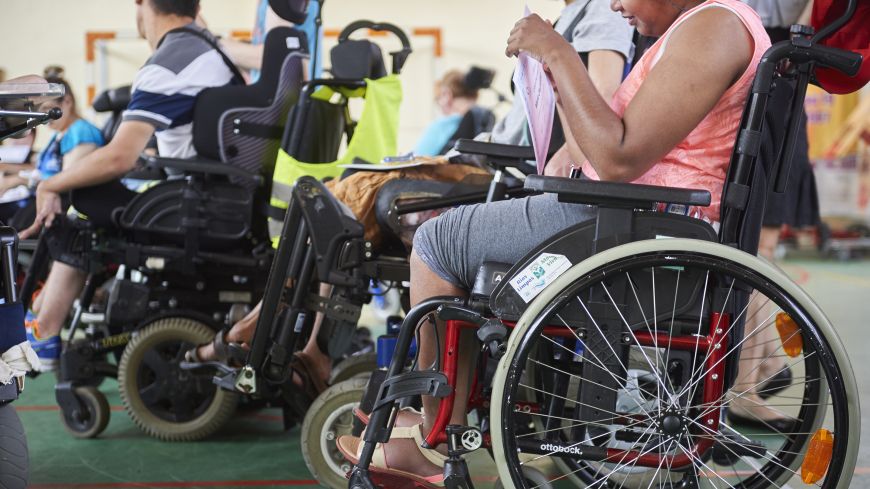
- Everyone may be discriminated against on some occasion or other.
- Why does discrimination take place?
- What forms does it take?

To understand the world we live in
Different societies, countries or states cannot develop if they are isolated from one another. We live in an interdependent world:
- Societies are in need of each other.
- Europe is just one continent, not an entire planet!
- Inequalities and injustices elsewhere affect us all.
It is a shared responsibility:
- To a large extent, the forces that oblige many people to leave their countries in order to survive originate in the economic system on which our ways of life are based.
As a complement to realising that we live in an interdependent world, we need to be working on our responses to the phenomenon of globalisation these days. An investigation into the causes and effects is contained in the chapter in Compass on Globalisation.
To be acquainted with other realities
Many of the negative attitudes towards cultures, lifestyles or societies which are different to our own have their origin in the “fear of the unknown”. That is why an essential element in intercultural education is encouraging acquaintance with and knowledge of other cultures – not that of the tourist who keeps a safe distance, but one which allows us to open up to the risks of encounter and exchange. This acquaintance must be based on the effort to understand realities different to our own.
Main ideas and content:
- What do we know about other cultures or lifestyles?
- How have we obtained the information we possess about other cultures, societies, countries?
- How much of reality is there in that knowledge, and how many preconceived thoughts reach us by different ways?
- How much do we need to question the information and images we receive through the mass media?
- How can we really find out what it is like to “walk in someone else's shoes”?
- How aware are we of the influence of prejudice and stereotyping in the way we look at and treat other people?
- There are neither superior nor inferior cultures
- Each culture is the result of a different reality.
- In each culture there are positive aspects from which it is possible to learn, and negative aspects we may criticise: how do we decide?
- Different does not mean worse, but dissimilar
- What are the factors by which the difference between human beings is seen as something negative?
- What are the factors by which the difference between human beings is seen as something negative?
To see difference positively
What are the bases of being able to look at difference from a positive perspective?
Main ideas and content:
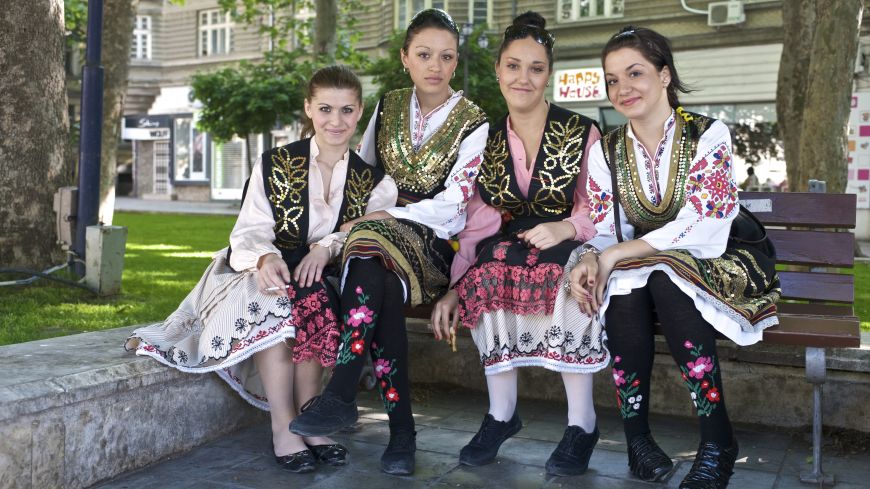
- The social and cultural reality we belong to is the result of a conglomeration of differences.
- We do not consider those differences to be an overwhelming obstacle to living together.
- The difference among different cultures is a positive fact.
- The connections and relations between different cultures are enriching not only for individuals but also for societies. They can also be the sources of great amusement and pleasure.
- Every society and culture has something to learn from and something to teach to other societies.
- How do we learn to avoid making immediate judgements about facets of other cultures or lifestyles which are “strange” to us?
- How can we learn to live with the feelings of (temporary) insecurity which these processes awaken in us?
- How do we take advantage of the enormous opportunities such encounters give us to discover new sides to our identities?

To favour positive attitudes, values and behaviour
All of these stages are based on the promotion of values: human rights, recognition, acceptance, active tolerance, respect, peaceful conflict resolution and solidarity.
- If we claim the right to solidarity then, as Jean-Marie Bergeret summarised, we also have an obligation to show solidarity. It is this type of conclusion we are working towards in intercultural learning. Young people, however, will only change their attitudes and conclusions for and by themselves. We can only help to facilitate the process by working through a variety of challenges with them over time.
- If we work to favour these sorts of attitudes, it will be easier to encourage positive behaviour towards people from other cultures, but we have to take into consideration that these attitudes and behaviours are not possible if they are not developed in parallel with qualities such as honesty, co-operation, communication, critical thought and organisation.
1More at Compass – the manual for human rights education with young people.