Journalists Matter, Council of Europe Campaign for the Safety of Journalists
The Council of Europe encourages member states to transpose the Campaign to the national context. Without each member’s committed and effective effort at national level, through the development of the so-called ‘national chapter’, the Campaign cannot reach its goals.
In this section, we will present developments in Greece:
National Focal Points
Mr. Dimitrios KIRMIKIROGLOU,Secretary General of Communication and Media, Presidency of the Government Ms Aikaterini POLYZOU, Head of Department for Audiovisual Media and Internet, Presidency of the Government, General Secretariat of Communication and Media
National Campaign Committee
Greece has adopted an inter-ministerial Memorandum of Understanding (MoU) on the “Protection, Safety and Empowerment of Journalists and Other Media Professionals” on 23 May 2022 providing for the creation of a Task Force. The Task Force involves 22 members from ministries, public service media, universities, journalists’ associations, and other media professional meeting every month for the period 2024. It is dedicated on ensuring protection safety and empowerment of journalists and other media professionals. It serves as an innovative Think Tank that puts forward new ideas and national initiatives to support governmental policies.
In order to maximize the impact and engagement of local stakeholders in the Campaign for the Safety of Journalists, it has been decided that the Task Force will serve as the National Campaign Committee, under the coordination of the Panhellenic Federation of Journalists’ Unions (POESY) - the Greek trade federation of journalists’ unions. The POESY is a member of the European Federation of Journalists and the International Federation of Journalists.
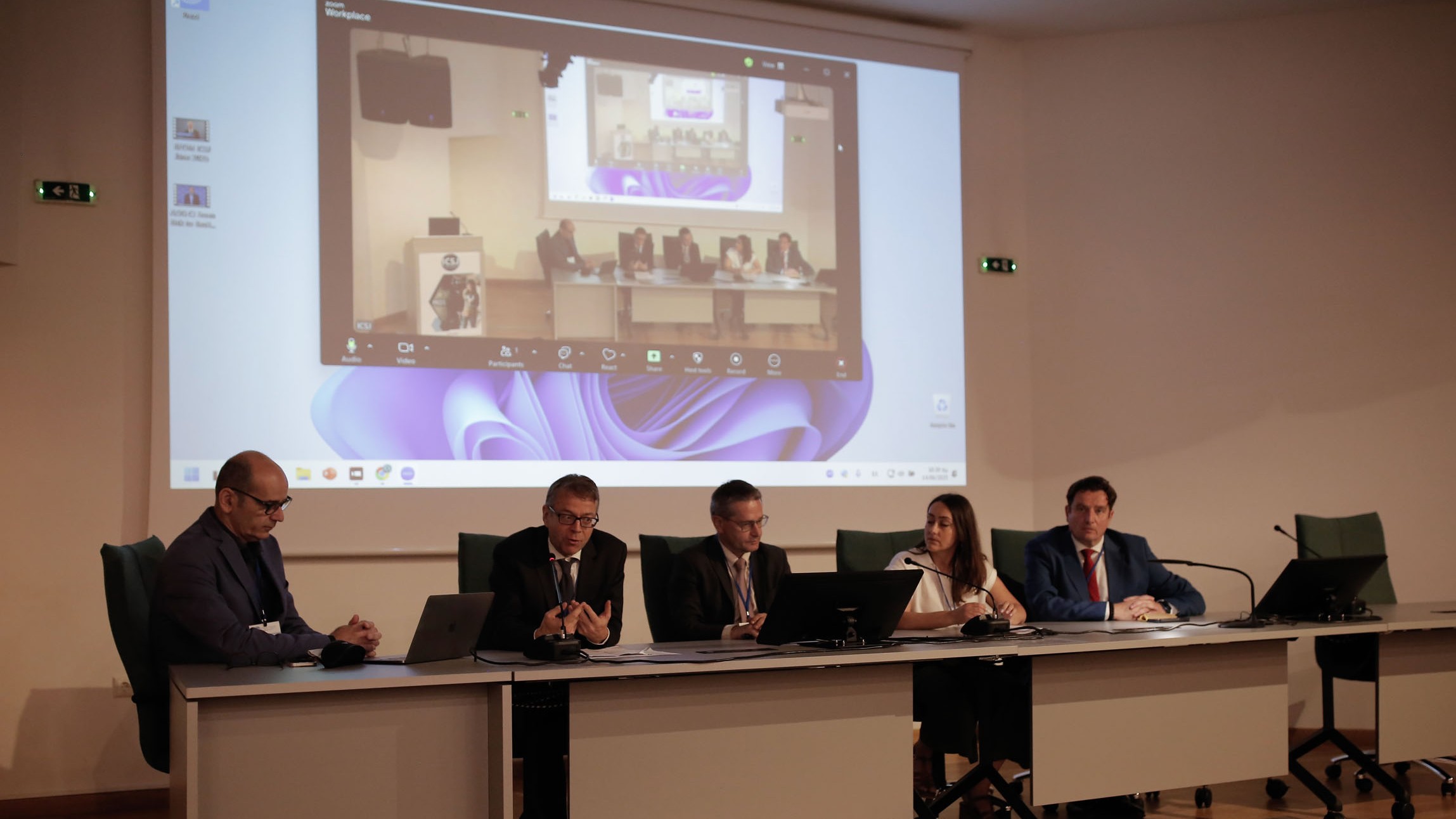
In Greece, among the most important deliverables of the Task Force during its two years of operation, is the establishment of the “International Training Centre for the Safety of Journalists and Media Professionals” (ICSJ) which aims to harness the expertise and resources of the academic and professional community to provide specialized practical training to journalists and media professionals.
A number of legislative initiatives have been taken to provide better protection for journalists:
Under Law 5085/2024 Article 15, anyone who issues public statements, announcements, and publications, incites, urges, encourages or facilitates acts that may lead to violent offenses or threats of violence against journalists, who in the context of their capacity cover or comment on professional events sports, as well as related issues, shall be punished by imprisonment at least one (1) year and a fine.
With the recently adopted law number 5090/2024, article 362 concerning the act of simple defamation was removed from the Greek Penal Code. Now only the act of libel concerning the dissemination of knowingly false information that may harm the honor or reputation of another, foreseen in article 363, remains punishable.
On 23 May 2024, journalists’ unions in Greece and the government signed a collective labour agreement for journalists employed by the State and public media. The agreement includes new gender equality provisions and enhanced protection for women journalists against harassment.
On 20 November 2024, the Hellenic Parliament adopted Law No. 5253/2024 (“Modernization of the legal framework for ERT and implementation of the European Media Freedom Act”). The law introduces significant reforms, including:
National Action Plan for the Safety of Journalists, featuring clear timelines, monitoring and evaluation mechanisms. The Plan will be prepared with the contribution of the Task Force for the Safety and Empowerment of Journalists.
National Strategy for Media Literacy (three-year cycle) with multi-stakeholder governance, in cooperation with academia, NGOs, EU institutions and international organisations.
Economic support for the POESY SLAPPs Observatory, ensuring its long-term sustainability and its capacity to assist journalists facing abusive litigation.
Framework for a new Hellenic Media Council, an independent self-regulatory body composed of journalists, media owners, civil society and academia.
2025 update
Greece further strengthened its institutional framework for the safety of journalists in 2025. The mandate of the Task Force for the Safety and Empowerment of Journalists and Media Professionals was renewed for a fourth consecutive year and expanded through the participation of the Hellenic Coast Guard and the National Cybersecurity Authority, reinforcing its capacity to address emerging safety challenges.
The adoption of Law 5253/2025 marked a significant step forward in the implementation of the European Media Freedom Act and the institutionalisation of journalists’ safety policies. The law formally established a National Action Plan for the Safety of Journalists, to be developed by the Secretariat General for Communication and Media with the contribution of the Task Force, and introduced mechanisms for monitoring and reporting on its implementation.
Greece also advanced reforms relating to media freedom, self-regulation and editorial independence. New legislative provisions strengthened transparency requirements for media ownership, introduced safeguards for editorial independence, and established a legal framework for the future creation of a Hellenic Media Council as an independent self-regulatory body bringing together journalists, media owners, academia and civil society.
Work also progressed on the implementation of European and Council of Europe standards concerning Strategic Lawsuits Against Public Participation (SLAPPs). A permanent structured dialogue on SLAPPs continued within the Task Force, while Law 5253/2025 introduced a mechanism for recurring public funding of the POESY SLAPP Observatory, ensuring its long-term sustainability and support for journalists facing abusive litigation.


 Greece, National chapter