ABOUT THE COMMITTEE OF MINISTERS

AT A GLANCE

Members
Committee of Ministers
Ministers' Deputies
Secretariat

Rules of procedure and working methods
iGuide to procedures and working methods

Other publications
Communication on the activities of the Committee of Ministers
The Council of Europe (1989-1999) - A decade that made history (by Denis Huber, Council of Europe Press, 1999)
The Committee of Ministers of the Council of Europe (Guy De Vel, Council of Europe Press, 1995) (replaced by the above iGuide)


● What is the Committee of Ministers (CM)?

● Who sits on the CM?
● When does it meet?
● What does it do?
● How does it operate?

● What is the Committee of Ministers (CM)?

The Committee of Ministers is the Council of Europe's decision-making body. It comprises the Foreign Affairs Ministers of all the member states, or their permanent diplomatic representatives in Strasbourg. It is both a governmental body, where national approaches to problems facing European society can be discussed on an equal footing, and a collective forum, where Europe-wide responses to such challenges are formulated. In collaboration with the Parliamentary Assembly, it is the guardian of the Council's fundamental values, and monitors member states' compliance with their undertakings.

● Who sits on the CM?

Ministers

The Minister of Foreign Affairs of each Council of Europe member State.

List of Ministers
List of member states

Ministers’ Deputies

In May 1951 the Committee of Ministers invited each member State to appoint a Permanent Representative who would be in constant touch with the organisation. All Permanent Representatives reside in Strasbourg. They are usually senior diplomats with Ambassadorial rank, occasionally chargés d'affaires.

In 1952 the Committee of Ministers decided that each Minister could appoint a Deputy. The Deputies have the same decision-making powers as the Ministers. A Deputy is usually also the Permanent Representative of the member State.

The second in rank in a delegation usually has the title "Deputy Permanent Representative", not to be confused with "Ministers' Deputy".

List of Permanent Representatives

● When does it meet?

Ministers

The Committee meets at ministerial level once a year, in May or in November. The meetings, known as "sessions", are normally held in Strasbourg and usually last one full day or two half days.

While the greater part of each session is usually devoted to political dialogue, the Ministers may discuss all matters of mutual interest with the exception of national defence.

Although the records of the sessions are confidential, a final communiqué is issued at the end of each meeting. The Ministers may also issue one or more declarations.

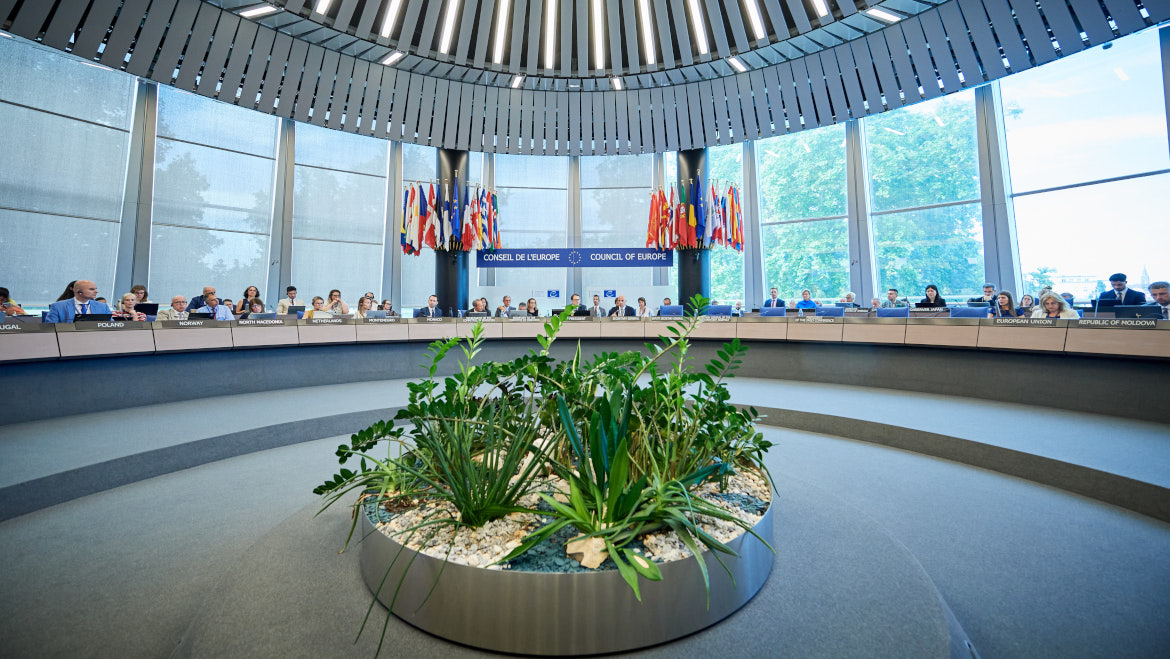
Sessions are conducted according to the Committee of Ministers' rules of procedure (5th rev. ed. 2005). They are usually held in the Committee of Ministers' meeting room.

Sessions

Ministers’ Deputies

Once a week. These "Meetings of the Ministers' Deputies" are usually held in the Committee of Ministers' meeting room.

The Deputies also meet several times a week in subsidiary groups.

● What does it do?

The Committee of Ministers performs a triple role:

as the emanation of the governments which enables them to express on equal terms their national approaches to the problems confronting Europe's societies;

as the collective forum where European responses to these challenges are worked out;

as guardian, alongside the Parliamentary Assembly, of the values for which the Council of Europe exists.

The work and activities of the Committee of Ministers include:

● How does it operate?

The CM operates on several levels.

Meetings of the Ministers and their Deputies are governed by the Statute of the Council of Europe and rules of procedure.

iGuide to procedures and working methods

Ministers

At their yearly sessions the Ministers review European cooperation and matters of political concern.

Ministers' Deputies

The Deputies, acting on behalf of the Ministers, conduct most of the day-to-day business of the Committee of Ministers.

They hold separate meetings for Human rights (execution of judgments) and monitoring of commitments.
Since September 1999 the Ministers' Deputies meet each Wednesday.

Chairmanship

The chairmanship of the Committee is rotated on a six-monthly basis, changing with each session in the English alphabetical order of member States. (More..…)

Bureau of the Ministers' Deputies

A Bureau was set up in 1975 to assist the Deputies. Since May 2001, it has consisted of six members: the Chairman, the two previous chairmen and the three future chairmen.

The Bureau meets approximately twice a month, exercising management and protocol functions, including the preparation of Committee of Ministers' meetings. It is also used as a discussion forum to coordinate action under successive chairmanships, particularly concerning the drawing up and implementation of their programmes. The specific responsibility for ensuring continuity between successive chairmanships and programmes is entrusted to the Vice-Chairman of the Deputies in co-operation with the Secretariat of the Committee of Ministers.

Rapporteur Groups, Working Parties and Thematic Co-ordinators

The system of rapporteur groups was introduced by the Deputies in 1985. The groups help to prepare the meetings of the Deputies. They are composed of Deputies, who are often represented by substitutes, and assisted by members of the Secretariat.

Rapporteur groups were reorganised in 1999 to reflect the new organisational chart (one group by directorate), with additional Rapporteurs nominated for specific activities.

Working parties are set up on an ad hoc basis to deal with specific issues within a limited time period.

A further reorganisation took place with effect from 1 January 2006 – see CM(2005)181rev (2. Subsidiary bodies).

List of Rapporteur Groups, Working Parties and Thematic Co-ordinators

Secretariat

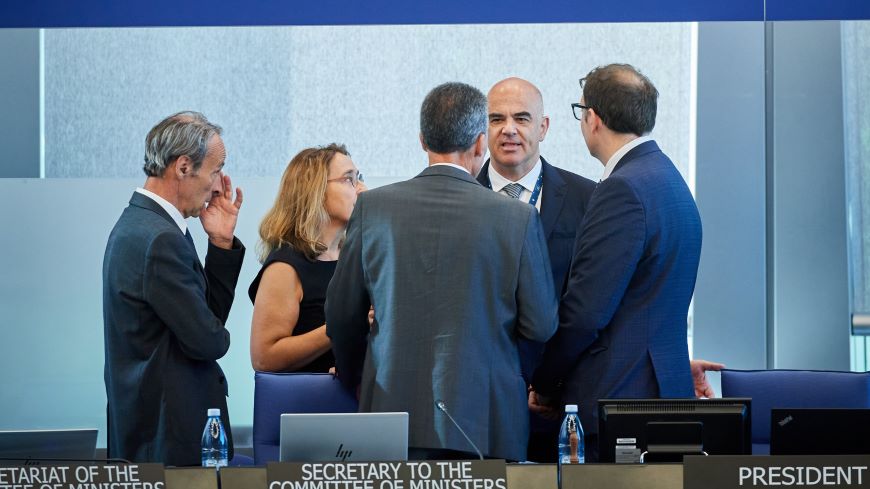
The Secretariat of the Committee of Ministers (SECCM) comprises some 25 members of the General Secretariat. It is headed by the "Secretary to the Committee of Ministers", who has the rank of a Director General.

The SECCM services the meetings of the Ministers and Ministers' Deputies.