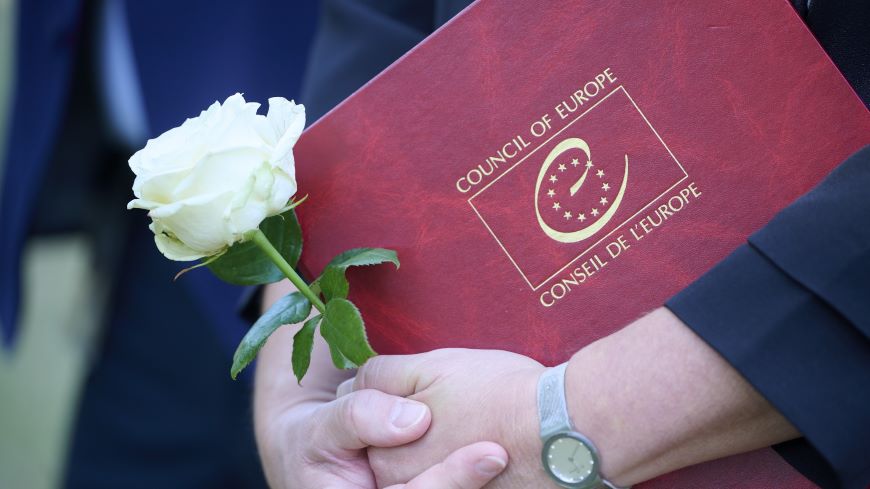
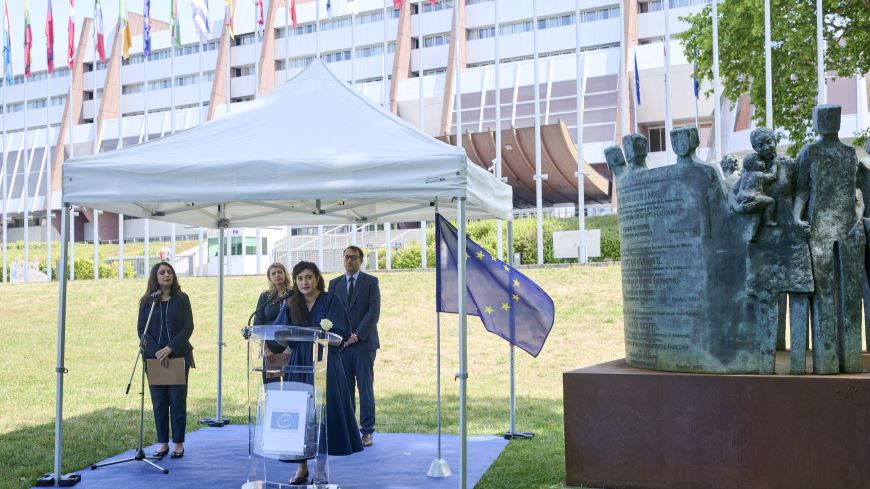
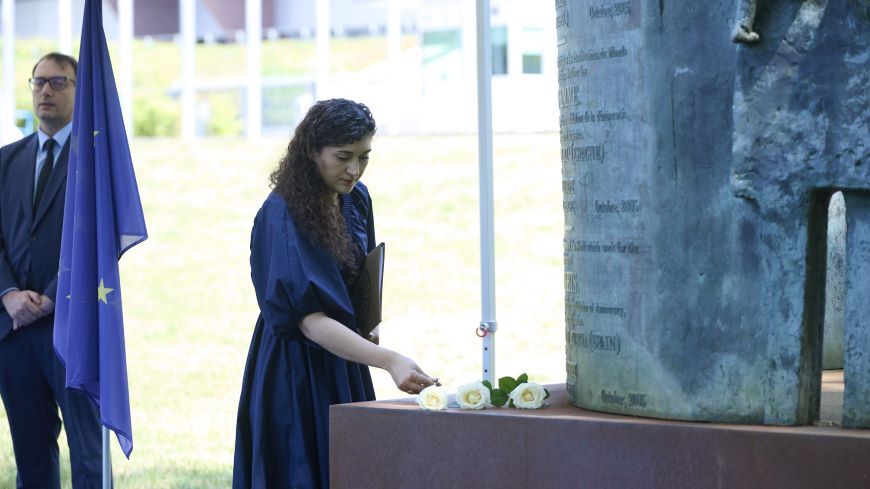
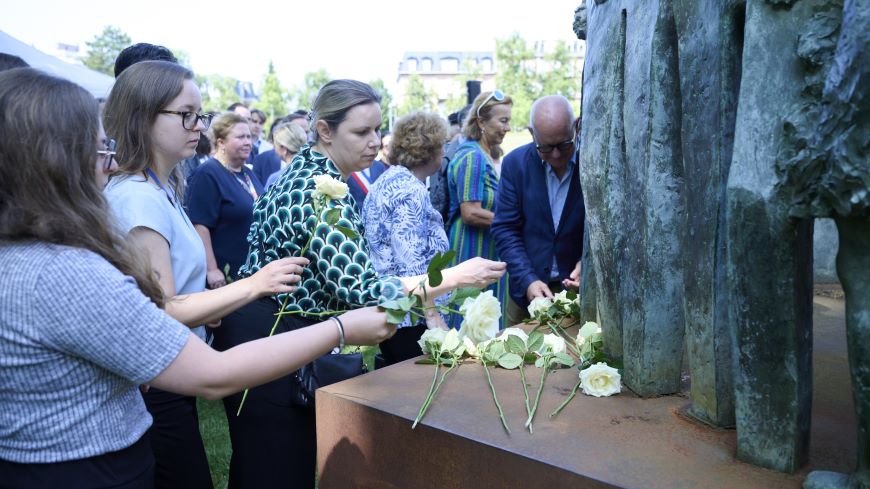
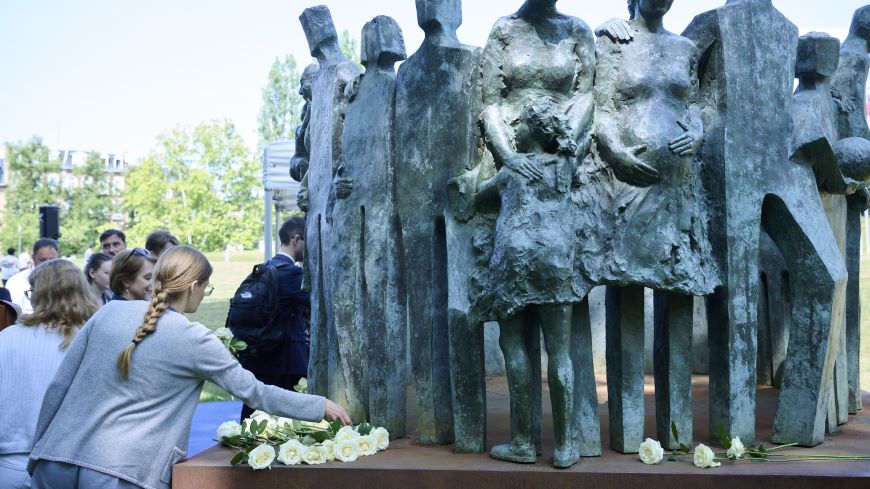
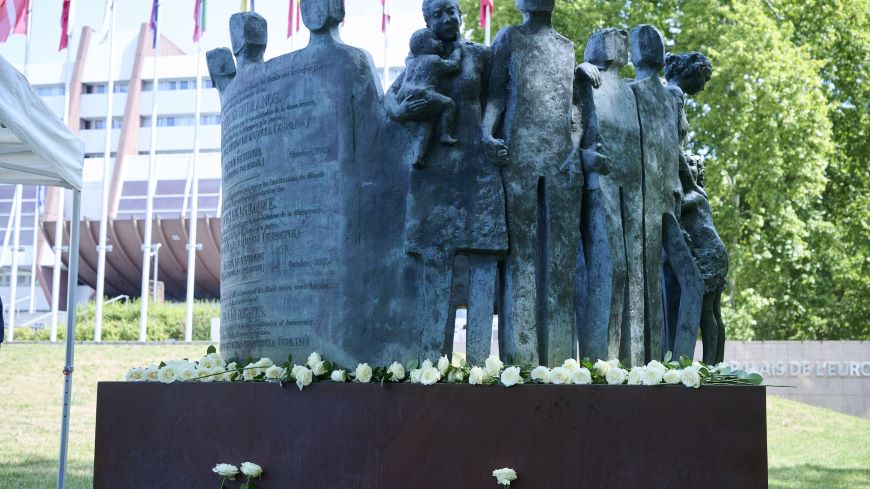
The Council of Europe has marked European Roma Holocaust Memorial Day in Strasbourg, honouring the memory of the hundreds of thousands of Roma murdered during the Holocaust and reaffirming its commitment to combating antigypsyism and discrimination.
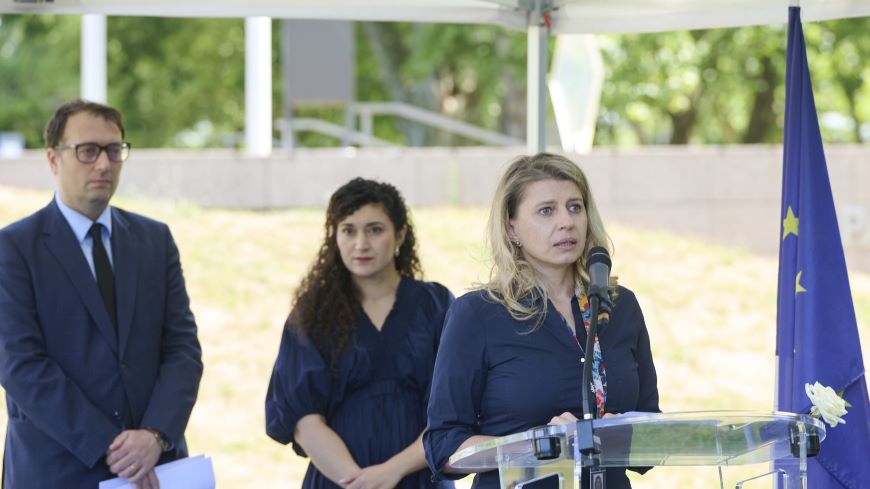
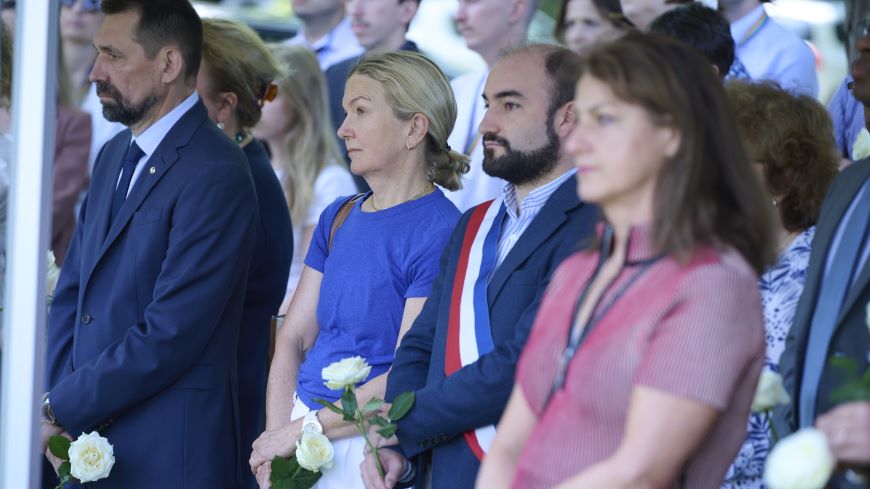
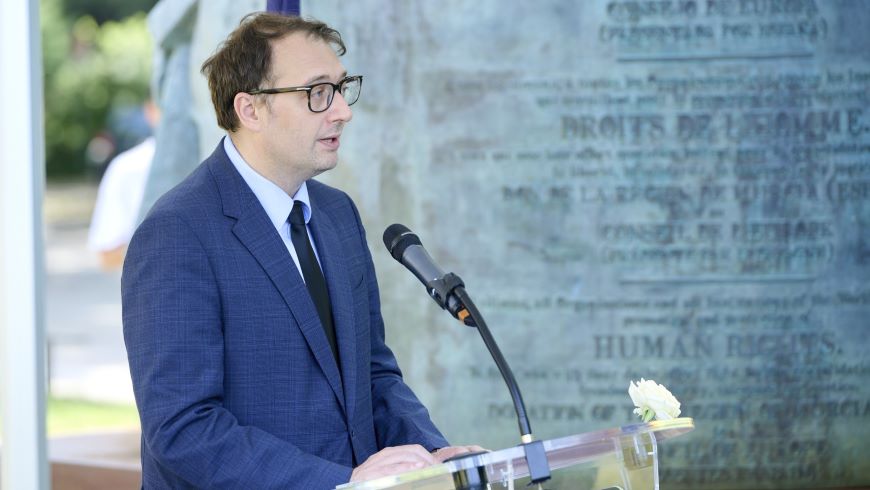
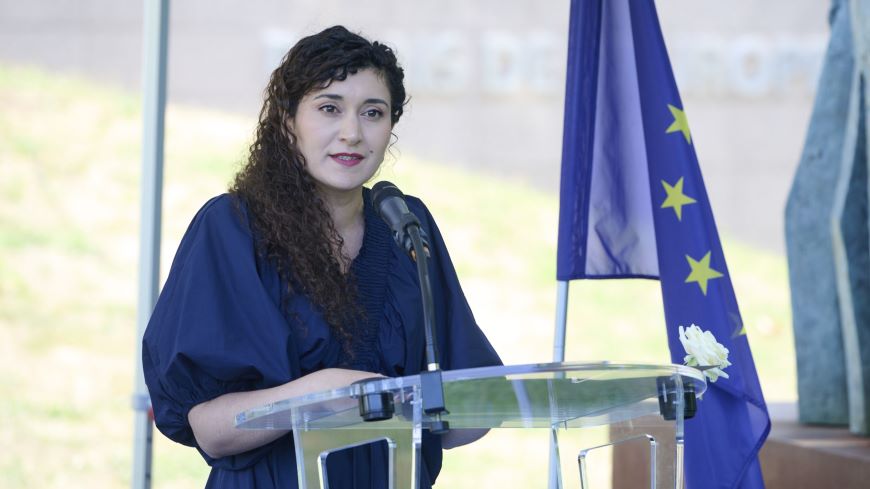
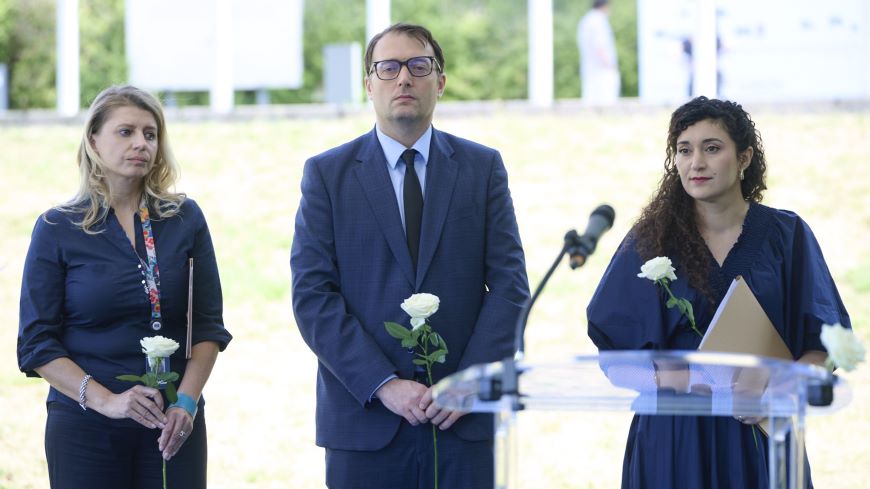
Held on the lawn in front of the Palais de l'Europe, the ceremony featured addresses by Aurora Ailincai, Head of the Anti-discrimination and Inclusion Department, speaking on behalf of the Council of Europe; Ambassador Gabriel Revel, Permanent Representative of Monaco to the Council of Europe, on behalf of the Presidency of the Committee of Ministers; and Anina Ciuciu, representing the Romani and Traveller Youth Collective ZOR, on behalf of Roma and Traveller civil society. Participants then laid flowers before the Human Rights sculpture and observed a minute of silence.
Preparations continue for the 2 August international commemoration at Auschwitz-Birkenau
The Council of Europe will also be represented at the annual international commemoration ceremony to be held on 2 August at the Auschwitz-Birkenau Memorial and Museum in Poland. Organised by the Central Council of German Sinti and Roma and the Association of Roma in Poland in co-operation with the museum, the event will bring together representatives of parliaments, governments, international organisations and civil society, as well as members of the international Roma youth network TernYpe.
European Roma Holocaust Memorial Day commemorates the night of 2–3 August 1944, when more than 3,000 Roma men, women and children were murdered in the so-called “Gypsy family camp” at Auschwitz-Birkenau. Historians estimate that the Nazi regime persecuted and killed 500,000 Roma during the Holocaust.
Remembering the past while confronting discrimination and exclusion today
Speakers at the Strasbourg ceremony today stressed that remembering these crimes is not just about preserving historical truth, but also about defending human dignity, confronting denial and ensuring that the lessons of the Holocaust continue to guide Europe’s response to racism, hatred and discrimination.
The ceremony highlighted the Council of Europe’s continuing efforts to promote remembrance, education and inclusion through initiatives such as the Roma Memory joint programme with the European Union and the implementation of its Strategy for Roma and Traveller Inclusion (2026–2030).
Because antigypsyism remains one of Europe’s most persistent forms of discrimination, speakers stressed that remembrance must be accompanied by continued action to uphold human rights, democracy and the rule of law. They underlined the importance of combating anti-Roma racism, strengthening protection against hate speech and hate crime, promoting equal access to education, housing, employment and healthcare, and ensuring the meaningful participation of Roma and Traveller communities in public life.
 Read the full speech by Aurora Ailincai
Read the full speech by Amb. Revel
Read the full speech by Anina Ciuciu
 Learn more about the Council of Europe’s work with Roma and Travellers