Back Police and Roma community in the Republic of Moldova unite on joint cooperation platform

Council of Europe support crucial to ensuring understanding and access to justice
Elena Radița (left) is a Roma community mediator, operating as a bridge between her community and the authorities

Elena Radița (left) is a Roma community mediator, operating as a bridge between her community and the authorities

Elena Radița plays a crucial role in her community in Mihaileni, a village in the north of the Republic of Moldova. As a Roma community mediator, she is someone people confide in. They tell her things they would not tell a police officer, a social worker, or a city official. She is close to the Roma community while maintaining links to state institutions. But for a long time that bridge only stretched so far.

Listening to Roma people promotes collaboration

“Trust between the police and the Roma community is built through constant dialogue, mutual respect and a genuine presence within the community, not only during conflict situations,” she says. “The police plays an important role not only in the intervention process, but also in prevention, awareness-raising and ensuring equal protection for every citizen. Effective collaboration happens when Roma people are listened to, treated with dignity and involved as partners in addressing and solving community issues.”

Roma community mediators are trained professionals who serve as a bridge between Roma communities and public institutions, facilitating access to public services, promoting dialogue and helping build mutual trust. This facility has been supported by the Council of Europe, alongside provision by local authorities, schools, health centres or social service, NGOs implementing public programmes, or, in some cases, government agencies.

That kind of collaboration has not always been easy to achieve. Roma communities in the Republic of Moldova continue to face significant barriers to public services and access to justice. Community members stress the need for stronger trust between law-enforcement authorities and Roma citizens.

Police officers active in ensuring equal treatment for Roma

For the police the challenge lies in better understanding the needs of the community and in identifying solutions to address them.

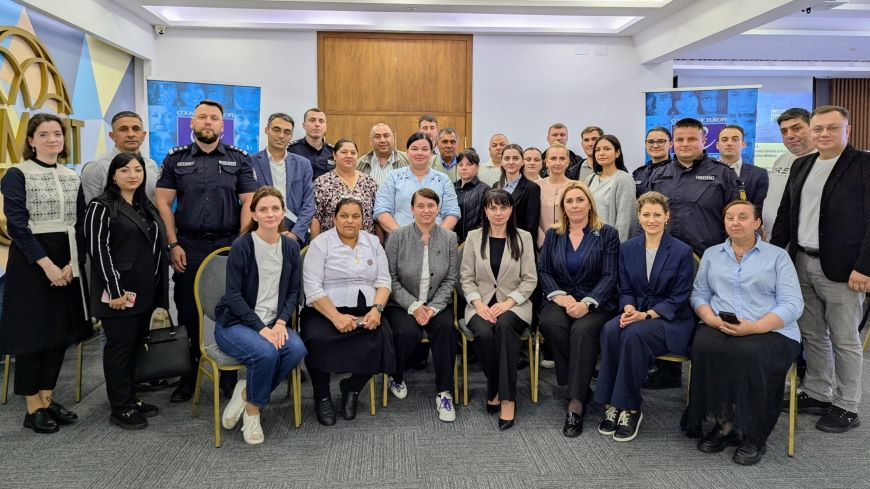
In early June, a significant step forward was taken to strengthen this relationship. For the first time at a national level, representatives of the General Police Inspectorate, Roma community leaders and mediators, and civil-society organisations sat down together to work on a shared platform for dialogue and cooperation, creating an open and safe space for dialogue and collaboration that takes into account community needs and local‑level realities.

Alexandru Lupan, deputy head of the General Police Inspectorate, spoke of the particular importance of the event for his organisation: “It is important to gain a better understanding of the challenges and needs faced by the Roma community and  together with institutional partners and civil society, to identify solutions aimed at protecting the rights and ensuring the safety of all citizens.”

Real solutions spring from community collaboration

Participants examined the legal framework in place to protect Roma people from discrimination, hate speech and abuse. They reviewed real cases, assessed the reporting mechanisms that exist in theory,  and asked whether people actually make use them in practice – and why, often, they do not. Community mediators like Elena were central to that conversation, because they are usually the first to know when something has gone wrong and the last to be formally consulted about it. Ultimately, everyone involved shared the same goal: ensuring better protection for victims and fostering mutual trust and understanding.

This dialogue was made possible with the support of the Council of Europe, via the projects Combatting discrimination, hate speech and hate crimes in the Republic of Moldova and  Enhancing diversity and equality - phase II,  which are being implemented under the Council of Europe action plan for the Republic of Moldova for the years 2025-28.


 The Council of Europe office in Chișinău

 The Republic of Moldova and the Council of Europe


Image Gallery

Council of Europe Chișinău, Republic of Moldova 10 July 2026
  • Diminuer la taille du texte
  • Augmenter la taille du texte
  • Imprimer la page
Related news

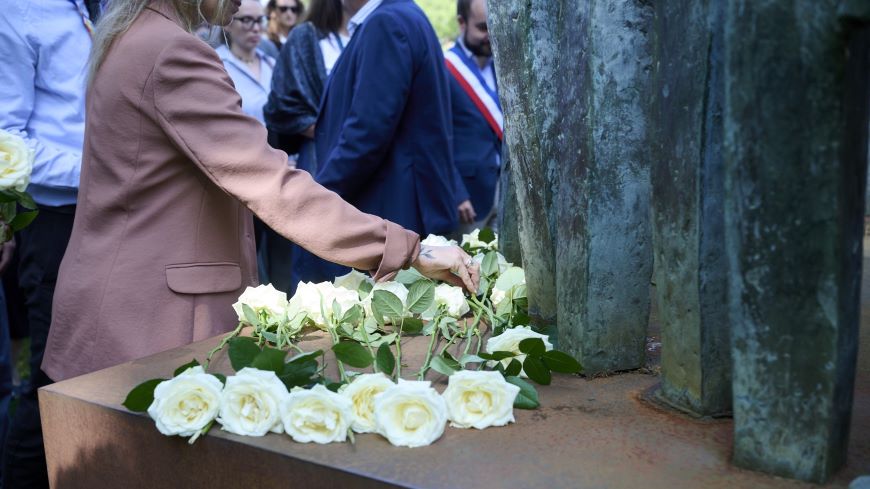
Council of Europe honours victims of the Roma Holocaust

Council of Europe 22 July 2026 Strasbourg

The Council of Europe has marked European Roma Holocaust Memorial Day in Strasbourg, honouring the memory of the hundreds of thousands of Roma murdered during the Holocaust and reaffirming its commitment to combating antigypsyism and discrimination. Held on the lawn in front of the Palais de...

Read More

Foreign ministers agree on Special Tribunal for Ukraine, make declaration on migration, strengthen legal framework against money laundering and the financing of terrorism

Committee of Ministers 15 May 2026 Chișinău

The Foreign Affairs Ministers of the 46-nation Council of Europe today reaffirmed their unwavering support to Ukraine by establishing an Enlarged Partial Agreement on the Special Tribunal for the Crime of Aggression against Ukraine. The Committee of Ministers also adopted a declaration on the...

Read More