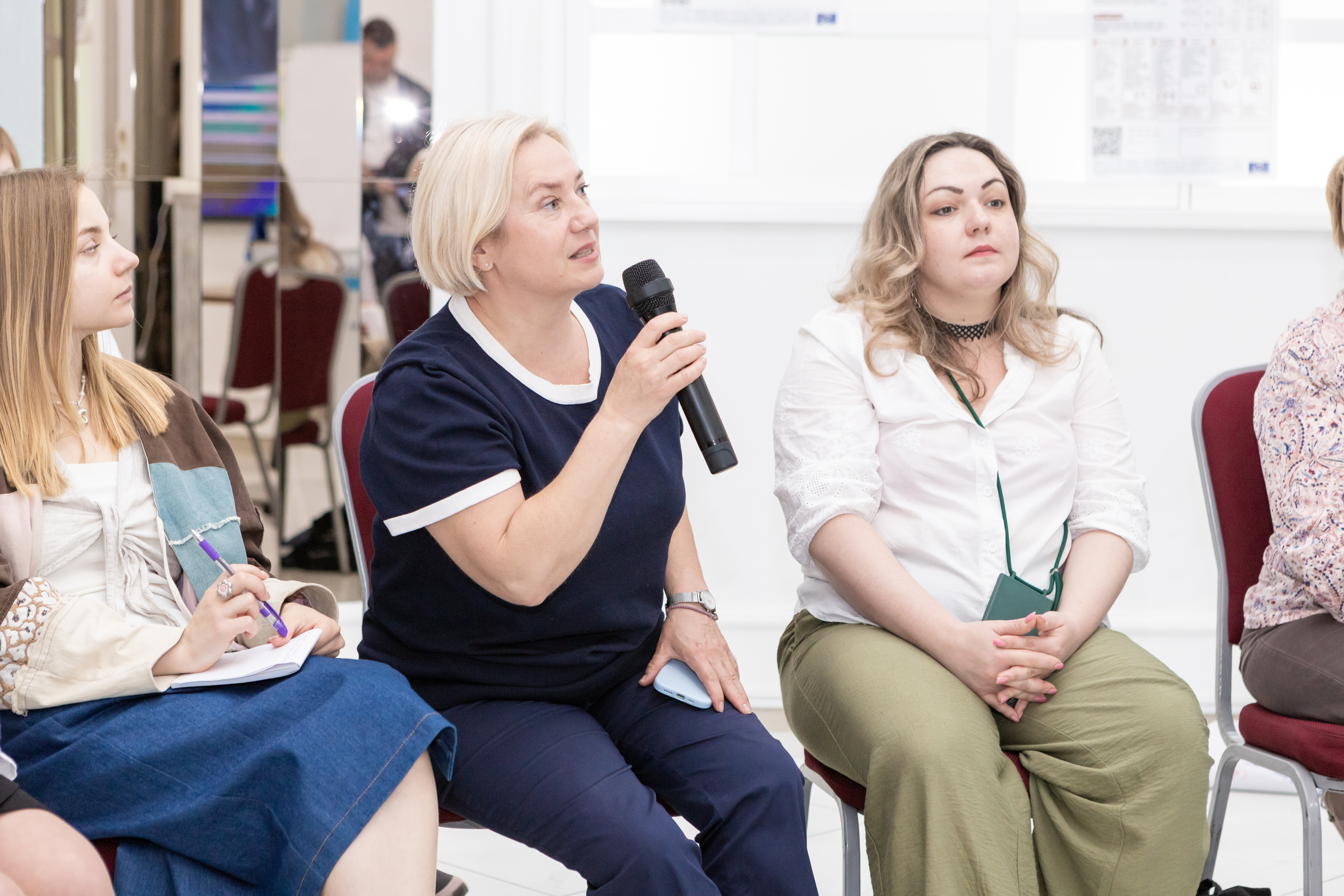
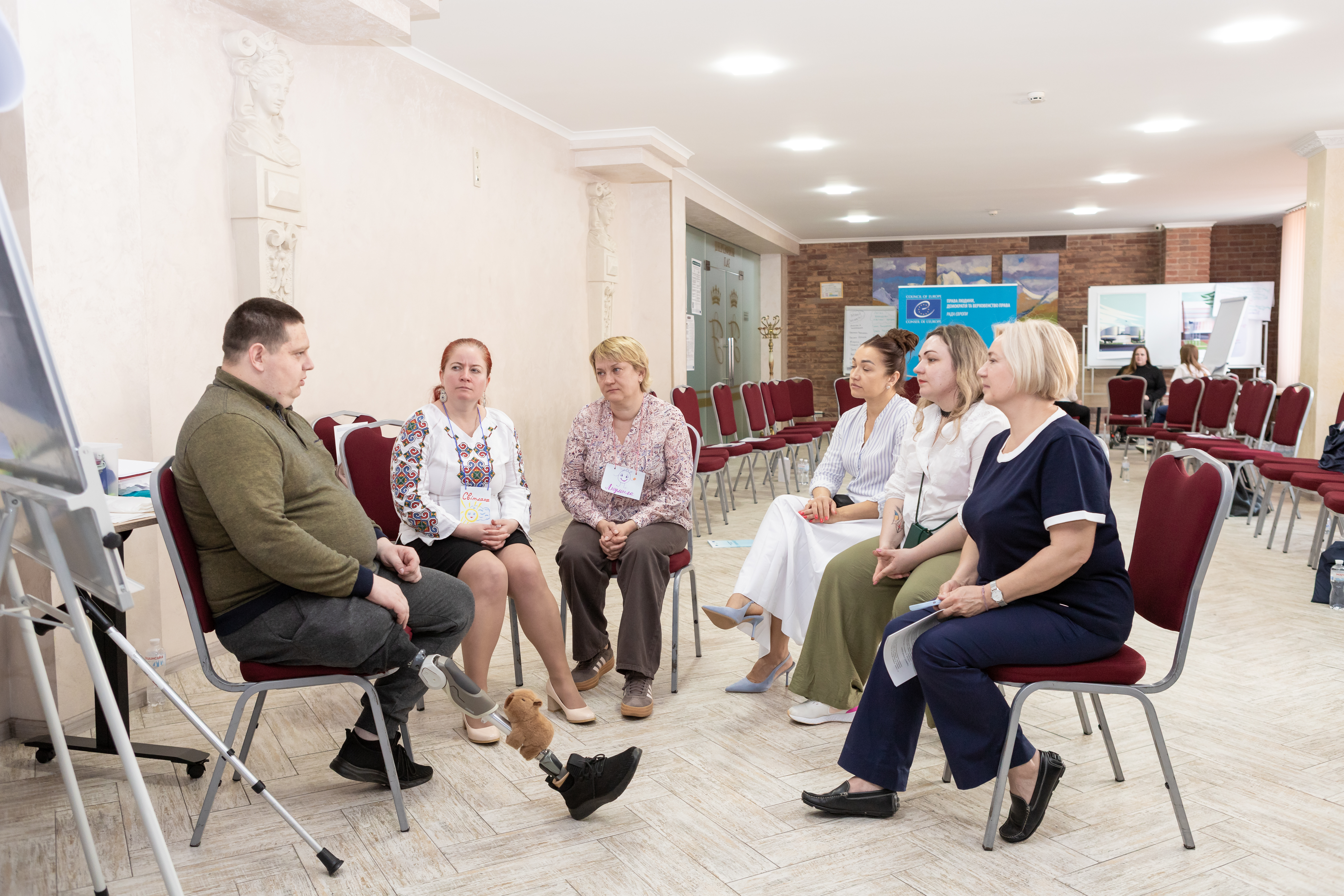
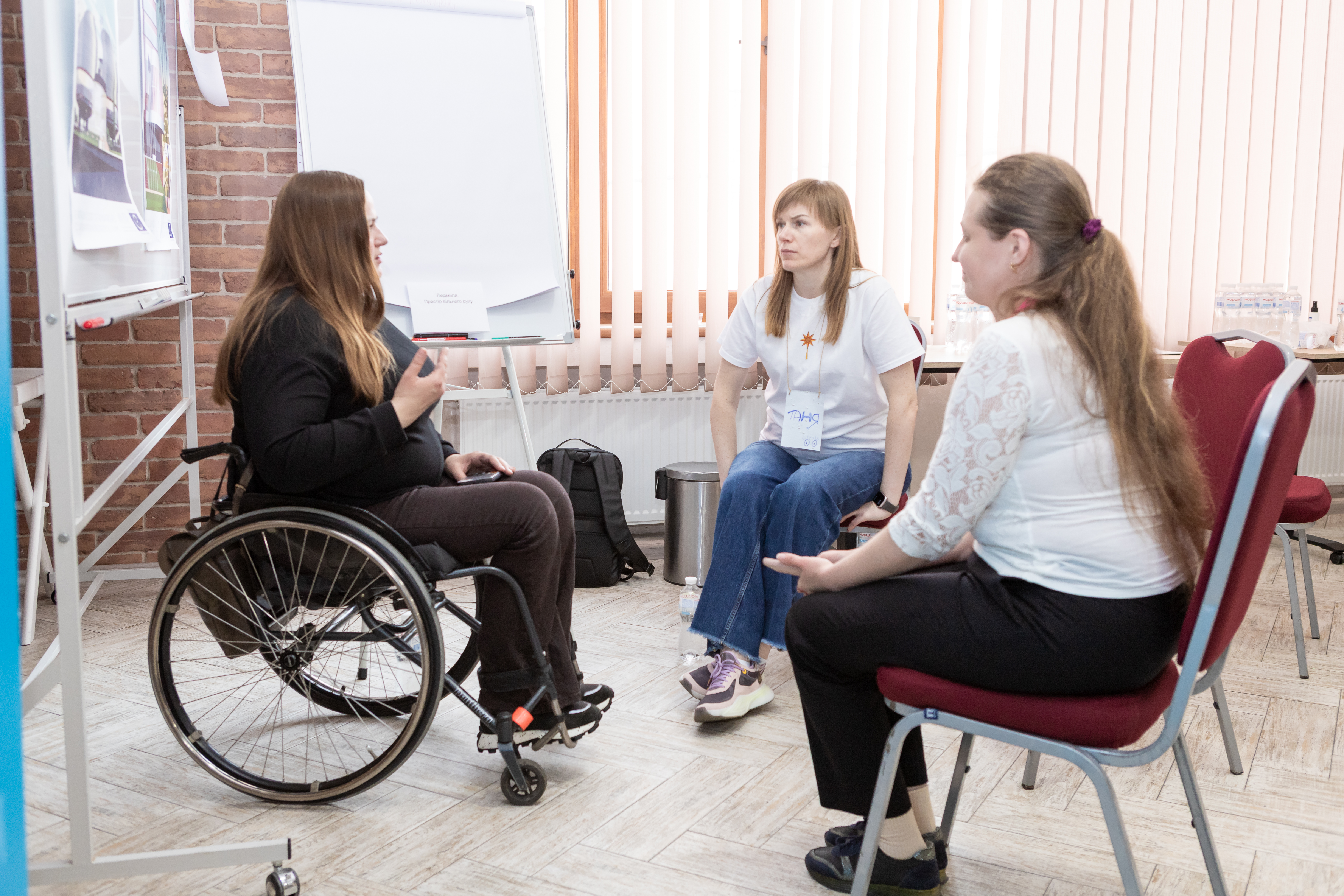
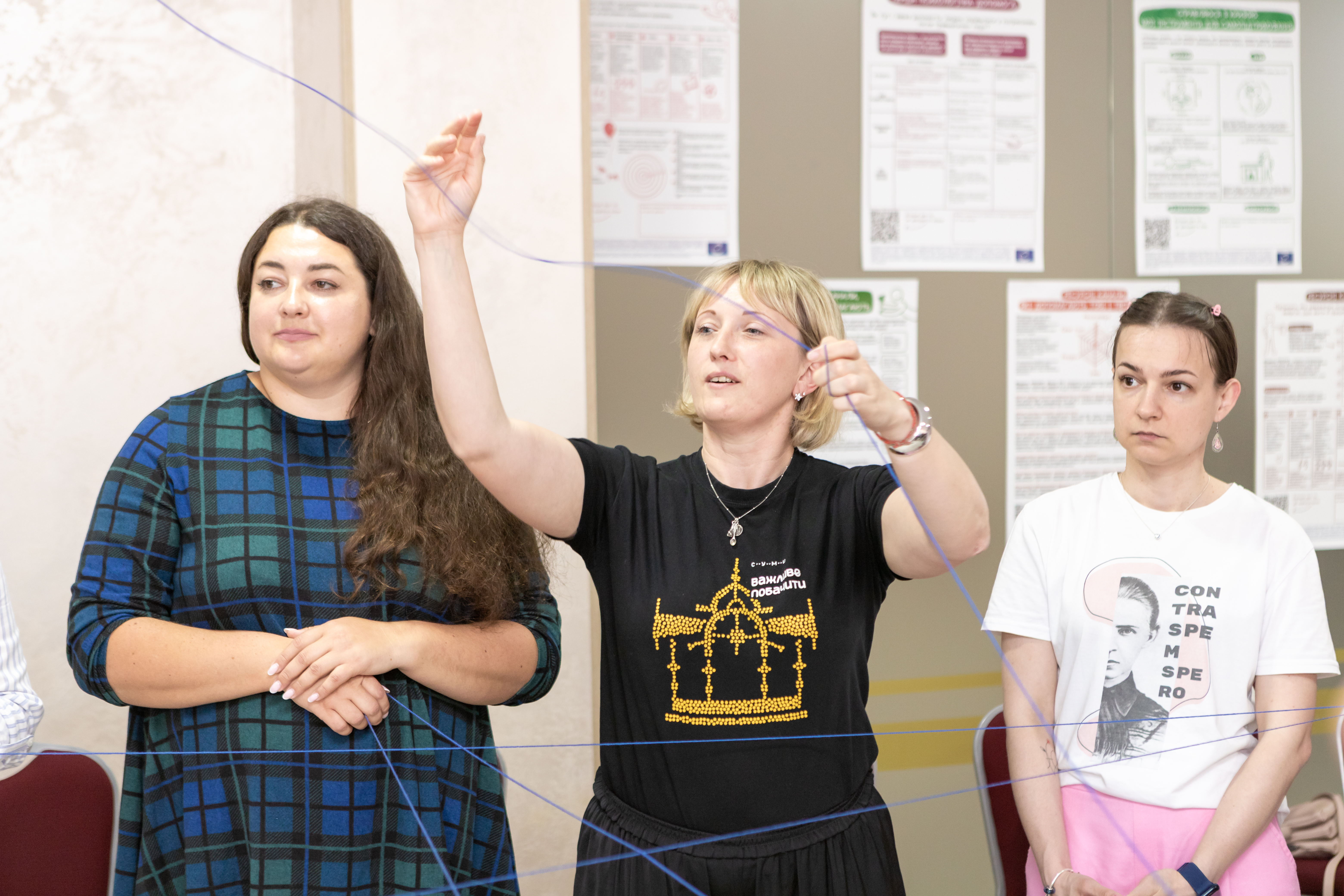
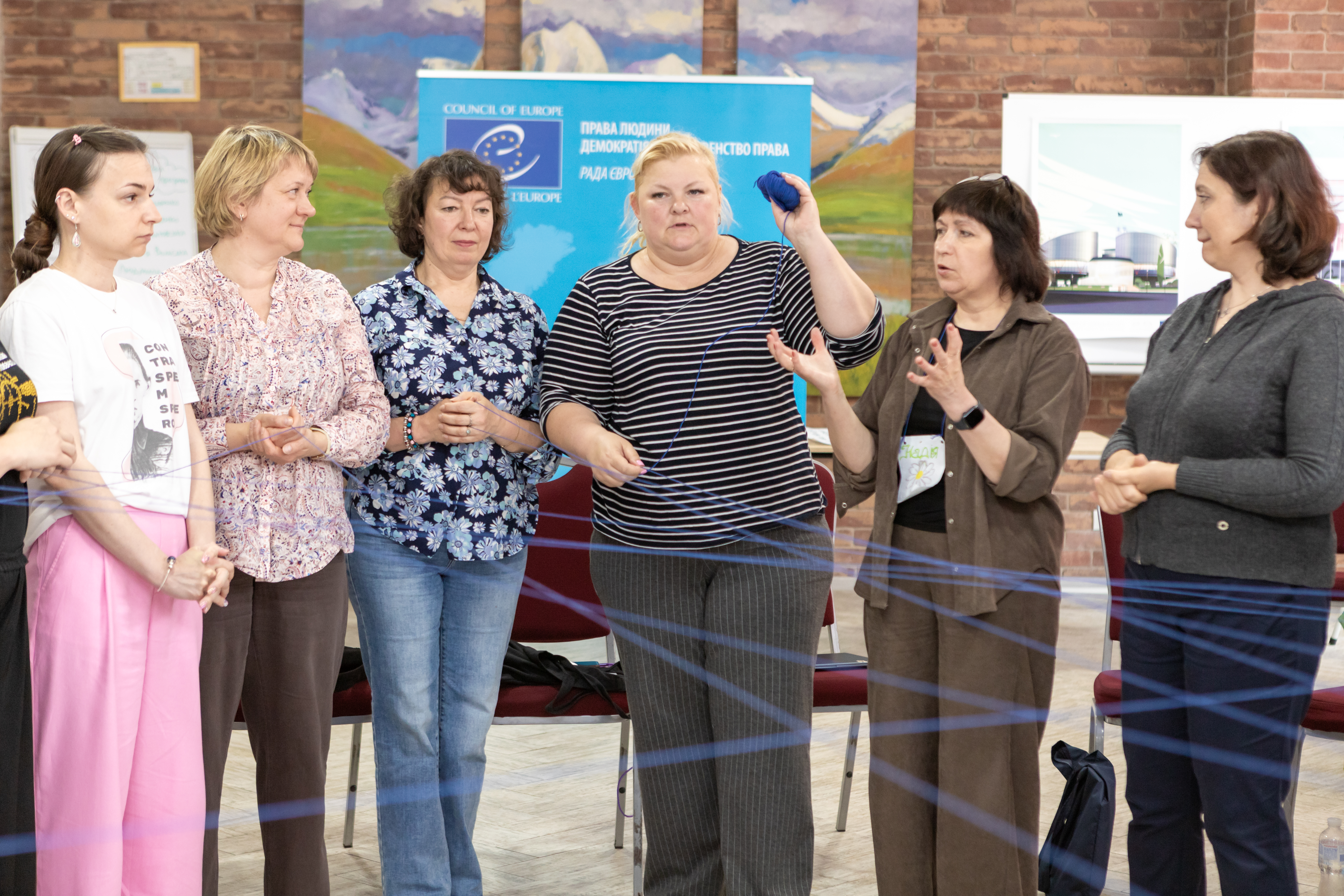
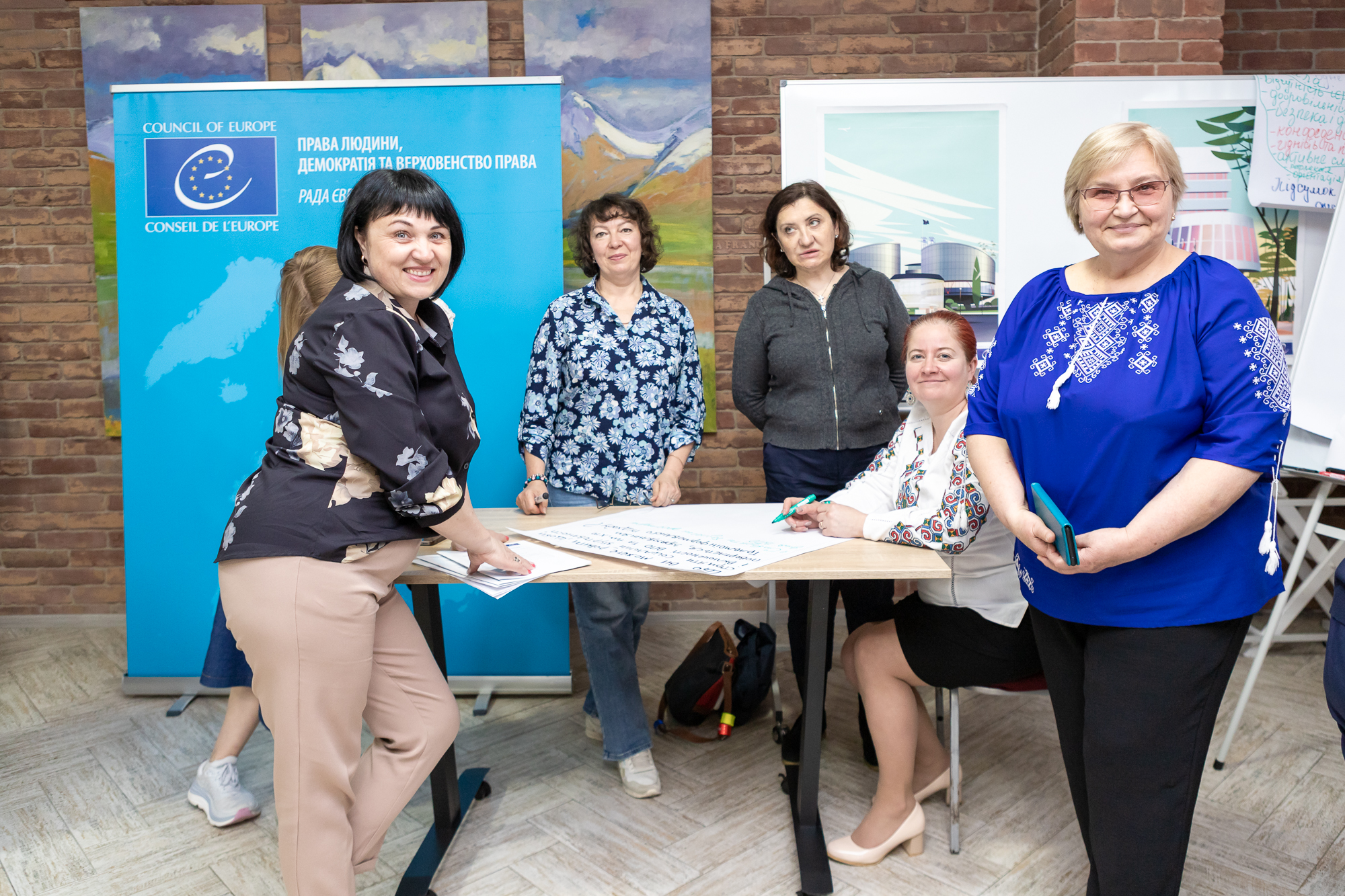
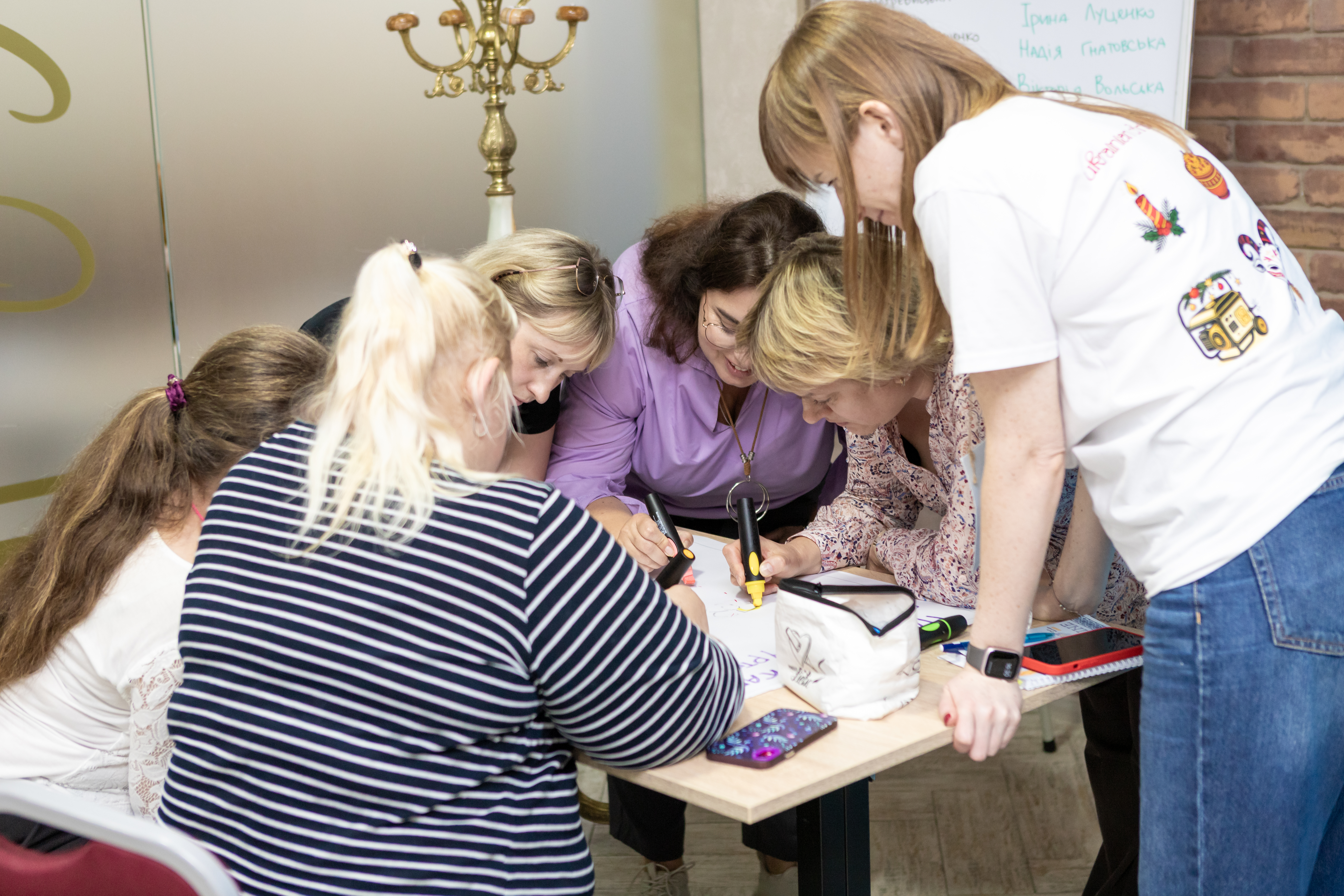
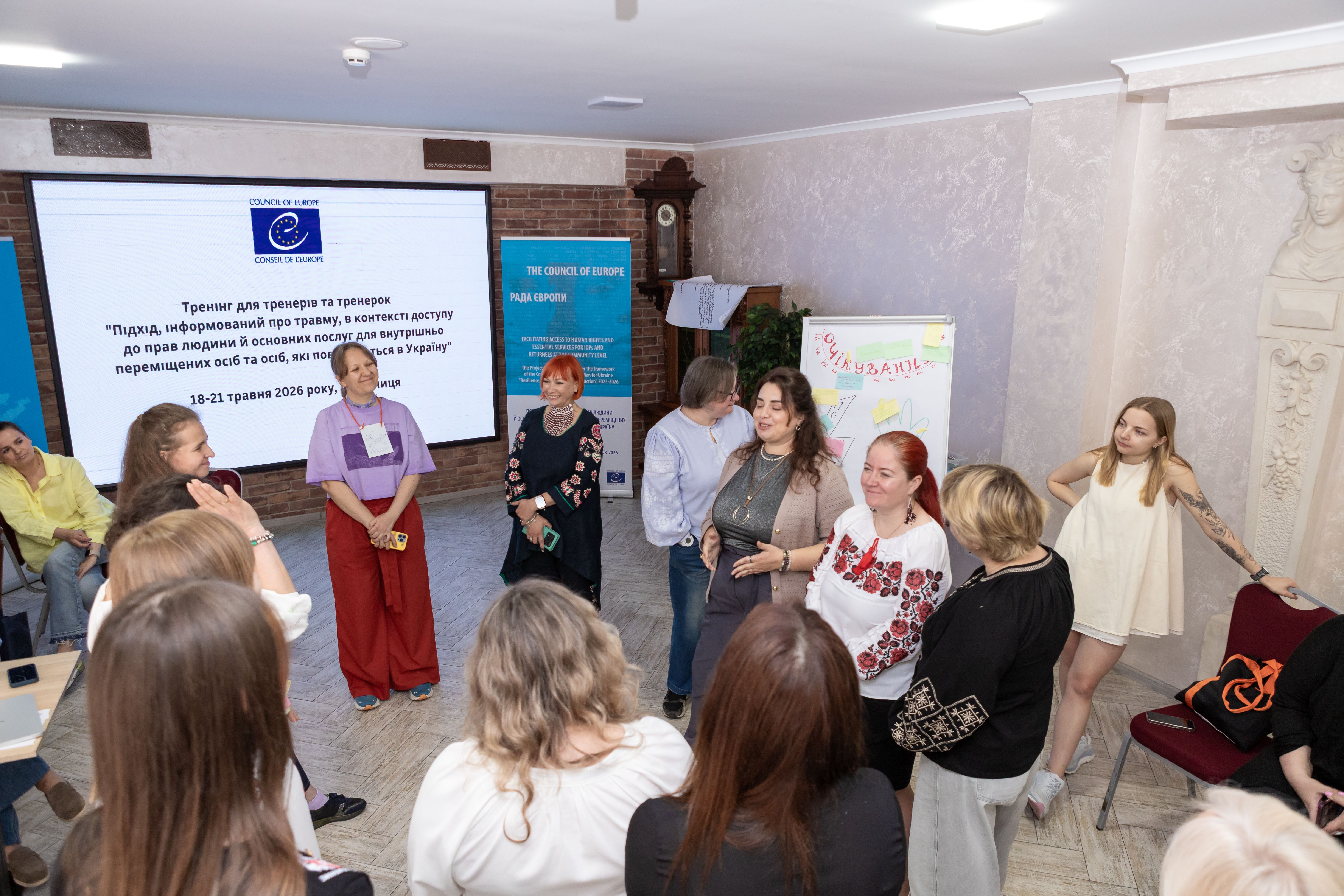
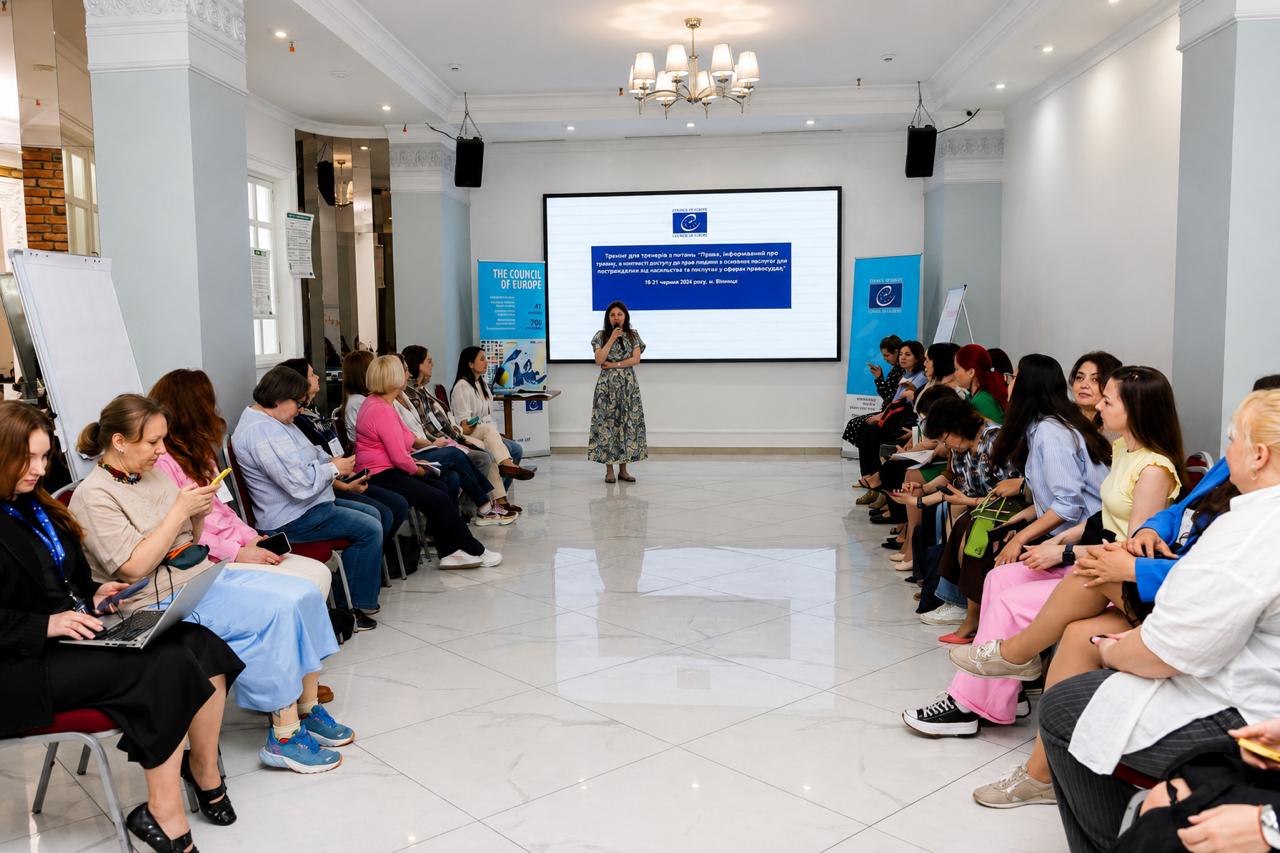
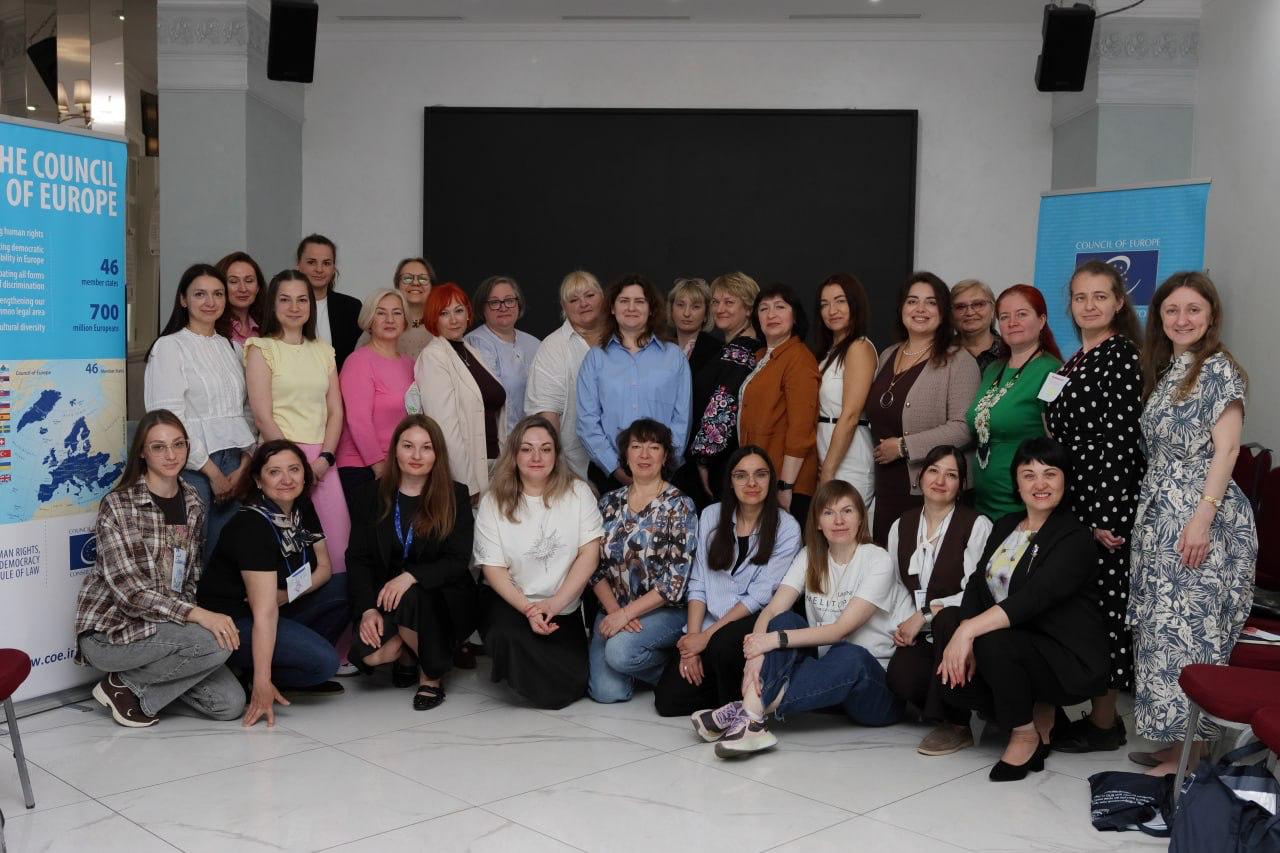
A trainingon a trauma-informed approach to support internally displaced persons and returnees was organized by the Council of Europe on 18-21 May 2026 in Vinnytsia, with participants from civil society organisations, local self-government bodies and the youth sector. The aim of the event was to strengthen the participants’ competencies in applying a trauma-informed approach in supporting internally displaced people and returnees in accessing human rights and basic services.
This training contributed to the development of professional networking and the exchange of practical experience between trainers working with different categories of the population - internally displaced persons, youth, returnees, etc. - in order to develop new ideas, effective approaches and tools in working with target audiences.
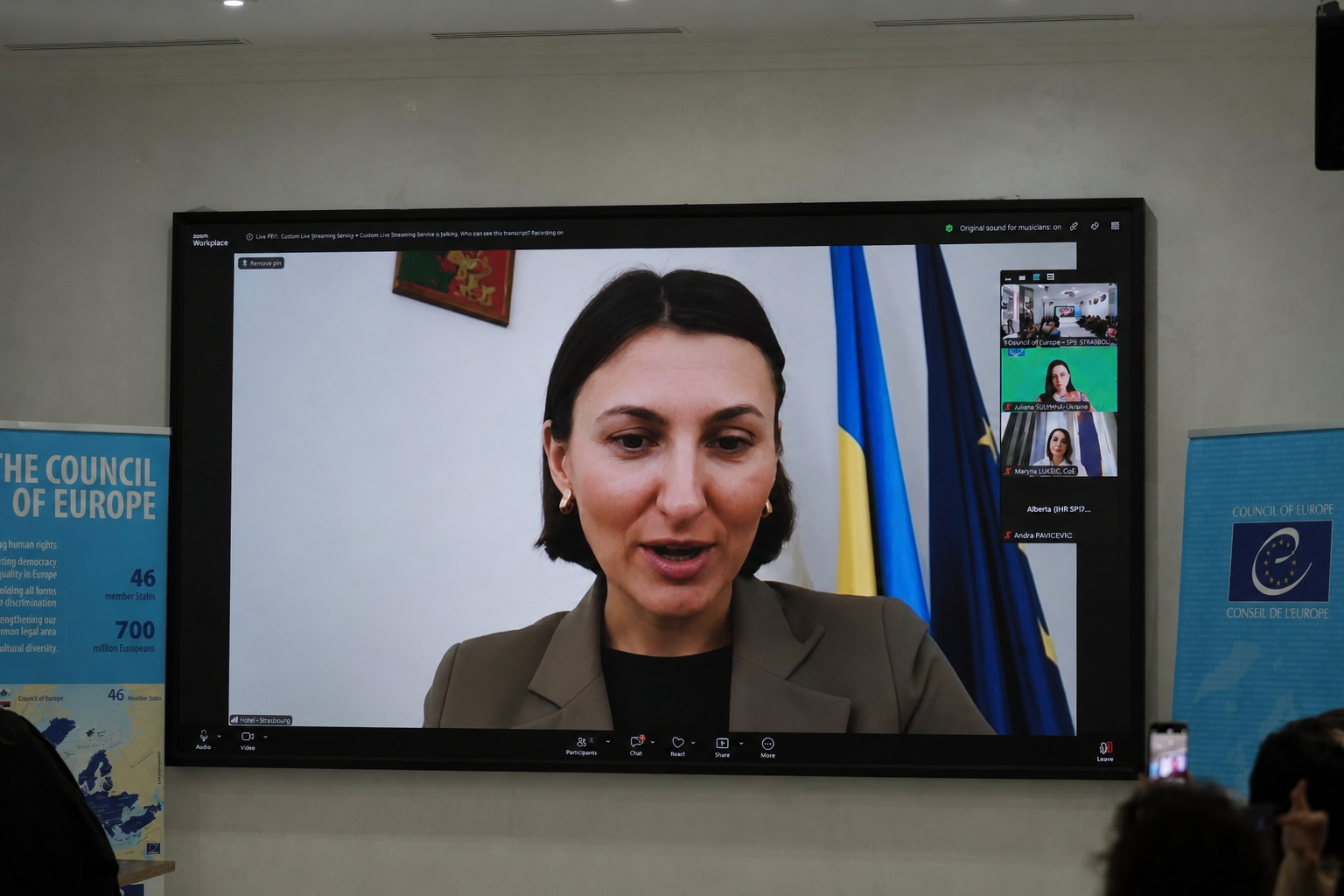
The event was opened by the Deputy Head of the Council of Europe Office in Ukraine Hilde Haug. She noted that the youth of Ukraine, those internally displaced in Ukraine, persons returning from abroad as well as Ukrainians abroad all face stressful situations, and many experience trauma due to the war. She thanked the participants for helping to strengthen the protection of human rights, support ways to improve living conditions for those who have lost their homes, and reduce the negative consequences of the war in a gender-sensitive manner, in line with Council of Europe and European standards.
The floor was taken by the Deputy Minister of Social Policy, Family and Unity of Ukraine for European Integration Ilona Havronska. She noted: "For the Ministry of Social Policy, Family and Unity of Ukraine, this topic is of particular importance. The full-scale war has changed the life circumstances of millions of people: those who were forced to move within the country, those who went abroad and are already returning or are considering returning to Ukraine. Working with such people requires not only professional knowledge, but also sensitivity, respect for dignity and understanding of experience. A trauma-informed approach helps build trust, avoid re-traumatization, and provide real access to rights, services, and opportunities. It is important that this training brings together specialists who work with different audiences. It is through such professional networks that quality approaches, practical tools and common standards of work are disseminated."
Head of the Youth Policy Department of the Ministry of Youth and Sports of Ukraine, Volodymyr Khadzhynov, expressed gratitude to the Council of Europe and a practical response to the needs of young people and youth workers in Ukraine. He emphasized the importance of the team of trainers of the specialized training programme "m Trauma-Informed Youth Work" of the state programme "Youth Worker" and the activities of the Council of Europe on the annual professional development of trainers in response to new challenges.
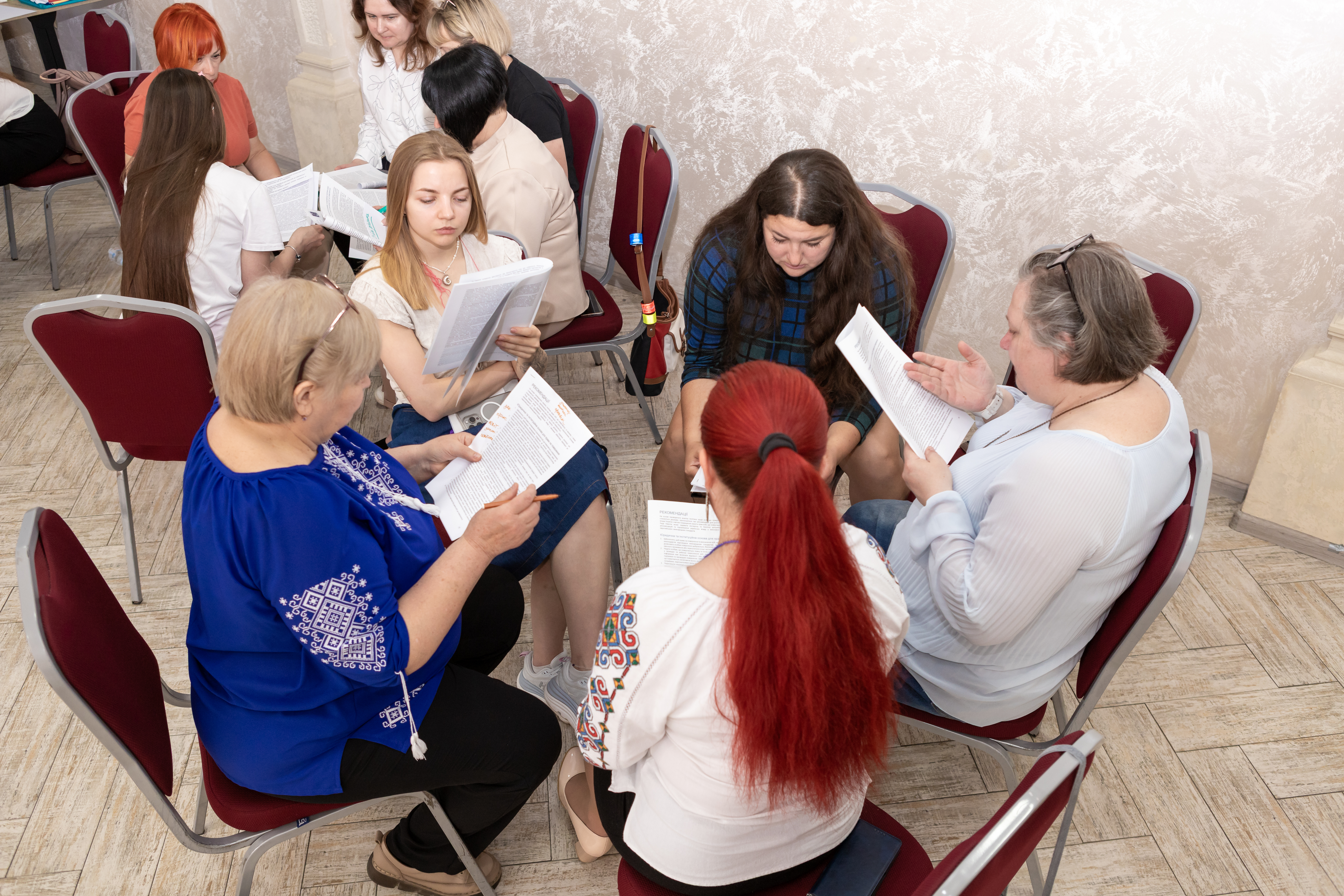
During the training, the team of trainers analyzed the challenges to social cohesion and barrier-free access of different groups, including internally displaced persons, returnees and young veterans, and identified ways to overcome them through a trauma-informed approach.
Director of the All-Ukrainian Youth Centre Denis Minin met with the trainers and discussed personal experience and ideas for working with veterans in different communities in Ukraine.
Youth Development, Policy and Partnership Building Analyst at UNDP in Ukraine Sofia Pyshneva presented a short-term specialized training course "Youth Work with Veterans" within the framework of the state programme "Youth Worker".
The trainers explored the potential of the Living Library format to overcome stereotypes and prejudices. The format was organized on the basis of the methodology of the Council of Europe manual Don't Judge by the Cover. The Living Library provided an opportunity to meet with invited guests (Books) who openly shared their own stories and encounters with stereotypes and prejudices against young veterans, people with disabilities, Roma youth, young IDPs and those returning to Ukraine, feminists, LGBTI community, representatives of national communities, and large families.
The training programme included opportunities to both participate and conduct workshops to improve competencies in the selection of non-formal education methods, the development of training programs taking into account the trauma-informed approach, the use of intervision, the use of artificial intelligence tools (with a focus on ethics and human rights), humor and human rights.
A separate topic was the study of the topic of loss and grief, taking into account the trauma-informed approach. In addition, it became possible to watch and discuss the film "Something Beautiful Is Left Behind" by the Network of Human Rights Media Education Film Clubs DOCU/CLUB, NGO "Docudays".
As a result, the trainers have planned new educational and outreach activities taking into account the trauma-informed approach in their communities.
The training of trainers is an example of the impact of a long-term and successful co-operation between two of Council of Europe projects working respectively on supporting IDPs/returnees and young people: Facilitating access to human rights and essential services for internally displaced persons and returnees at the community level and Youth for democracy in Ukraine. Furthermore, it also points to the successful and close involvement of two partners of the Council of Europe, the Ministry of Social Policy, Family and Unity of Ukraine and the Ministry of Youth and Sports of Ukraine.
The training programme is implemented within the framework of the Council of Europe Action Plan for Ukraine "Resilience, Recovery and Reconstruction" 2023-2026.