Shaping democratic renewal: civic space and the path to
a New Democratic Pact for Europe
2 - 3 February 2026 Strasbourg, France (Palais de l'Europe, Room 1)
About the Conference
At the 2023 Reykjavík Summit, Heads of State and Government of the Council of Europe adopted the landmark Reykjavík Principles for Democracy, setting out a common vision of the key elements of a functioning democracy. These Principles underscore the vital role of civil society in upholding democratic values and safeguarding fundamental freedoms across Europe.
The 2025 Report of the Secretary General of the Council of Europe, Towards a New Democratic Pact for Europe, highlights the urgency of protecting civic space as a cornerstone of democratic renewal. It calls for stronger cooperation among member states, international organisations, and civil society to reverse current trends and reinforce democratic institutions.
In response, the process leading to the New Democratic Pact aims to revitalise democracy through innovation, institutional renewal, and civic empowerment. This high-level event will contribute to that effort by exploring how civic space can be strengthened at both national and international levels. It will showcase practical initiatives for monitoring civic space and inspire new approaches for civil society and member states to jointly advance the Pact and build a
more inclusive and resilient democratic future.
The conference will provide a strategic platform for reinforcing stakeholder commitment to developing and strengthening a coherent mechanism for monitoring and protecting civic space across Council of Europe member states. It will facilitate the exchange of best practices and the formulation of concrete proposals – including policy recommendations, collaborative frameworks, and pilot initiatives – aimed laying foundations for such a mechanism.
Programme
Monday, 2 February 2026
14:00 - 14:10: Opening session
Introductory remarks by Alain Berset, Secretary General of the Council of Europe
14:10 - 14:30: Welcome and setting the scene
Introductory live poll
Welcoming by Ambassador Daniela Cujbă, Permanent Representative of the Republic of Moldova to the Council of Europe, President of the Ministers’ Deputies
Keynote address by Dr. Michael O'Flaherty, Commissioner for Human Rights, Council of Europe
14:30 - 15:50: Session I: Taking stock – what is the state of civic space in Europe?
Objective: This session will present and discuss key findings, emerging trends, and lessons learned regarding the current state of civic space across Europe. Drawing on evidence and experiences from a diverse range of stakeholders, it will help identify critical gaps, vulnerabilities, and opportunities in civic space monitoring and protection. The session will set the stage for deeper exploration and strategic dialogue throughout the conference.
Moderator:
Tara Petrović, Civic Space Research Officer, CIVICUS
Speakers:
Andreas Accardo, Head of Unit, Institutional Cooperation and EU Charter, EU Agency for Fundamental Rights
Bartosz Cyran, Chief Coordinator for Cooperation with Social Partners, Office of the Commissioner for Human Rights, Poland
Eszter Hartay, Program Director at the European Center for Not-for-Profit Law (ECNL) and member of the CINGO Expert Council on NGO Law
Michal Piško, Director, Transparency International Slovakia
15:50 - 16:20: Coffee Break
16:20 - 17:40: Session II: Monitoring civic space – learning from practice
Objective: Building on the insights from Session I, this session will explore current pilot initiatives and institutional practices aimed at monitoring and protecting civic space. It will highlight lessons learned, showcase innovative approaches, and identify opportunities for stronger collaboration between international organisations, member states, civil society and human rights defenders. The session will also serve as a platform for proposing new ideas and partnerships to enhance the effectiveness, sustainability and impact of civic space monitoring efforts.
Moderator:
David Milner, Head of the Human Rights Intergovernmental Co-operation Division, Council of Europe
Speakers:
Goran Forbici, Director, the Centre for Information, Cooperation and Development of NGOs (CNVOS), Slovenia
David Goessmann, Head of Open Governance Unit, Innovative, Digital and Open Government, OECD
Maria-Andriani Kostopoulou, President, Group of Experts on Action against Violence against Women and Domestic Violence (GREVIO)
Aarti Narsee Senior Policy Officer & lead for Rule of Law advocacy, European Civic Forum (ECF)
18:00 - 19:30: Networking and reception
Welcoming remarks by Ambassador Vebjørn Heines, Permanent Representative of Norway to the Council of Europe and Chair of the Group of Friends to Promote Engagement with Civil Society within the Council of Europe, Palais de l'Europe, Salon Bleu Restaurant, ground floor
Tuesday, 3 February 2026
9:30 - 10:50: Session III: Legislative trends and civic space – navigating regulatory change
Objective: This session will explore the evolving landscape of legislative and regulatory measures impacting civic space, with a focus on laws governing transparency, accountability, and funding, including those involving foreign sources. Drawing on national and regional experiences, the discussion will focus on how civil society and institutional actors can respond to these developments. The session will highlight legal, policy, and advocacy approaches to mitigate risks, adapt to new requirements, and identify opportunities for coordinated, constructive, and rights-based engagement.
Moderator:
Eve Geddie, Director, European Institutions Office, Amnesty International
Speakers:
Giorgi Kldiashvili, Executive Director, Institute for Development of Freedom of Information (IDFI), Georgia
Estelle Masse, Policy Officer, Fundamental Rights Policy Unit, DG Justice and Consumers, European Commission
Ambassador Sini Paukkunen-Mykkänen, Permanent Representative of Finland to the Council of Europe
Daniel Simons, Senior Legal Counsel Strategic Defence, Greenpeace International
Tania Van Dijk, Legal Adviser, Venice Commission, Council of Europe
10:50 - 11:20: Coffee Break
11:20 - 12:20: Session IV: Digital civic space – innovation, inclusion, and protection
Objective: This session will explore how digital technologies are reshaping civic space and creating new opportunities for participation while also introducing risks such as surveillance, disinformation, and exclusion – risks that must be carefully addressed in monitoring and protection efforts. At the same time, digital tools hold significant potential for more inclusive civic engagement, and promising practices are emerging in this field. The session will explore new dimensions of digital civic space and discuss how the Council of Europe can strengthen its support through policy guidance and cooperation.
Moderator:
Joanna Szymańska, Head of Programmes and Strategy for Europe, Article 19
Speakers:
Pavel Antonov, Co-founder and Executive Editor, BlueLink Foundation
Giulia Lucchese, Co-Secretary CDMSI, Council of Europe
Claudia Luciani, Director, Congress of Local and Regional Authorities
Alexis Prokopiev, Vice-President of Civic Tech Europe (ACTE)
12:20 - 14:00: Lunch Break
14:00 - 15:20: Session V: Civic space at a crossroads – charting strategic pathways forward
Objective: This session will synthesise key insights from the conference and provide a platform for diverse actors – across institutional, academic, and grassroots sectors – to identify strategic directions and actionable recommendations. These reflections will inform the conference key takeaways and guide future Council of Europe initiatives to strengthen civic space across Europe.
Moderator:
Anna Sevortian, Member of the Standing Committee of the Conference of INGOs
Speakers:
Ambassador Caitríona Doyle, Permanent Representative of Ireland to the Council of Europe and Chair of the Rapporteur Group on Democracy (GR-DEM)
Dave Elseroad, Head of Advocacy and Geneva Office, Human Rights House Foundation
Tom Matthew, Board Member, European Youth Forum
Seema Shah, Head of Democracy Assessment Unit, International IDEA
Niklas Wilhelmsson, Head of Democracy and Elections Unit, Ministry of Justice, Finland, and Vice-Chair of the Steering Committee on Democracy (CDDEM)
15:20 - 15:50: Coffee Break
15:50 - 16:50: Closing Session: From insight to impact – advancing Council of Europe action on civic space
Objective: The closing session will consolidate the key outcomes of the conference and translate these into concrete next steps. The session will also summarise strategic opportunities for the Council of Europe to strengthen its role in protecting and expanding civic space and invite further dialogue and reflections from diverse stakeholders.
Moderator:
Matjaž Gruden, Director for Democracy, Council of Europe
Speakers:
Astrid Bergmål, State Secretary for Minister of Foreign Affairs, Norway
Antoine Buyse, Professor of Human Rights from a multidisciplinary perspective and Director of the Netherlands Institute of Human Rights (SIM): Presentation of the key takeaways
Anu Juvonen, Special Representative of the OSCE Chairperson-in-Office on Civil Society
Closing Reflections and Next steps by the moderator
The conference will feature moderated panel discussions with diverse speakers from civil society, member states, and international organisations.
Each panel will include structured opportunities for audience engagement, such as Q&A sessions, live polling, and facilitated dialogue segments to encourage active participation, foster dynamic exchange and generate concrete ideas.
The event will take place in English and French, with interpretation provided, and will be live-streamed.
An accompanying programme will include an exhibition space for materials and a civic space resource table showcasing reports, standards, case law, and tools.
Financial support from the Council of Europe is no longer possible, as the budget has been fully allocated.
Back
Anna Sevortian, Member of the Conference of INGOs
Sevortian
Anna Sevortian has over 20 years of experience in supporting civil society and addressing human rights issues in Wider Europe through her work with international NGOs. She has been serving on the Standing Committee of the Council of Europe’s Conference of International NGOs since 2021. As of 2024, Anna has worked full-time as an expert and consultant with non-profits and philanthropies in Europe, Central Asia, North America, and West Africa specialising in governance, leadership and facilitating change. She co-leads the Human Rights Compass initiative and curates arts-based civil society projects. Anna holds Mid-Career MPA from Harvard Kennedy School and a degree in Journalism.


 2 - 3 February 2026
  Strasbourg, France (Palais de l'Europe, Room 1)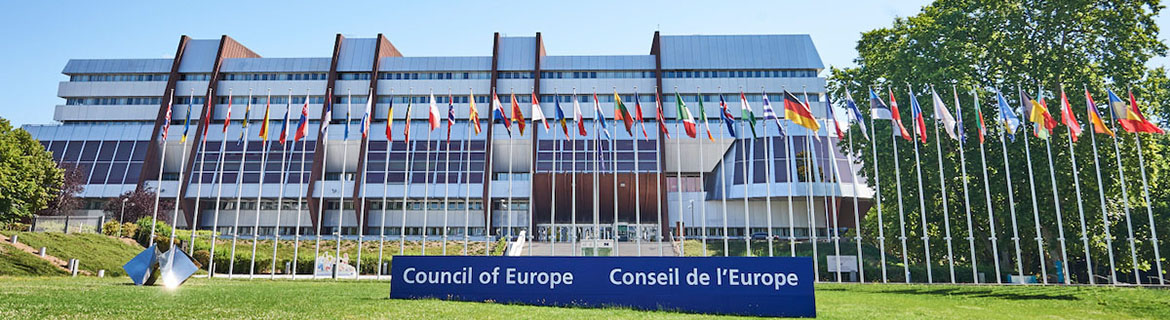

 About the Conference
 Programme
 Practical information