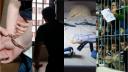
The objective of the visit was to assess the implementation of the CPT’s long-standing recommendations concerning the treatment and conditions of detention of foreign nationals deprived of their liberty pursuant to aliens legislation. To this end, the CPT’s delegation carried out follow-up visits to Border Police detention facilities in Elhovo and Svilengrad (Kapitan Andreevo), Special Homes for Temporary Accommodation of Foreigners (SHTAF) in Busmantsi and Lyubimets, and Closed-Type Premises run by the State Agency for Refugees (SAR).
In the two SHTAFs and the SAR Closed Unit, the delegation heard no recent and/or credible allegations of physical ill-treatment of detained foreign nationals whilst in the custody of the Border Police. That said, a few detained persons alleged that they had been verbally abused or threatened by Border Police officers at the time of their apprehension. Likewise, the delegation heard no credible allegations of recent physical ill-treatment of detained foreign nationals by staff of the SHTAF in Lyubimets. By contrast, some detainees at the SHTAF in Busmantsi alleged having been punched, kicked and/or violently pushed by custodial officers; in a few cases, physical ill-treatment had reportedly been accompanied by verbal abuse. The CPT reiterated its recommendation that it be recalled to Border Police officers and staff at the SHTAF in Busmantsi that any forms of ill-treatment of detained foreign nationals (including of a verbal nature) are illegal and unacceptable and will be punished accordingly.
Material conditions in the immigration detention facilities visited remained extremely poor, with virtually all detainee accommodation areas being overcrowded, dilapidated, dirty and infested with bedbugs. The premises were very prison-like and particularly poorly adapted for the accommodation of women, families and minors. Further, foreign nationals – some of whom had spent months or even years in custody – had nothing or almost nothing to occupy their time. There were no organised activities, which was of particular concern with respect to the minors. Furthermore, unlike in Lyubimets, foreign nationals accommodated at the SHTAF in Busmantsi (and in the SAR Closed Unit) had no guaranteed access to daily outdoor exercise, which was indeed a truly deplorable state of affairs.
As regards health-care services, the only positive aspects were the 24/7 health-care staff coverage and an improved access to outside consultations and hospitalisations. Alas, other aspects of health-care provision, such as medical screening on arrival, medical records, equipment and medication, psychiatric case and psychological assistance, were unsatisfactory.
The CPT made recommendations to address the aforementioned deficiencies in the SHTAFs and SAR Closed Unit, as well as those concerning insufficient staffing, lack of access to interpretation and free legal aid, limited visiting entitlement and access to a telephone.
The delegation interviewed a number of foreign nationals who had recently been deprived of their liberty by Bulgarian law enforcement agencies and who were no longer in Bulgaria at the time of the visit. Based on the detailed and consistent accounts received by the delegation, a clear pattern emerged with regard to the treatment by Bulgarian law enforcement officials of migrants who had managed to enter Bulgarian territory from Türkiye through the “green border” in August-September 2024. It would appear that the foreign nationals concerned had been apprehended by Bulgarian security forces patrolling the border area and had been forcibly returned to Türkiye, outside any legally established procedures. It further appeared that the apprehension of the foreign nationals concerned and their subsequent forced removal from Bulgaria had often been carried out by using physical violence and unmuzzled service dogs.
The Bulgarian authorities should take the necessary measures to stop the ill-treatment and prevent further “pushbacks”; that is, forcibly returning irregular migrants arriving at the border or present in the territory of Bulgaria, without any prior individualised screening with a view to identifying persons in need of protection.
The report is published under the automatic publication procedure, in accordance with the agreement with the Bulgarian authorities. In their response, the Bulgarian authorities provide information on the measures taken to implement the CPT's recommendations.