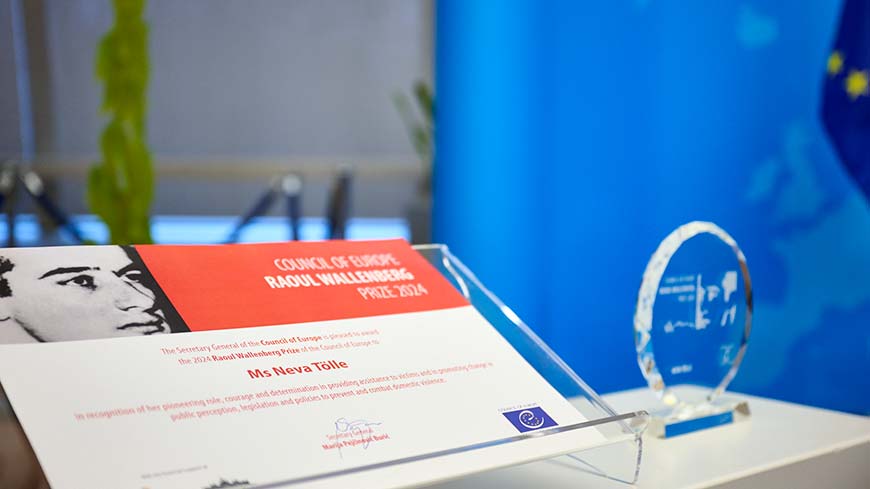
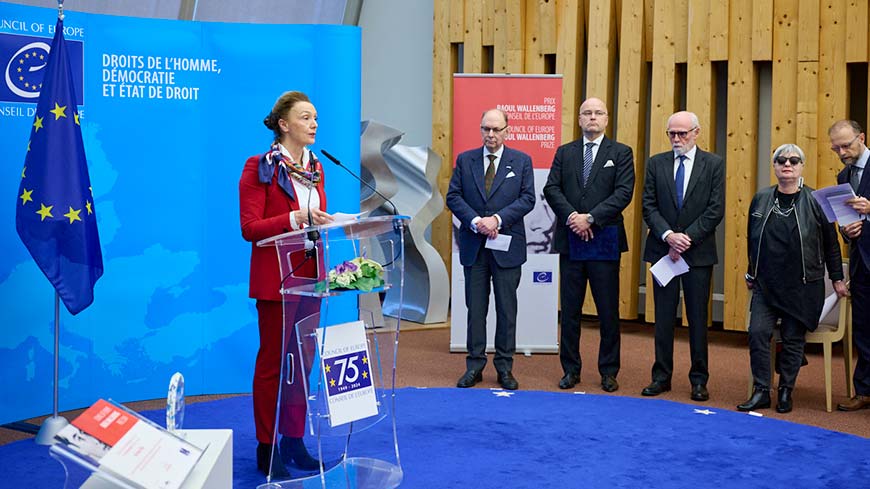
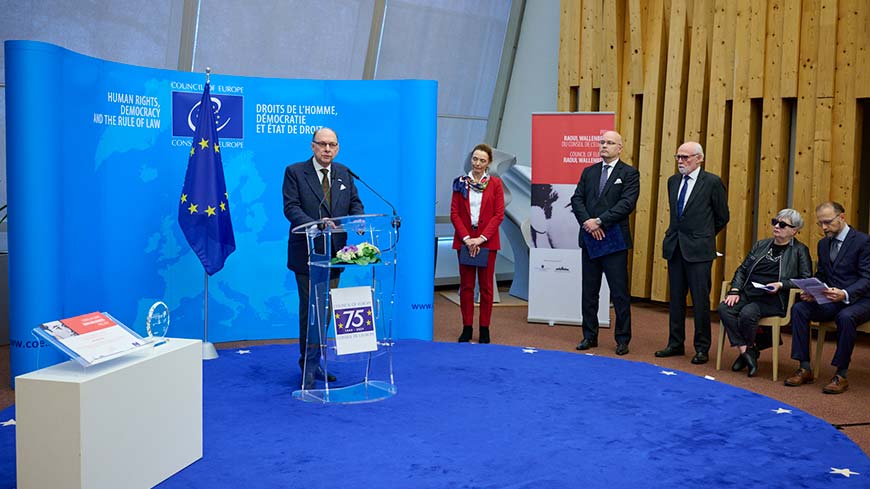
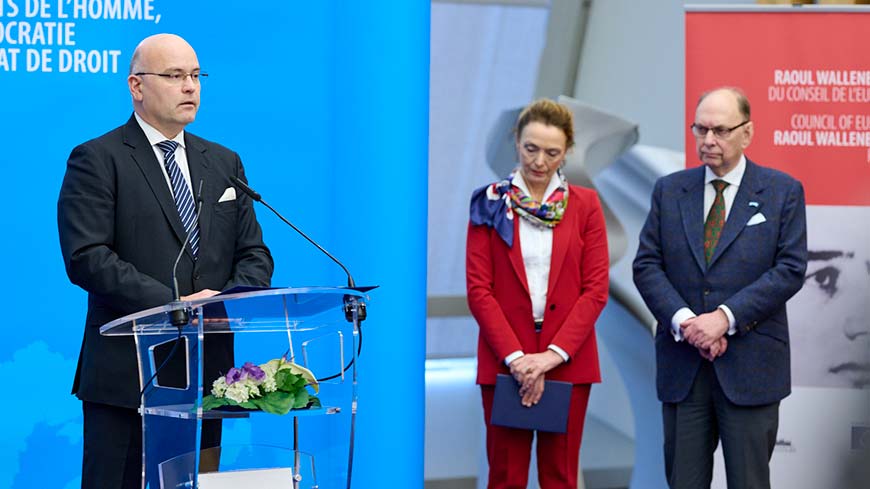
Gana el Premio Raoul Wallenberg una pionera croata en la protección de las mujeres contra la violencia doméstica

Gana el Premio Raoul Wallenberg una pionera croata en la protección de las mujeres contra la violencia doméstica

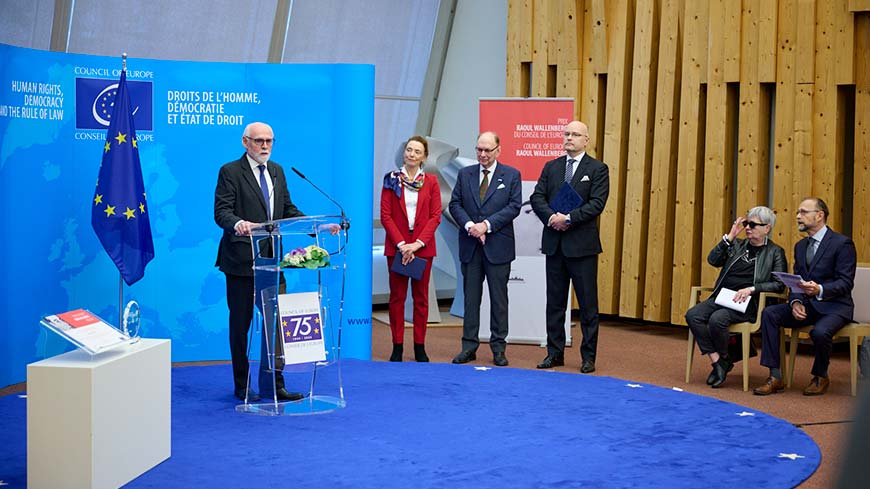
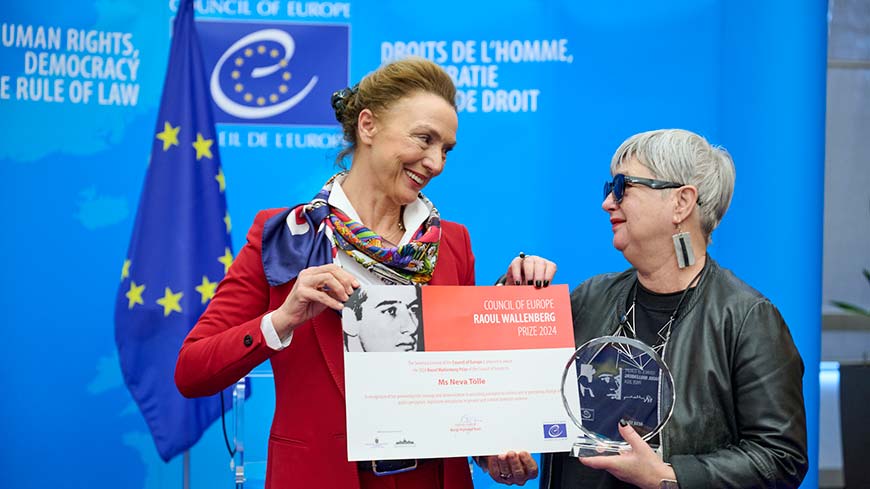
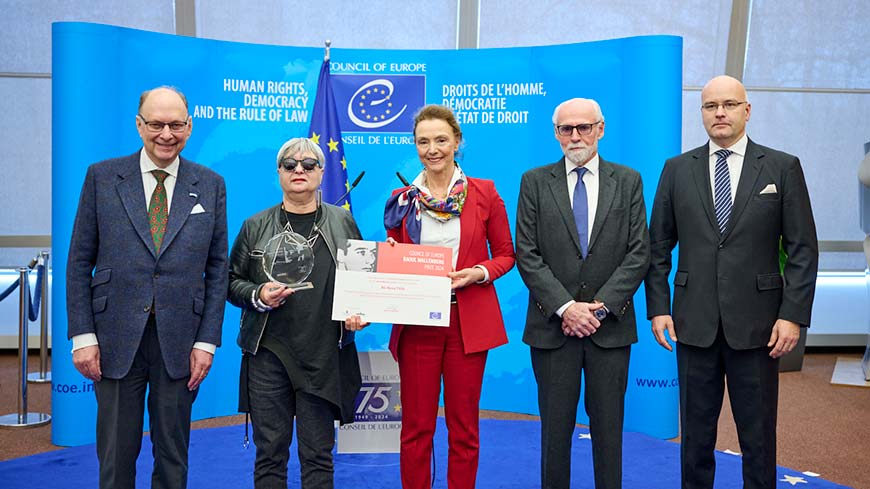
Neva Tölle, una ciudadana croata que ha dedicado casi toda su vida adulta a trabajar para proteger a las mujeres contra la violencia doméstica, ha sido galardonada con el Premio Raoul Wallenberg 2024 del Consejo de Europa en reconocimiento a su papel pionero, su valor y su determinación a la hora de prestar asistencia a las víctimas y de promover cambios en la percepción pública, la legislación y las políticas para prevenir y combatir la violencia doméstica. En la ceremonia de entrega del premio en Estrasburgo, la secretaria general del Consejo de Europa, Marija Pejčinović Burić, declaró: «Estas acciones y esta dedicación no son gratuitas. A lo largo de los años, sé que ha sufrido amenazas e intimidaciones y se ha enfrentado a obstáculos de muchos tipos. Pero usted ha perseverado. Su valor y su determinación han ayudado a los más necesitados y han contribuido a cambiar la opinión pública y a promover leyes mejores y más justas. Literalmente, ha salvado vidas».

El Jurado destacó cómo el valor y la determinación, la innovación y la creatividad de Neva Tölle han tenido un impacto real y sostenido que ha beneficiado a las víctimas de la violencia doméstica. Además de prestar apoyo directo a las víctimas, también ha trabajado incansablemente —y con éxito— para promover la introducción de cambios legislativos como el reconocimiento del delito de feminicidio, políticas penales más estrictas y cambios en la Ley de Bienestar Social.

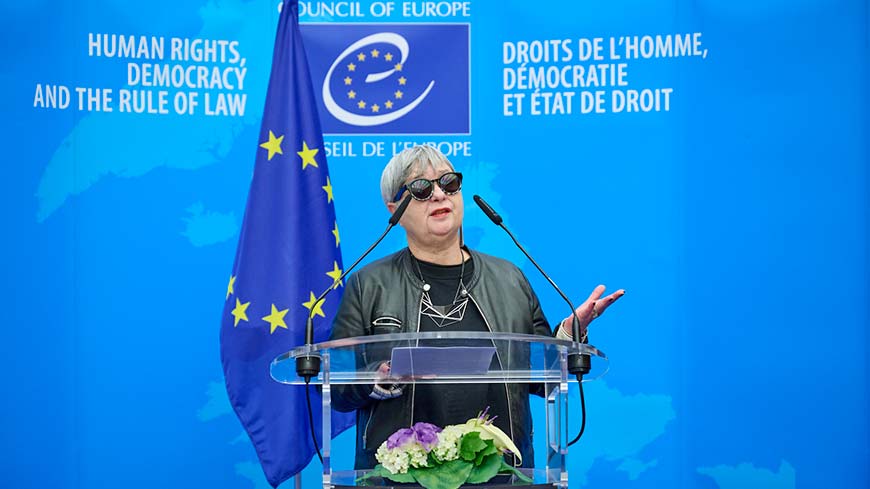
Al recibir el Premio Raoul Wallenberg, Neva Tölle declaró: «Este premio no es solo para mi: es también un reconocimiento a las mujeres que han sobrevivido a la violencia. Son mis heroínas y la inspiración que me da fuerzas cada día. Me considero una privilegiada por haber tenido la oportunidad de estar con ellas, escuchar sus historias y ser testigo de su increíble coraje. No es solo un reconocimiento de los esfuerzos realizados en el pasado, sino también un compromiso de cara al futuro. Seguiré luchando por los derechos humanos de las mujeres, promoviendo la justicia y la seguridad, y construyendo junto a ustedes una sociedad en la que la violencia contra las mujeres no tenga cabida».

En la ceremonia intervinieron la secretaria general; Roderick Liddell, presidente del jurado; la persona galardonada; el embajador Robert Rydberg, encargado de negocios ad interim de la Representación Permanente de Suecia; y el embajador Harry Rusz, representante permanente de Hungría ante el Consejo de Europa.

El 17 de enero se conmemora el aniversario de la detención de Raoul Wallenberg en Budapest en 1945. El diplomático sueco Raoul Wallenberg utilizó su estatus para salvar a decenas de miles de judíos del Holocausto. Sus acciones demuestran que el valor y la capacidad de una persona pueden marcar la diferencia, y nos inspiran a todos para alzar la voz y actuar contra la persecución y la xenofobia. Su suerte continúa siendo un misterio. En 2012, por iniciativa del Gobierno sueco y el Parlamento húngaro, el Consejo de Europa creó el Premio Raoul Wallenberg para mantener vivo el recuerdo de sus logros. El Premio, dotado con 10.000 euros, se concede cada dos años desde 2014 en reconocimiento de los logros extraordinarios de carácter humanitario realizados por una persona, un grupo de personas o una organización.

Las ediciones anteriores del Premio reconocieron los logros de Elmas Arus (2014), una joven directora de cine romaní de Türkiye; la asociación griega Agalià (2016), de la isla de Lesbos; el Centro Europeo de Derechos Romaníes, con sede en Budapest (2018); una médica siria, Amani Ballour (2020); y Vincent Raj Arokiasamy (2022), defensor de la población desfavorecida de «intocables» en la India.

El jurado está compuesto por seis personas independientes de reconocido prestigio moral en el ámbito de los derechos humanos y la acción humanitaria, y que son nombrados por: la Secretaria General del Consejo, el Ministerio de Asuntos Exteriores de Suecia, el municipio de Budapest, el Instituto Raoul Wallenberg de Lund, el Alto Comisionado de las Naciones Unidas para los Refugiados (ACNUR) y la familia de Raoul Wallenberg.


 Nota de prensa [EN, FR]
Primera mujer croata en recibir el Premio Raoul Wallenberg por su labor en pro de la protección de las mujeres contra la violencia doméstica


 Discurso de la secretaria general [EN]


Galería imágenes

Secretaria general Estrasburgo 17 enero 2024
  • Diminuer la taille du texte
  • Augmenter la taille du texte
  • Imprimer la page

Defender of disadvantaged population of “untouchables” in India receives Raoul Wallenberg Prize

Defender of disadvantaged population of “untouchables” in India receives Raoul Wallenberg Prize

Vincent Raj Arokiasamy, founder of the organisation “Evidence” in India, has been awarded the Council of Europe’s Raoul Wallenberg Prize for his outstanding determination and persistence in bringing meaningful change to the lives of the Dalits, historically known as “untouchables”.

“Vincent Raj Arokiasamy has risked his life to help an exceptionally disadvantaged part of the Indian population whose plight is often ignored by national and international communities. In defending human rights with incredible commitment and resilience, his courageous actions for the so-called “untouchables” fully reflect the spirit and values of the Raoul Wallenberg prize”, said Marija Pejčinović Burić, the Secretary General of the Council of Europe.

Vincent Raj Arokiasamy has demonstrated enormous courage and taken grave risks regarding his own and his family’s lives. He has rescued some 25,000 victims in 3,000 incidents of human rights violations. As a result, he has to live apart from his family to protect them. He has devoted his life to the cause of promoting justice for Dalits and others whose voices are rarely heard.

The award ceremony took place on Wednesday 19 January in a hybrid format. Speakers at the event included the Secretary General, the Chair of the Jury and the Laureate. A screening of József Sipos’s documentary on the life of Raoul Wallenberg “The Lost European” followed the ceremony. The documentary can be streamed online, free of charge, until 23 January. The film streaming is made available with the support of the Permanent Representation of Hungary to the Council of Europe.

17 January marks the anniversary of Raoul Wallenberg’s arrest in Budapest in 1945. The Swedish diplomat used his status to save tens of thousands of Jews from the Holocaust. His actions show that one person's courage and ability can really make a difference. Established in 2012, at the initiative of the Swedish Government and the Hungarian Parliament, the Council of Europe has created the Raoul Wallenberg Prize to keep the memory of his achievements alive. The Prize, worth €10,000, is awarded every two years in recognition of extraordinary humanitarian achievements by a single individual, a group of individuals or an organisation.


 Press release
Defender of disadvantaged population of “untouchables” in India receives Raoul Wallenberg Prize

Raoul Wallenberg Prize Strasbourg 17 January 2022
  • Diminuer la taille du texte
  • Augmenter la taille du texte
  • Imprimer la page

Syrian doctor who ran underground children’s hospital receives Wallenberg prize

Marija Pejčinović Burić and Amani Ballour

Marija Pejčinović Burić and Amani Ballour

Dr. Amani Ballour, a paediatrician from Syria who ran an underground hospital in Eastern Ghouta in 2012-2018 and is now a refugee in Turkey, has been awarded the Council of Europe’s Raoul Wallenberg Prize for her personal courage, bravery and commitment in saving hundreds of lives during the Syrian war.

“Human rights and personal dignity are not a peacetime luxury. Dr. Amani Ballour is a shining example of the empathy, virtue and honour that can flourish even in the worst circumstances: in the midst of war and suffering,” said Marija Pejčinović Burić, the Secretary General of the Council of Europe.


“A young paediatrician just out of university, Dr Ballour started as a volunteer helping the wounded and ended up, several years later, managing a team of some 100 staff members at the subterranean hospital, the ‘Cave’, in her hometown near the Syrian capital.

“The Cave became a beacon of hope and safety for many besieged civilians. There, Dr Ballour risked her own safety and security to help those in the greatest need. She and others acted day after day to save the lives of so many people, including children suffering the effects of chemical weapons,” the Secretary General added.

Raoul Wallenberg Prize Strasbourg 15 January 2020
  • Diminuer la taille du texte
  • Augmenter la taille du texte
  • Imprimer la page

European Roma Rights Centre receives Raoul Wallenberg Prize for combating racism, rights abuse

European Roma Rights Centre receives Raoul Wallenberg Prize for combating racism, rights abuse

The Budapest-based organisation European Roma Rights Centre (ERRC) has received today the Raoul Wallenberg Prize of the Council of Europe for successfully challenging discrimination, anti-Romani racism and rights abuses of Roma through innovative litigation, evidence based research and policy development.

On this day in 1945, Raoul Wallenberg, a Swedish diplomat who used his status to save tens of thousands of Jews from the Holocaust, was arrested in Budapest. The Prize instituted in 2012 by the Council of Europe at the initiative of the Swedish Government and the Hungarian Parliament, is meant to keep his memory and outstanding achievements alive.

Thorbjørn Jagland, Secretary General of the Council of Europe, said when awarding the 10,000 EUR prize to Ðorđe Jovanović, the ERRC Director: “While it is a matter of regret that individuals and communities in our continent are still subject to abuse and mistreatment, it is right that prizes like this highlight problems that might otherwise be overlooked – and recognise those who have gone to extraordinary efforts to counter them.”

“I am happy to say that the 2018 award goes to an organisation that is breaking down barriers for Europe’s largest minority, the Roma people; an organisation whose energy, tenacity and belief in the rule of law are ensuring the delivery of Roma rights; an organisation whose courage and determination are inspiring young Roma people and showing them a future full of possibility.”

As a Roma-led public interest law organisation with the staff being majority Roma, the ERRC has proven both relentless and effective in combatting anti-Romani racism and human rights abuses in many countries, he added.

Council of Europe Strasbourg 17 January 2018
  • Diminuer la taille du texte
  • Augmenter la taille du texte
  • Imprimer la page

Helping refugees in the Mediterranean: Greek association “Agkalia” awarded Raoul Wallenberg Prize

Helping refugees in the Mediterranean: Greek association “Agkalia” awarded Raoul Wallenberg Prize

Today, a Greek association Agkalia from the island of Lesvos has received the Council of Europe’s Raoul Wallenberg Prize 2016 Prize for outstanding achievements in providing frontline assistance to thousands of refugees irrespective of their origin and religion.

As Lesvos has become a European gateway for refugees, Agkalia has been providing temporary shelter, food, water and medical aid to people in need, assisting some 17,000 refugees and migrants since May 2015. Through its work to assist refugees, Agkalia also promotes tolerance and human rights.

Founded by Father Efstratios (“Papa-Stratis”), who passed away in September 2015, Agkalia has continued to gain steady support as its devoted associates pursue the Father’s endeavour.

“As a small and flexible local organisation based on volunteers, Agkalia sets a leading example of effective action by European civil society on the burning global issue”, stated Secretary General Thorbjørn Jagland during the award ceremony. “Agkalia makes a real difference for the people who reach the island after a dangerous sea crossing. Its activities reflect the fundamental values of the Council of Europe and contribute to its work to promote and protect human rights in Europe and beyond.”

“Only humanism and tolerance can bring better days to Europe in this dark moment,” said representative of the Agkalia association Georgios Tyrikos-Ergas in his speech during the ceremony. “The European people, volunteers from so many nations who responded to our call for help set the example of how this can be achieved – through solidarity. Utopia or not, we have seen it happening in Greece with our own eyes”.

The Council of Europe Raoul Wallenberg Prize worth 10,000 Euro was established in 2012 at the initiative of the Swedish Government and the Hungarian Parliament. The first prize, which is biennial, was awarded in January 2014 to Elmas Arus, Turkish film director of Roma origin.

See also:

Speech by Tyrikos-Ergas George, Efstathiou-Selacha Katerina, Efstathiou-Selacha Eleni - NGO Agkalia
Video
Interview with winners
18 December - International Migrants Day

Council of Europe Strasbourg 13 January 2016
  • Diminuer la taille du texte
  • Augmenter la taille du texte
  • Imprimer la page

Le Prix Raoul Wallenberg du Conseil de l'Europe décerné à Elmas Arus, réalisatrice turque d'origine rom

Le premier Prix Raoul Wallenberg du Conseil de l'Europe a été remis, lors d'une cérémonie le 17 janvier à Strasbourg, à Elmas Arus, réalisatrice turque d'origine rom, pour sa contribution remarquable en faveur de la sensibilisation à la condition des Roms en Turquie et ailleurs.

Après avoir visité plus de 400 quartiers roms situés dans 38 villes de Turquie en compagnie d'un groupe de bénévoles de 2001 à 2010, Mme Arus a produit 360 heures de documents d'archives. Ce matériau a tout d'abord permis la réalisation d'un documentaire d'une heure sur la problématique à laquelle sont confrontés les différents groupes roms en Turquie. Elmas Arus a ensuite créé une organisation non-gouvernementale, « Zéro Discrimination », dont l'exemple a fait de nombreux émules : il existe aujourd'hui plus de 200 associations roms en Turquie. L'action de Mme Arus a joué un rôle déterminant dans l'élaboration de la politique « d'ouverture à l'égard des Roms » du gouvernement en 2009.

La cérémonie a eu lieu à 12h00, au Foyer du Comité des Ministres du Palais de l'Europe.

Raoul Wallenberg 2012

Strasbourg, 2 October 2012 - In Budapest 1944, Swedish diplomat Raoul Wallenberg saved tens of thousands of Jews from the Holocaust. His actions show that one person's courage and ability can really make a difference, offering inspiration to us all to speak out and indeed to act against persecution, xenophobia and anti-Semitism.

The Swedish government has decided to commemorate the centenary of Raoul Wallenberg's birth, honouring his memory with various events and activities both in Sweden and internationally.

A memorial ceremony took place at the Council of Europe in honour of Mr Raoul Wallenberg, organised by the Permanent Representation of Sweden, in co-operation with the Permanent Representation of Hungary, on 2 October at 2.30 pm in the Foyer of the Committee of Ministers of the Council of Europe. A special exhibition about Raoul Wallenberg was inaugurated in the Council of Europe’s main building.