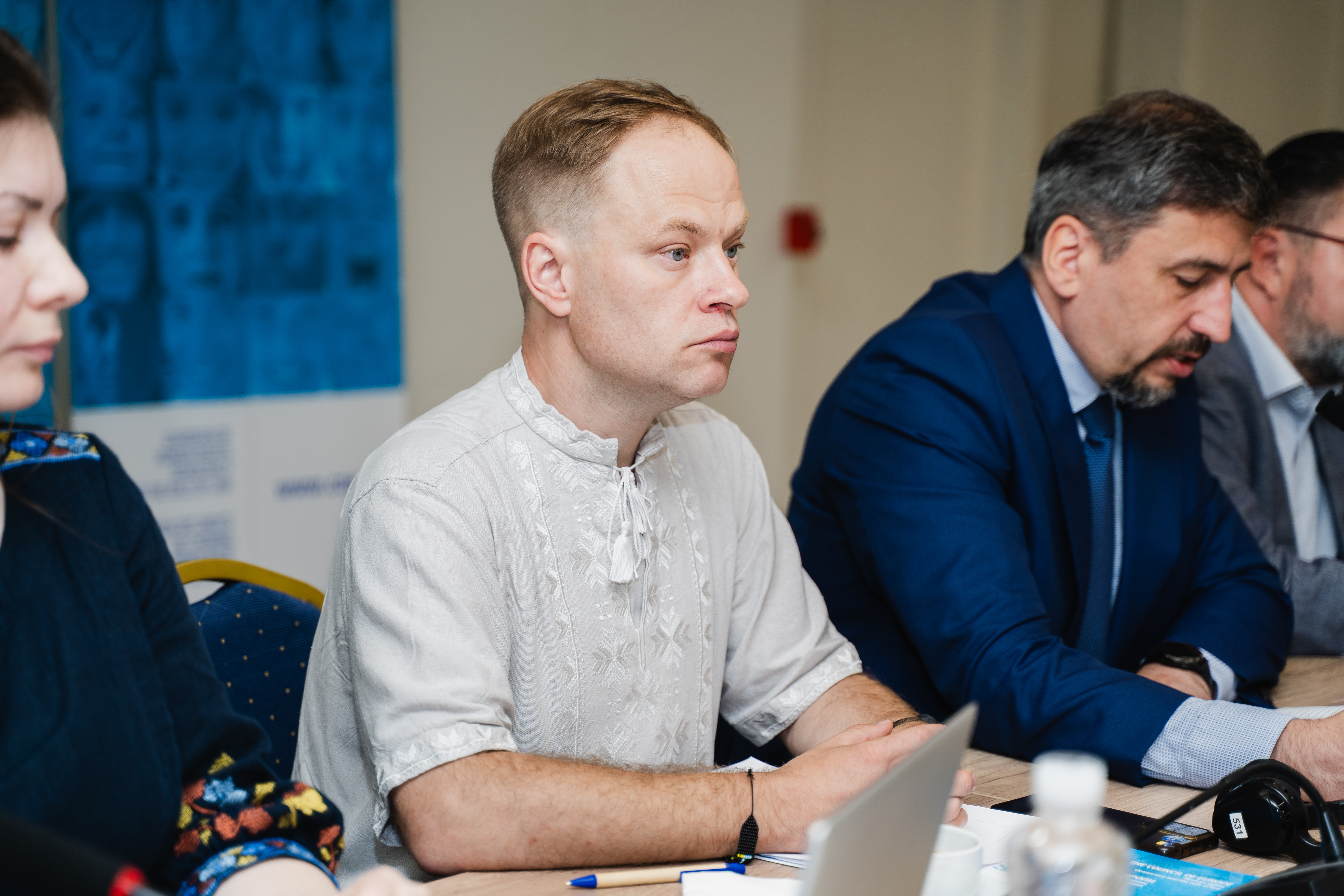
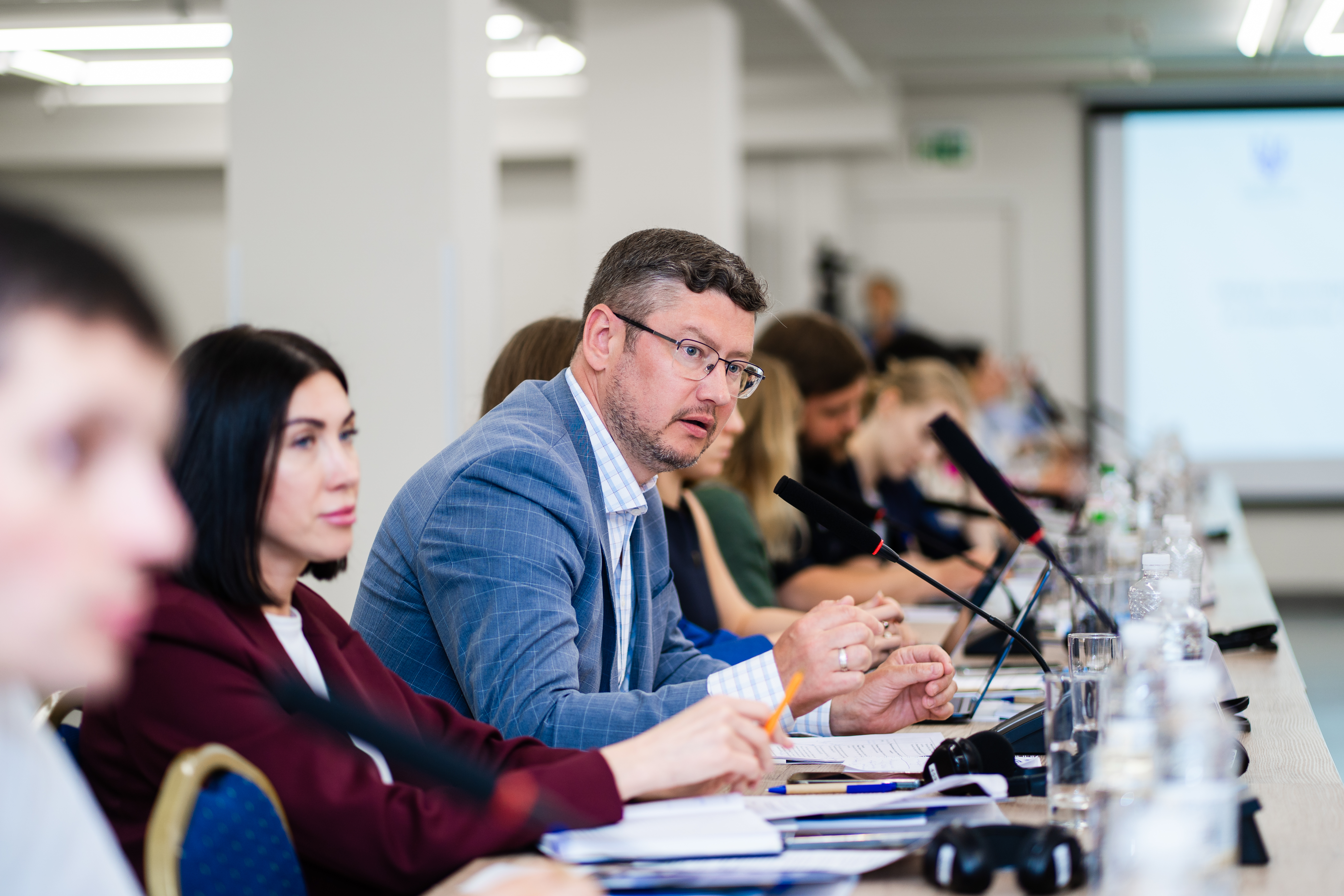
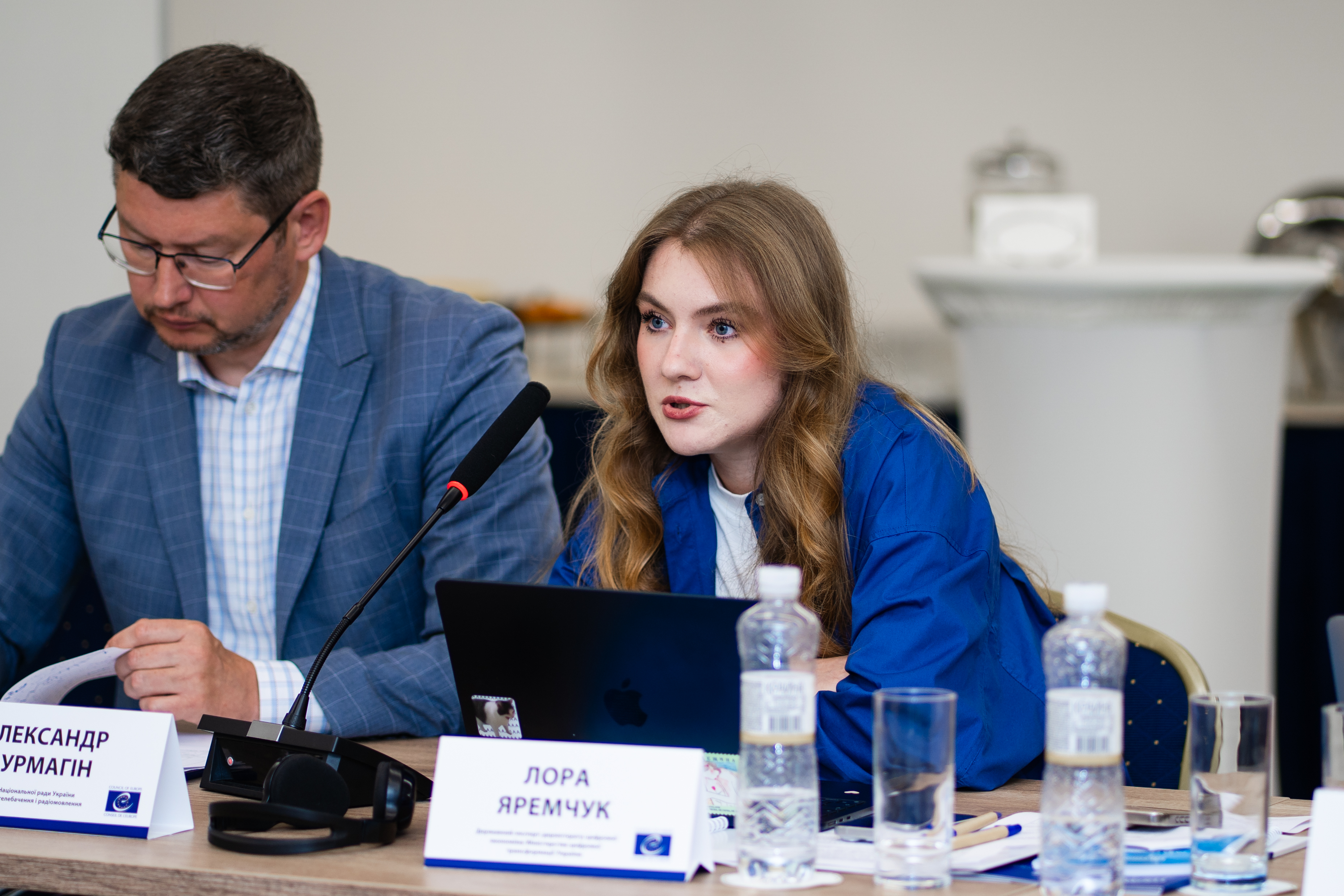
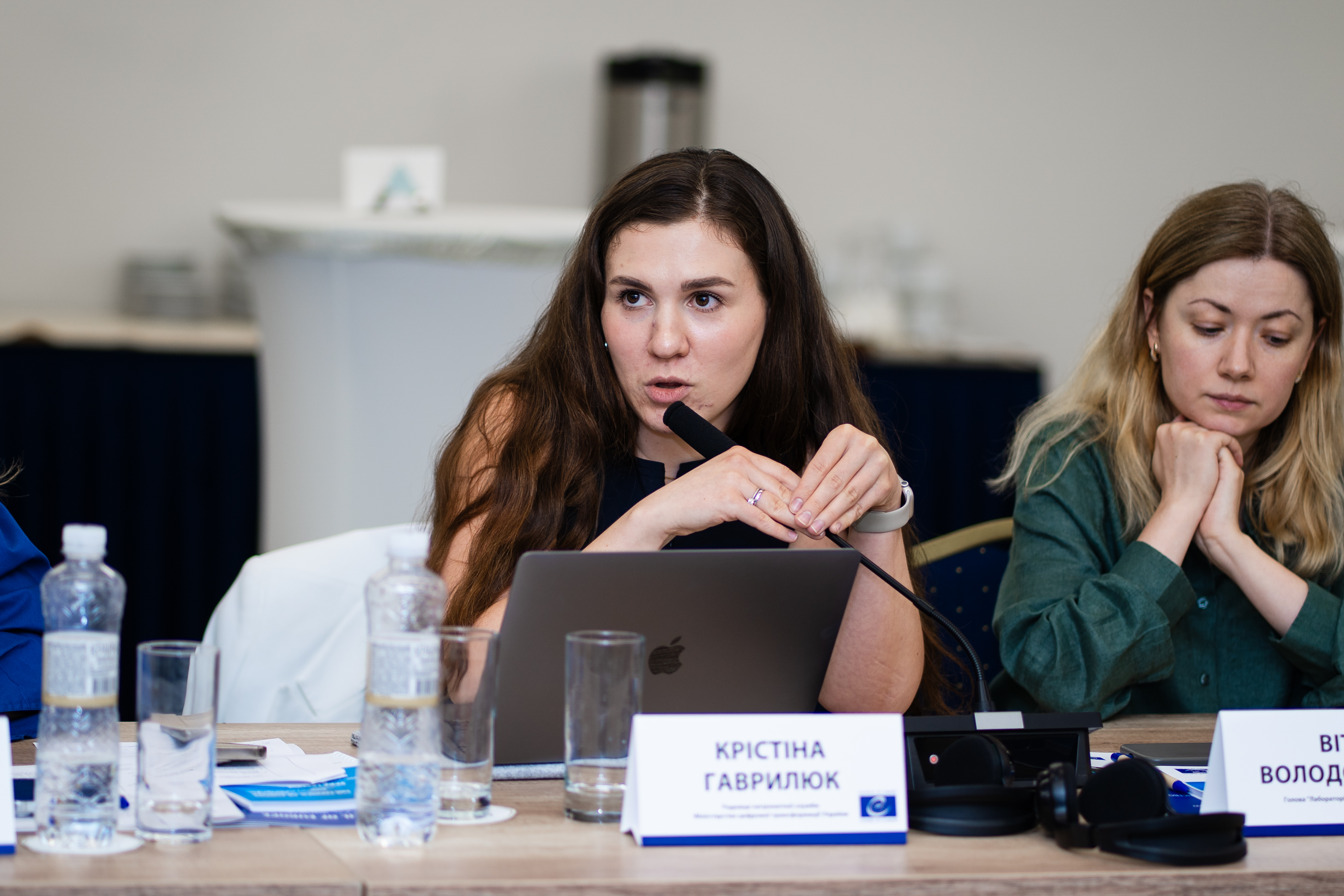
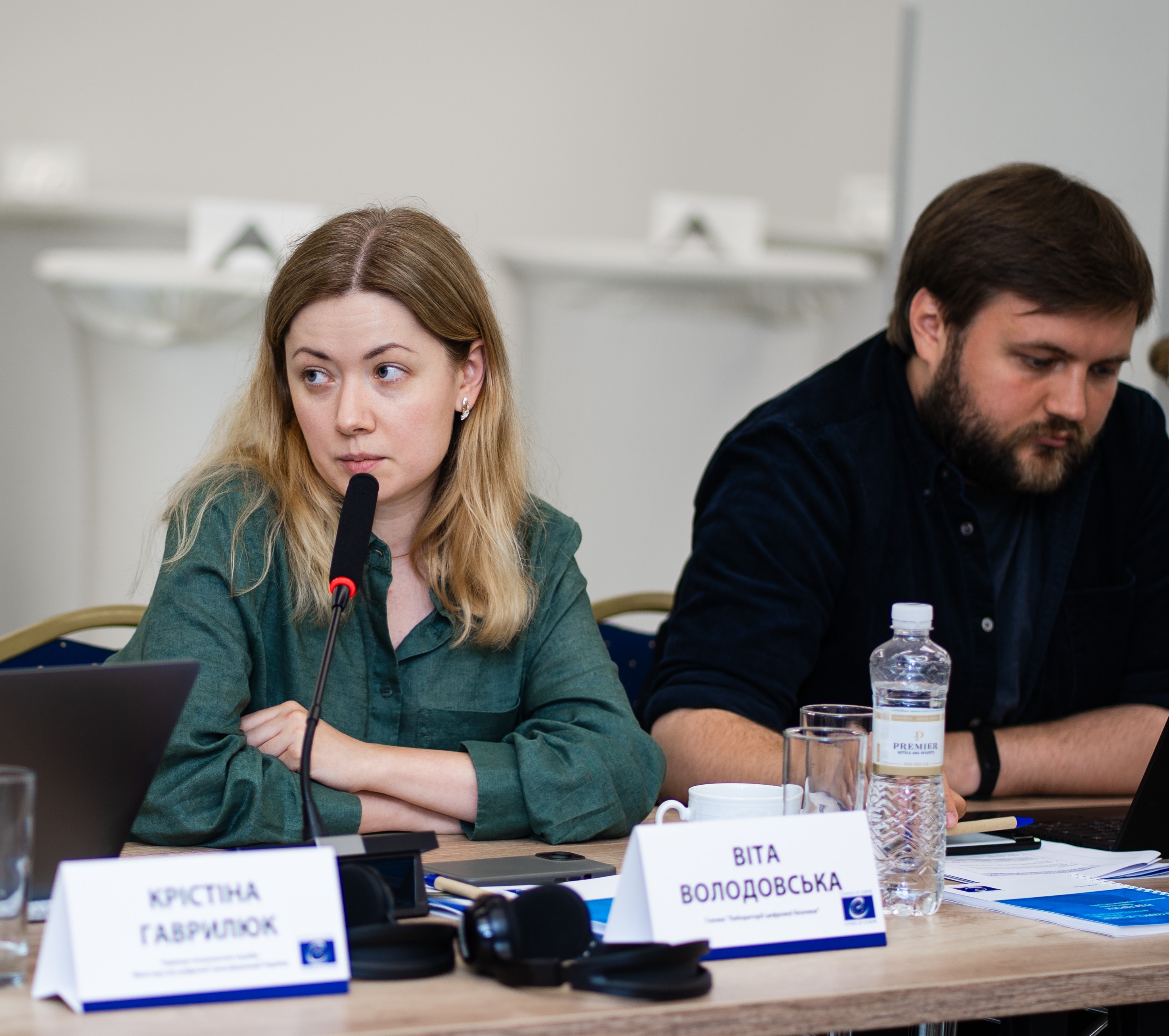
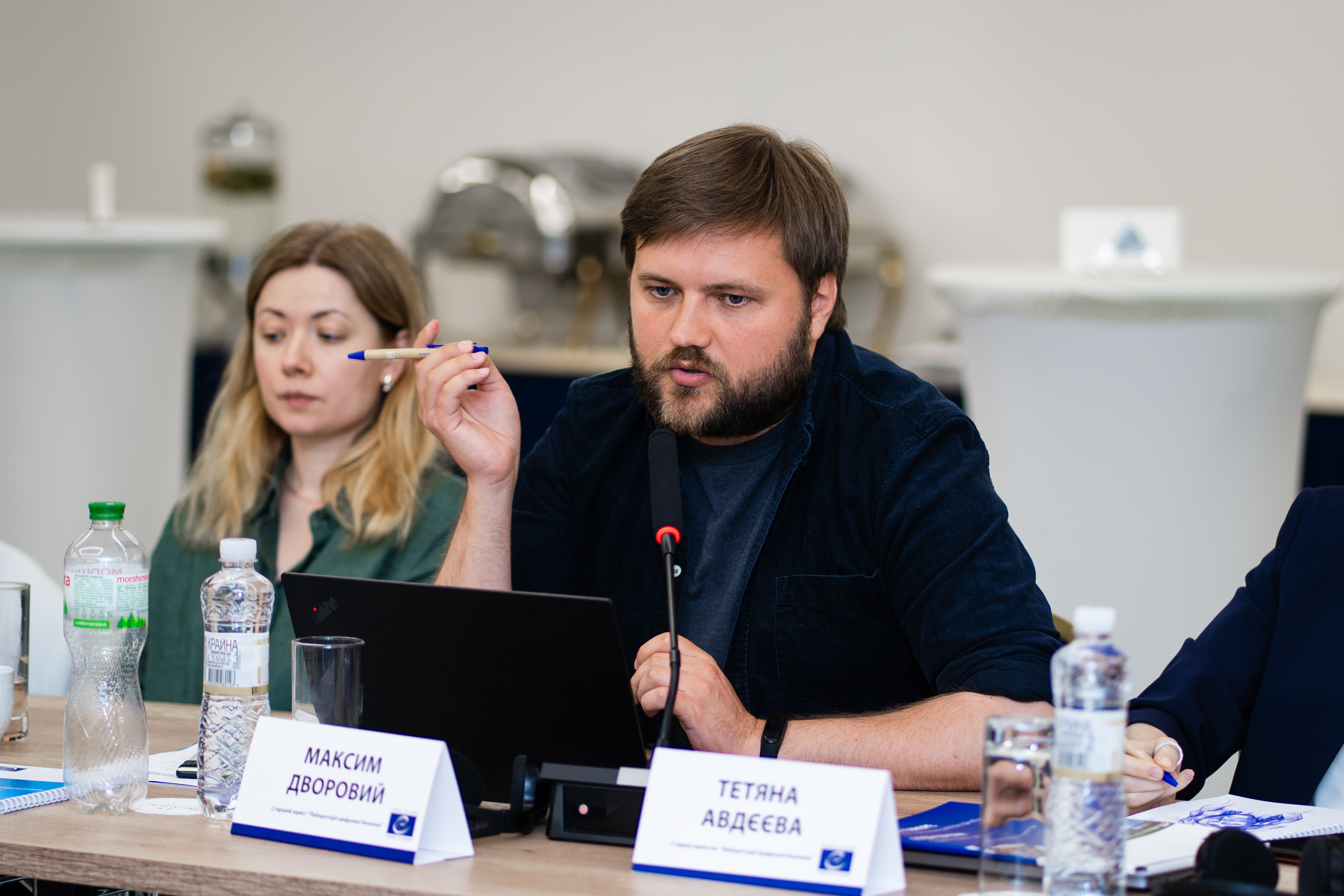
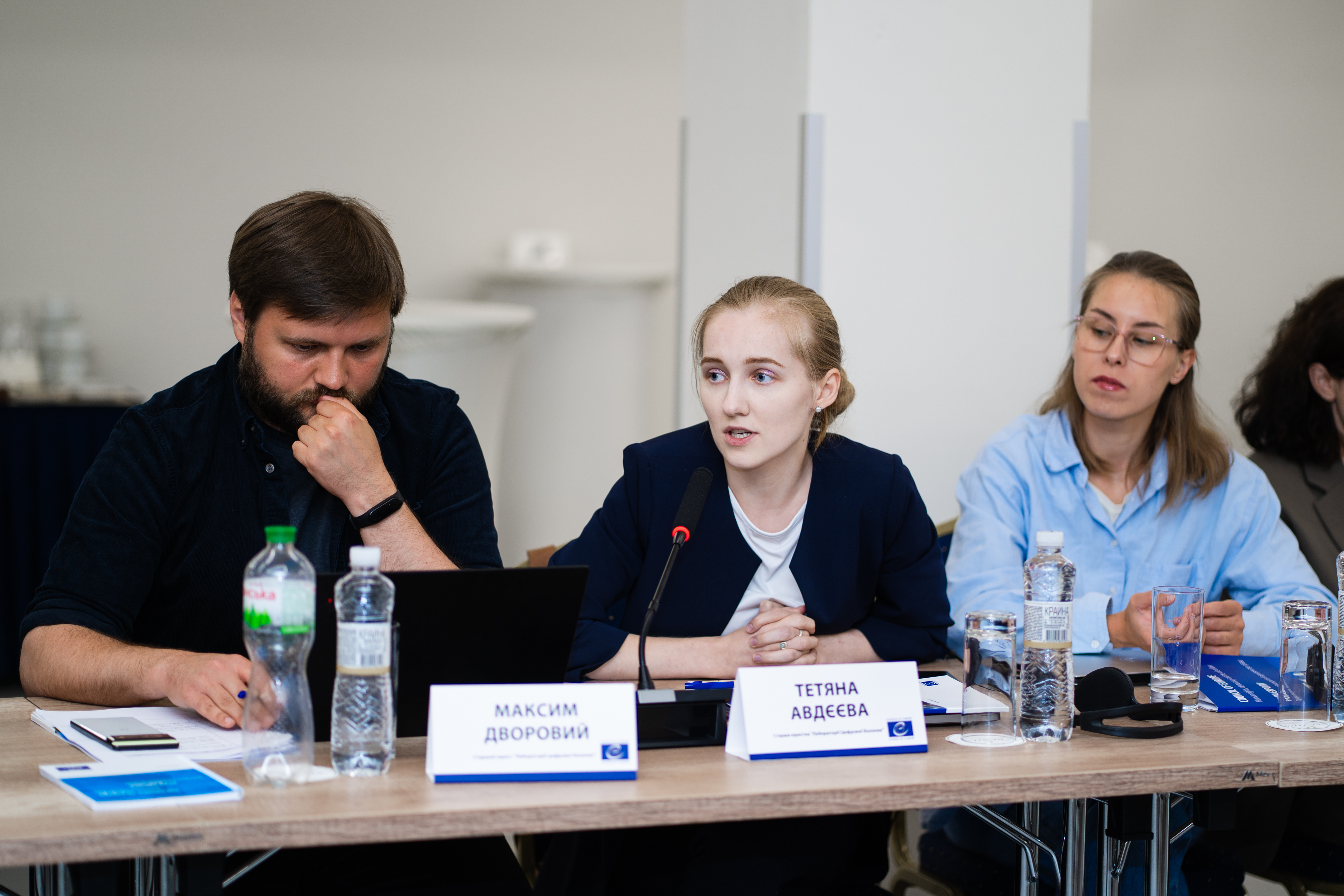
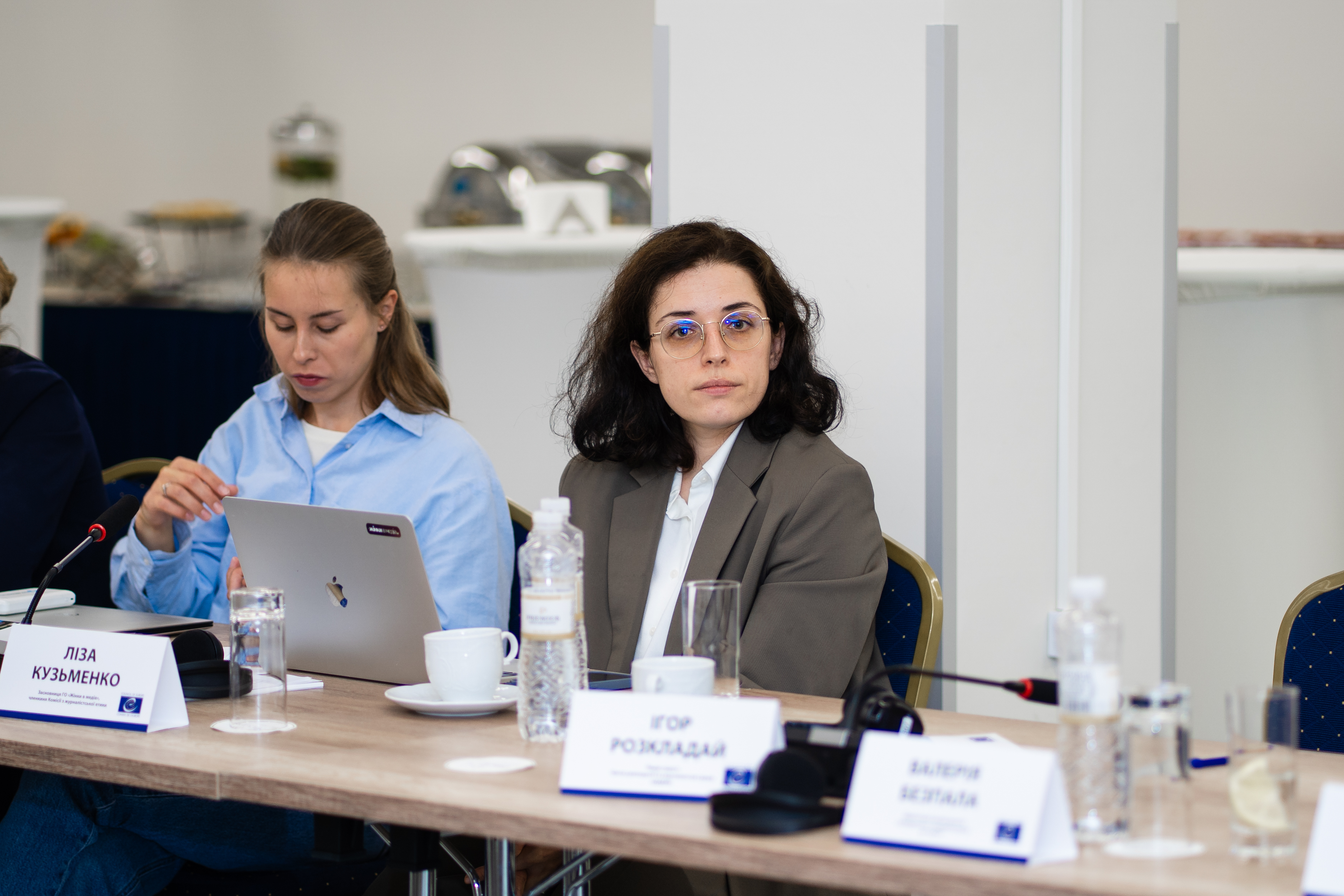
“Freedom of the media and the safety of journalists are indispensable components of democracy.” These words, quoted from the Council of Europe’s Secretary General Alain Berset, provided a powerful thematic anchor to the Steering Committee Meeting (SCM) held on 24 June 2025 in Kyiv. The meeting marked the official conclusion of the first phase and the launch of the second phase of the Council of Europe Project “Safeguarding Freedom of Expression and Freedom of the Media in Ukraine – Phase II” (SFEM-UA).
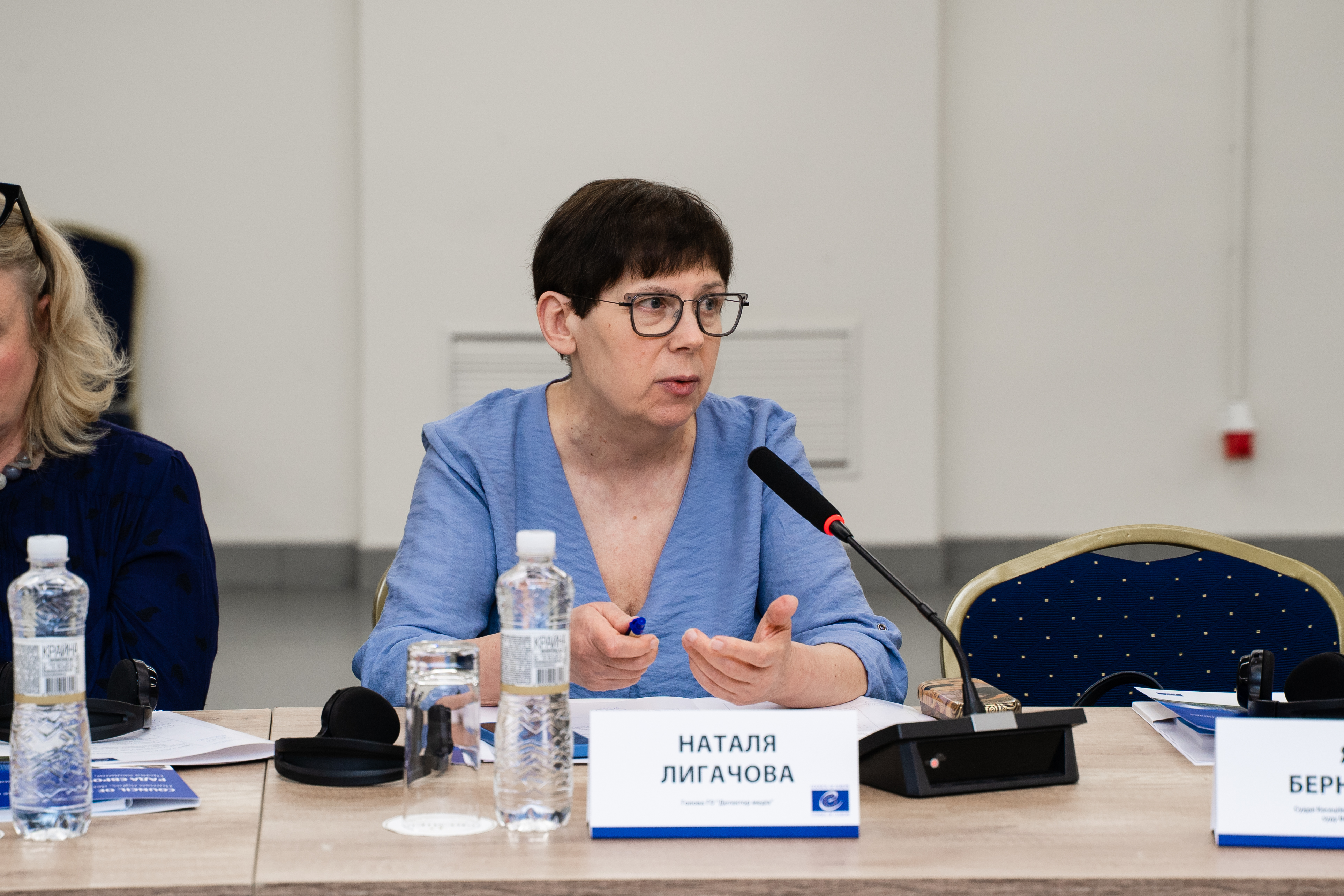
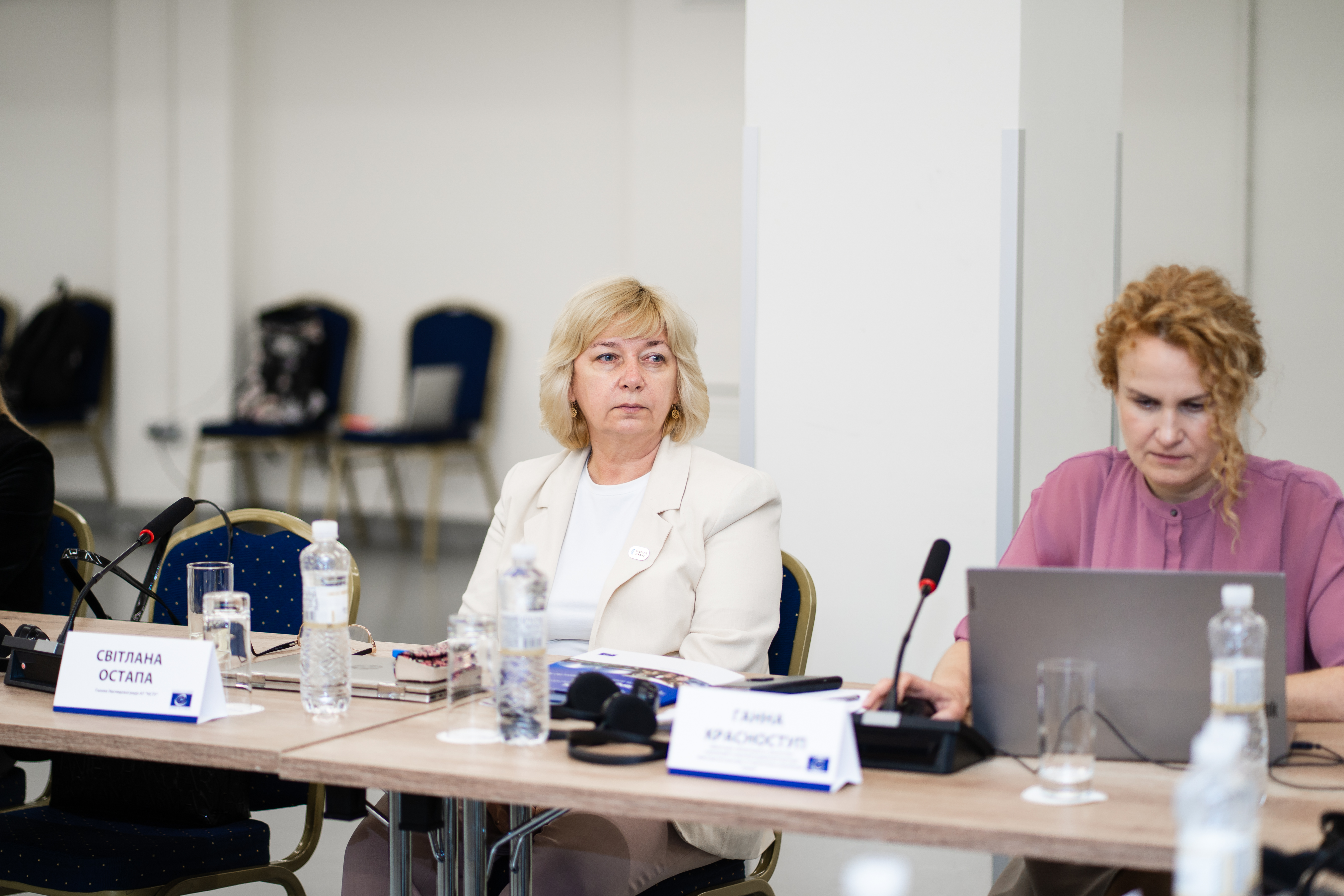
Convened under the Council of Europe’s Action Plan for Ukraine 2023–2026 “Resilience, Recovery and Reconstruction”, the SCM brought together parliamentarians, state institutions, civil society representatives, journalists, and international stakeholders to review the substantial results achieved and set the strategic direction for the coming phase.
Maciej Janczak, Head of the Council of Europe Office in Ukraine, opened the session with a strong reaffirmation of the Organisation’s commitment to democratic resilience through media reform. He addressed both the structural and human dimensions of the challenge, emphasising the critical need to protect journalists amidst persistent threats and Russia’s war of aggression. “As of 6 June 2025, 106 media professionals have been killed since 2022, with at least 30 still in Russian captivity. The tragic death of Viktoria Roshchyna, abducted and tortured in Russian custody, reminds us of the high cost of defending the truth.”
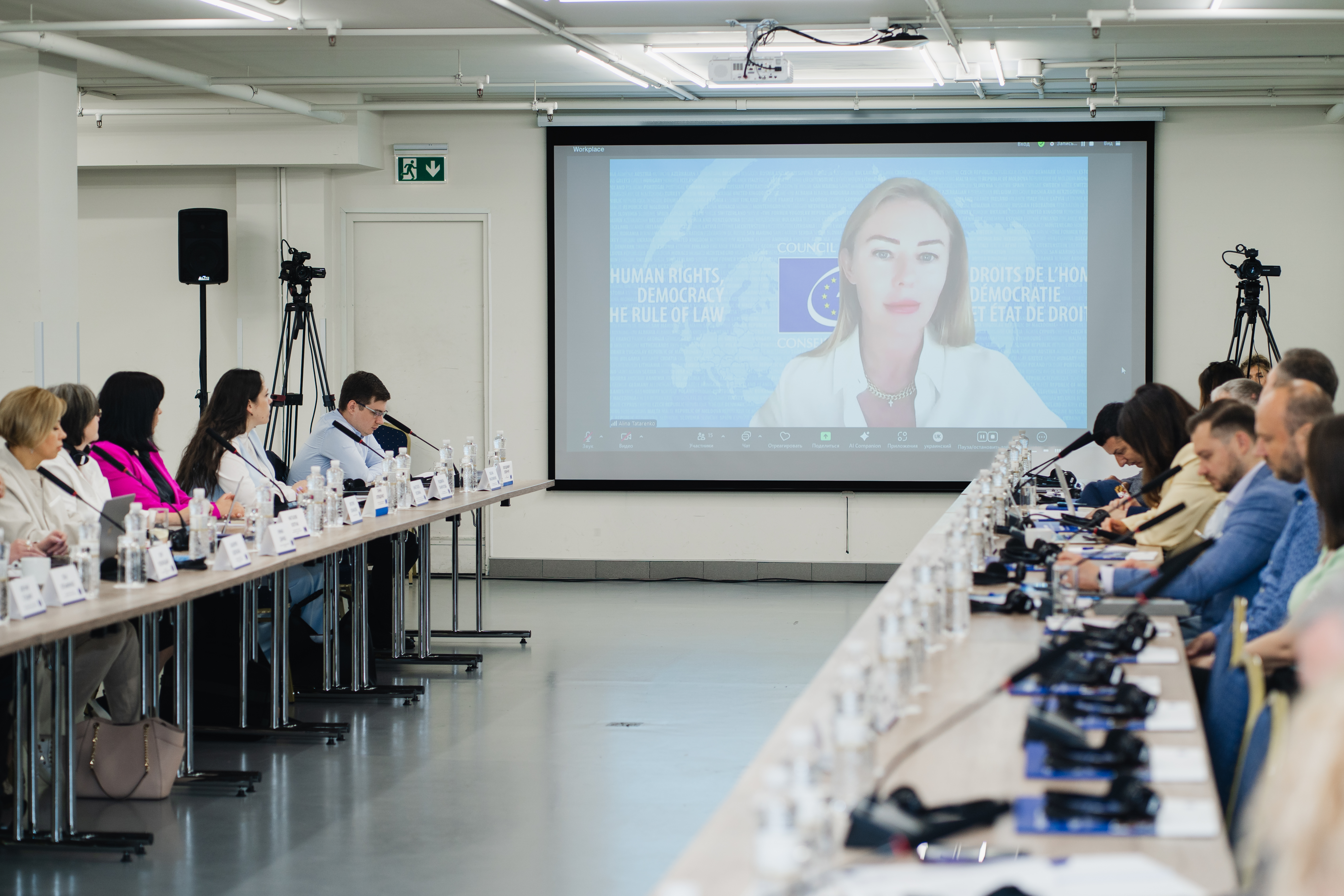
Alina Tatarenko, Head of the Division for Co-operation on Freedom of Expression, followed with remarks underscoring the political and strategic value of the SFEM-UA project.
"This is not merely technical assistance – it is a strategic partnership for democratic sustainability."
She emphasised that completing media reform should remain a key priority for Ukraine, particularly in light of its EU accession aspirations. The Council of Europe continues to work closely with the two relevant parliamentary committees – on Humanitarian and Information Policy, and on Freedom of Speech. During the previous phase of the project, five legal opinions and one policy document were developed. “The challenges are significant,” Tatarenko noted, “and while not everything depends on the Council of Europe, its support is both substantial and tangible.”
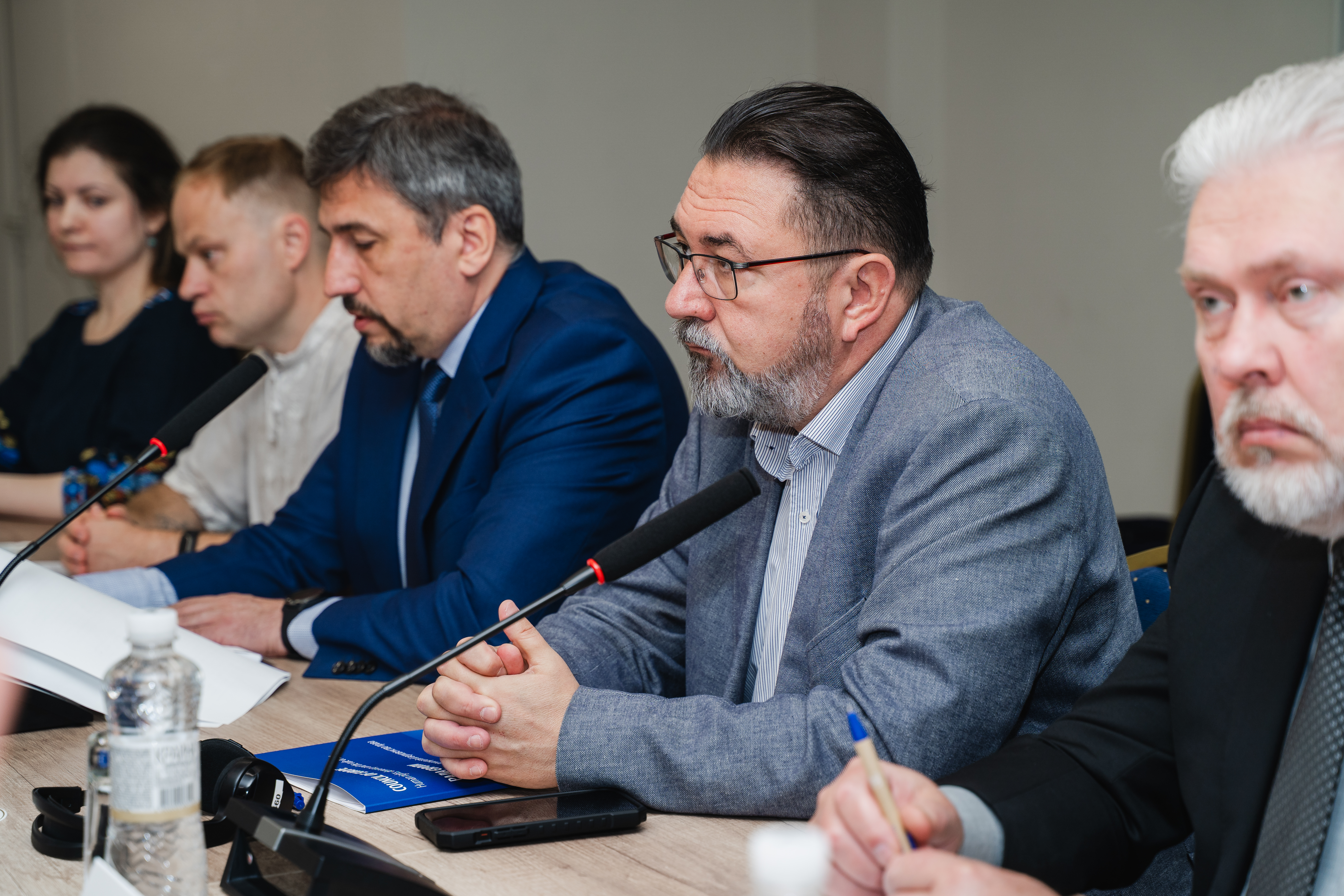
Mykyta Poturaiev, Chair of the Parliamentary Committee on Humanitarian and Information Policy, addressed the political uncertainties surrounding Ukraine’s EU accession. He remarked that when certain EU member states openly block or question Ukraine’s European future, it inevitably raises concerns: should Ukraine continue implementing complex reforms – including in the media sphere – and if so, in which direction? These concerns, he suggested, should be acknowledged.
In turn, Yaroslav Yurchyshyn, Chair of the Parliamentary Committee on Freedom of Speech, emphasised the importance of securing the release of Ukrainian journalists held in captivity. He acknowledged that organisations such as the Council of Europe, despite limited resources, play a vital role as a voice of support and solidarity in this area.
Phase II Launch: A Strategic Step Forward
The launch of Phase II signals deeper commitments across several strategic axes:
– Practical implementation of the Media Law through secondary regulation, monitoring, and professional dialogue;
– Institutional support to the public broadcaster Suspilne and the National Council for Television and Radio Broadcasting;
– Protection of journalists through co-ordinated inter-agency action and adherence to international standards;
– Expansion of media literacy, ethical journalism, and counter-disinformation efforts;
– Tackling SLAPPs through legislative proposals and policy harmonisation;
– Strengthening Ukraine’s voice in European media governance forums, such as the Council of Europe’s CDMSI.
Frontline Experiences and a Shared Commitment
Senior representatives from the Prosecutor General’s Office and the Ministry of Internal Affairs joined civil society voices in exploring enhanced mechanisms for co-operation, protection, and accountability in support of freedom of media.
According to the Prosecutor General’s Office of Ukraine, journalists continue to face serious risks amid Russia’s war of aggression, with 264 recorded cases of obstruction of journalistic activity since 2022 - including against those investigating corruption and covering public incidents. The Office acknowledges shortcomings in certain investigations and is taking steps to address them, including enhanced training for prosecutors, interagency coordination, and measures aimed at rebuilding public trust and improving institutional response.
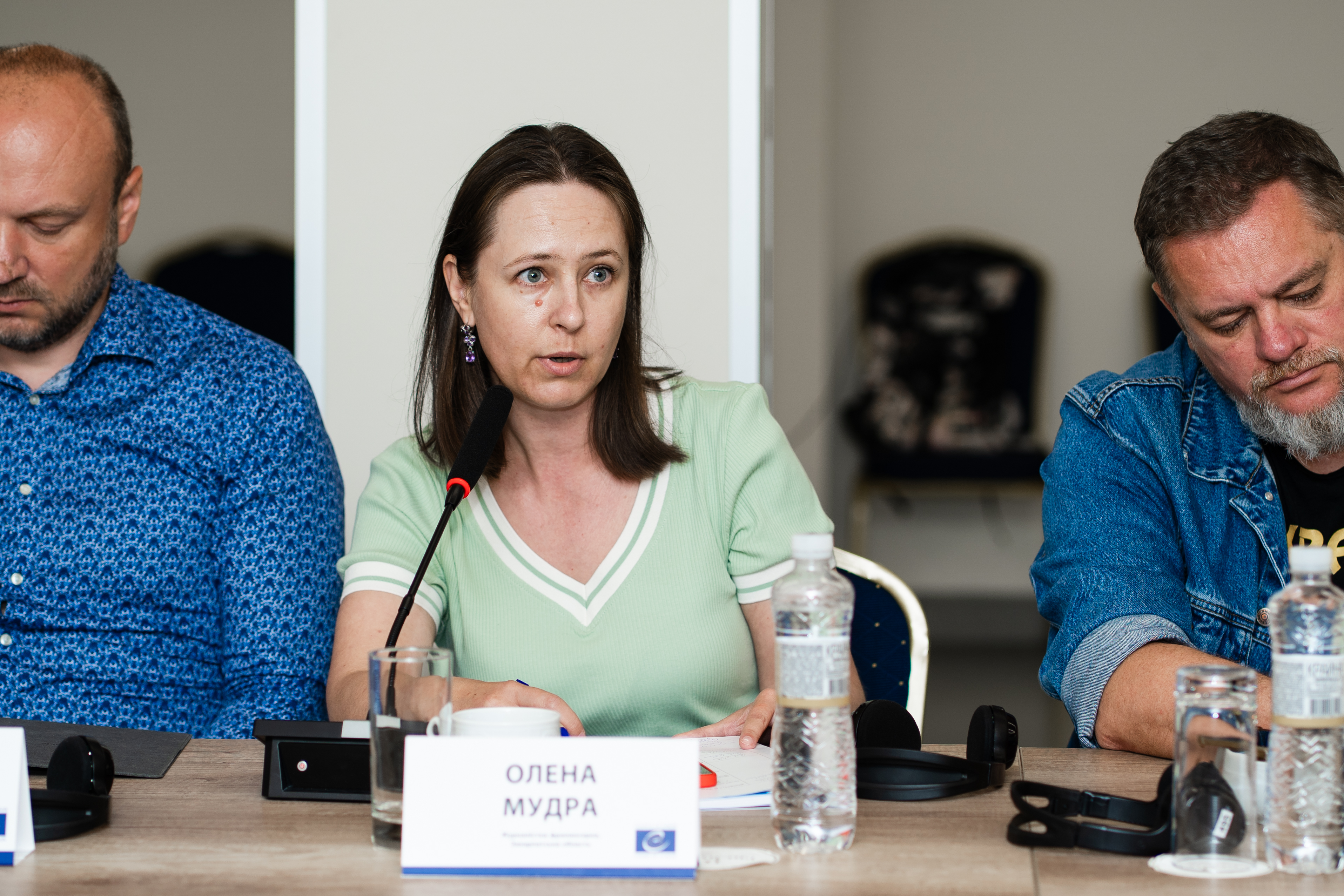
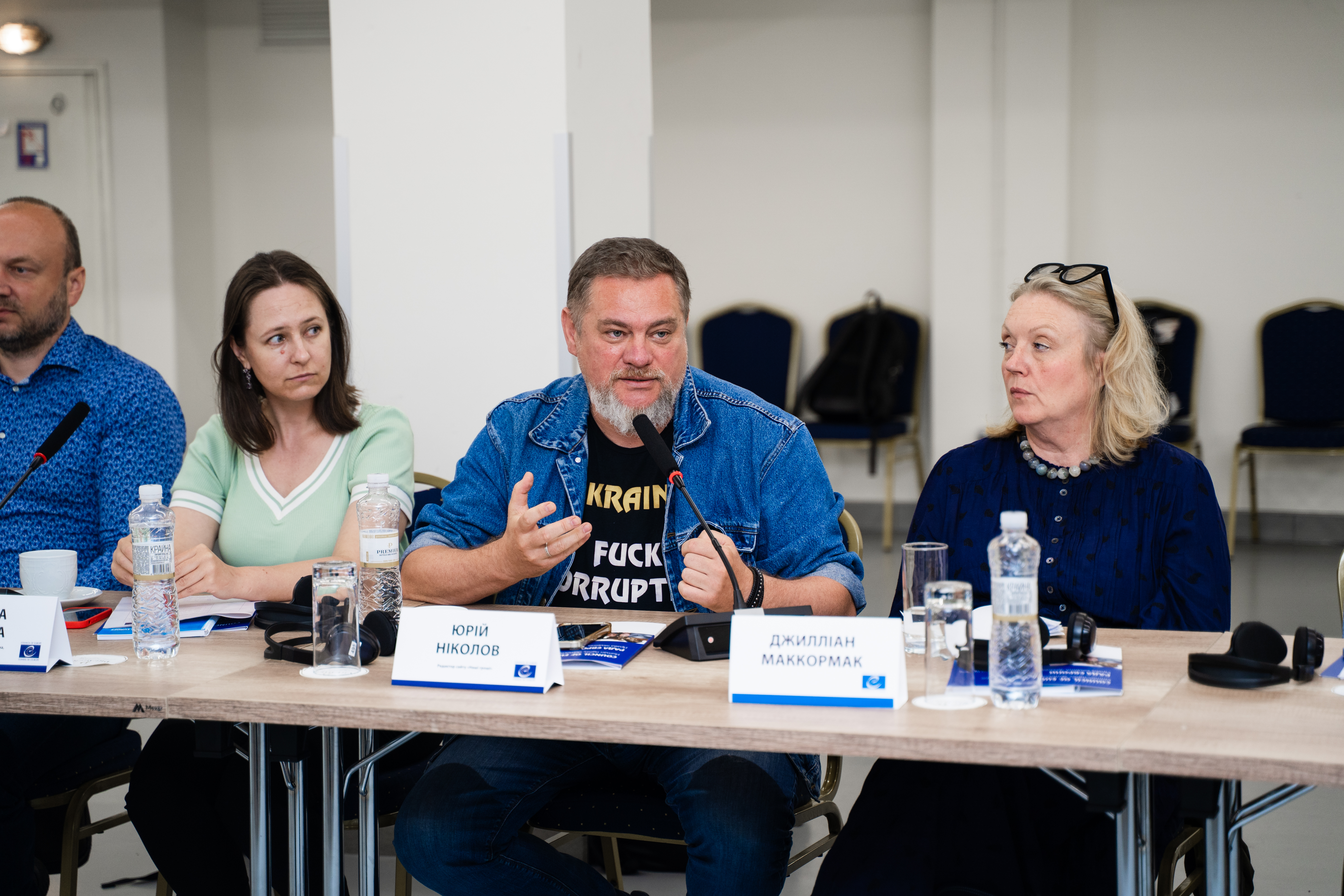
A highlight of the meeting was the direct testimony from Ukrainian journalists working under conditions of war. Investigative journalist Yurii Nikolov (NashiGroshi), legal expert Mariya Muzychka (Bihus.Info), and freelance journalist Olena Mudra shared compelling accounts of the risks they face – from surveillance and intimidation to institutional pressure – underscoring the continued need for legal and professional safeguards.
Olena Mudra, reported being targeted by a coordinated smear campaign in the media, which she links to her professional activities - including the publication of false accusations and fabricated claims about her income, family, and alleged ties to Russia.
“Despite receiving legal support and feeling somewhat more protected, journalists in the region continue to face growing threats - from smear campaigns and SLAPP lawsuits to attempts to push independent media out of the information space using methods reminiscent of the 1990s or authoritarian regimes. In wartime conditions, with relocated businesses exerting media influence and law enforcement often remaining inactive despite public appeals, the media community in Zakarpattia is under increasing pressure and systemic attempts to silence critical voices” – stated Olena Mudra.
The experience of Bihus.Info highlights the long-term pressures faced by investigative journalists in Ukraine. One example is the "Semochko case", initiated in May 2019, which has dragged on for nearly six years - clearly bearing the hallmarks of a SLAPP. Authors of the investigation were directly involved in the legal proceedings, with over 500,000 UAH in moral damages demanded, and even temporary freezes imposed on journalists’ and the media outlet’s accounts.
Such cases consume enormous time and resources, often launched by well-connected plaintiffs with the means to pursue baseless claims - like the Komarnytskyi case. A more recent concern in 2024 includes reported surveillance of our newsroom by the Security Service of Ukraine (SBU), which is under investigation by the State Bureau of Investigation (SBI) for over a year with no public updates. These pressures, coupled with campaigns of discreditation - including the case involving MP Oleksiy Honcharenko - illustrate how state and political actors sometimes misuse their power. We have formally addressed these issues to parliamentary committees and the National Agency for Corruption Prevention (NACP), but meaningful response remains absent.
Journalist Yurii Nikolov, who has investigated corruption in public procurement since 2010, faces three SLAPP lawsuits over reporting on a failed wartime ammunition contract. Despite public interest and evidence, the case remains stalled at NABU, while the same supplier has secured new contracts abroad.
The lawsuits - including one over a brief TV comment — are backed by powerful interests and drain legal resources, diverting journalists from their work. Nikolov warns that such pressure deters coverage of sensitive issues; his team has formed a working group to counter the abuse of legal mechanisms against independent media.
Through its sustained engagement, the Council of Europe continues to serve not only as a technical partner, but also as a political ally in safeguarding independent journalism as a public good – essential for transparency, the rule of law, and human dignity.
The Council of Europe Project “Safeguarding Freedom of Expression and Freedom of Media in Ukraine – II Phase” (SFEM-UA) is implemented by the Council of Europe Division for Co-operation on Freedom of Expression in the framework of the Council of Europe Action Plan for Ukraine “Resilience, Recovery and Reconstruction” 2023-2026.