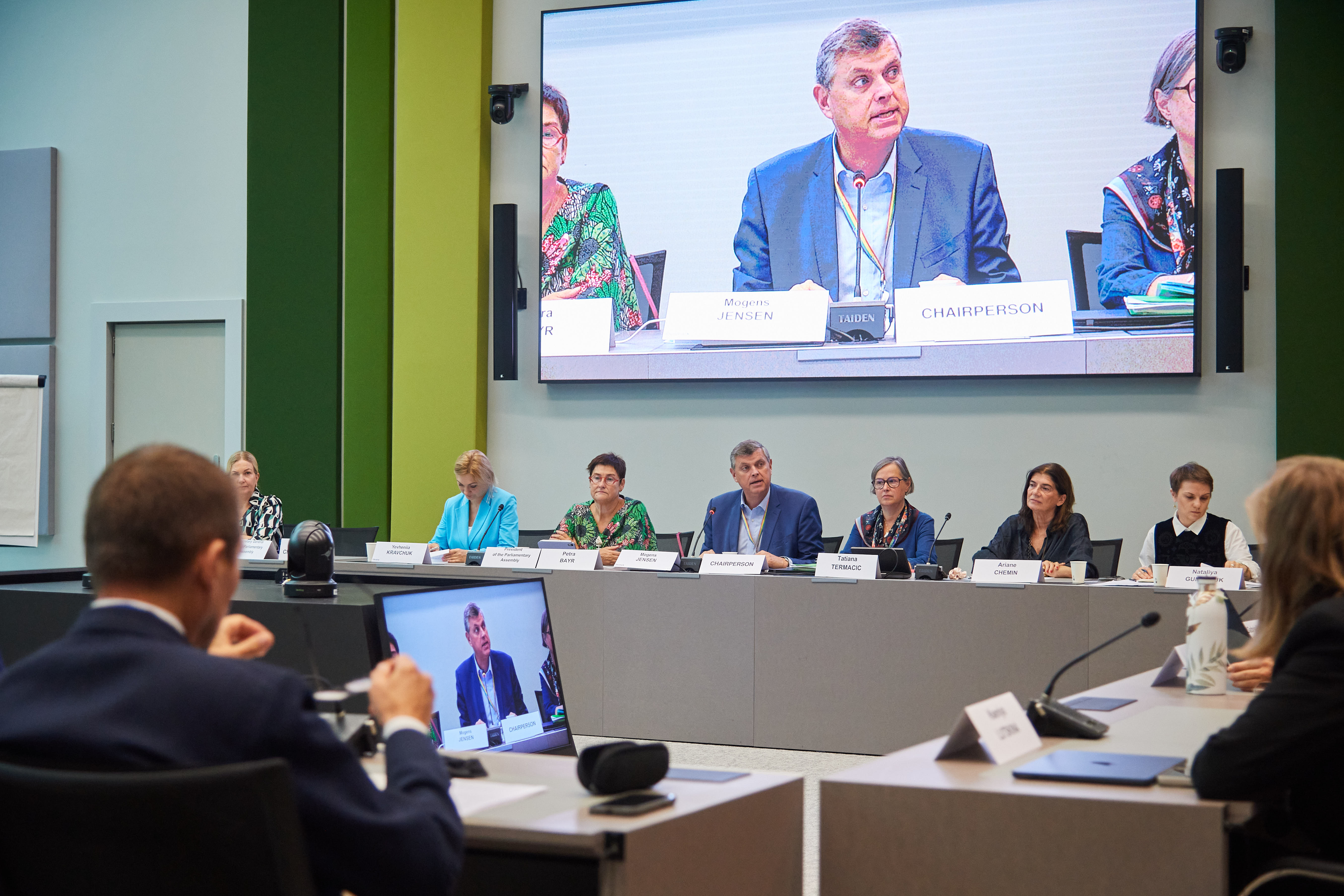
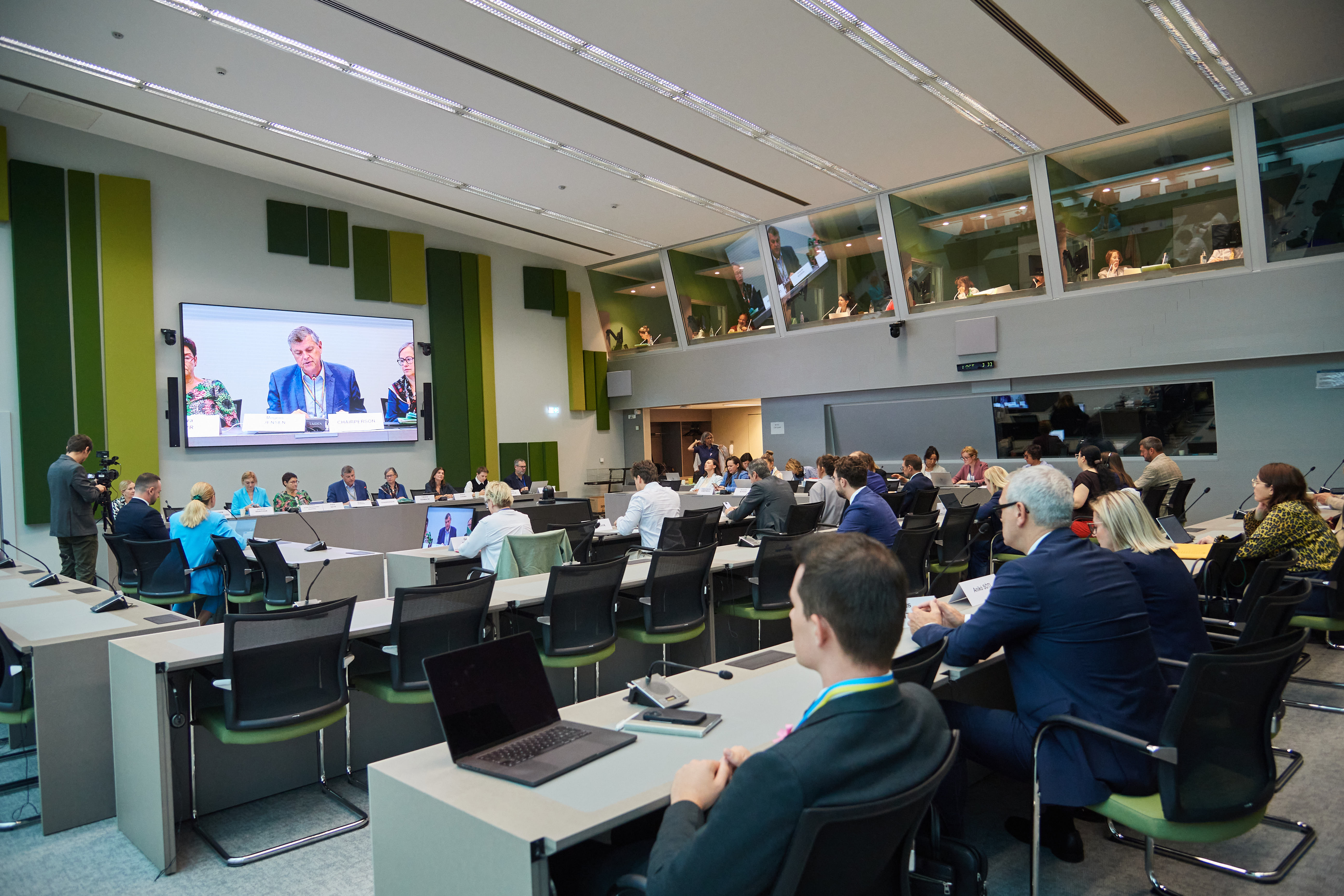
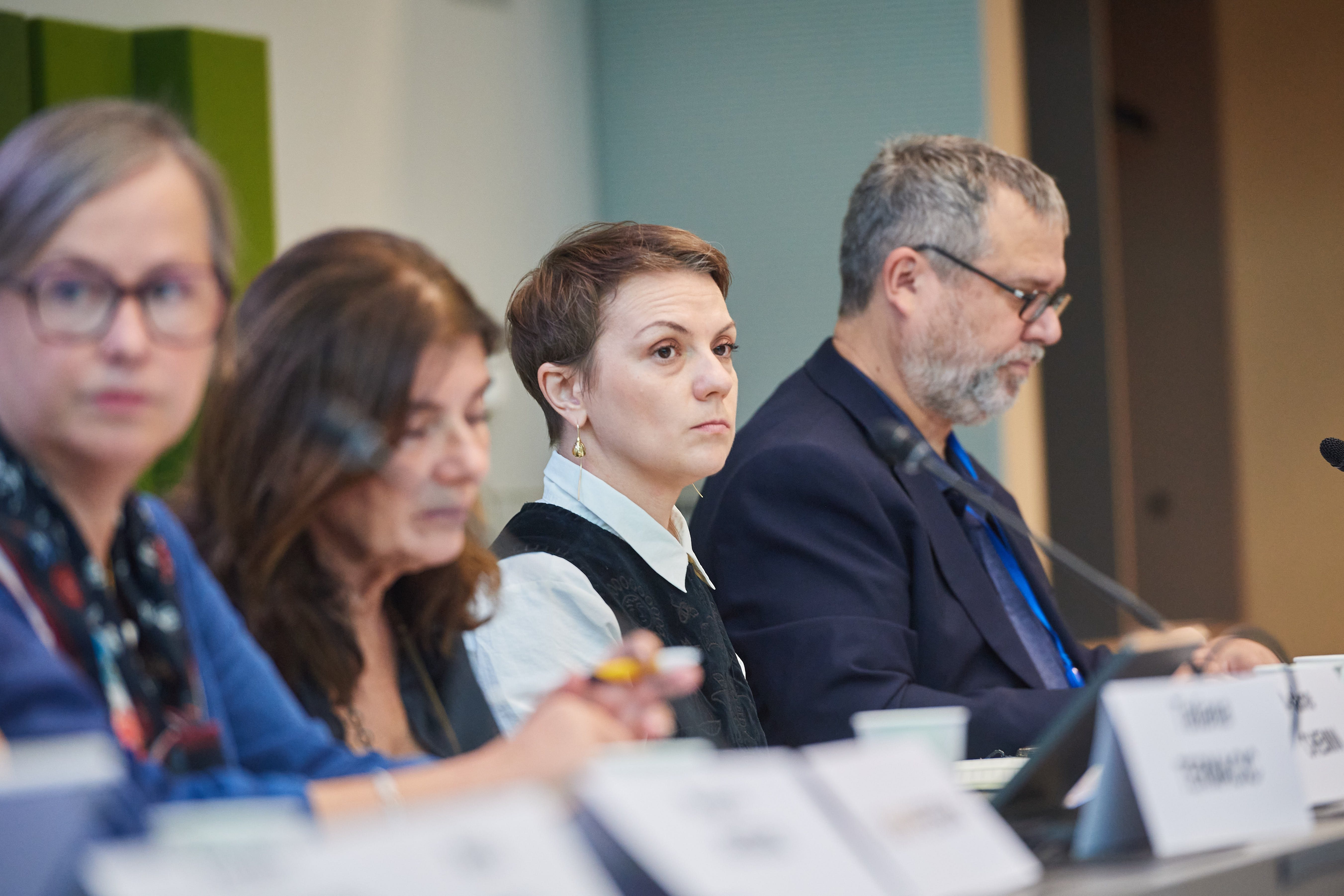
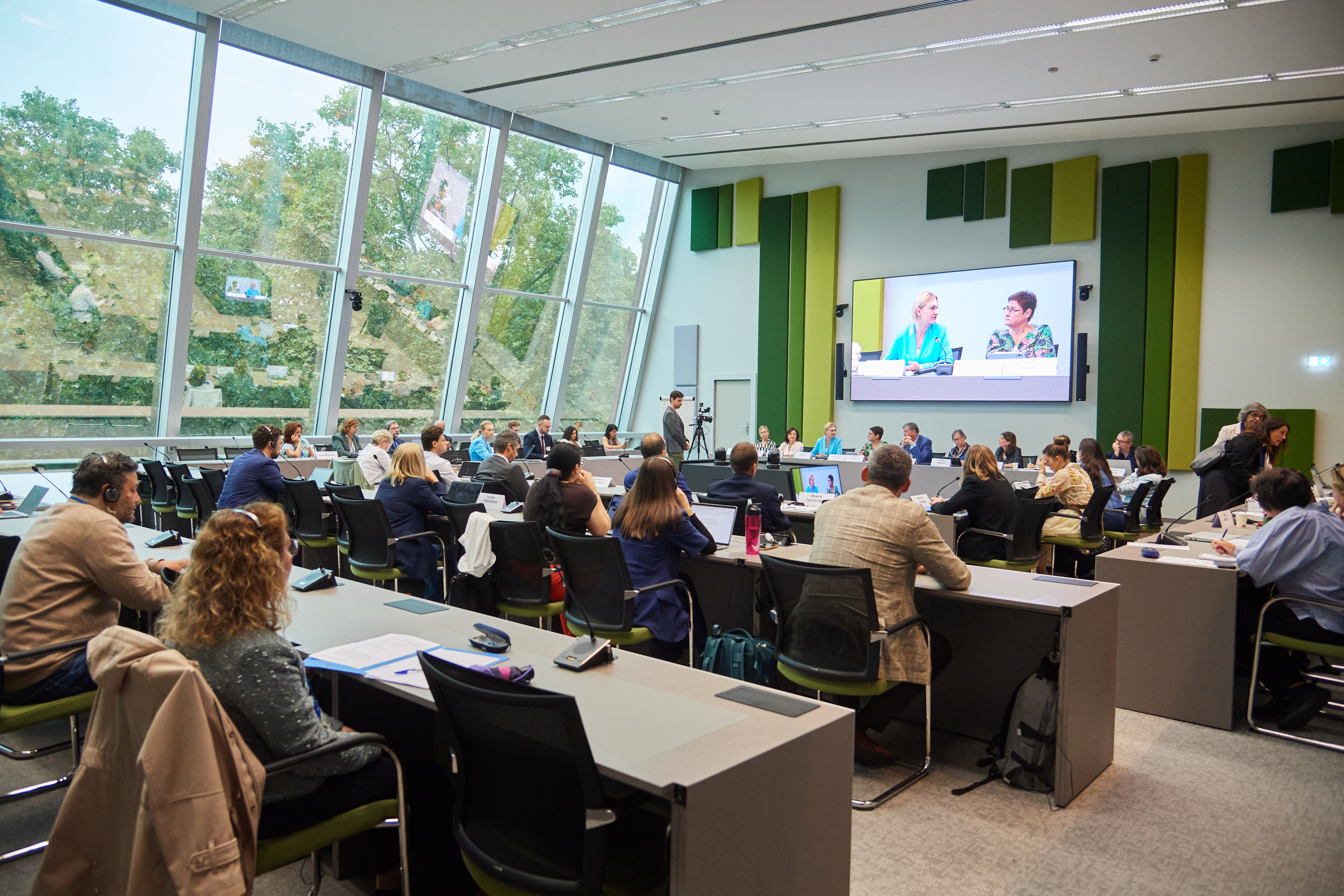
The Committee on Culture, Science, Education and Media of the Parliamentary Assembly of the Council of Europe (PACE) held a hearing in Strasbourg on 1 October, during the PACE’s autumn plenary session, to commemorate Ukrainian journalist Viktoria Roshchyna and highlight the challenges faced by journalists working in war zones. The hearing, “Victory for Viktoria: Remembering Viktoria Roshchyna and Supporting Journalists in War Zones”, marked the second annual “Victory for Viktoria” Day, established by PACE in 2025 in memory of the Ukrainian journalist who was abducted and died in Russian captivity.
The hearing brought together PACE President Petra Bayr, Ukrainian journalist and documentary-maker Nataliya Gumenyuk, Le Monde journalist and author Ariane Chemin, and Ukrainian MP Yevheniia Kravchuk, who prepared a report on Ukrainian journalists held in Russian captivity. The discussion addressed the risks faced by journalists reporting from war-affected areas, the situation of Ukrainian journalists in Russian captivity, and the importance of protecting independent journalism and access to verified information.
Nataliya Gumenyuk, who knew and worked with Viktoria Roshchyna, spoke about her professional dedication and the importance of remembering journalists who continue to report from dangerous areas. “We cannot bring Viktoria back. It is very difficult to free people from captivity, but we have to talk about it. And we can help the journalists who continue to work – provide them with at least basic means of protection and enable them to do their job. Because they'll do their job anyway,” she said.
Ms Gumenyuk also stressed that Ukrainian journalists continue to provide essential information despite security threats, physical and psychological exhaustion, infrastructure damage and digital security risks. “In Ukraine, journalism exists. Journalists are being killed, but journalism is alive,” she underlined, emphasising the importance of supporting the diverse media ecosystem that continues to operate across the country.
The Council of Europe project “Safeguarding Freedom of Expression and Freedom of the Media in Ukraine – Phase II” supported the participation of Nataliya Gumenyuk in the PACE hearing, contributing to the continued visibility of the challenges faced by Ukrainian journalists and the need for their protection.
This support forms part of the project’s broader advocacy efforts to keep the situation of Ukrainian journalists affected by Russia’s war of aggression against Ukraine on the international agenda. In 2025, the project also supported the participation of Ukrainian representatives in activities accompanying the PACE autumn session, including the exhibition “PRESS IN DETENTION – #FreeUkrainianJournalists”. Held in Strasbourg on 1 October in cooperation with the Institute of Mass Information and the Committee on Humanitarian and Information Policy of the Parliament of Ukraine, the exhibition presented the names, photographs and stories of 26 Ukrainian journalists held in Russian captivity and included a dedicated stand honouring Viktoria Roshchyna.
Through such initiatives, the project continues to support advocacy, international awareness and the protection of journalists who face severe risks while carrying out their work in Ukraine.
The Council of Europe Project “Safeguarding Freedom of Expression and Freedom of Media in Ukraine – Phase II” (SFEM-UA - Phase II) is implemented by the Council of Europe Co-operation on Freedom of Expression in the framework of the Council of Europe Action Plan for Ukraine “Resilience, Recovery and Reconstruction” 2023-2026.