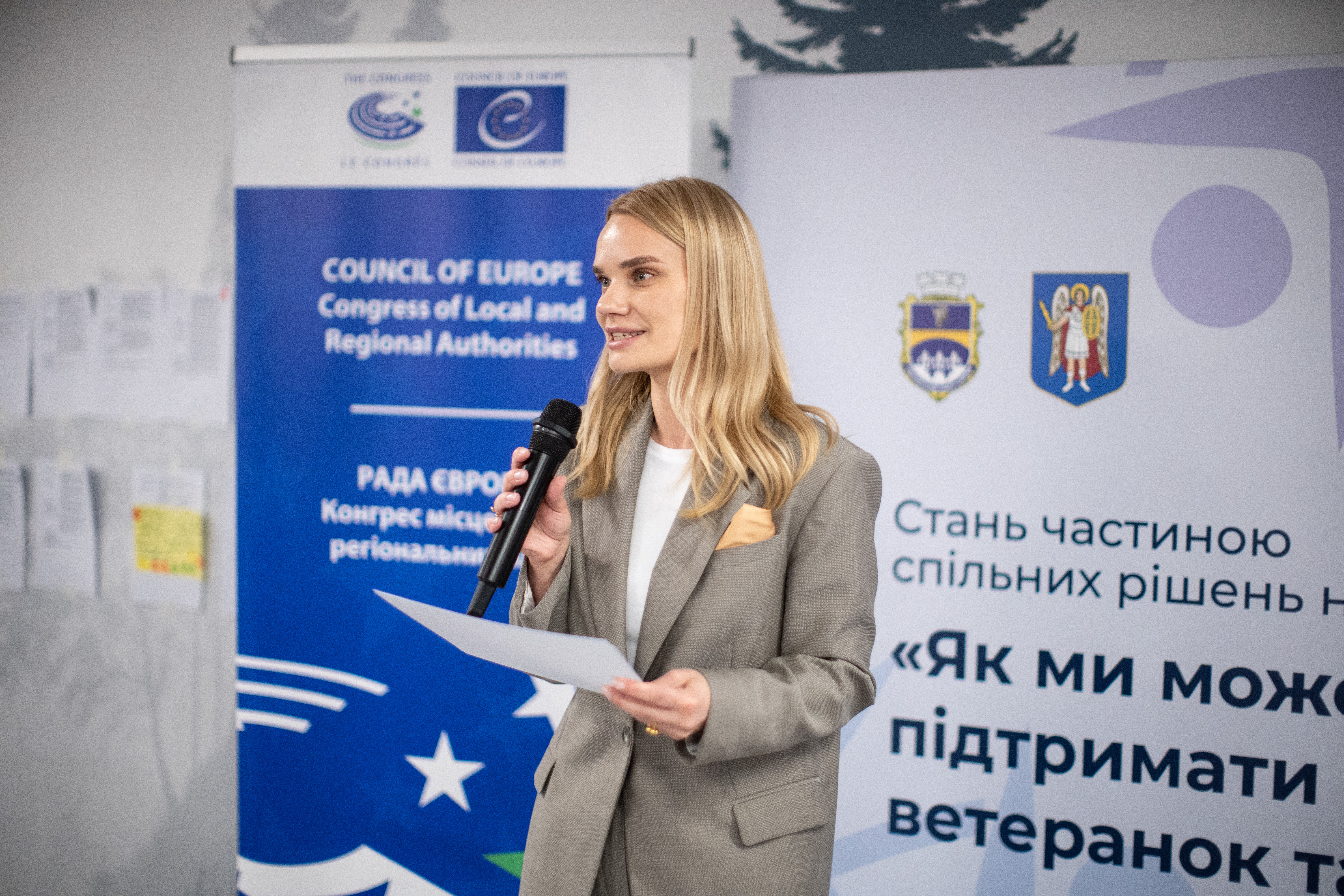
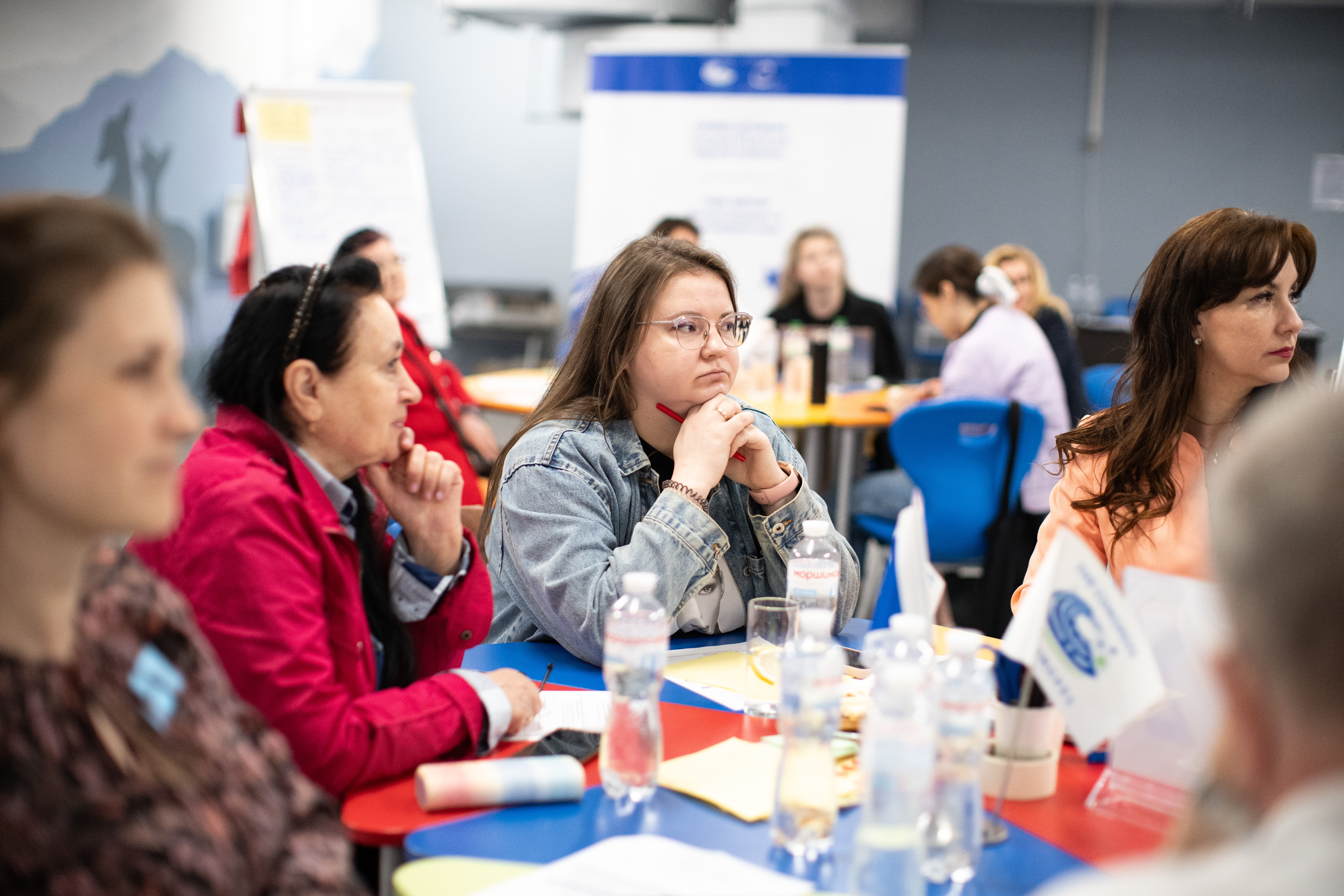
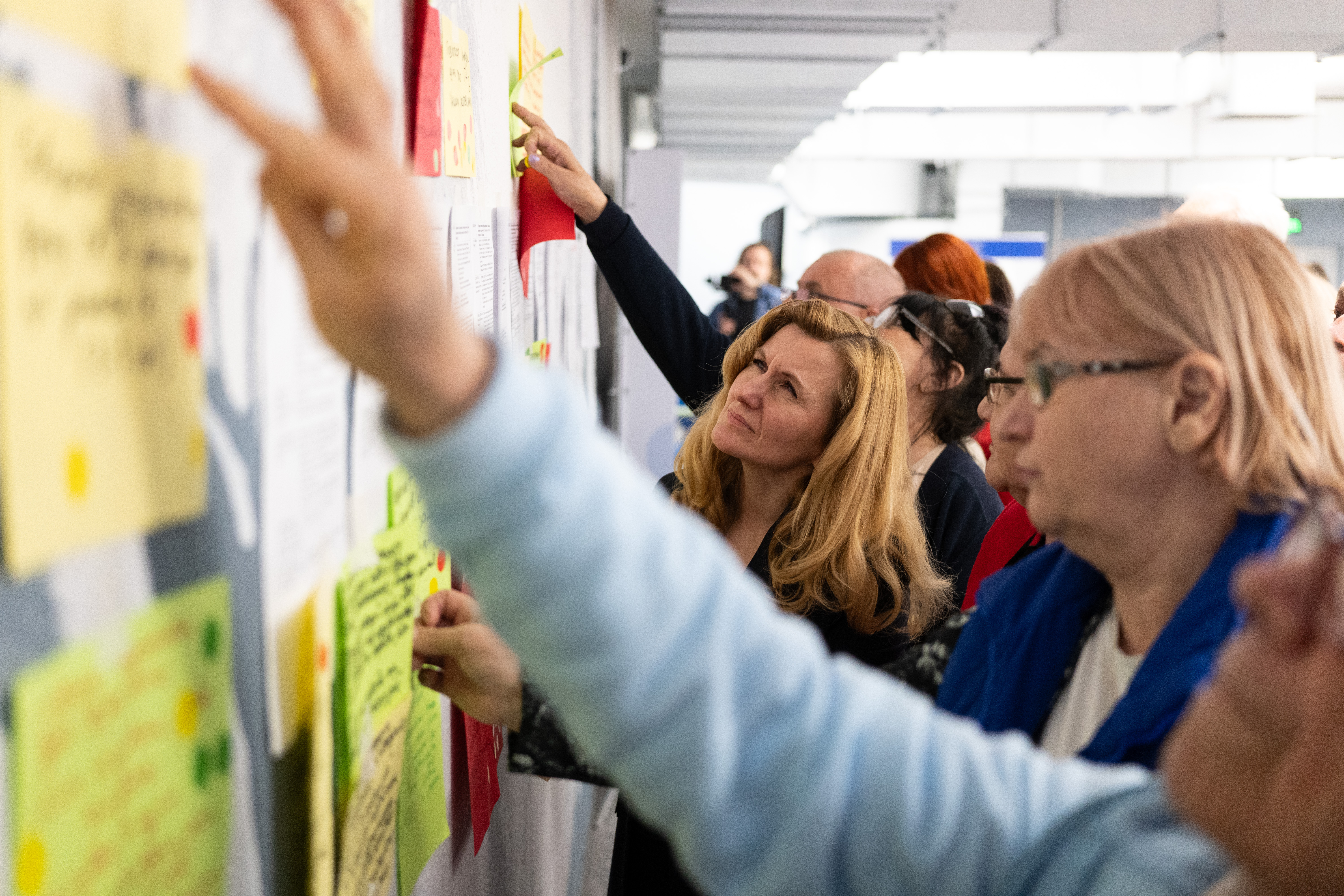
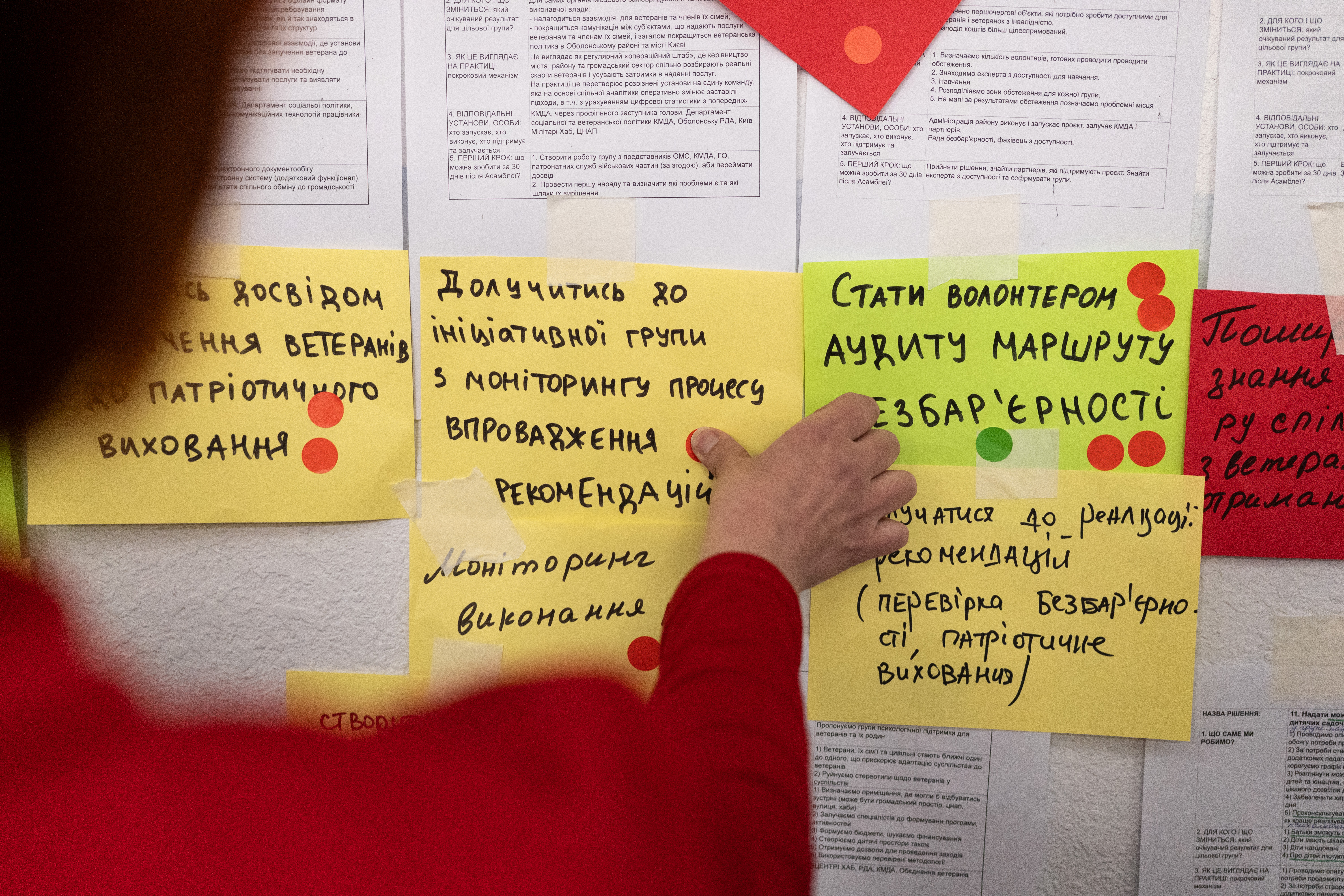
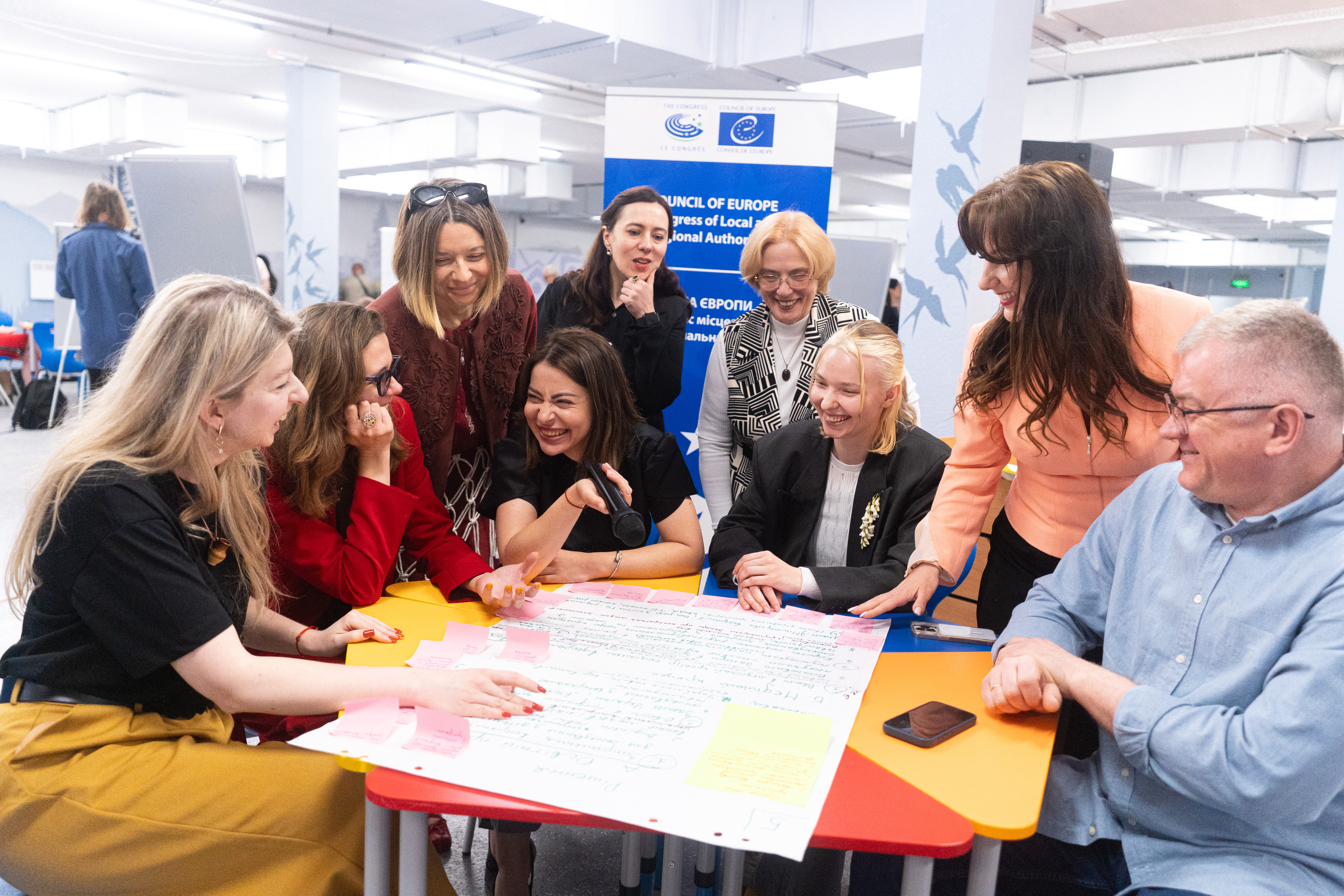
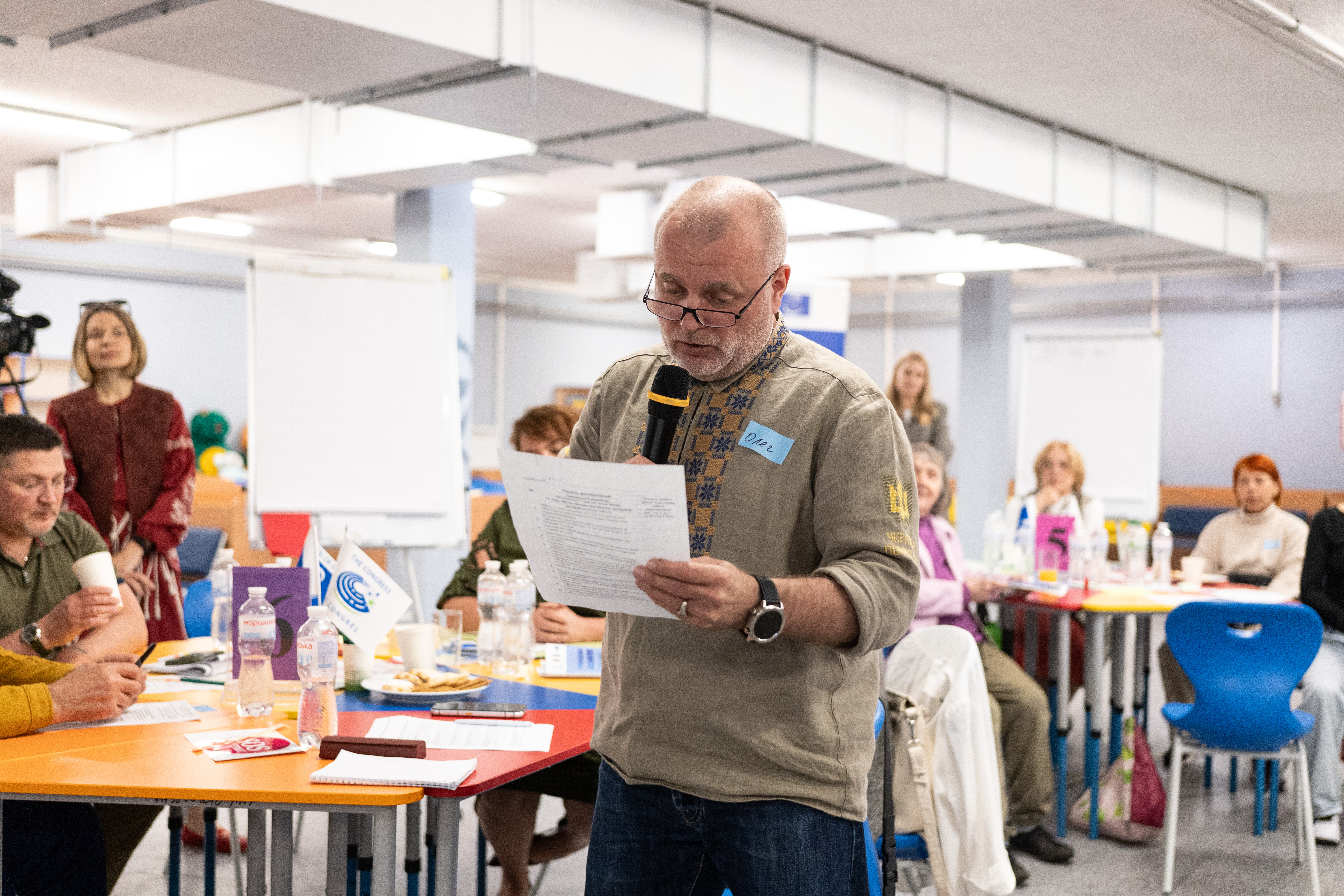
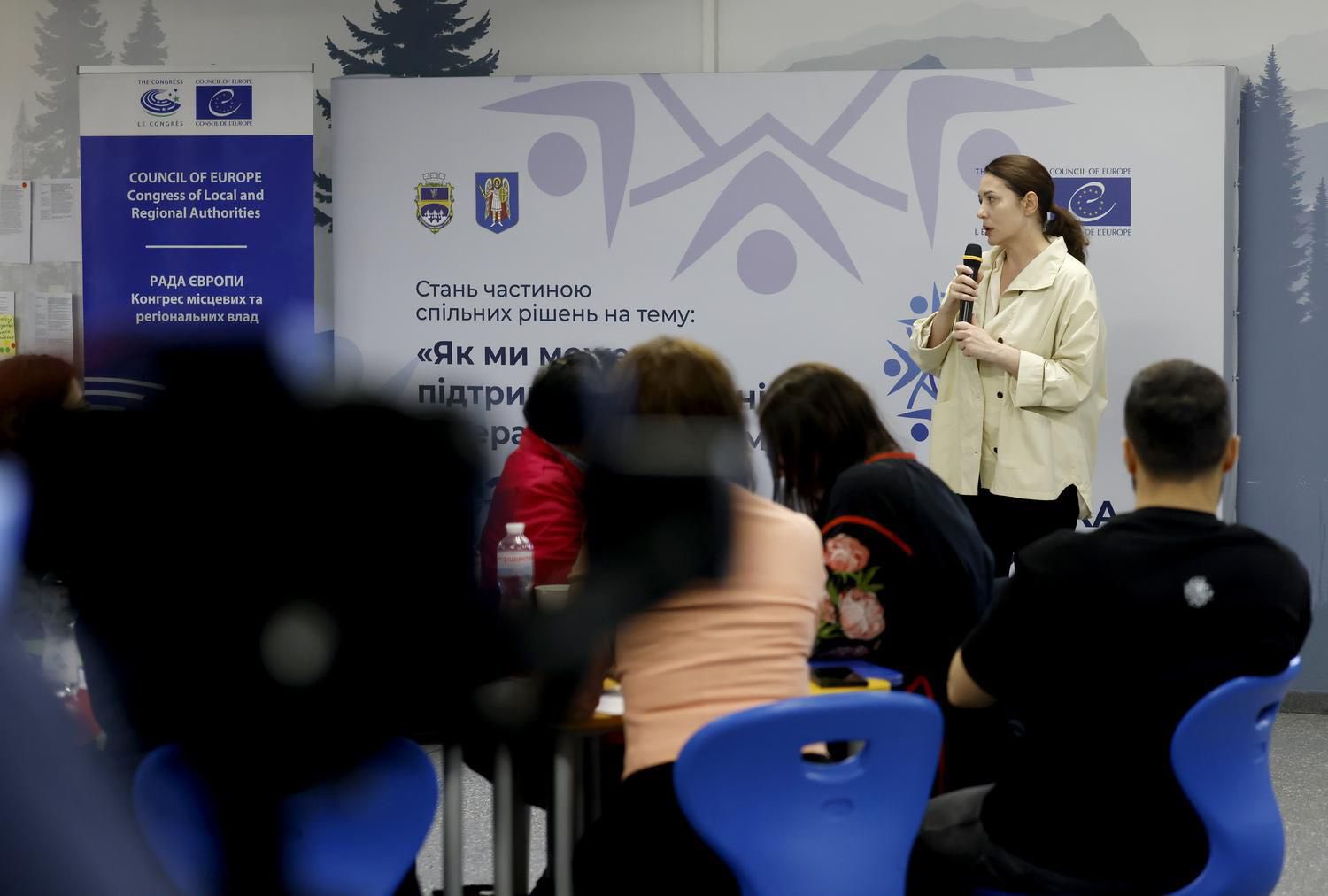
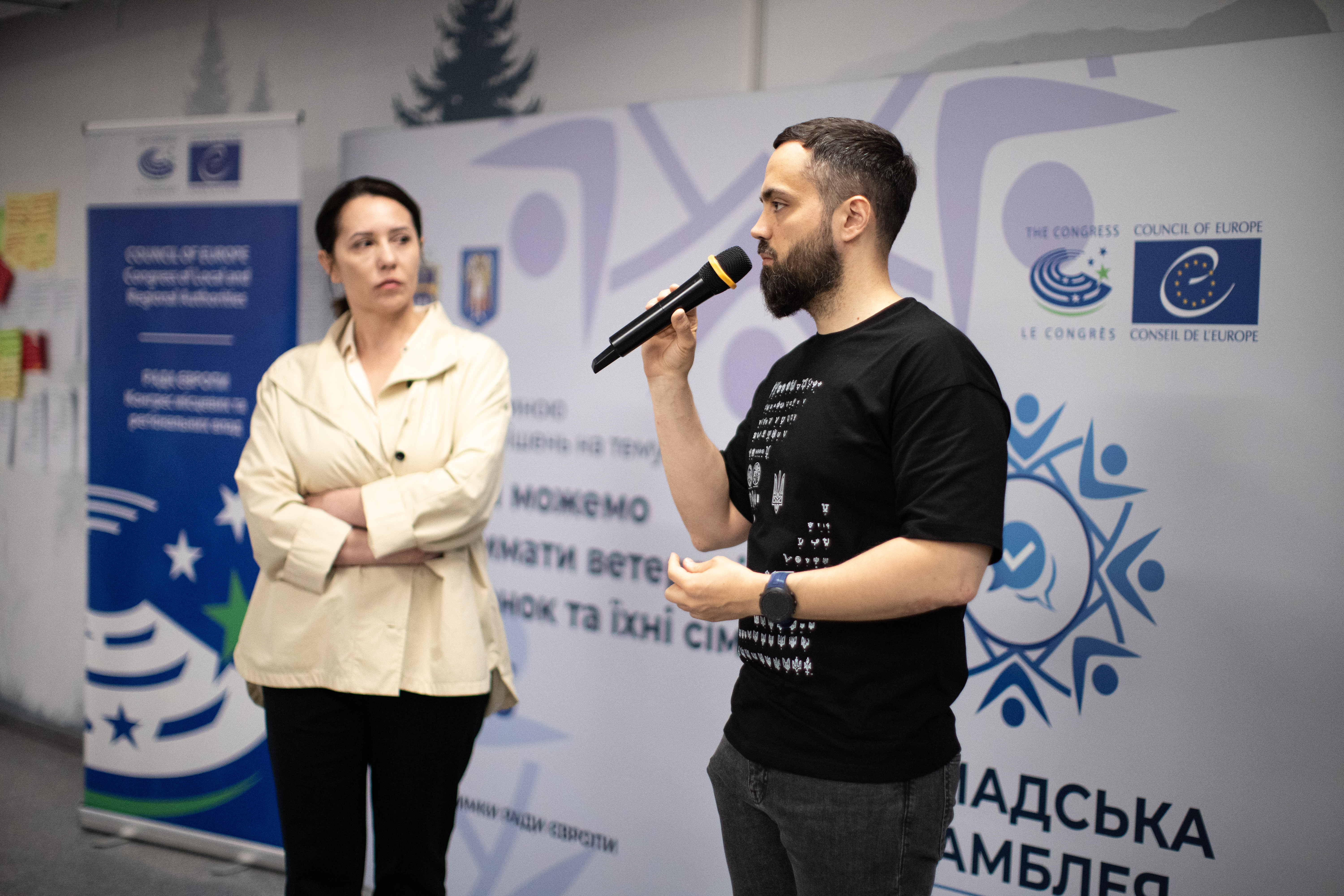
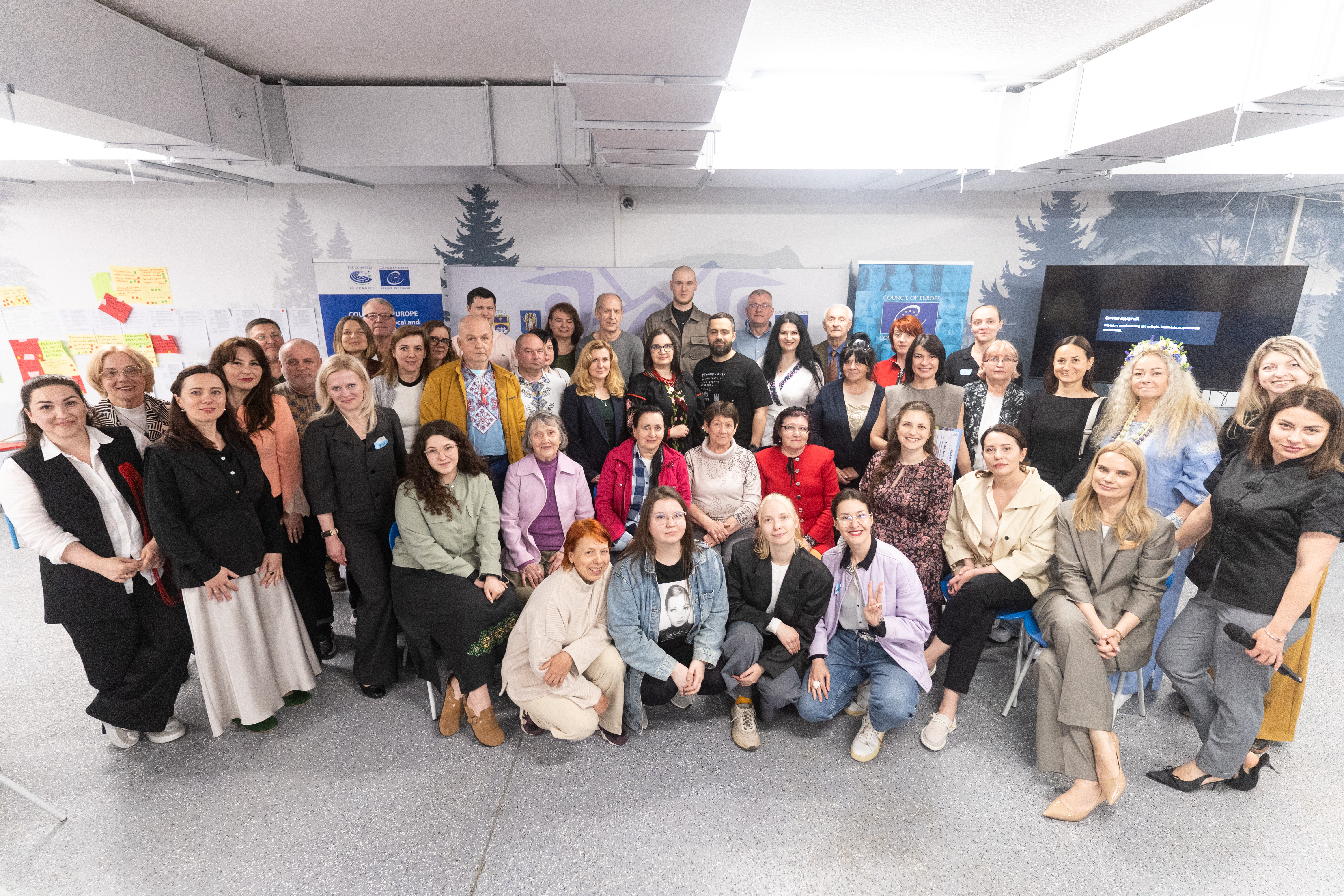
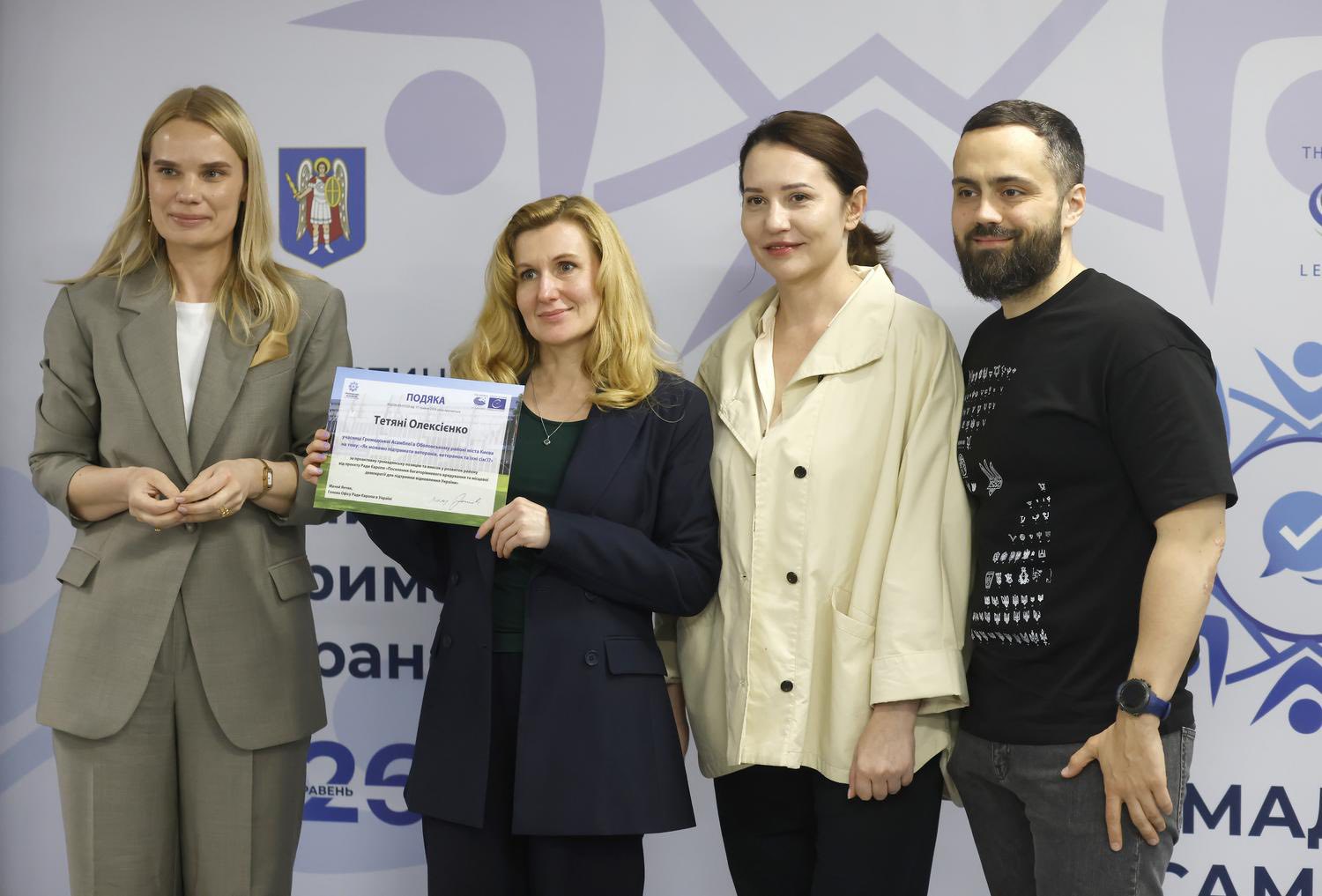
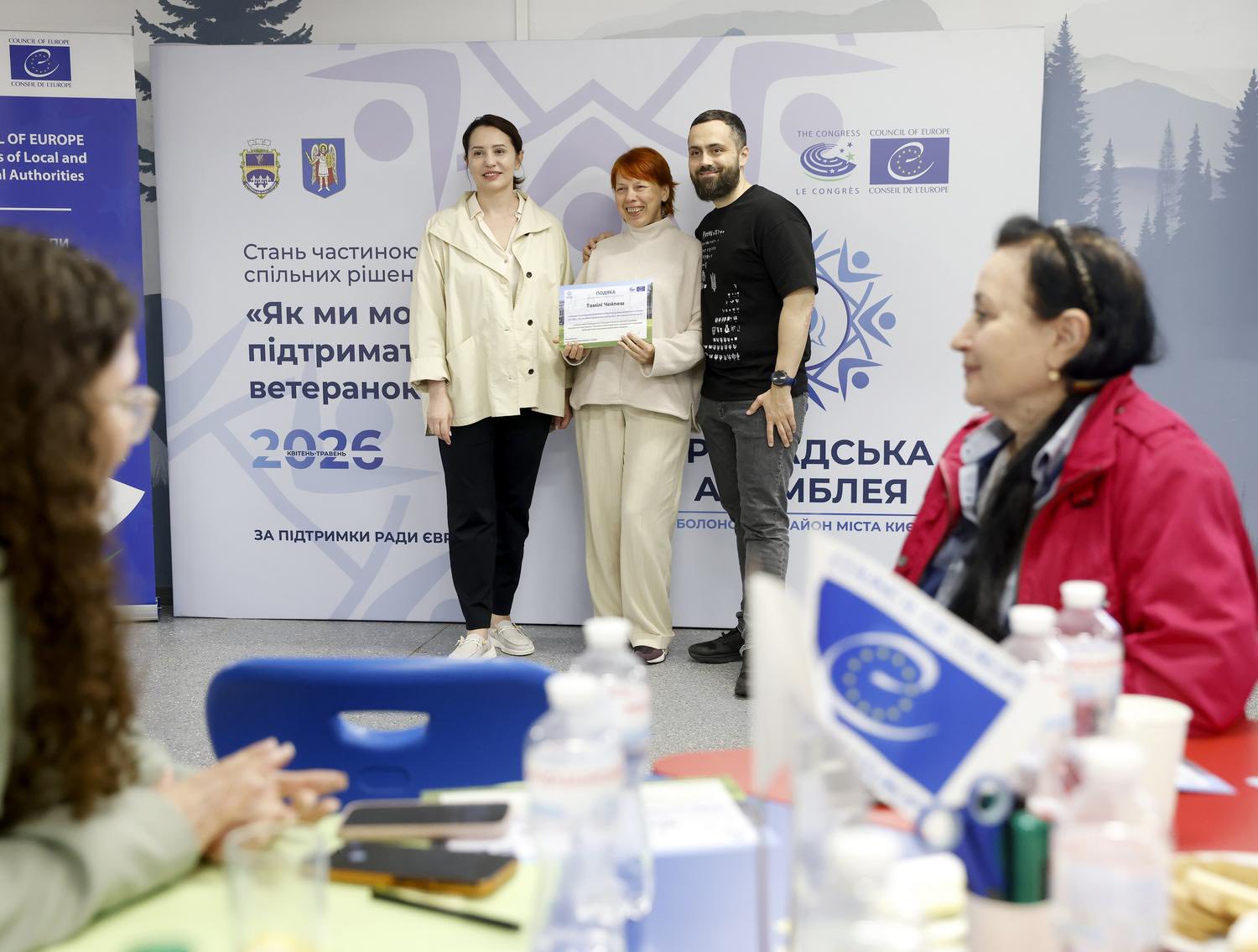
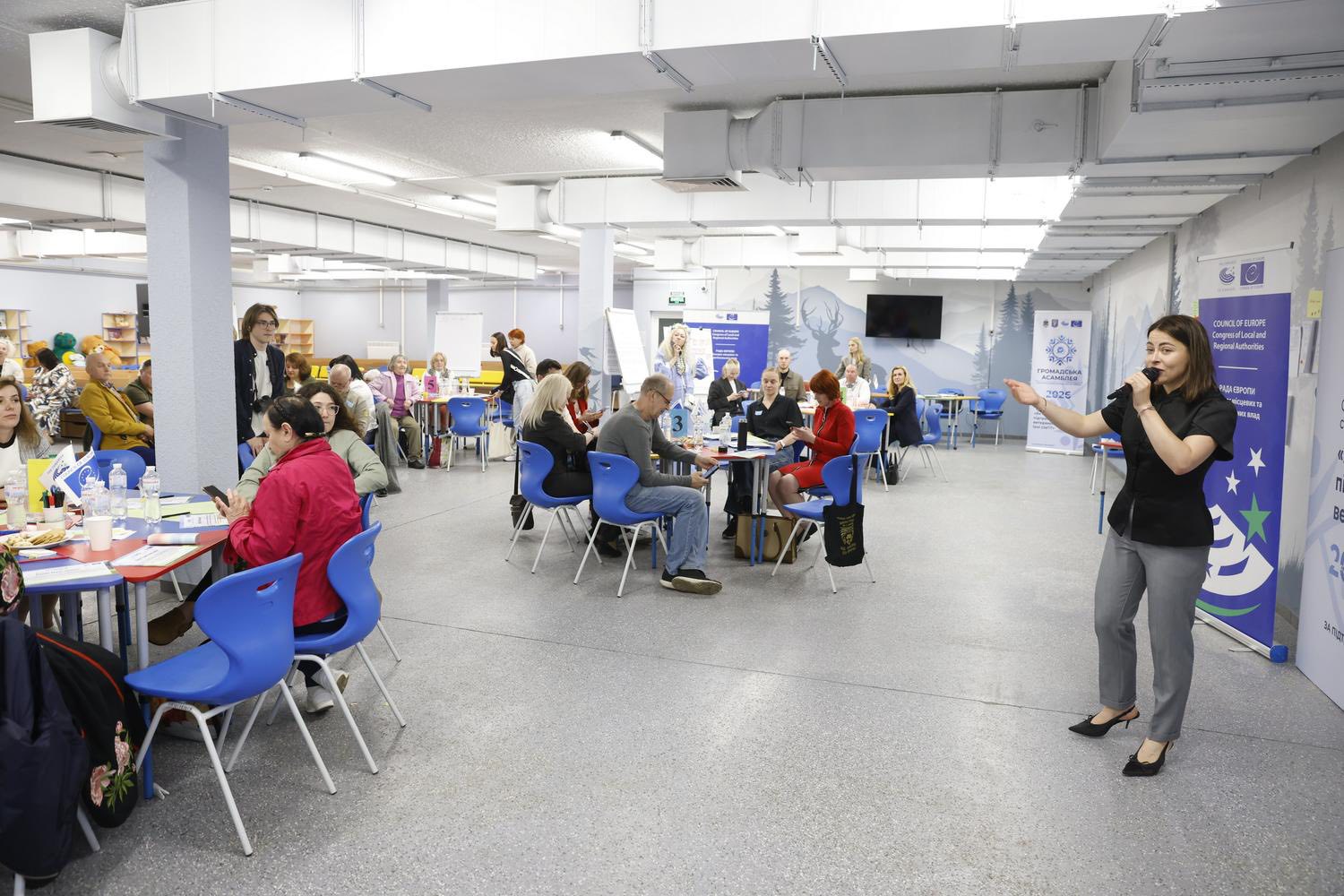
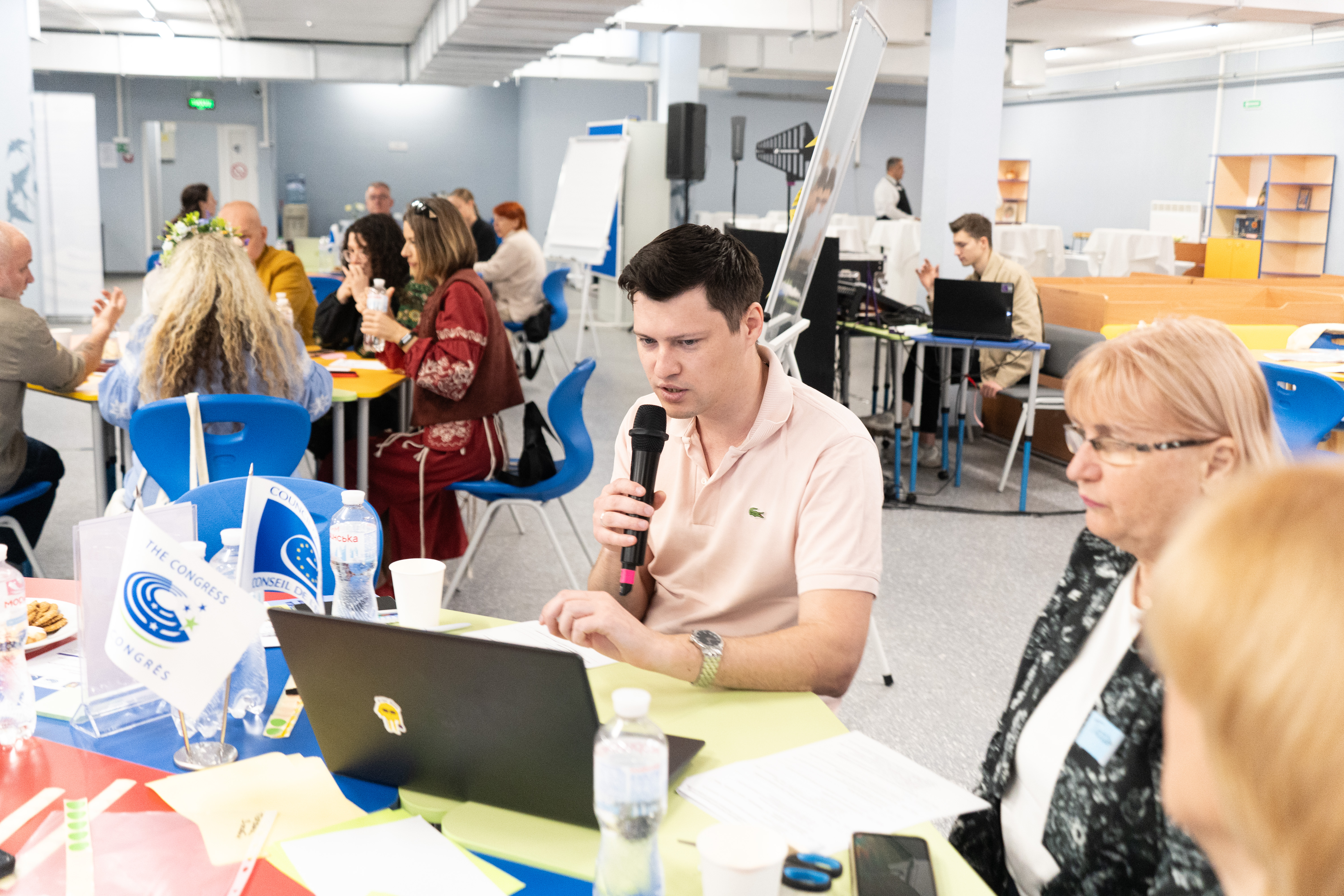
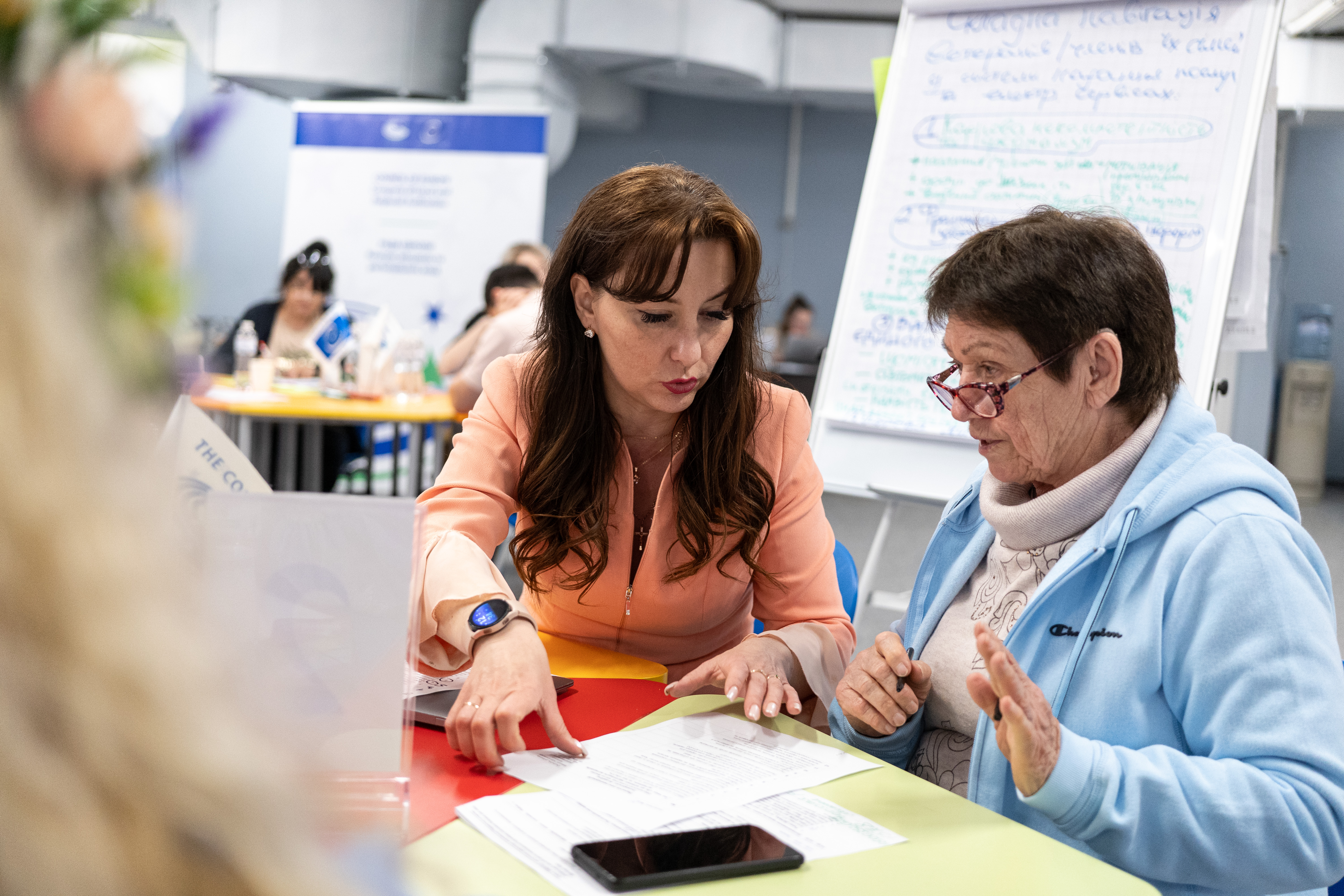
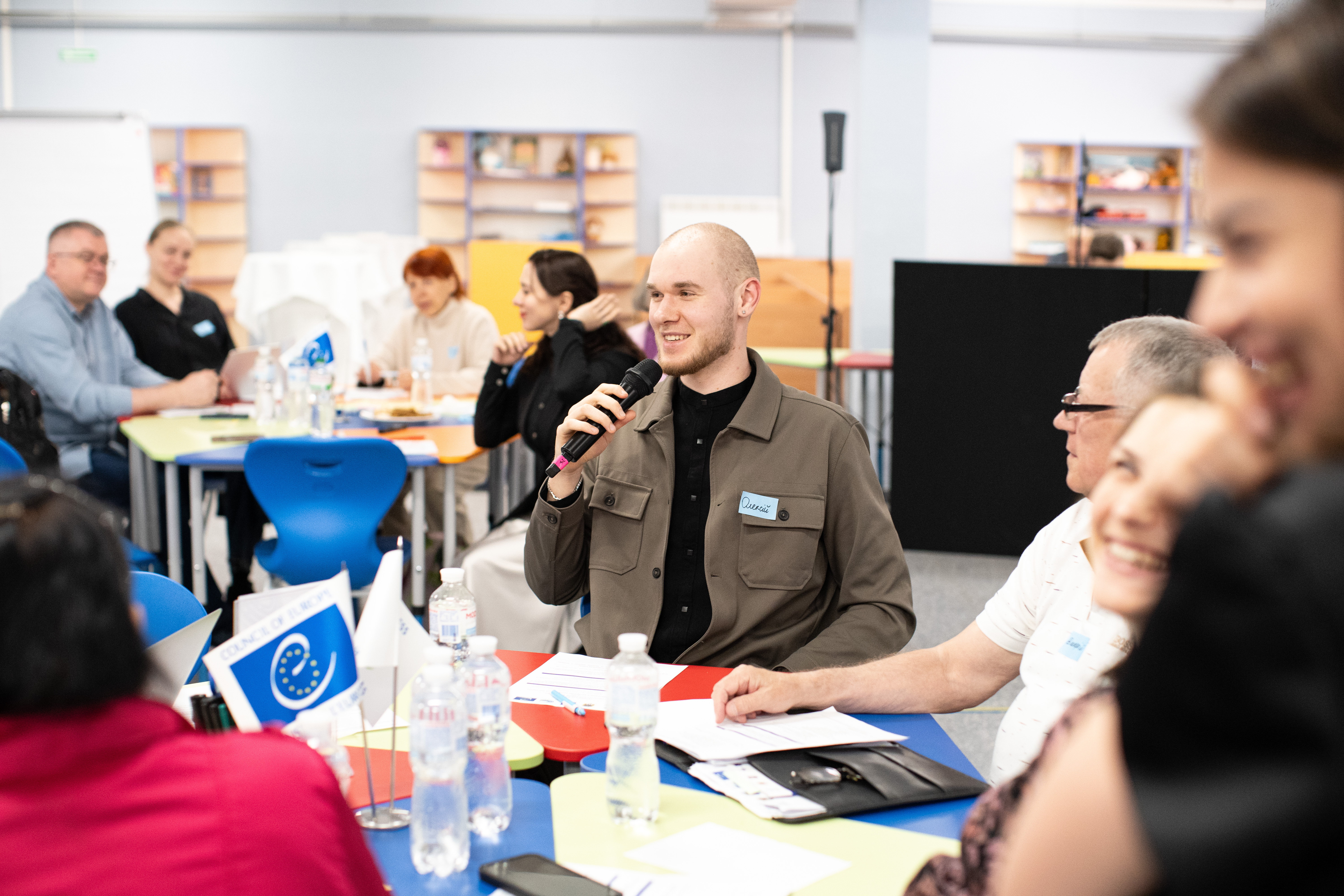
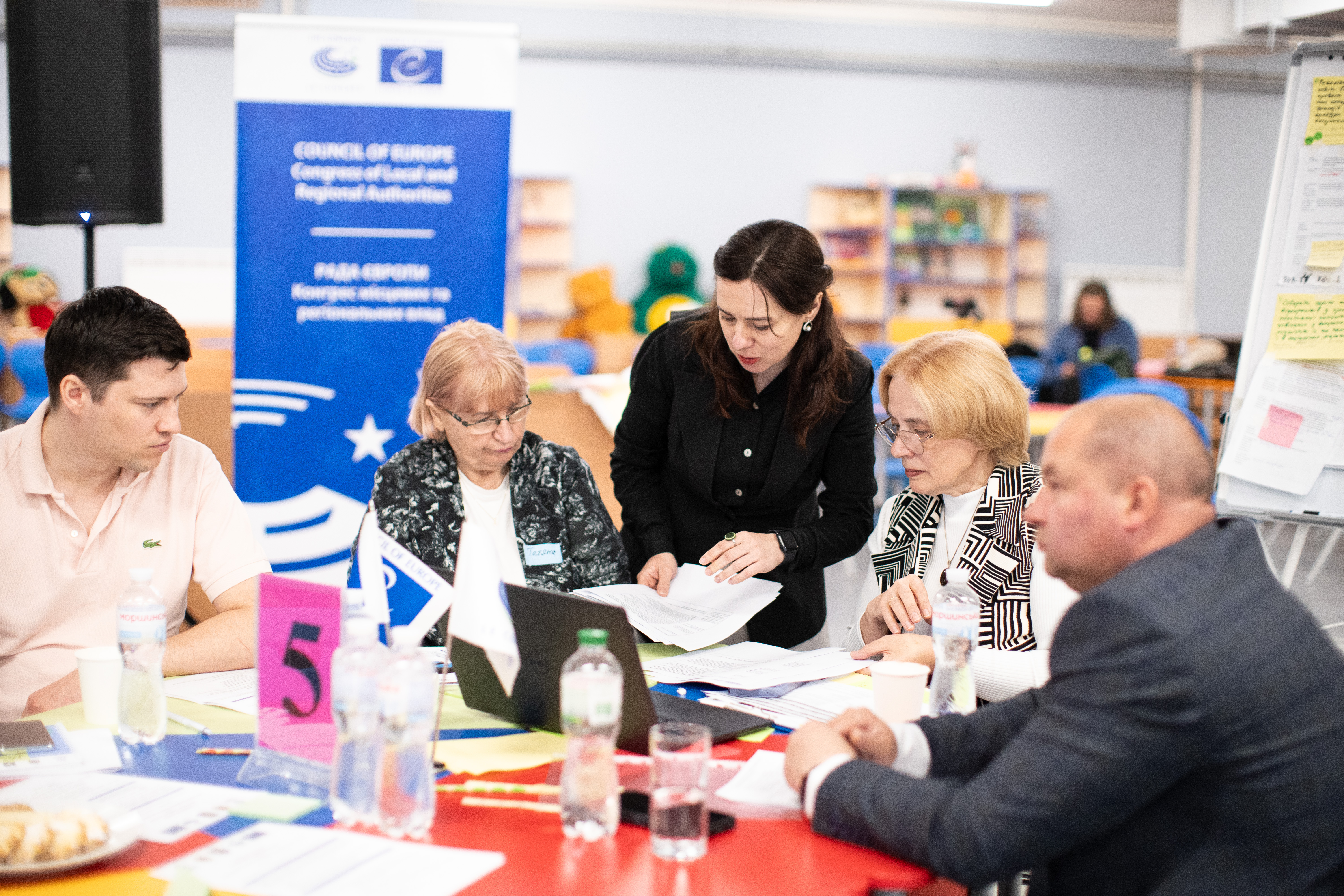
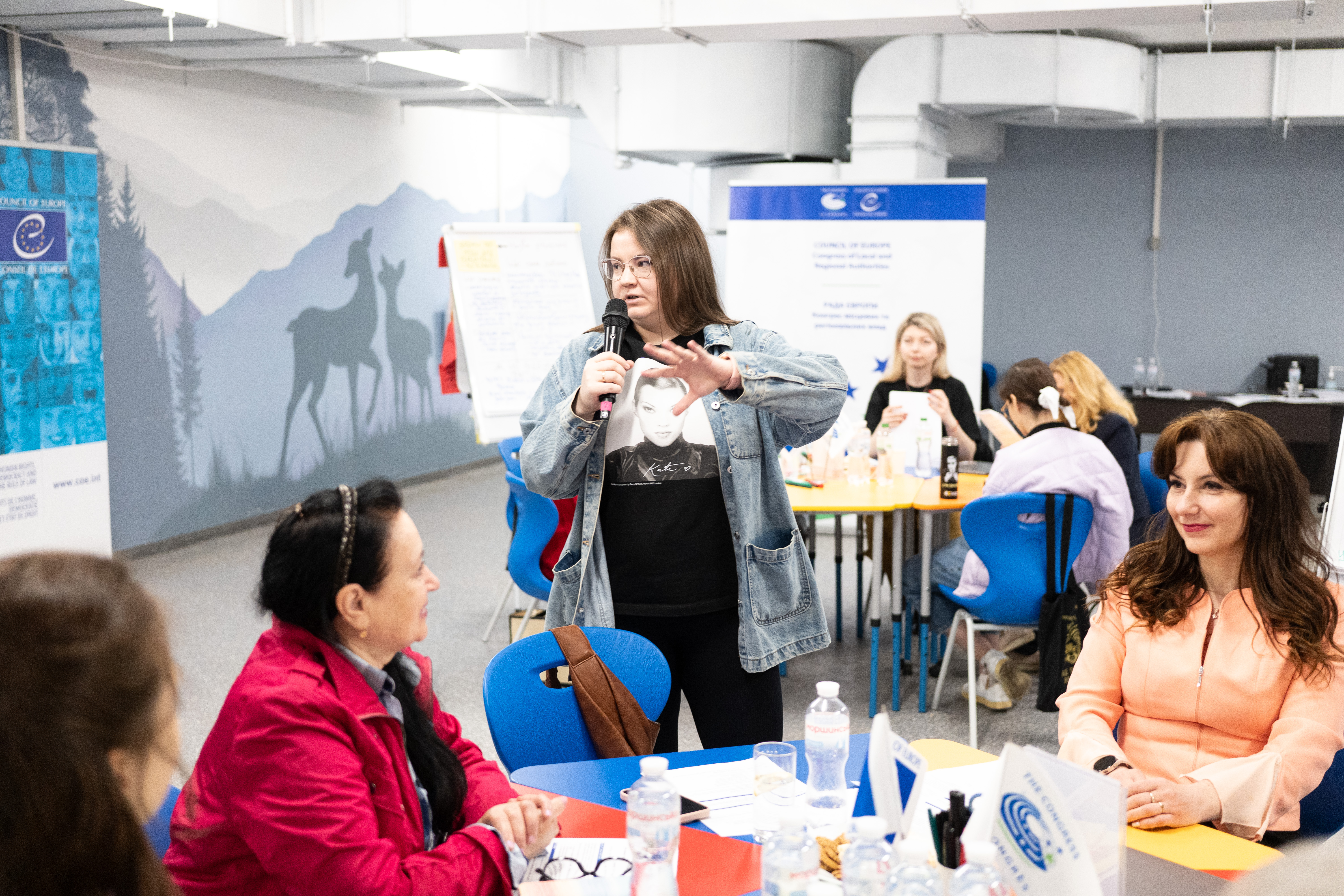
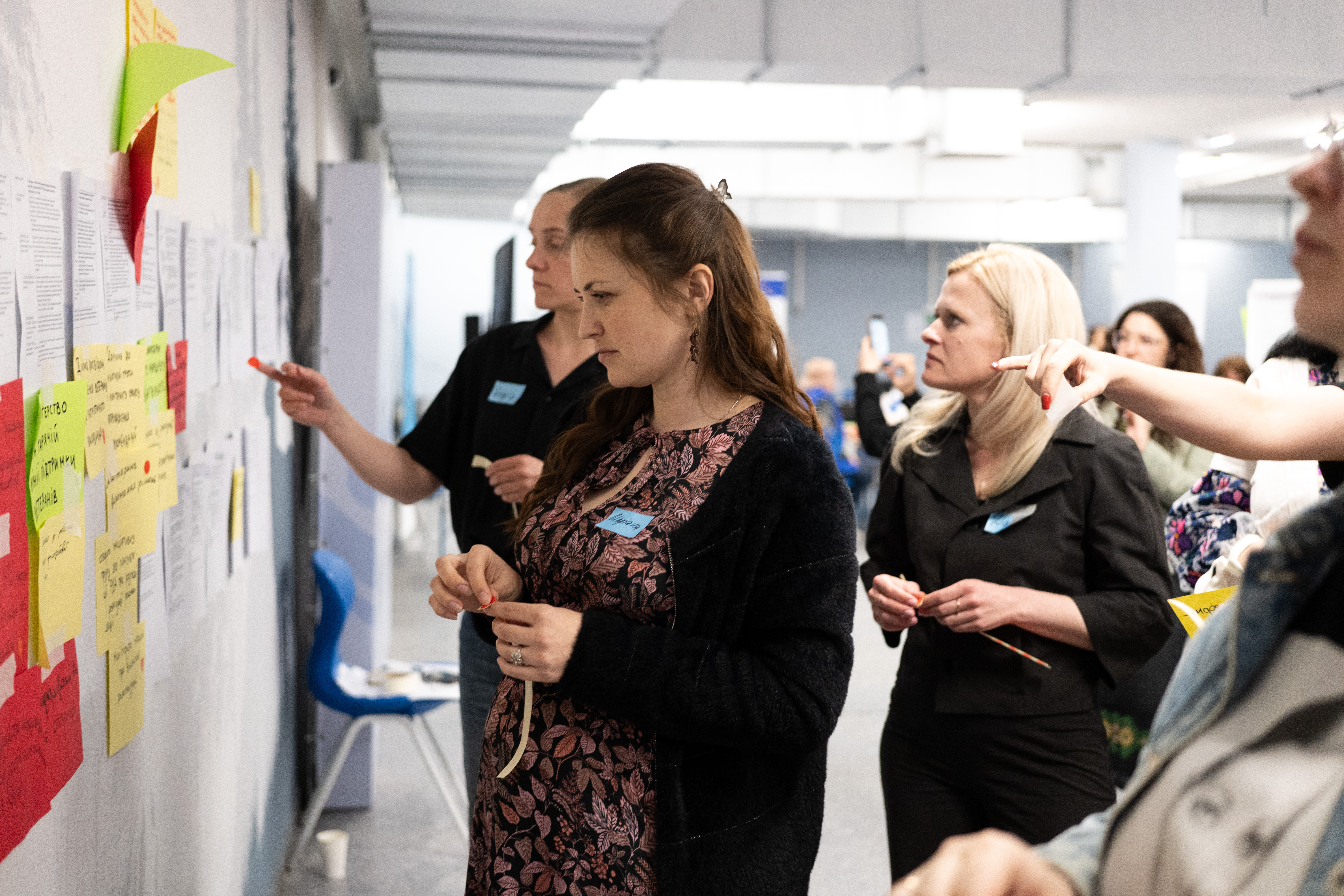
On 16–17 May 2026, the third and final session of the citizens’ assembly on the topic “How can we support veterans and their families?” took place in Kyiv’s Obolon district. Following three weekends of deliberation, assembly participants developed and presented 24 recommendations to the city and district authorities aimed at improving the system of support for veterans and their families at both district and city levels.
The citizens’ assembly was organised by the Obolon District State Administration with comprehensive expert and methodological support provided by the Council of Europe project “Strengthening multilevel governance and local democracy to support Ukraine's recovery” . The assembly brought together randomly selected residents reflecting the diversity of the district in terms of age, gender, education and place of residence.
During the first session (18–19 April 2026), participants familiarised themselves with the key aspects of the topic, engaged with veterans, experts and representatives of public authorities, and identified the main challenges and priority issues. During the second session (2–3 May 2026), they moved on to analysing problems, discussing possible approaches and developing initial ideas for solutions. The final session focused on refining, discussing and voting on the recommendations.
Over the course of the three sessions, 18 experts – the majority representing civil society organisations – as well as 9 veterans, contributed to the work of the Citizens’ Assembly. They helped participants gain a deeper understanding of the key challenges related to supporting veterans and their families, while also discussing possible approaches to addressing them. The third session was also attended by Oleh Shymanskyi, Deputy Minister for Veterans Affairs of Ukraine, who presented state approaches and priorities in the field of veterans’ policy.
Overall, participants developed 24 recommendations for local authorities covering a broad range of issues related to supporting veterans and their families at district and city levels. Following the final vote, the recommendations receiving the strongest support from participants focused on:
- collecting and systematising information on the needs of veterans and their family members at district and city levels;
- providing training and professional development for staff of public authorities, administrative service centres and other institutions delivering services to veterans and their families;
- improving digital services for veterans, including the “Defenders’ Electronic Cabinet” within the “Kyiv Digital” platform;
- establishing a mobile service office for veterans and their families;
- creating a support and interaction space for veterans in the Obolon community;
- improving co-ordination between service providers and introducing shared data exchange mechanisms between institutions;
- advancing accessibility and monitoring the accessibility of facilities and services;
- creating an interactive map of services and opportunities for veterans integrated into the “Kyiv Digital” platform;
- conducting information and educational campaigns aimed at strengthening mutual understanding between veterans and civilians;
- ensuring the systematic involvement of veterans in the educational process and patriotic education of young people.
The recommendations were presented by assembly participants to Maryna Khonda, Deputy Head of the Kyiv City State Administration for the exercise of self-governing powers and co-ordinator of the Department of Social and Veterans Policy, and Kyrylo Fesyk, Head of the Obolon District State Administration. They highlighted the importance of direct citizen participation in shaping local policies and thanked participants for their contribution, active engagement and joint efforts to support veterans and their families.
For many participants, the assembly became their first experience of civic participation and deliberation in such a format. In their feedback, participants noted that the process created a rare opportunity for meaningful dialogue, mutual understanding and joint decision-making among people with different backgrounds and experiences. They also stressed that even the implementation of part of the recommendations would already represent an important achievement for the community and local veterans’ policy.
The Council of Europe project “Strengthening multilevel governance and local democracy to support Ukraine’s recovery” provides comprehensive expert and methodological support for the organisation and implementation of citizens’ assemblies in the Rivne community, the Obolon District of Kyiv, and the Lviv Agglomeration in 2026. In October 2025, the respective Memorandums of Understanding were signed in Strasbourg.
The preparation and implementation of the citizens’ assembly take place within the Council of Europe Action Plan for Ukraine “Resilience, Recovery and Reconstruction” for 2023-2026 and the project “Strengthening multilevel governance and local democracy to support Ukraine’s recovery”, implemented by the Council of Europe Centre of Expertise for Multilevel Governance at the Congress of Local and Regional Authorities.