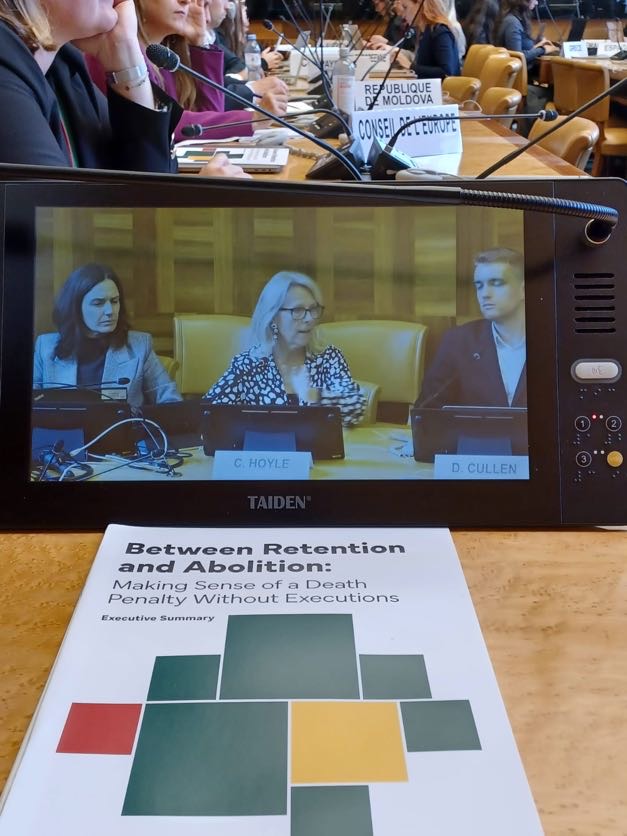
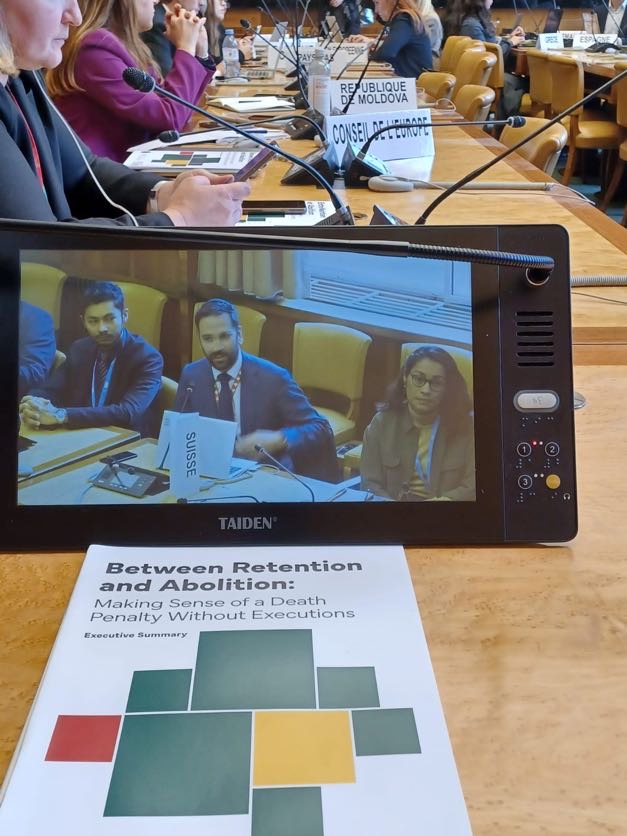
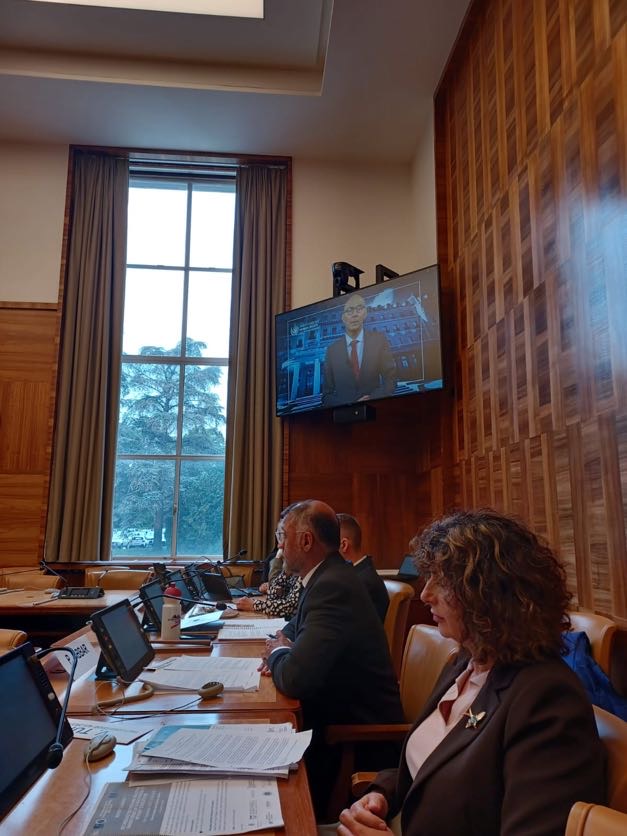
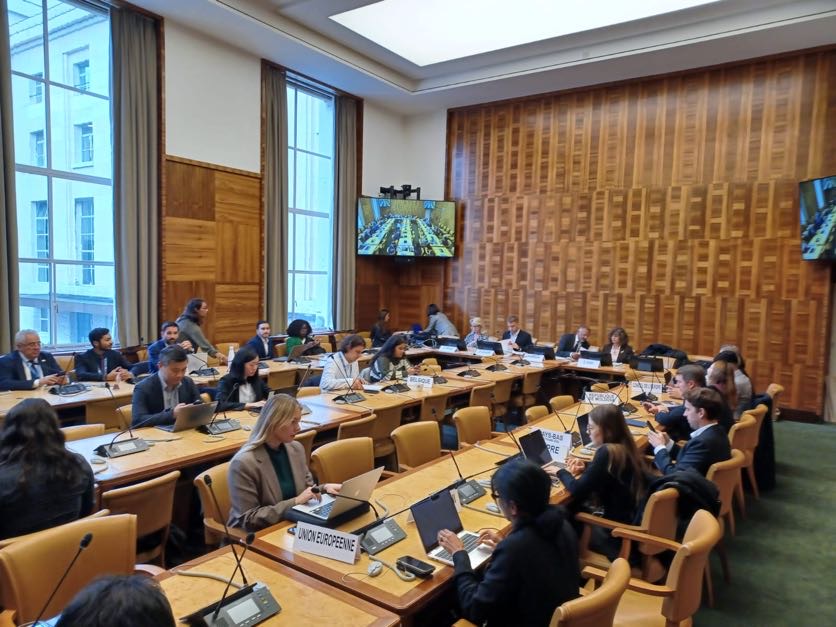
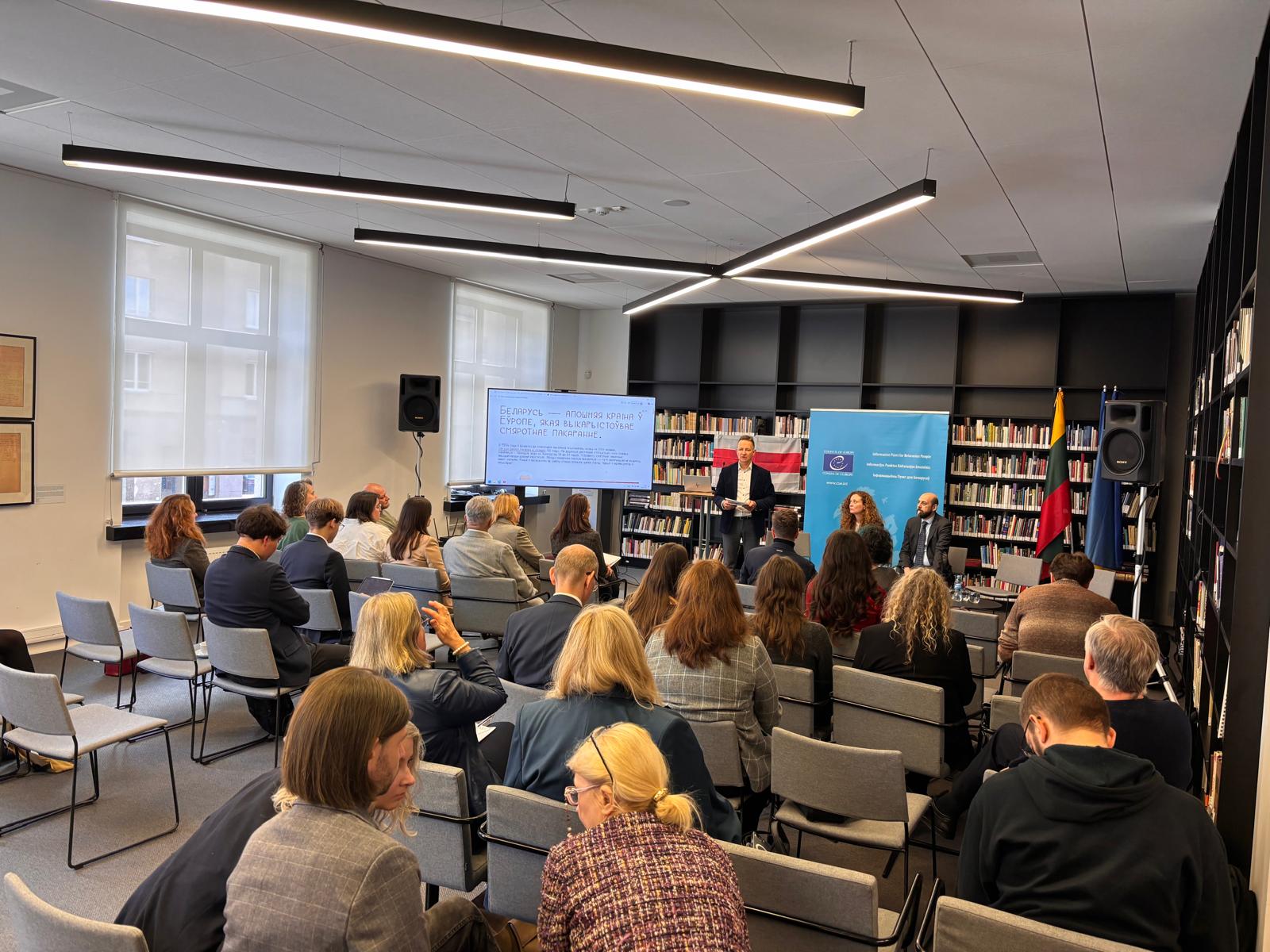
The Council of Europe co-organized with the Office of the United Nations High Commissioner for Human Rights (OHCHR), and with the Death Penalty Research Unit at Oxford University (DPRU) and the Death Penalty Project (DPP), a side-event in Geneva on 26 September 2025 on the margins of the 60th session of the United Nations Human Rights Council (HRC). It was co-sponsored by the members of the core group of the HRC resolution on the question of the death penalty (Belgium, Benin, Costa Rica, France, Mexico, Mongolia, Republic of Moldova, Switzerland).
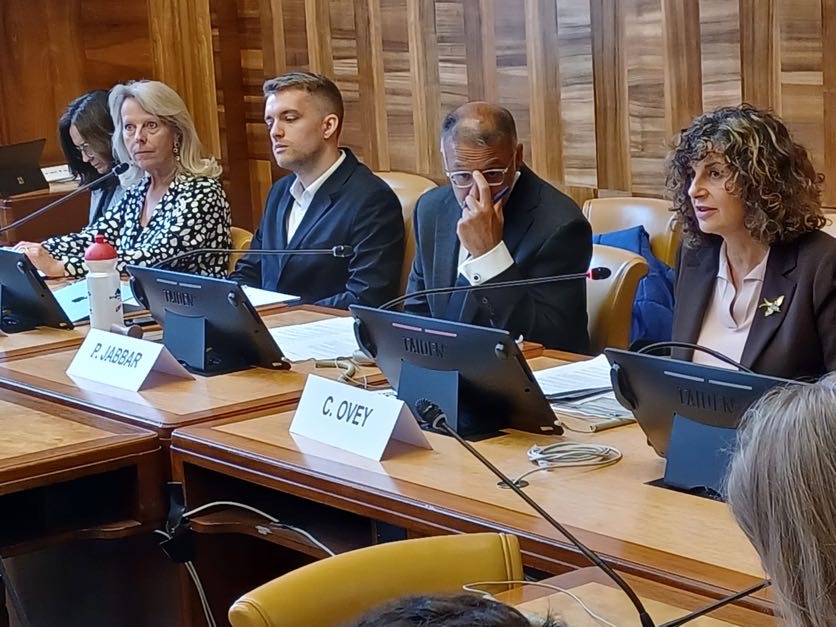
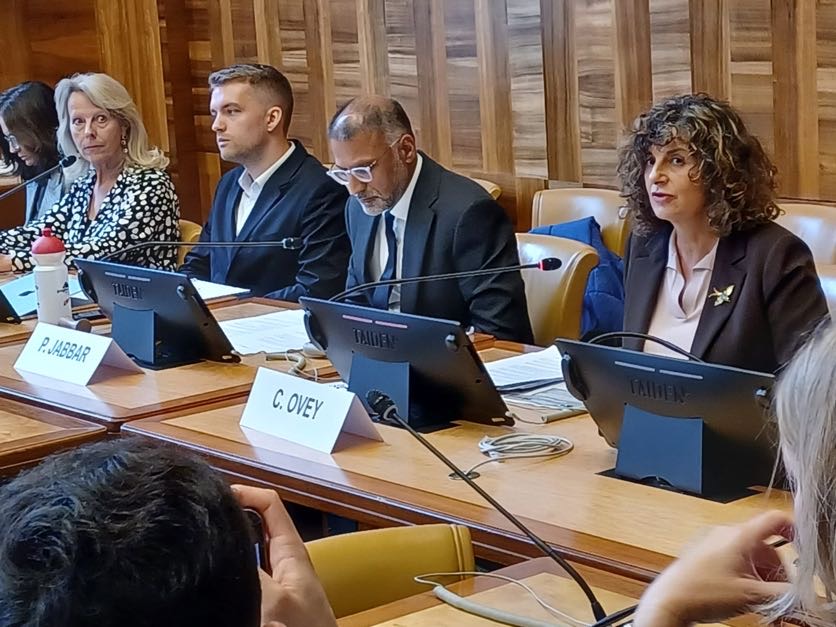
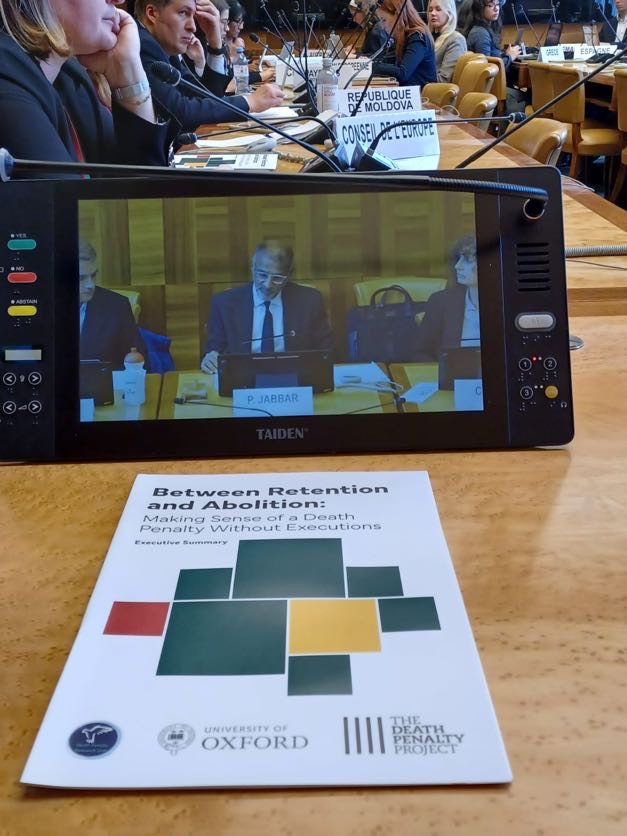
The goal of the side-event was to launch the report entitled "Between retention and abolition: making sense of a death penalty without executions" drafted by DPRU an DPP, with the support of the Council of Europe. It was opened by the United Nations High Commissioner for Human Rights (video message), Mr Volker Türk, and by the Director for Human Rights of the Council of Europe, Ms Clare Ovey. The authors of the report, Ms Carolyn Hoyle, Mr Parvais Jabbar and Mr Daniel Cullen, presented its main findings, and answered to questions from the audience.
At the Reykjavik Summit in 2023, it was decided to strengthen the Council of Europe’s work on the abolition of the death penalty. As part of the new projects launched to contribute to advocate for universal abolition, within the framework of the multilateral project “Death is not justice : abolition of the death penalty in Europe and beyond” financed by France and Switzerland, the Council of Europe wanted to study the effects of moratoria, that is the temporary suspension of executions (moratoria can be qualified as de facto or take the form of a legal text emanating from the executive, legislative or judicial power). The Council of Europe collaborated on this issue with DPRU and DPP. While, in the European experience, moratoria have always been viewed as a temporary measure and a short step towards de jure abolition, the report shows that, elsewhere in the world, moratoria, be they official or unofficial, are not always seen as transitional. Moreover, despite executions being suspended, death sentences can continue to be handed down. Moratoria can also be lifted.
This study marks the 40th anniversary of the official use in the UN’s quinquennial reports on the death penalty of the ‘abolitionist de facto’ - ADF – category (ADF are countries where no executions have taken place for at least a decade, but where the death penalty remains in law). Until now, there has been limited research into the practices and rationales underpinning the ADF concept or on its effects. Though an absence of executions must be commended, many ADF states still impose death sentences and sustain the legal infrastructure of capital punishment. The study sheds light on the adverse effects of moratoria, and draws attention to the potential for de facto abolition to become a destination point, rather than a step on the path towards permanent legal abolition. It acts as a reminder that the ultimate goal should remain the complete eradication of the death penalty.
This report has the potential to be very helpful for the abolitionist community, including in view of the next World Congress against the death penalty which will take place in Paris in 2026, and to be a valuable contribution in the United Nations context. It may also serve as a useful point of reference regarding the situation in countries with moratoria when national authorities and courts in Europe have to assess the risks likely to be incurred through the extradition of prisoners for example.
The report can be found here: Between Retention and Abolition | The Death Penalty Project
In addition, the Council of Europe co-sponsored another side-event to the 60th session of the HRC which took place on 19 September 2025 and was organised by the members of the core group of the HRC resolution on the question of the death penalty and the OHCHR. This other event was dedicated to “Moving away from the Death Penalty for Children: Arguments, Trends and Perspectives to Advance Global Abolition”.


 Coordinator for the Abolition of the death penalty