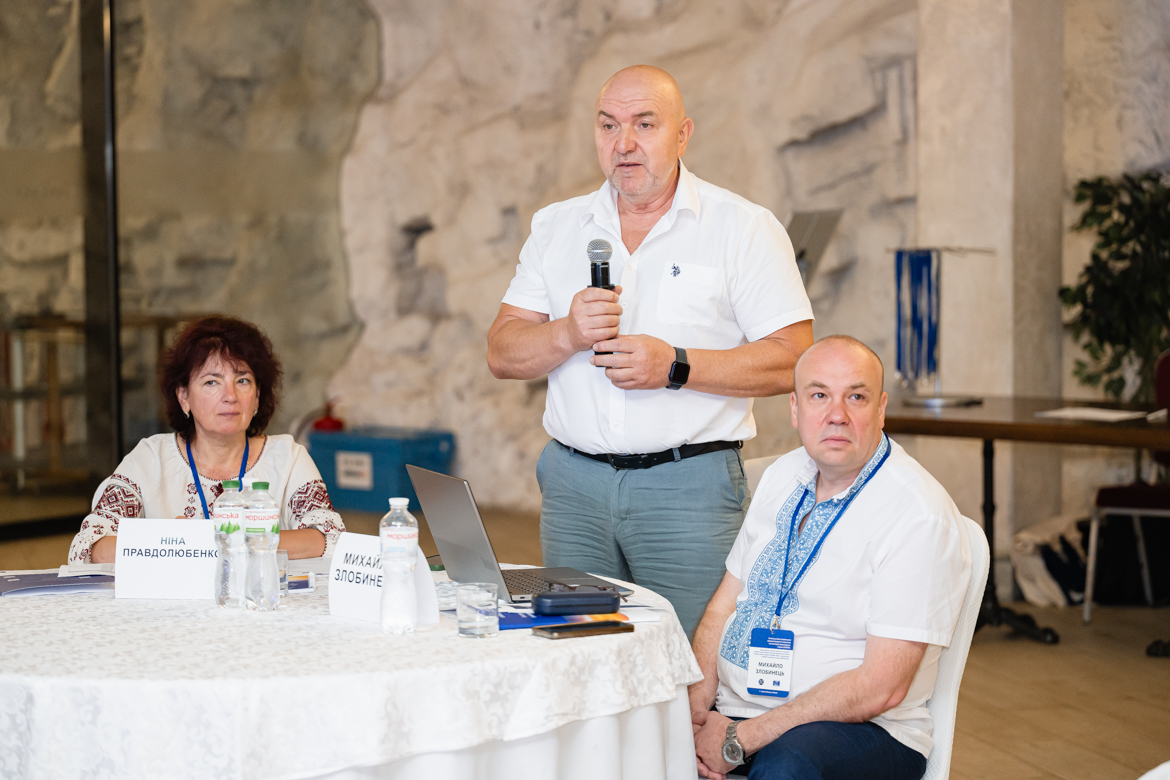
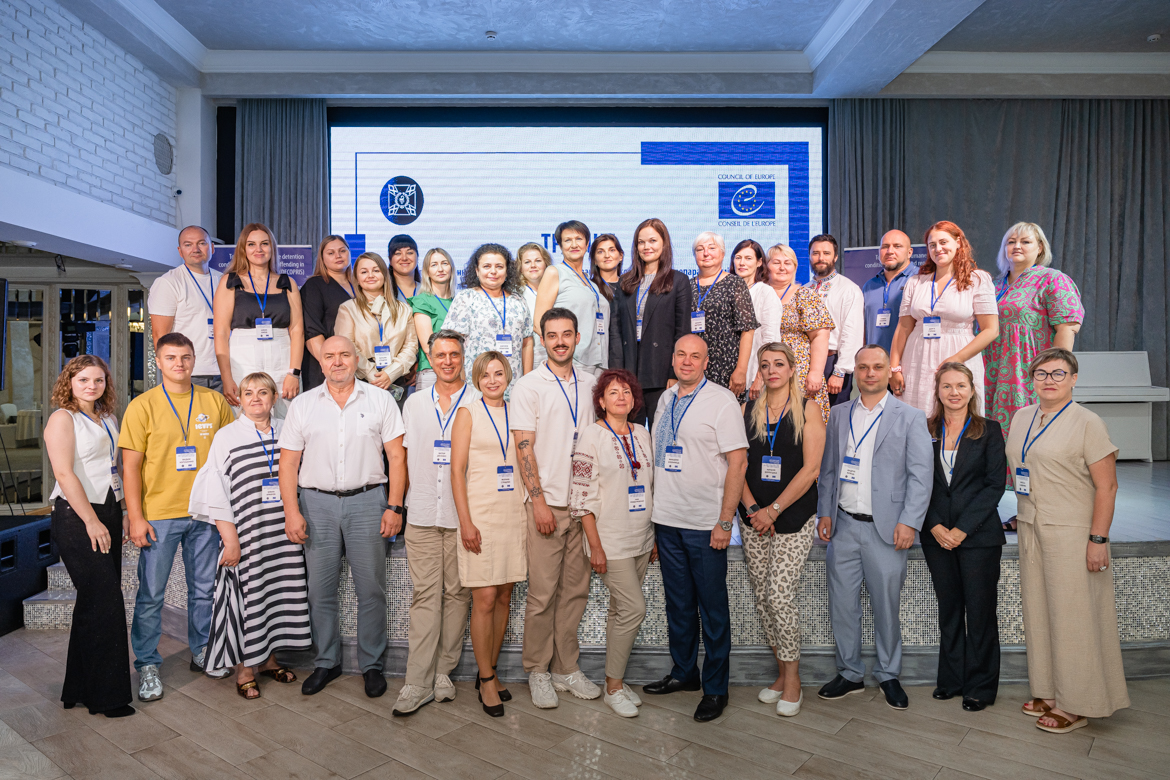
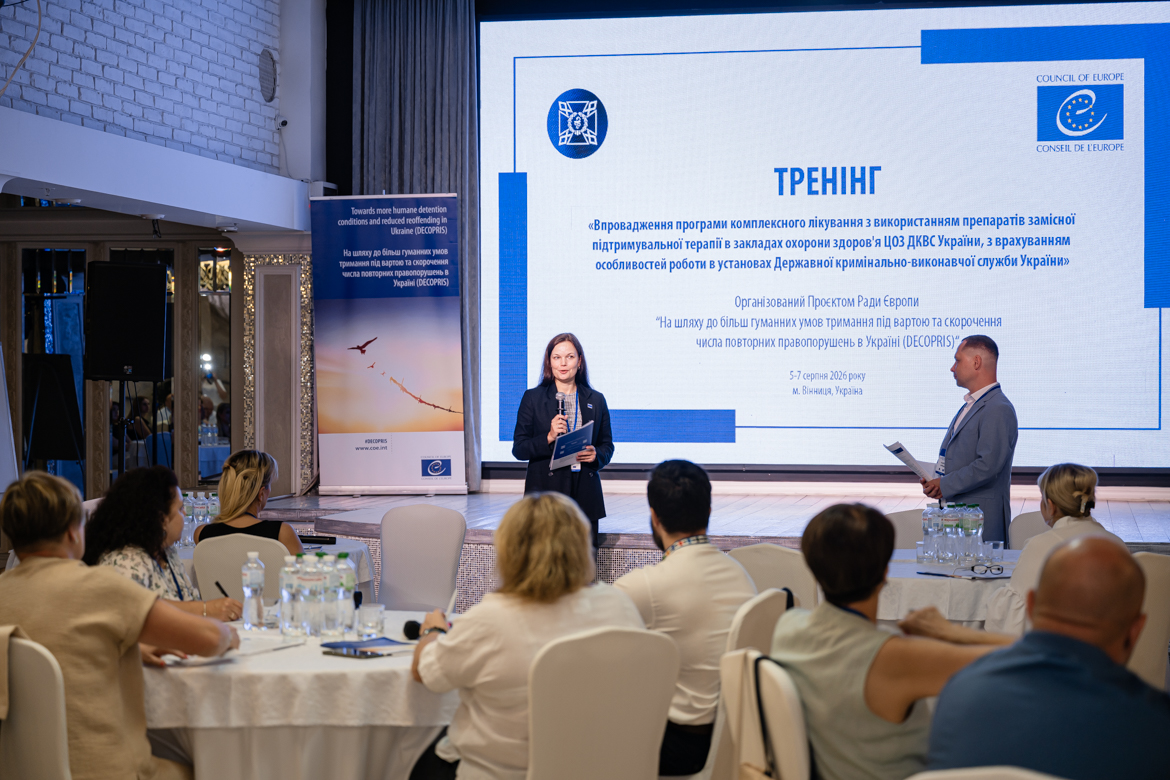
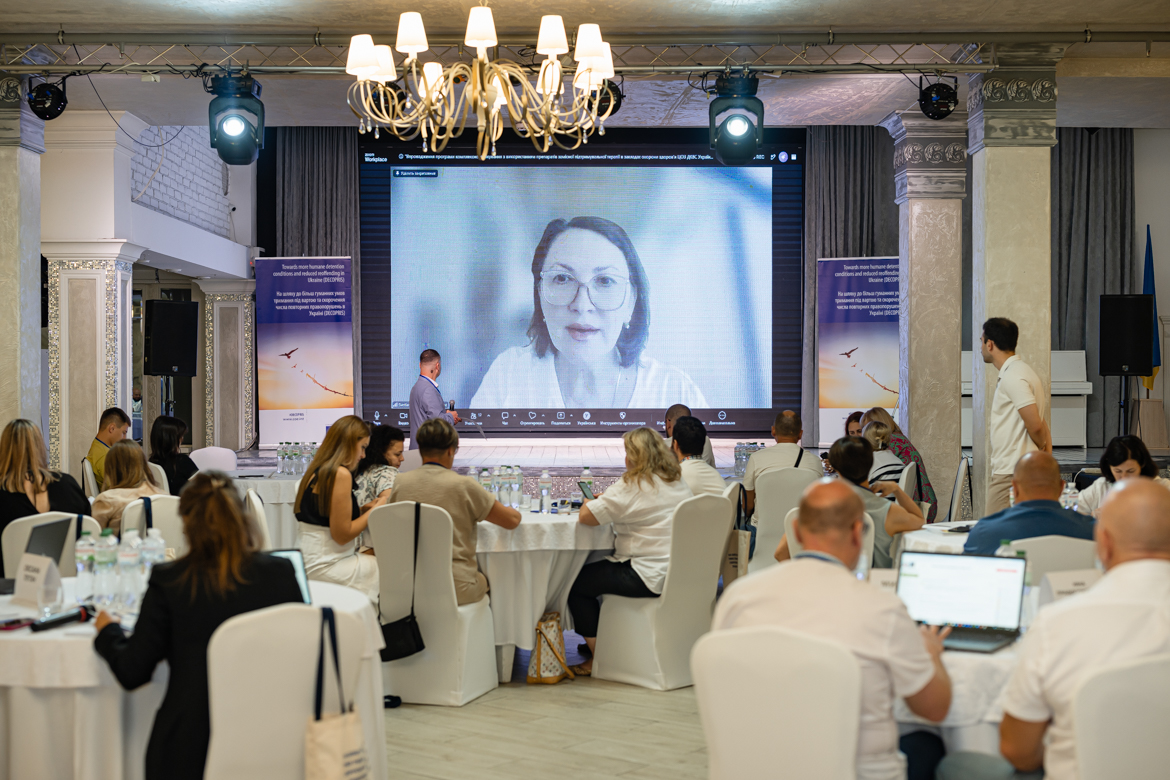
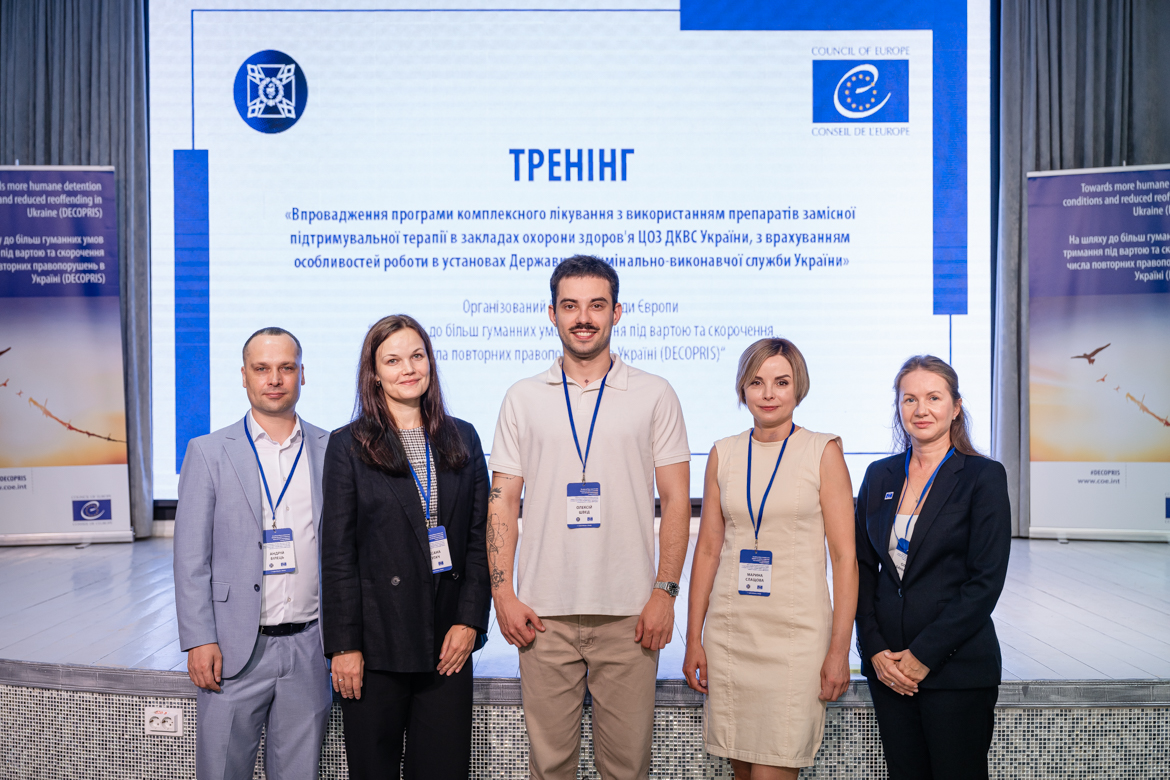
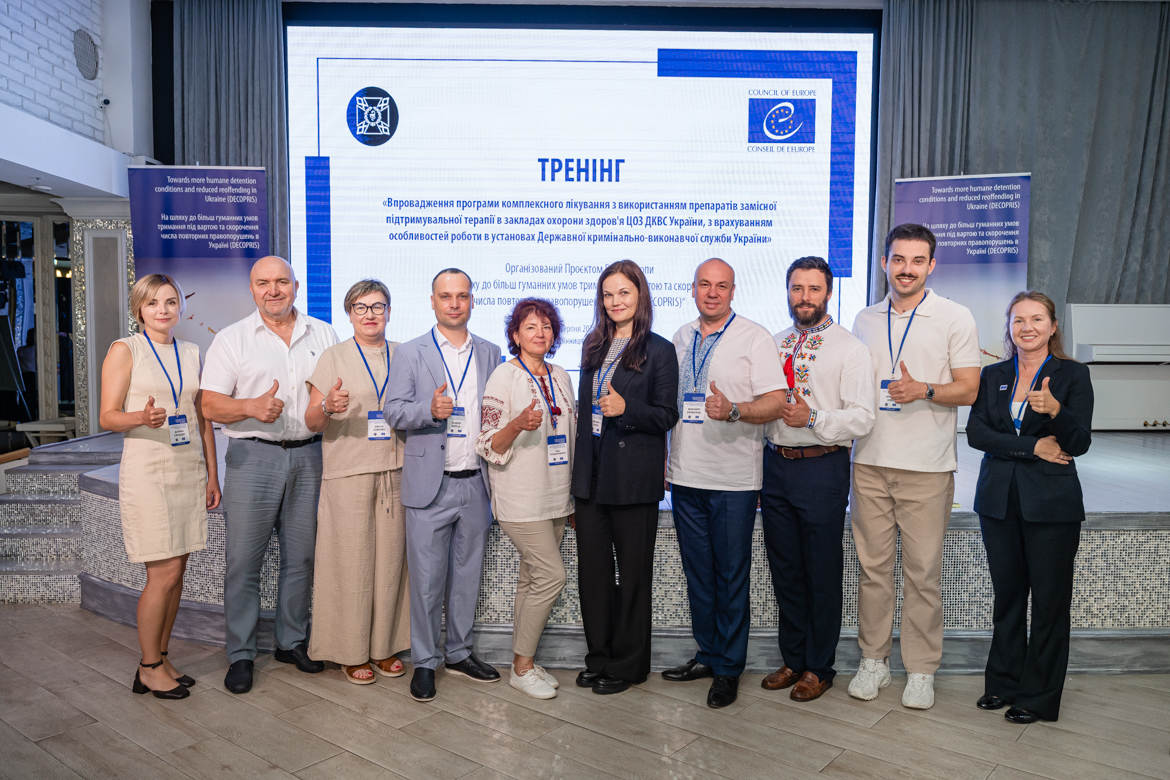
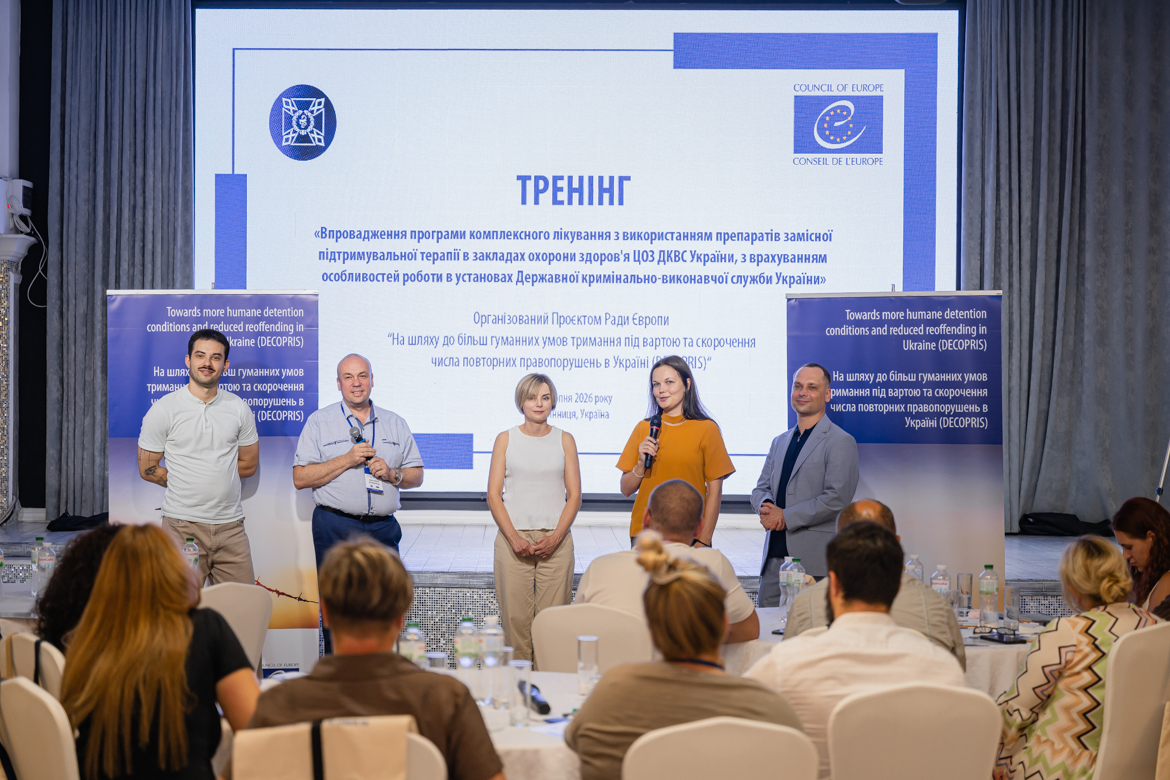
On 5–7 August 2026, the Council of Europe, in co-operation with the Health Centre of the State Criminal-Executive Service of Ukraine, organised a two-and-a-half day training on comprehensive Opioid Agonist Treatment (OAT) programme in prisons.
Held in a hybrid format, the training brought together 25 medical professionals responsible for providing healthcare and substance use treatment in Ukrainian penitentiary institutions. The training strengthened participants’ knowledge and practical skills in delivering effective, evidence-based and human rights-based treatment to people with substance use disorders in prison.
Particular attention was paid to the individual patient pathway—from initial assessment and enrolment in OAT to multidisciplinary case management, psychosocial support and continuity of treatment following transfer or release. Participants discussed the respective roles of medical and non-medical prison staff, co-operation with non-governmental organisations, and the renewal of standard operating procedures for the delivery of OAT in penitentiary institutions.
Through expert presentations, case studies and practical exercises, Ukrainian and international experts from Germany and the Republic of Moldova shared information on national achievements and European best practices. The discussions also addressed the influence of prison subculture on access to OAT and highlighted the importance of creating a supportive environment free from stigma and discrimination.
As part of the training curriculum, participants visited Stryzhavka Correctional Colony No. 81 in the Vinnytsia region, where they observed the administration of methadone and discussed the practical delivery of OAT in a penitentiary setting.
Ukraine has made significant progress in expanding access to OAT within its penitentiary system. Treatment is now available in 27 penitentiary healthcare facilities. As of June 2026, 963 people in Ukrainian penitentiary institutions were receiving this life-saving treatment. This expansion is an important step towards ensuring equivalence of healthcare and protecting the health and dignity of people deprived of their liberty.
This activity was organised within the framework of the Council of Europe project “Towards More Humane Conditions of Detention and Reduced Reoffending in Ukraine” (DECOPRIS)” which is implemented within the Council of Europe Action Plan for Ukraine “Resilience, Recovery and Reconstruction” (2023–2026). DECOPRIS aims to enhance the protection of prisoners’ rights by improving prison management practices and advancing rehabilitation efforts.