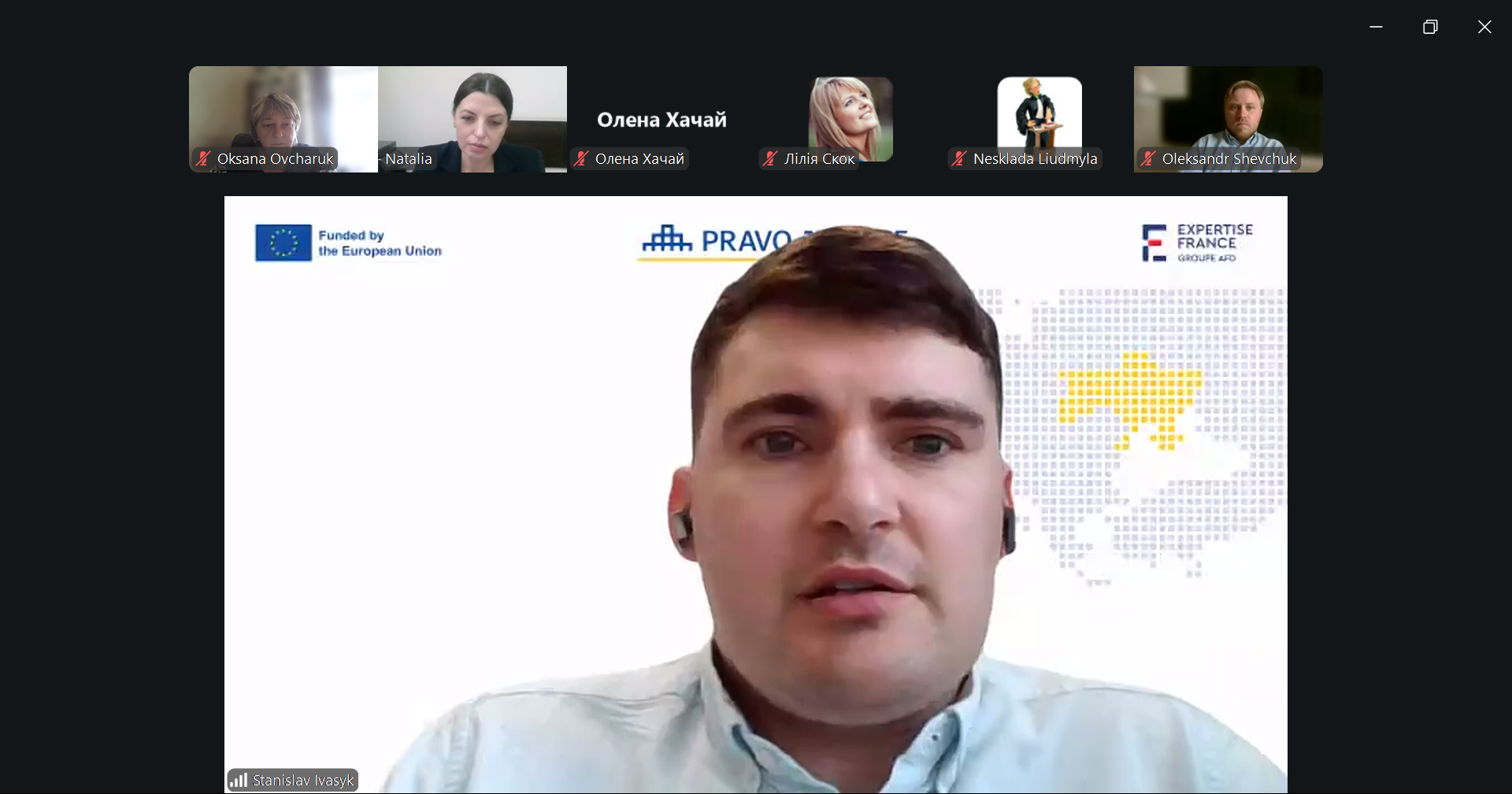
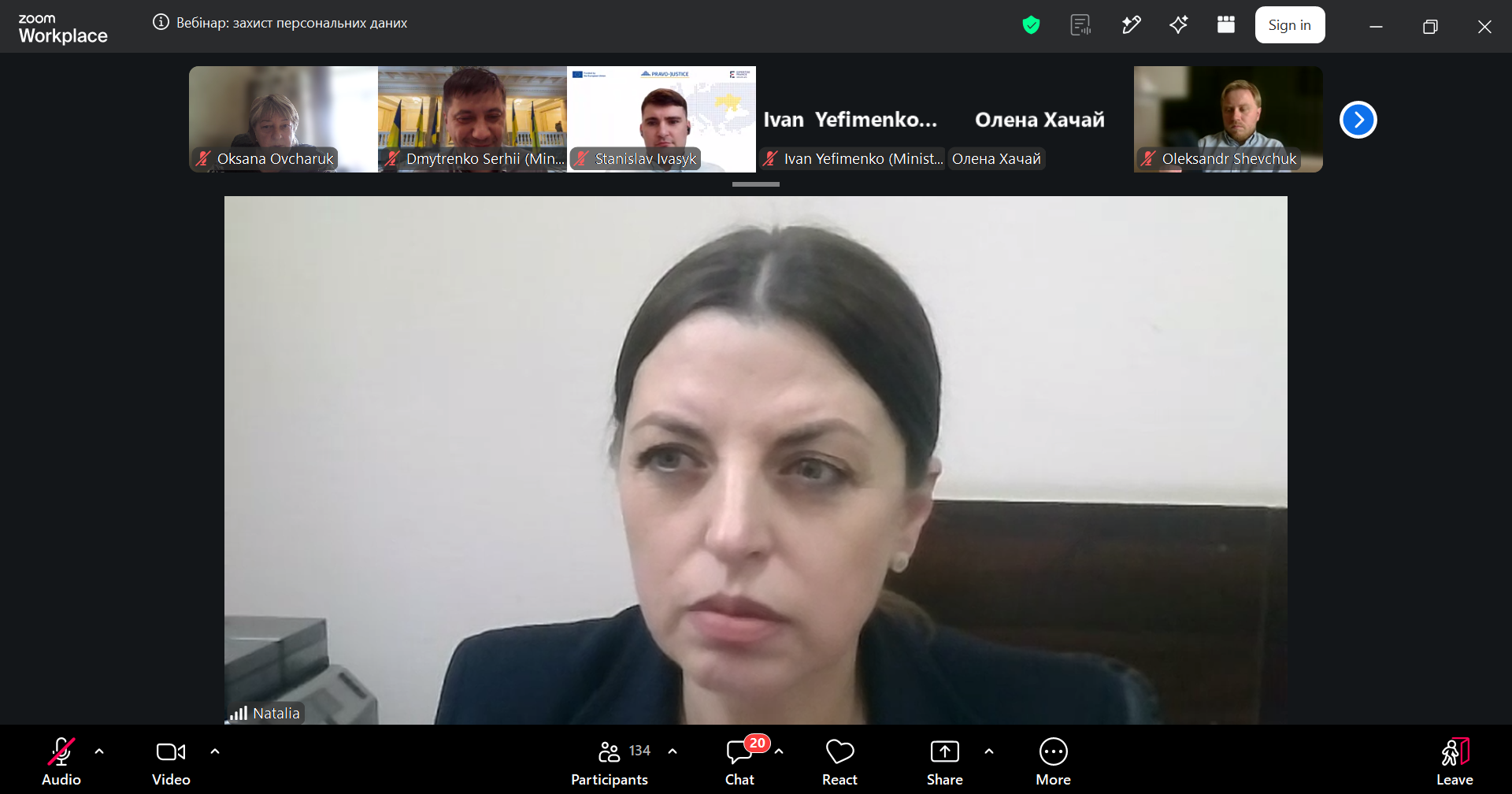
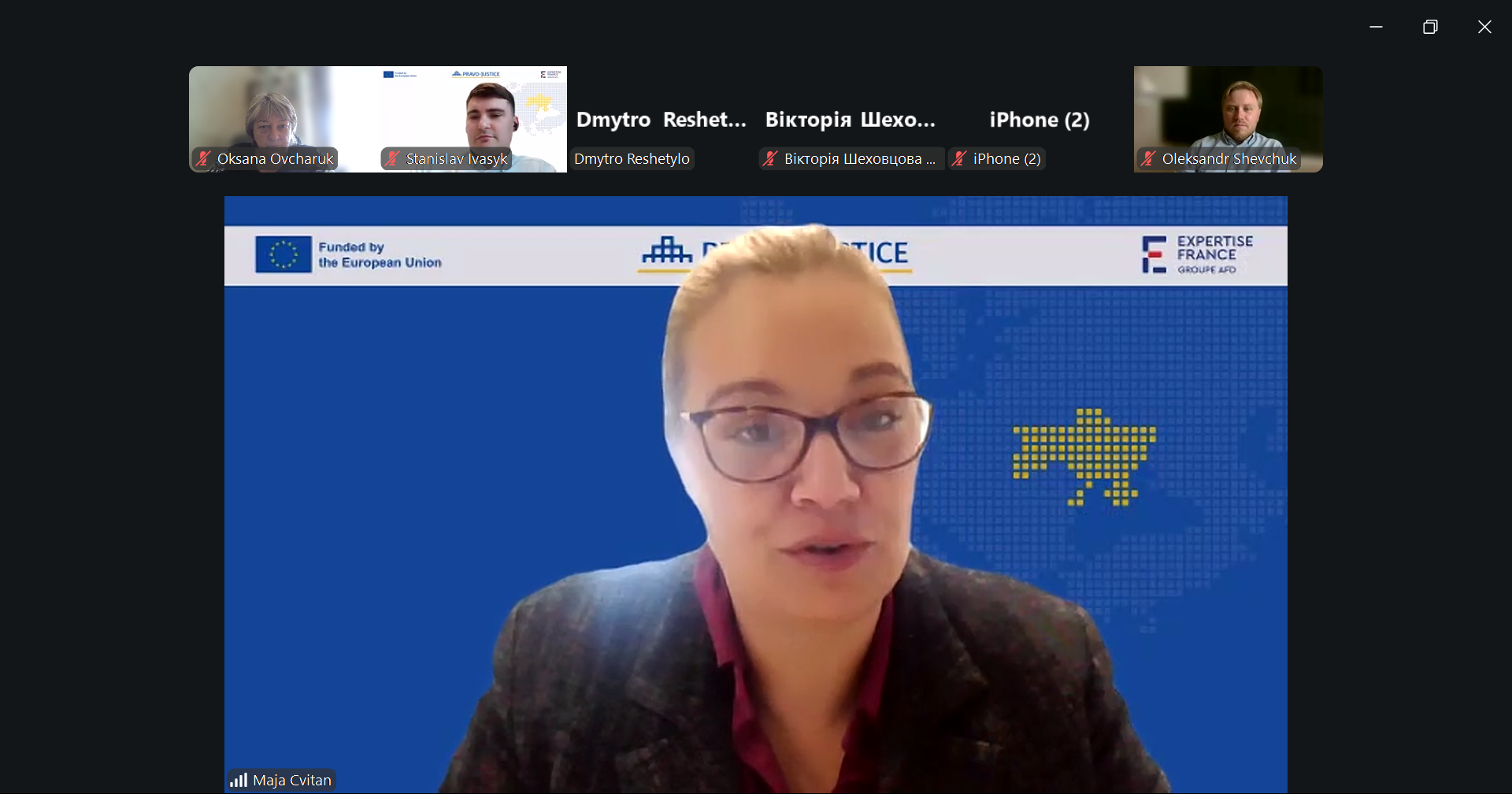
On 2 June 2026, the online webinar “Personal Data Protection: Current Challenges on Ukraine’s Path to EU Membership” was organised by the Council of Europe project “Support to the Implementation of the European Human Rights Standards in Ukraine: Phase II” and the EU-funded Pravo-Justice Project at the request of the Ministry of Justice of Ukraine. The participants discussed key aspects of the reform of the personal data protection framework and harmonisation of Ukrainian legislation with European standards as part of Ukraine’s path towards accession to the European Union.
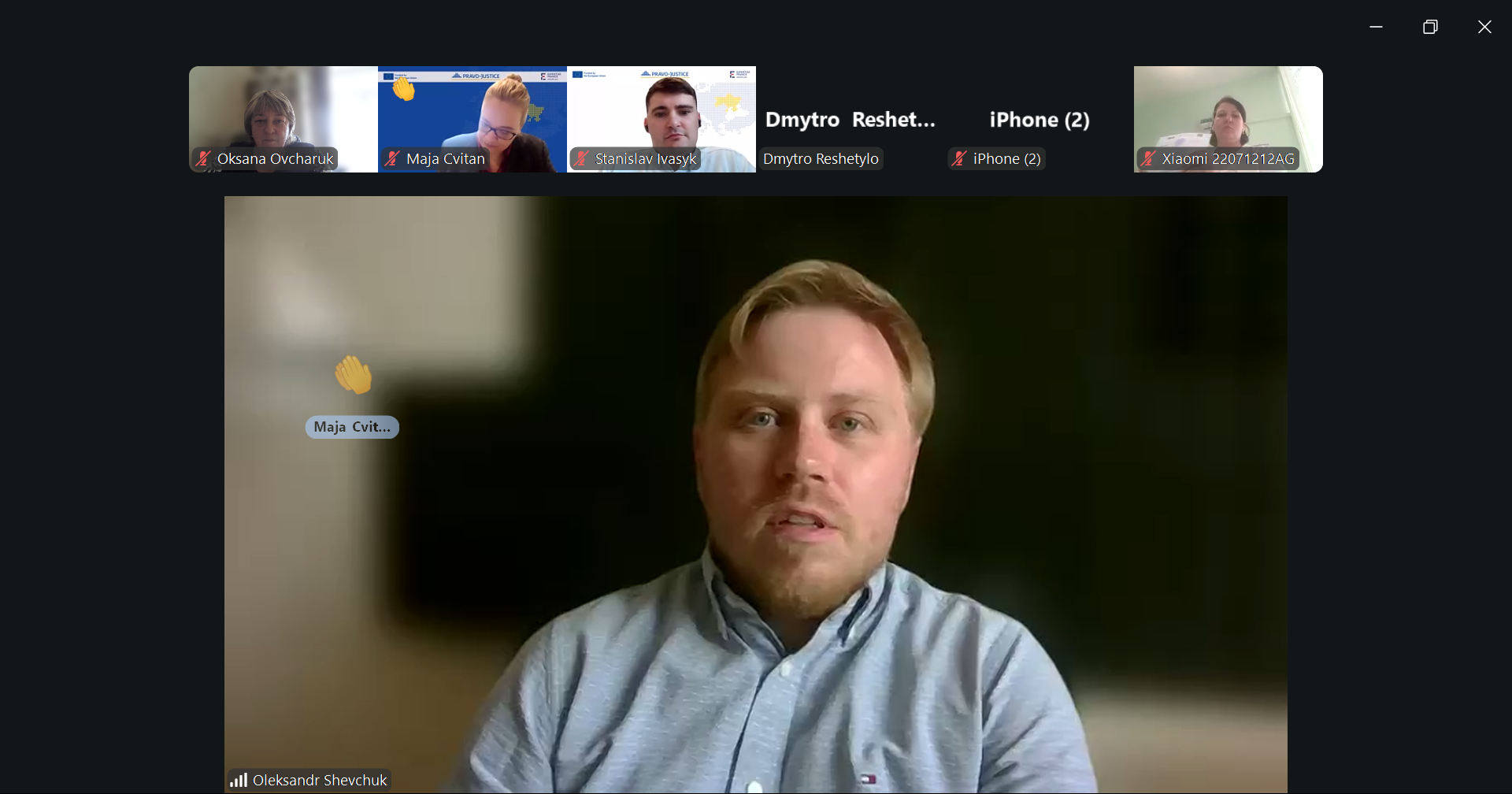
During the presentation, Council of Europe expert Oleksandr Shevchuk focused on Council of Europe and EU standards in the field of personal data protection, the progress of the relevant reform in Ukraine, and the assessment of implementation of the Rule of Law Roadmap. Particular attention was paid to the challenges and prospects of Ukraine’s integration into the European Union’s Digital Single Market.
Participants were introduced to EU standards for personal data processing, the specificities of conducting data protection impact assessments for the processing of sensitive categories of personal data, and the potential risks associated with the use of emerging technologies. The adoption of new legislation in the field of personal data protection, in particular the Laws of Ukraine “On Personal Data Protection” and “On the National Commission in the Field of Personal Data Protection and Access to Public Information”, is of particular importance today. The organisers stressed that further alignment of the Ukrainian legislation with European standards remains a key prerequisite for Ukraine’s successful progress towards EU membership.
Reference information: the Council of Europe project "Support to the Implementation of the European Human Rights Standards in Ukraine: Phase II" is aimed at strengthening the system of human rights protection in Ukraine by bringing the national legislation and practice in line with international standards and enhancing the operational capacity of the Ombudsperson to prevent torture and ill-treatment in places of deprivation of liberty and guarantee protection of the right to privacy and personal data.





.png/22d61ef9-f484-e61b-ccec-5829a26f7761?version=1.0)
.png/72c21cf9-5035-2e40-ad37-babd2c8b6237?version=1.0)