For millions of people living through Russia’s ongoing war of aggression against Ukraine, finding an accessible shelter is not a distant or hypothetical scenario. It is an everyday reality that can determine whether fundamental rights — including the rights to life, safety and human dignity — can be effectively protected. For many, hearing an air-raid siren and discovering that the nearest shelter is locked, inaccessible, or impossible to reach due to limited mobility, disability, or caring responsibilities is a daily risk.
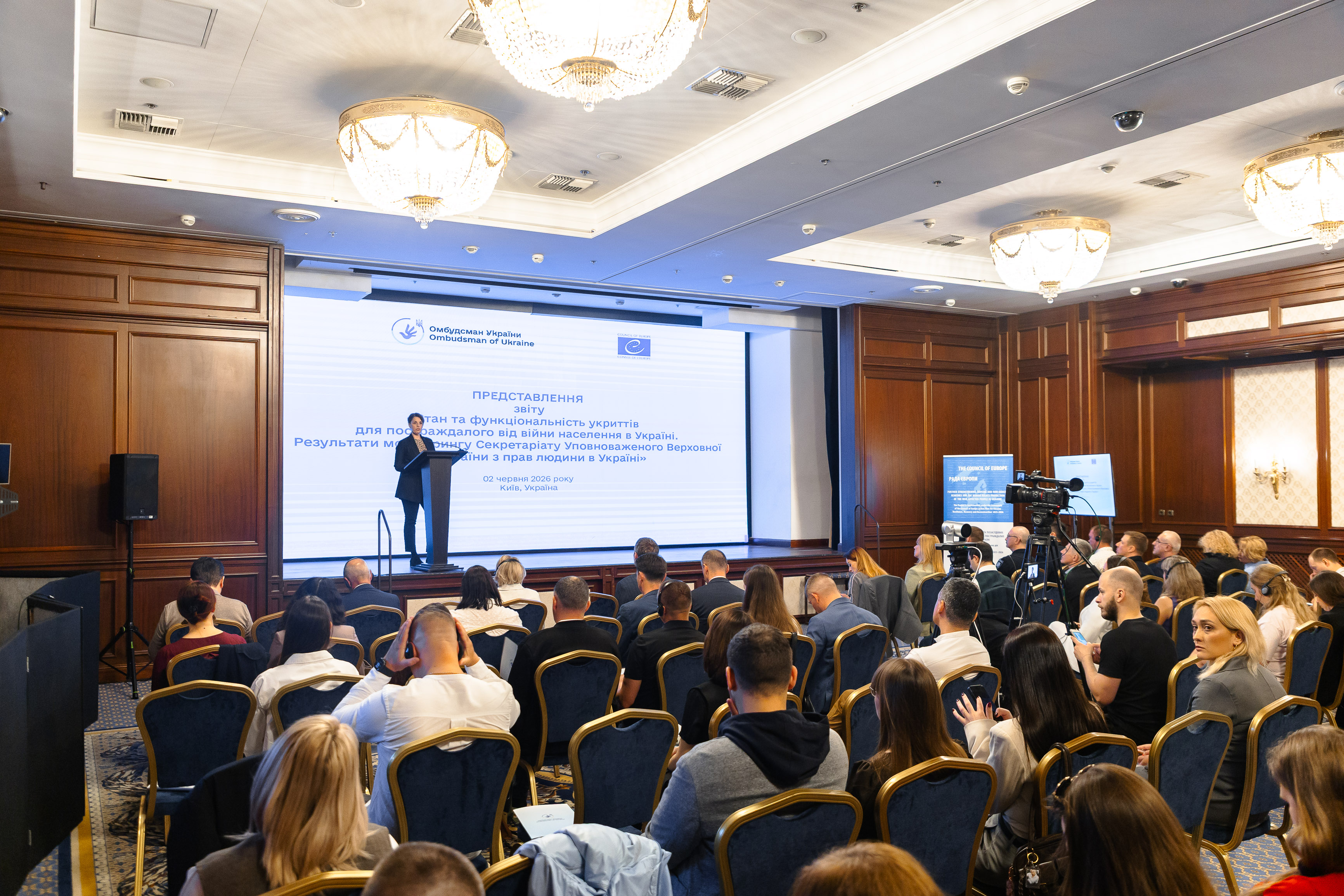
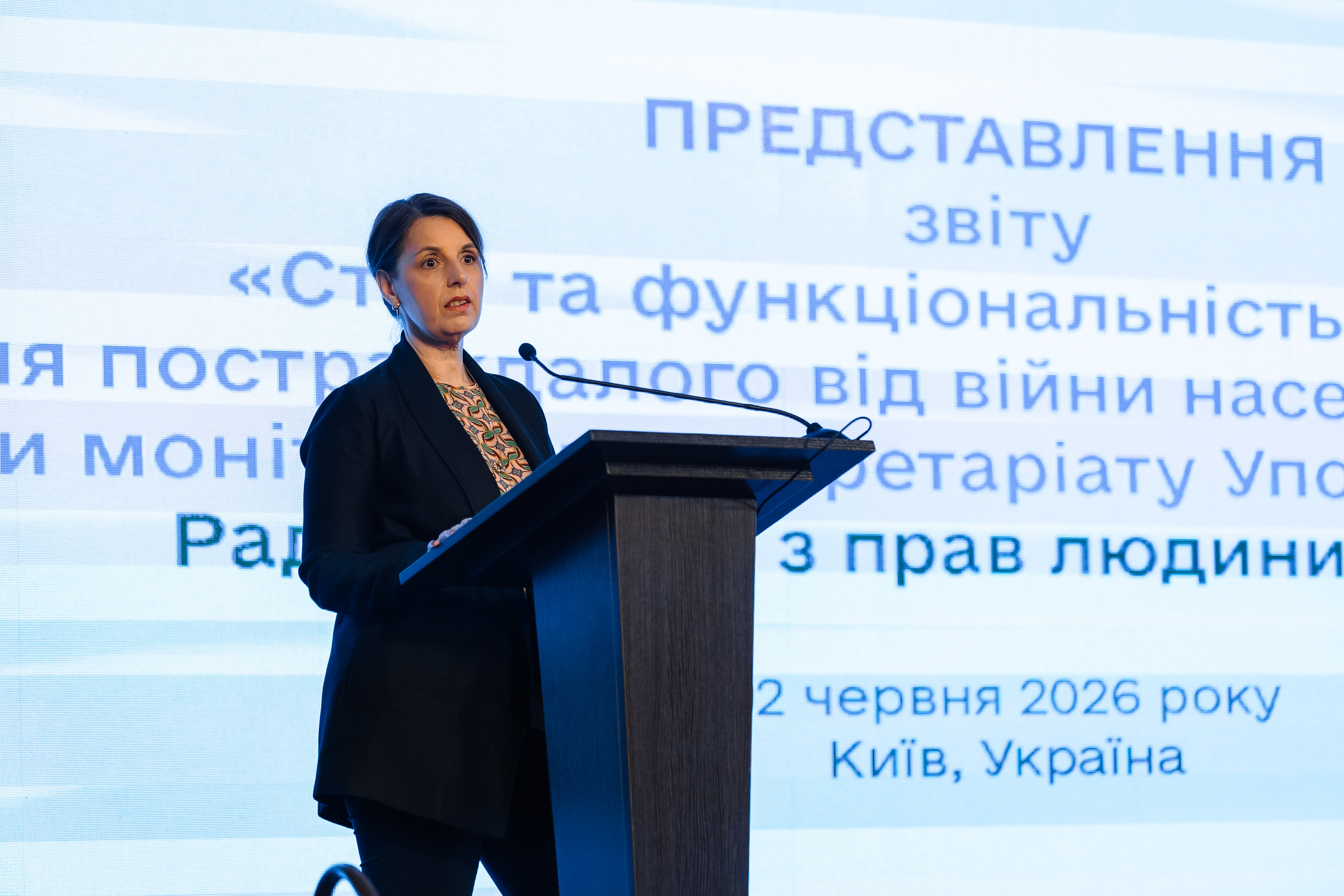
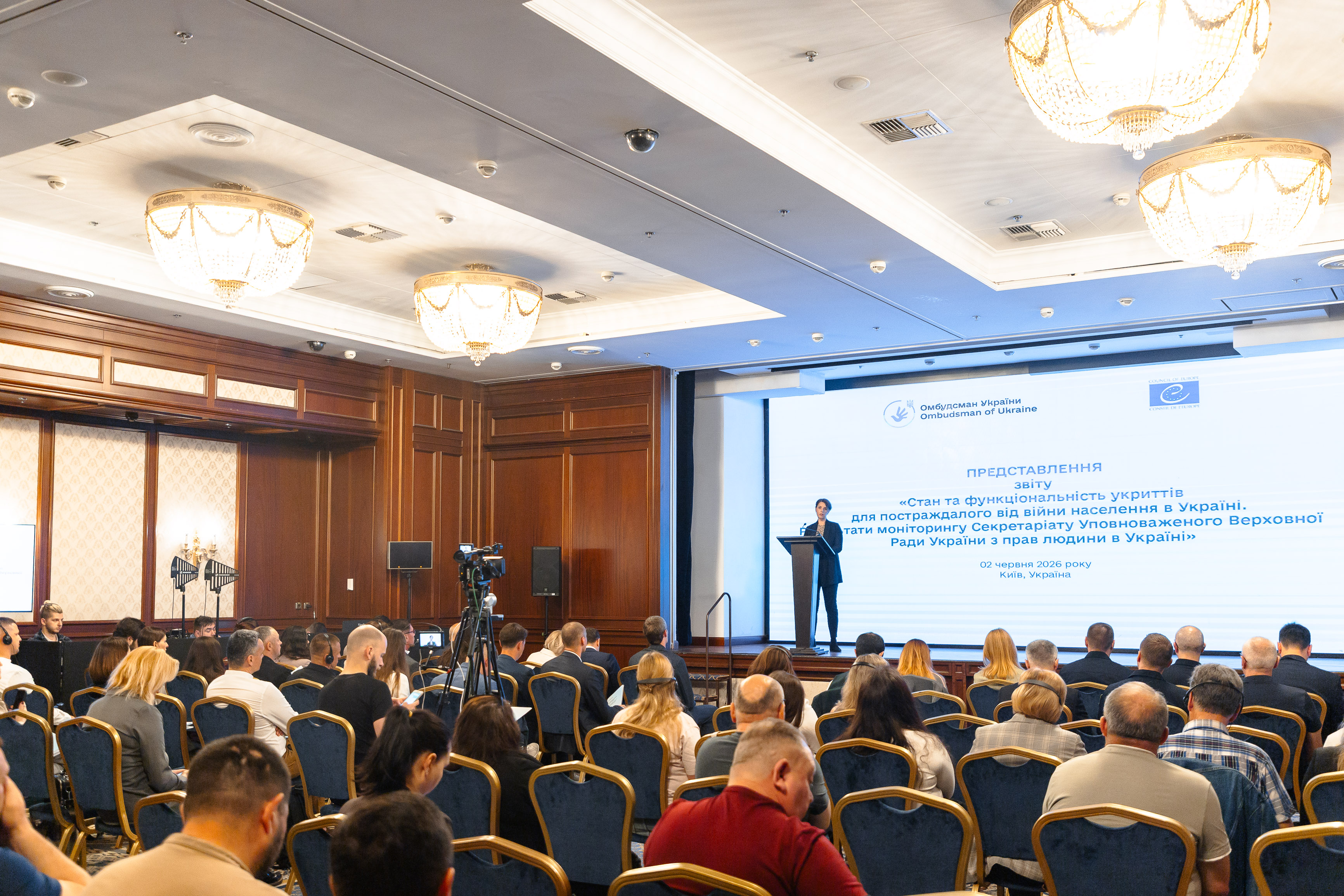
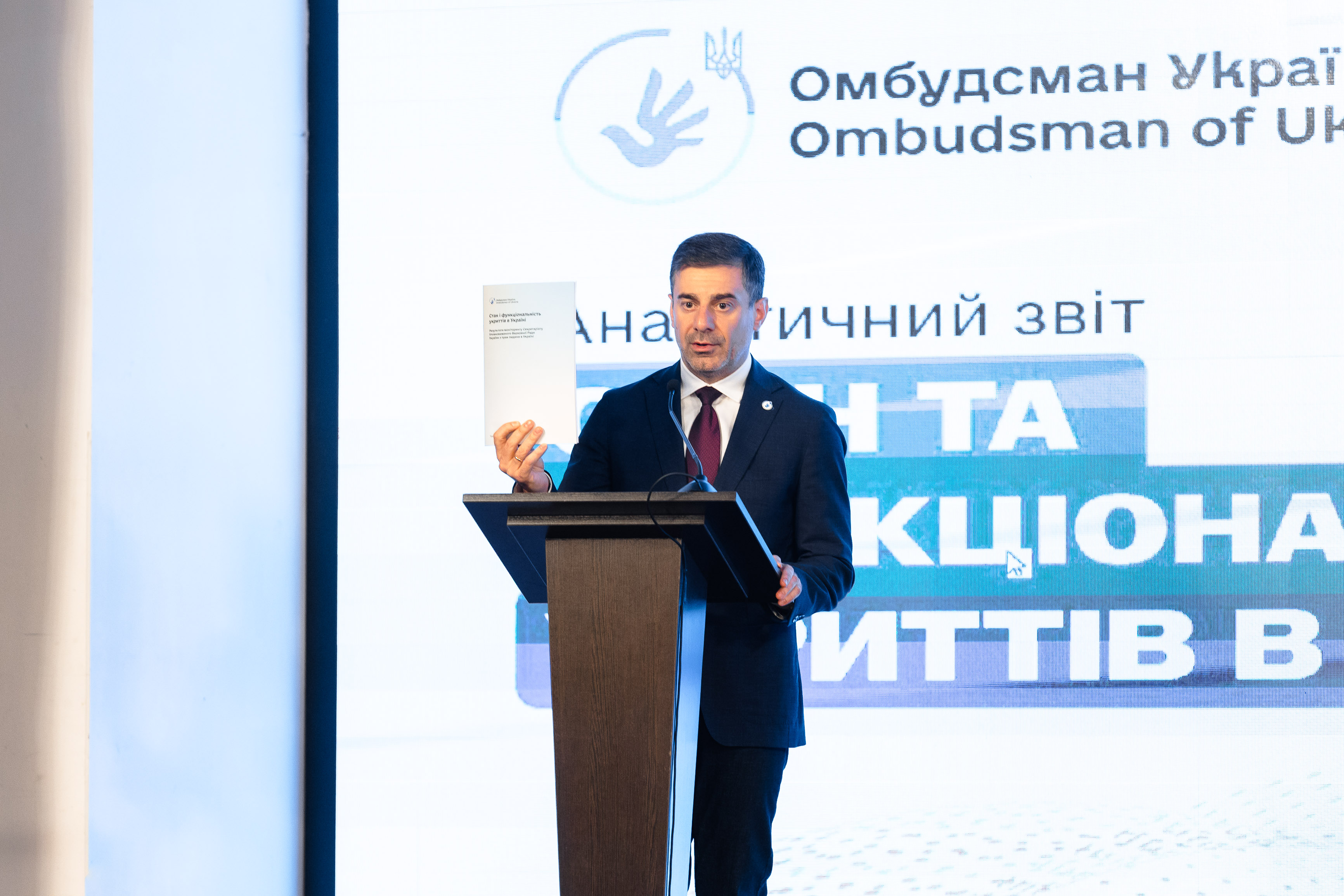
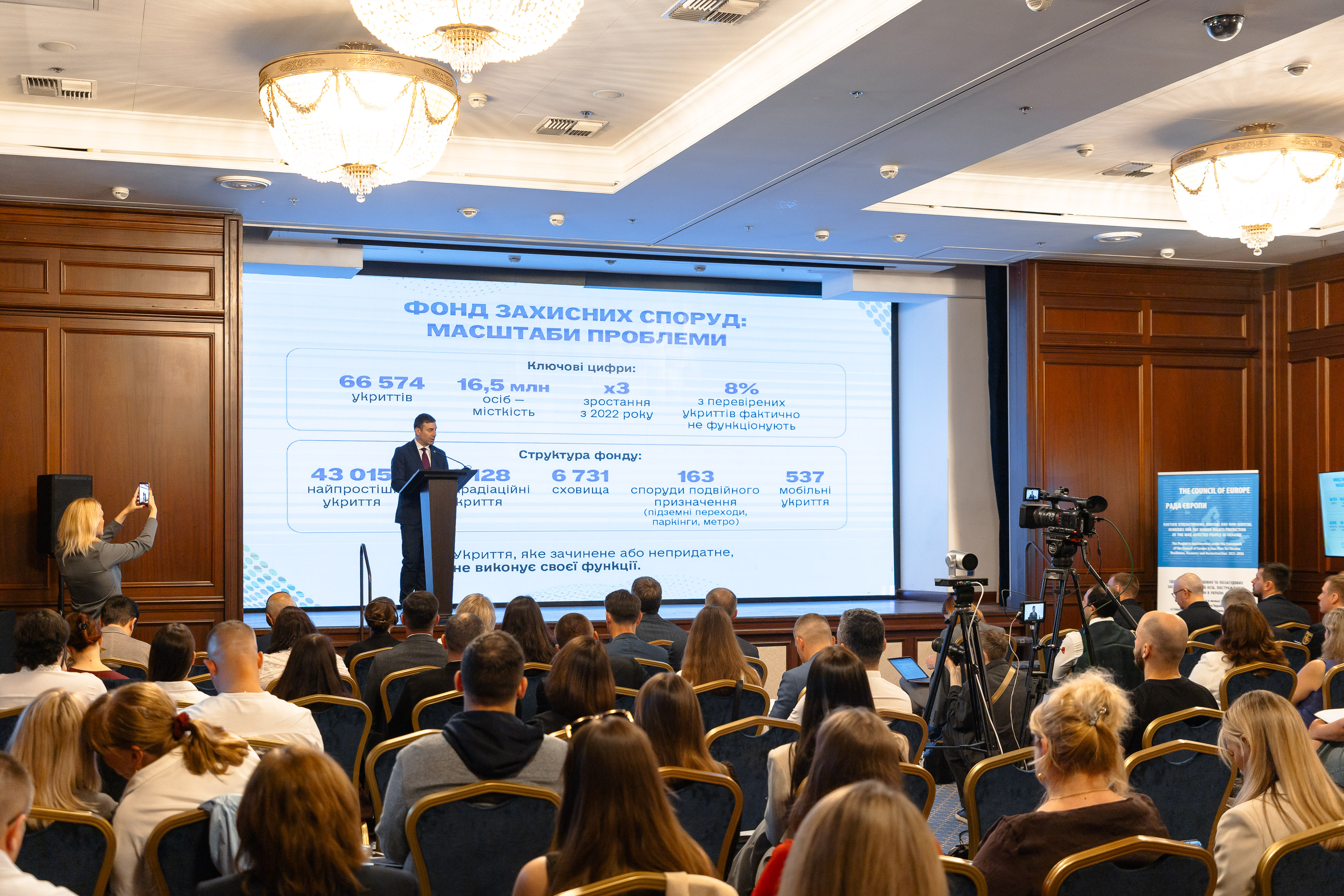
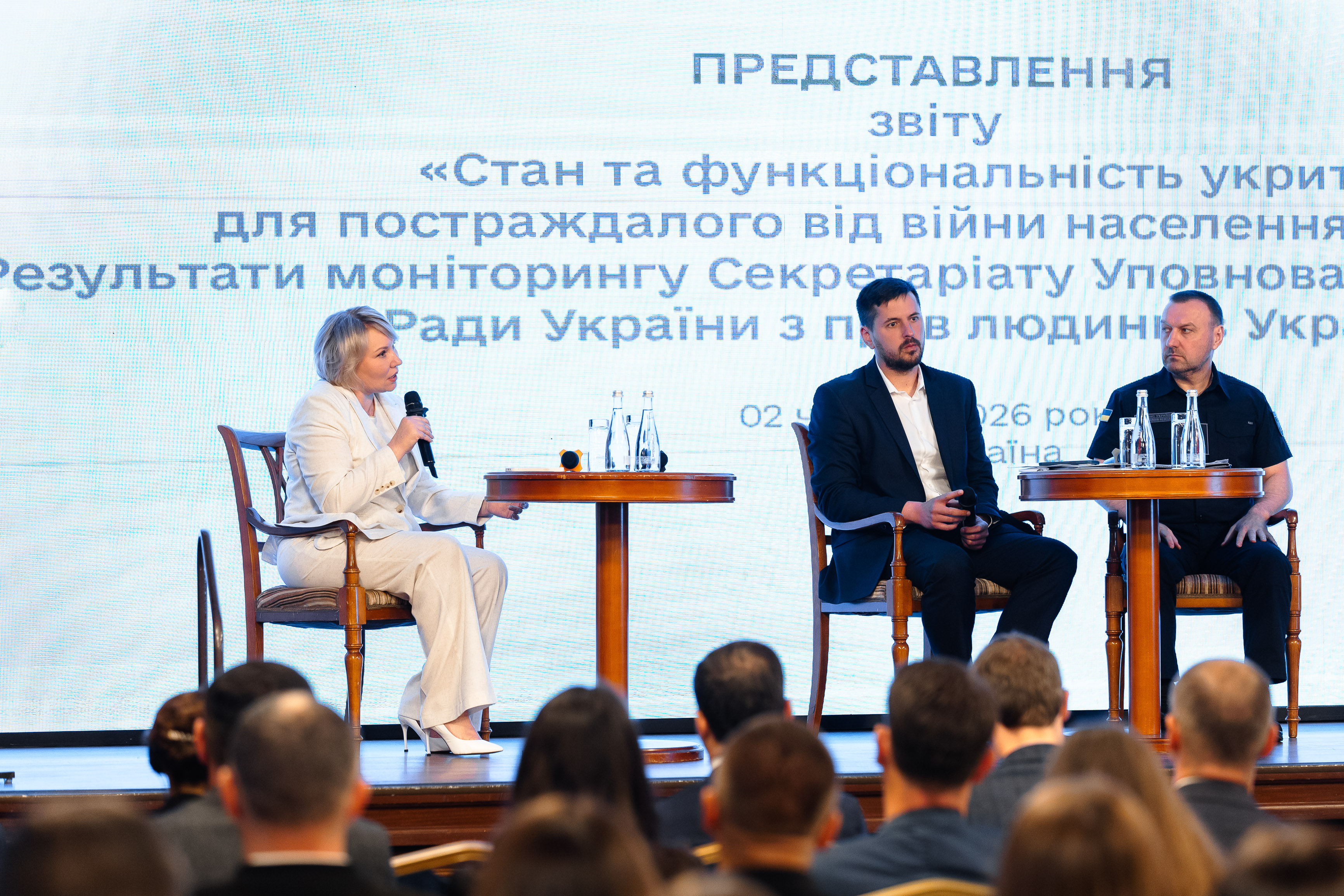
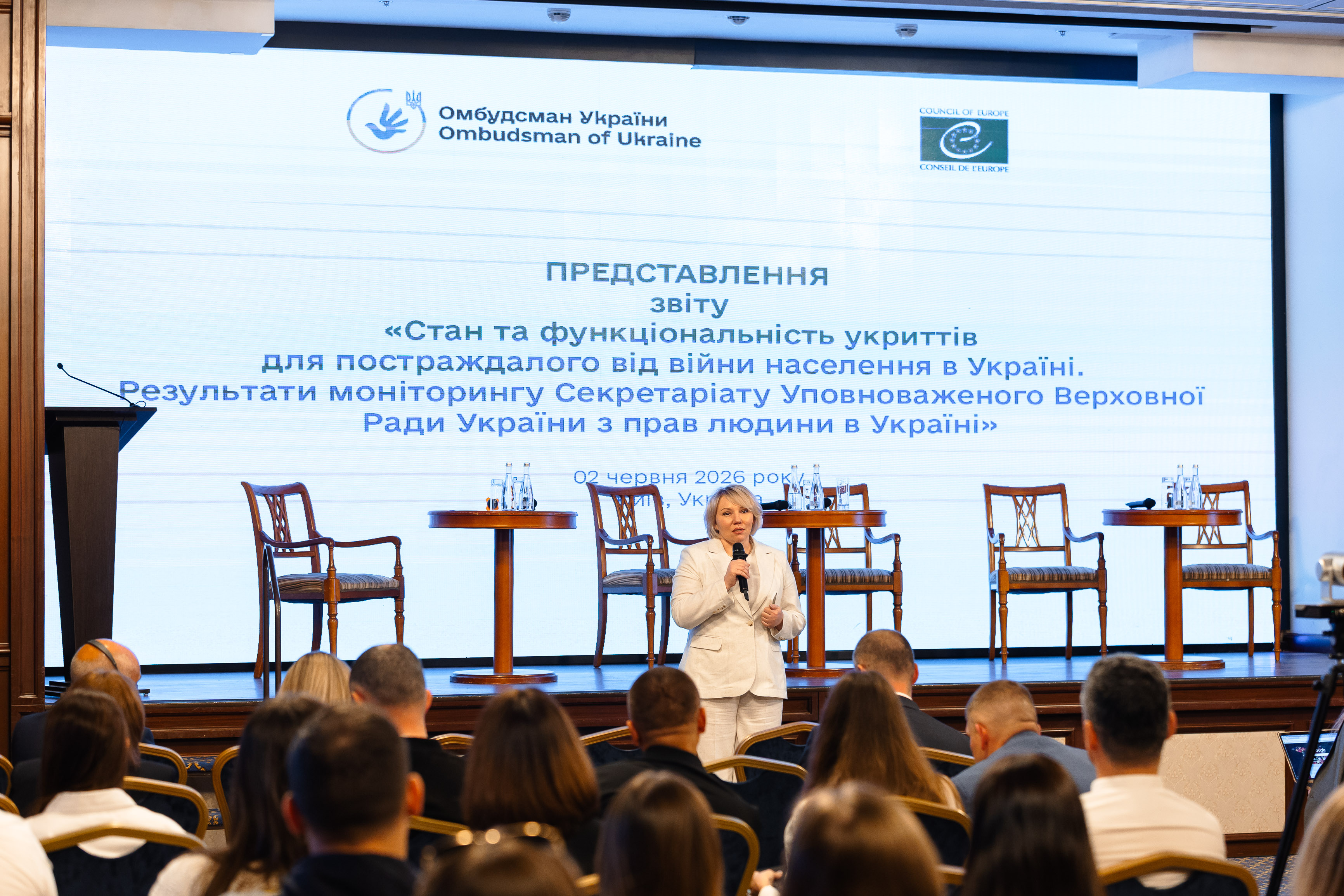
The status and functionality of shelters available to war-affected people was the subject of a joint report presented on 2 June 2026 by the Council of Europe and the Secretariat of the Ukrainian Parliament Commissioner for Human Rights. The presentation brought together representatives of the Verkhovna Rada of Ukraine, national ministries, the State Emergency Service, local authorities, civil society organisations, international partners, and experts to discuss practical solutions and innovative approaches to strengthening civil protection for war-affected people. Opening the presentation, the Deputy Head of the Council of Europe Office in Ukraine, underlined that accessible and properly functioning shelters are integral to protecting fundamental human rights.
The monitoring report entitled “Status and Functionality of Shelters for the War‑Affected People in Ukraine: Results of the Monitoring by the Secretariat of the Ukrainian Parliament Commissioner for Human Rights”* provides one of the most comprehensive assessments of shelter accessibility and functionality conducted in Ukraine since the beginning of the full-scale invasion in 2022. Based on
1 071 monitoring visits to protective structures, anti‑radiation shelters, dual‑purpose facilities and simple shelters nationwide, the report reveals serious and widespread problems with the accessibility and functionality of shelters across Ukraine. Of the monitored shelters, only 80 facilities required no recommendations; 991 shelters had deficiencies, giving rise to 3 929 recommendations in total. Nearly 8% of shelters listed in public registries were found to be non‑operational.
The report emphasises that these are not merely technical shortcomings: in a country facing regular air‑raid alerts and attacks on civilians, inaccessible or non‑functional shelters pose a direct danger to the rights to life, safety, dignity and non‑discrimination. Persons with disabilities, older people, caregivers of young children and other vulnerable groups are particularly at risk. Major recurrent issues identified included widespread physical barriers for people with reduced mobility (including lack of ramps, narrow doors, inaccessible lifts), locked or otherwise inaccessible premises and entrances, insufficient emergency supplies and first‑aid equipment, poor or missing signage and outdated information in official registries.
The report offers a practical roadmap of recommendations for national and local authorities, covering legislation and accessibility standards, dedicated financing and maintenance, urban planning and retrofitting, accurate public registries and signage, emergency supplies and training, and continued monitoring and accountability to ensure implementation.
This report was prepared by the Council of Europe within the framework of the project “Further Strengthening Judicial and Non-Judicial Remedies for the Human Rights Protection of War-Affected People in Ukraine”, implemented under the Council of Europe Action Plan for Ukraine “Resilience, Recovery and Reconstruction” 2023–2026.