The Council of Europe project “Strengthening multilevel governance and local democracy to support Ukraine’s recovery” presents its key achievements for the period from April 2025 to May 2026. During this period, the project continued to strengthen multilevel governance and local democracy in Ukraine in the context of the ongoing full-scale war, while supporting the alignment of recovery and reconstruction efforts with the principles of the European Charter of Local Self-Government and Ukraine’s path towards European Union membership through three key areas of intervention:
- Improving legal and institutional frameworks on multilevel governance in line with the European Charter of Local Self-Government, European standards and good practices;
- Improving the quality of local and regional governance through strengthened institutional capacities and co-operation among authorities at different levels and their associations;
- Boosting democratic innovations and participatory governance to foster public participation and strengthen collaboration with civil society organisations.
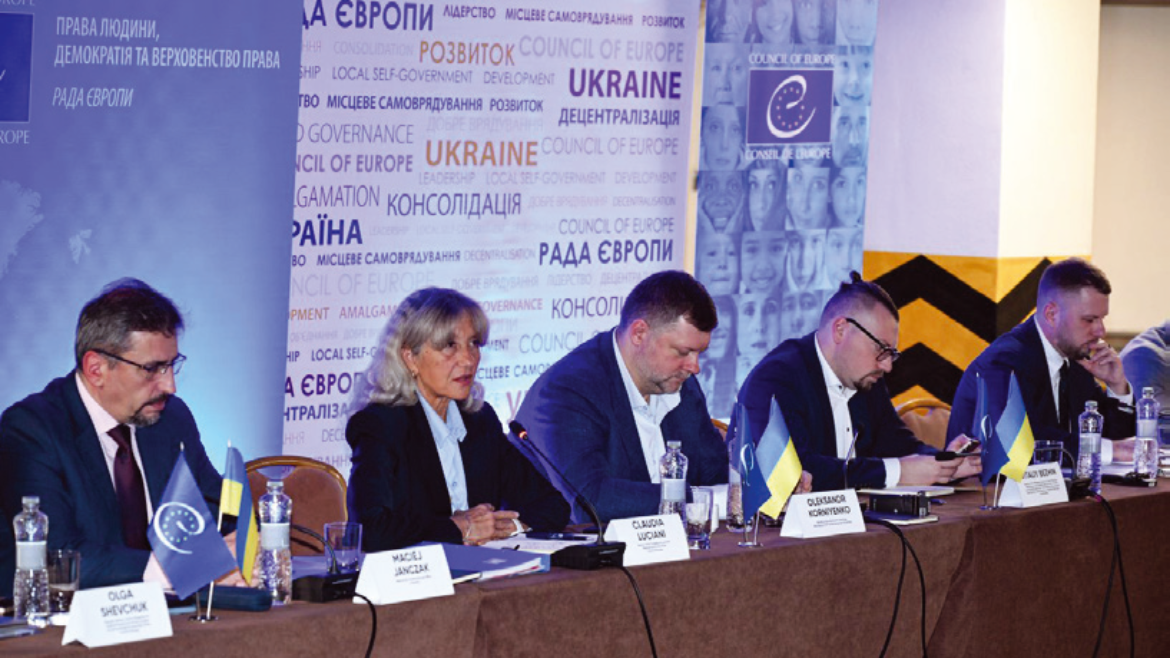
Through legal expertise, policy advice, High-Level Dialogues on Good Democratic Governance, multilateral in-camera negotiations and capacity-building activities, the project contributed to strengthening multilevel governance during wartime, advancing metropolitan co-operation, supporting the preparation of legislative proposals on the distribution of powers among levels of governance, and improving legality supervision and transparency in local self-government.
Significant progress in legislative and policy development was among the key achievements . This included the update of the Decentralisation Reform Concept (No.1748) ; the adoption of Law No. 4425-IX on Amendments to Legislation on Inter-Municipal Co-operation; and the first reading of Draft Law No. 14412 on the Principles of distribution of powers among levels of public governance.
The project also contributed to strengthening the role of local authorities in relation to the Register of Damage for Ukraine. In particular, 205 participants took part in activities dedicated to local open government principles and practices. In addition,a round table on the practical role of local authorities in supporting residents to submit claims to the Register of Damage brought together more than 500 participants.
Within the framework of local open government and human rights, a new cycle of Local Initiatives for 2025-2026 was launched. Following a competitive selection process, six communities – Bila Krynytsia, Hlyboka, Ivanivka, Kamianets-Podilskyi, Smila and Ternopil – received direct financial and expert support to implement initiatives promoting democratic innovation and human rights at the local level. Zviahel and Orzhytsia received additional support to implement their action plans. Each community works in partnership with a civil society organisation, enhancing the inclusiveness and sustainability of the initiatives. During the interim workshop for grantees held in Kyiv on 20 May 2026, representatives of the eight participating communities presented their achievements, exchanged experiences and received guidance on reporting requirements.
Representatives of participating communities also contributed to discussions on open government during the Open Government Partnership (OGP) Global Summit held in Vitoria-Gasteiz, Spain, from 6 to 10 October 2025. The Summit brought together more than 2,000 representatives of public authorities and civil society organisations from over 70 countries. Participating communities showcased their experiences in implementing open government principles and citizen participation practices.
Improving the quality of local and regional governance was important area of work. Project interventions strengthened the institutional capacities of local authorities in the Lviv, Kyiv and newly established Ivano-Frankivsk agglomerations.
Almost 2,000 participants took part in thematic and tailor-made capacity-building activities, including public investment management at local level, local self-government service and spatial planning to support sustainable recovery.
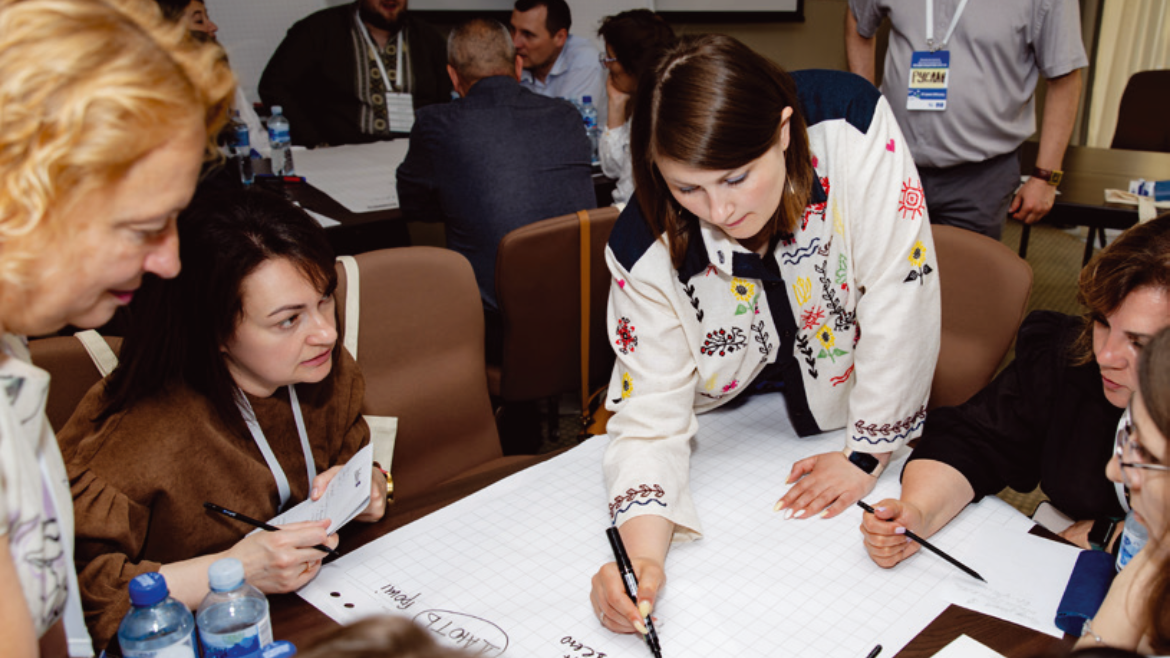
Supporting communities’ recovery also remained a priority. The second cohort of the Community Recovery Academy, a comprehensive learning programme implemented from October 2025 to April 2026, brought together representatives of communities from 17 regions of Ukraine. Participants enhanced their knowledge of strategic planning, strengthened skills in mobilising financial and human resources, and developed project proposals for the recovery and sustainable development of their communities, which they presented and defended during the final event held on 29-30 April 2026.
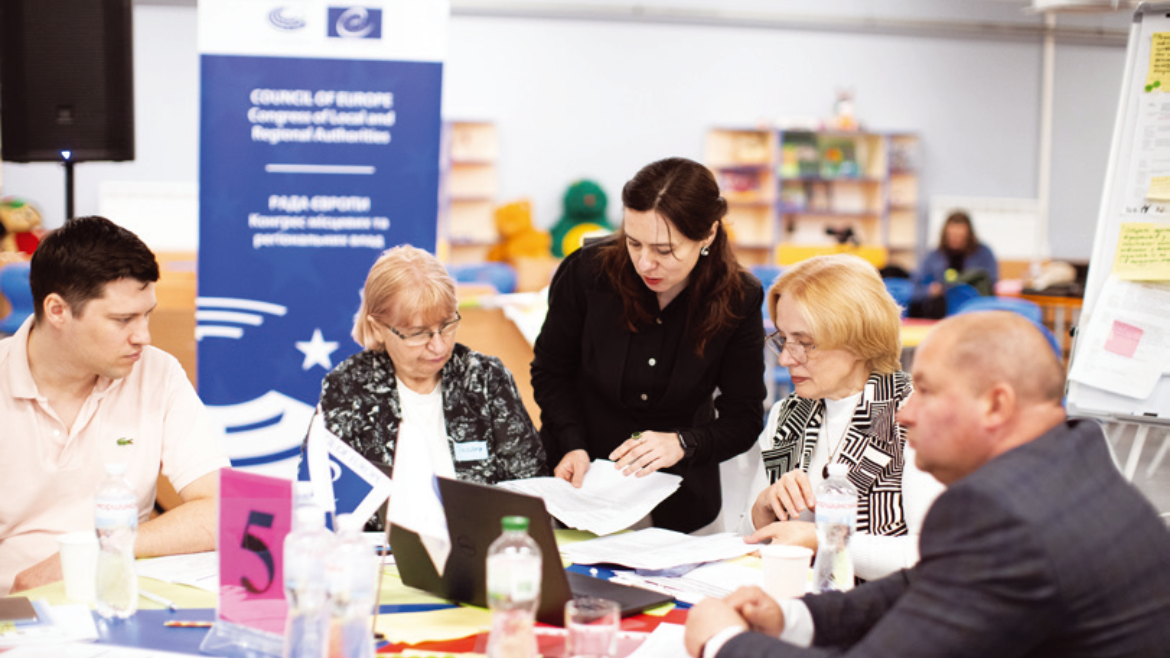
Special attention was devoted to spatial planning as a foundation for decision-making on land use, housing, economic development and infrastructure development in communities. A series of regional express trainings on spatial planning, conducted between November 2025 and April 2026, brought together more than 400 participants, including mayors and local self-government officials from over 200 Ukrainian communities. The final session held in Kyiv on 28 April 2026 identified practical steps for strengthening spatial planning at local level, including the need for reliable local data, integrated approaches and effective tools for aligning strategic, spatial, infrastructure and budgetary decisions.
The project also focused on democratic innovation, participatory governance and co-creation. Through the implementation of citizens’ assemblies, the project supported the direct involvement of residents in decision-making processes and in developing recommendations on key local development issues. In Rivne community, participants of the citizens’ assembly formulated 20 recommendations aimed at encouraging young people to remain in the community and build their future there. In Kyiv’s Obolon District, residents developed 24 recommendations to improve support for veterans and their families. In Lviv agglomeration, 50 residents from 13 communities will soon begin deliberations and develop recommendations on sustainable water resource management.
The project also strengthened the capacities of 80 representatives of public authorities and civil society organisations in the field of deliberative democracy and contributed to expanding the pool of local experts capable of designing and facilitating citizens’ assemblies.
A further important achievement was the institutionalisation of youth participation. Eleven Ukrainian communities adopted regulations on inclusive School Participatory Budgeting developed in line with Council of Europe standards through participatory approaches and have begun implementing this mechanism. As a result, more than 6,200 children from 11 communities, including children with special educational needs, have been empowered to participate in voting and decision-making processes within their schools. Six additional communities are currently receiving expert and mentoring support to launch inclusive School Participatory Budgeting in autumn 2026.
To support the wider dissemination of School Participatory Budgeting across Ukrainian communities, the project, in partnership with the EGAP Programme, developed an online training course. The course consists of three modules explaining how to implement School Participatory Budgeting for local authorities, educational institutions and school students.
The project “Strengthening multilevel governance and local democracy to support Ukraine’s recovery” is implemented as part of the Council of Europe Action Plan for Ukraine “Resilience, Recovery and Reconstruction” for 2023–2026 by the Centre of Expertise for Multilevel Governance at the Congress of Local and Regional Authorities of the Council of Europe.