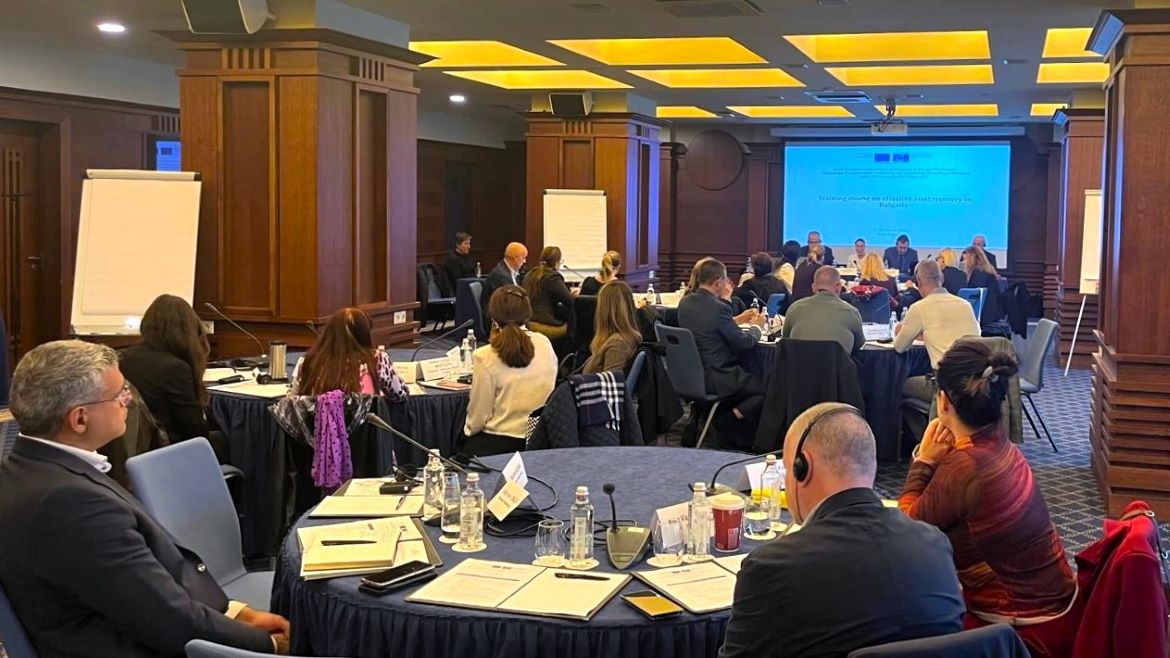
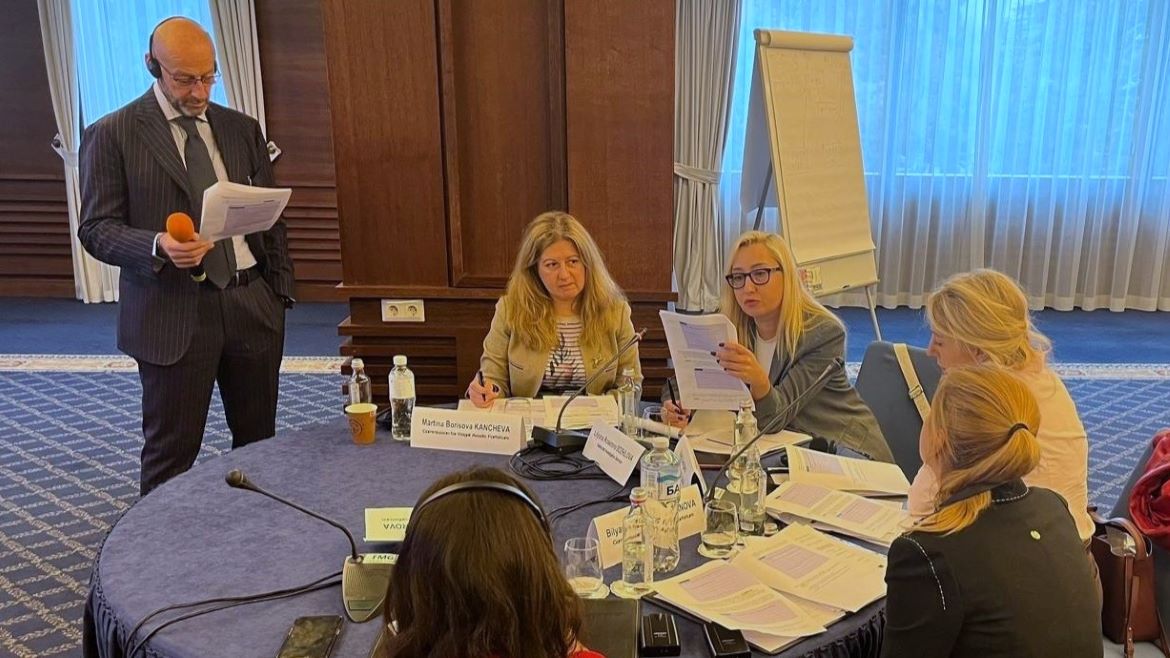
On 21-22 October 2026, the Council of Europe organised a two-day training course on effective asset recovery. The event aimed at strengthening Bulgarian competent authorities’ capacities to trace and recover criminal assets, including by supporting them in the operationalisation of recent legal reforms.
The course covered the full asset recovery process, from financial investigation and early freezing measures to seizure, confiscation and asset management. Participants explored how authorities can follow the money throughout an investigation and coordinate their efforts to identify, secure and confiscate criminal assets. Participants discussed parallel financial investigations, early freezing, international cooperation and the practical challenges of managing complex assets, including crypto-assets.
A key focus was the implementation of recent amendments to Bulgaria’s Criminal Code and Criminal Procedure Code. The amendments extended third party confiscation to non bona fide third parties across offences and established procedural rights for affected third parties. The discussions also addressed provisional measures, including outstanding legal and operational challenges.
Practical exercises invited participants to map assets in an organised crime case, plan a coordinated seizure and develop an international cooperation strategy. Sessions also covered asset management and disposal, victim compensation, social reuse and the use of statistics to monitor progress.
The course brought together 27 representatives of the Commission for Illegal Assets Forfeiture, the State Agency for National Security, the Prosecutor’s Office, the National Investigation Service, the Ministry of Interior’s General Directorate for Combating Organised Crime, the Ministry of Justice and the Council of Europe.
The activity was organised as part of the Council of Europe efforts to support Bulgarian authorities in addressing the recommendations set out in the 2022 MONEYVAL Mutual Evaluation Report and FATF Action Plan. The training will be complemented by the development of a tailored guidance document on tracing, freezing and confiscating assets in criminal cases in Bulgaria.
The activity was organised within the framework of the Technical Support Instrument (TSI) project on “Enhancing the anti-money laundering and countering the financing of terrorism (AML/CFT) framework in Bulgaria”, co-funded by the European Union and the Council of Europe, and implemented by the Council of Europe.

.jpg/65c16202-2943-d236-a67b-d665fdee7122?version=1.0)
.jpg/d9c11cd4-82a3-1e43-a398-e76279db74df?version=1.0)
.jpg/45867f99-7ab0-073f-be79-9301a4dccf79?version=1.0)