


No Hate Speech Week 2026

In a context of rising disinformation, polarisation and digital threats to democracy, hate speech remains one of the most corrosive forces undermining social cohesion and democratic values. Addressing it requires both principled action and practical innovation. That is why, in 2026, the Council of Europe is launching two complementary initiatives under the New Democratic Pact for Europe: the second Hackathon focused on technical and civic innovation to tackle democratic backsliding, and the third edition of the No Hate Speech Week (NHSW), focusing on strengthening democratic responses and public mobilisation against hate speech. The NHSW is organised to mark the International Day for Countering Hate Speech on 18 June.
The No Hate Speech Week is an event organised by the Council of Europe with support of the European Union, to mark the International Day for Countering Hate Speech on 18 June. The Week also aims to promote Recommendation CM/Rec(2022)16 on Combating Hate Speech and support multi-stakeholder cooperation to implement its recommended legal and non-legal measures. This year, the No Hate Speech Week forms part of the consultation process for a New Democratic Pact for Europe, initiated by the Council of Europe. The New Democratic Pact for Europe seeks to boost solutions that work and create new responses to reinforce democracy, amplify its benefits, and innovate its form to make it tangible for everyone, especially younger generations.

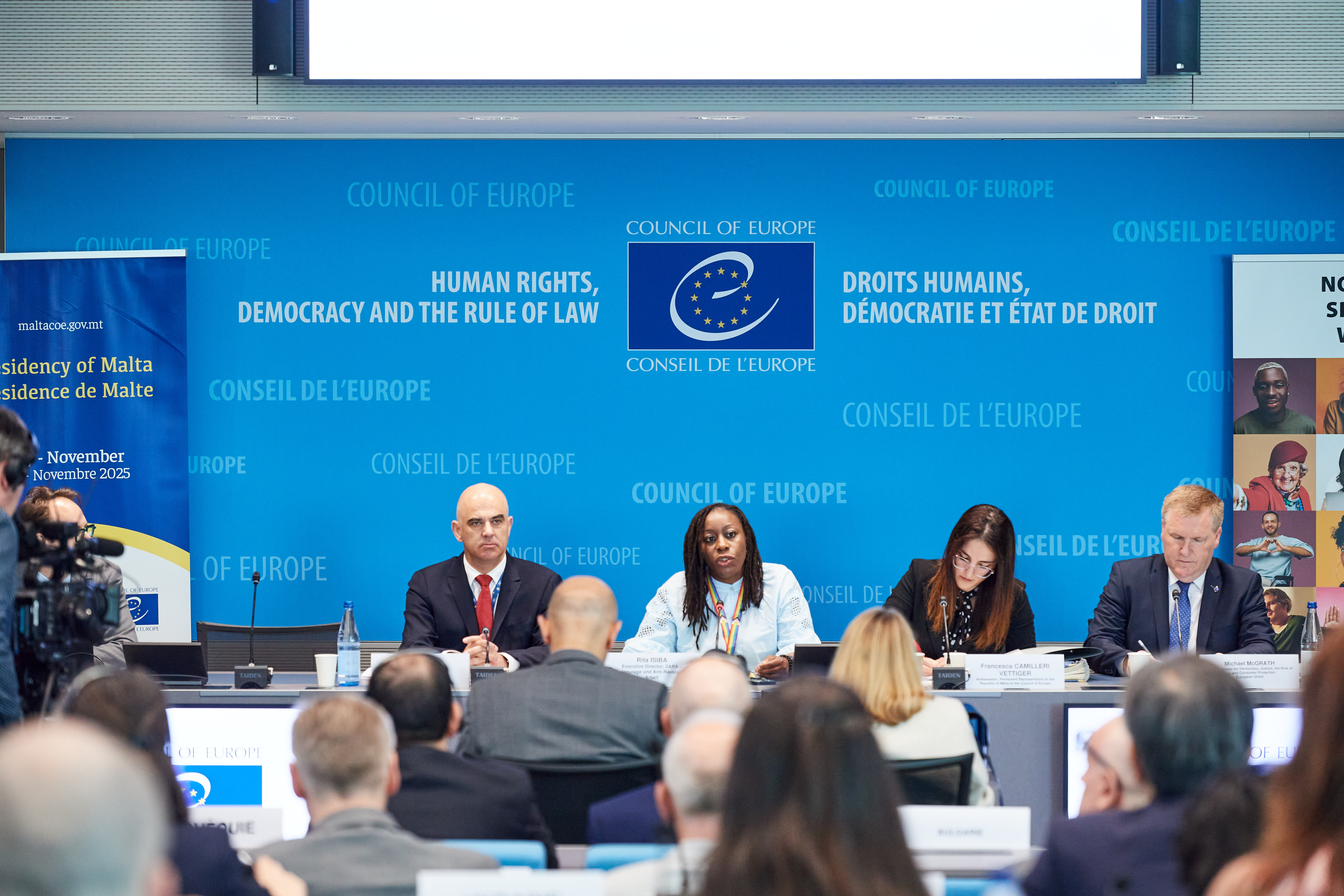
Theme for No Hate Speech Week 2026: ‘Hate Speech – Free Democracy’: Multistakeholder collaboration for preventing and combating hate speech and for inclusive democracy
The rise of hate speech, setbacks in gender equality and women’s rights and attacks on minority rights highlight the urgent need for renewed commitments. Furthermore, democratic participation relies on equal access and inclusion, yet racism, religious intolerance, anti-LGBTI attitudes, and antigypsyism continue to undermine this principle. These forms of discrimination fuel hate speech, exclusion and barriers to meaningful engagement in public life, disproportionately affecting marginalised groups.
The No Hate Speech Week 2026 enhances multistakeholder cooperation to prevent hate speech which hinders democratic participation of vulnerable groups. The week will explore examples and collect ideas on what can be done to strengthen inclusive democratic spaces free from hate speech. The No Hate Speech Week provides an opportunity to exchange on recent legal and policy developments and good practices of implementation, innovations and foster synergies between key partners. The presence of different stakeholders provides networking opportunities that can enable a comprehensive and multi-stakeholder approach to preventing and combating hate speech in line with the CM Recommendation CM/Rec(2022)16.
Methodological approach of the week - a collective success
The No Hate Speech Week takes place in parallel to other meetings of Council of Europe and EU bodies, to which the programme of the Week will make links, including:
- Plenary sessions of the Steering Committee on Anti-discrimination, Diversity and Inclusion (CDADI) and of the Steering Committee on Media and Information Society (CDMSI).
- Thematic sessions organised by the Intercultural Cities Programme (ICC).
- Project meetings of the Council of Europe Sexual Orientation, Gender Identity and Expression, and Sex Characteristics (SOGIESC) Unit
- Thematic session on hate speech and Journalism Excellence Award ceremony on ethical reporting on Roma and Travellers and combating antigypsyism through the media
- Workstream on preventing hate speech and hate crime under the EU High Level Group.
- Meeting of the EEA and Norway Grants’ Mission-Driven Initiative: Enhancing multi-stakeholder responses to hate speech and hate crime.
- Consultative meeting with CSO partners on the review of implementation of aspects of the CM/Rec(2022) on combating hate speech.
- Democracy Hackathon – Hack the hate, bringing together policy experts, technology expert, civil society, and young innovators to co-create practical solutions to combat hate speech in online spaces.
The programme of the week is designed to provide space for learning and networking between the different stakeholders – a multistakeholder approach in practice. The programme will include plenary sessions; workshops and working groups; networking sessions; social gatherings.
The 2026 Pact Hackathon should generate actionable insights and technology-driven approaches that will feed directly into the Pact’s consultation and thematic workstreams, supporting its ambition to deliver by the end of 2026 integrated and innovative solutions to address the current democratic backsliding. The democracy hackathon, with the support of the “No-Hate Speech Week” will bring together diverse stakeholders (policy experts, technology expert, civil society, and young innovators) to co-create practical solutions to combat hate speech in online spaces. Practically, the hackathoners will attend policy-workshop with the no-hate speech participants, who in turns will be involved as mentors and audience in the hackathon’s sessions.

Registration for local participants
The Council of Europe invites local representatives of civil society organisations, academia, studens and other stakeholders based in Strasbourg to register using the link below. Interested applicants can access the form by clicking the link below.
Additionally, some 130 participants from civil society organisations (CSOs) active at European and national levels, local and national authorities, as well as representatives of Equality bodies and Ombuds offices, academia, internet industry and other stakeholders have been invited to take part.
