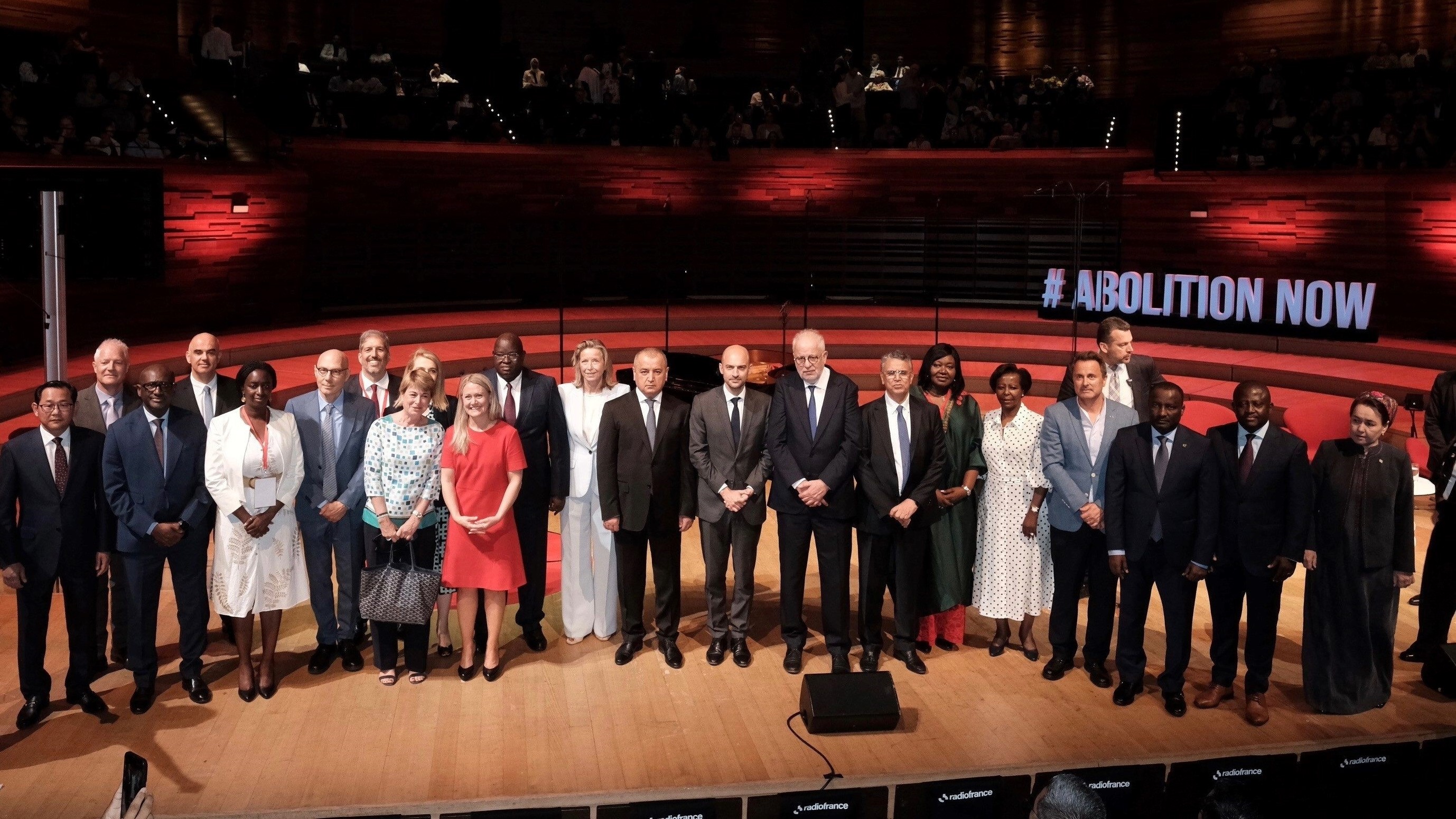
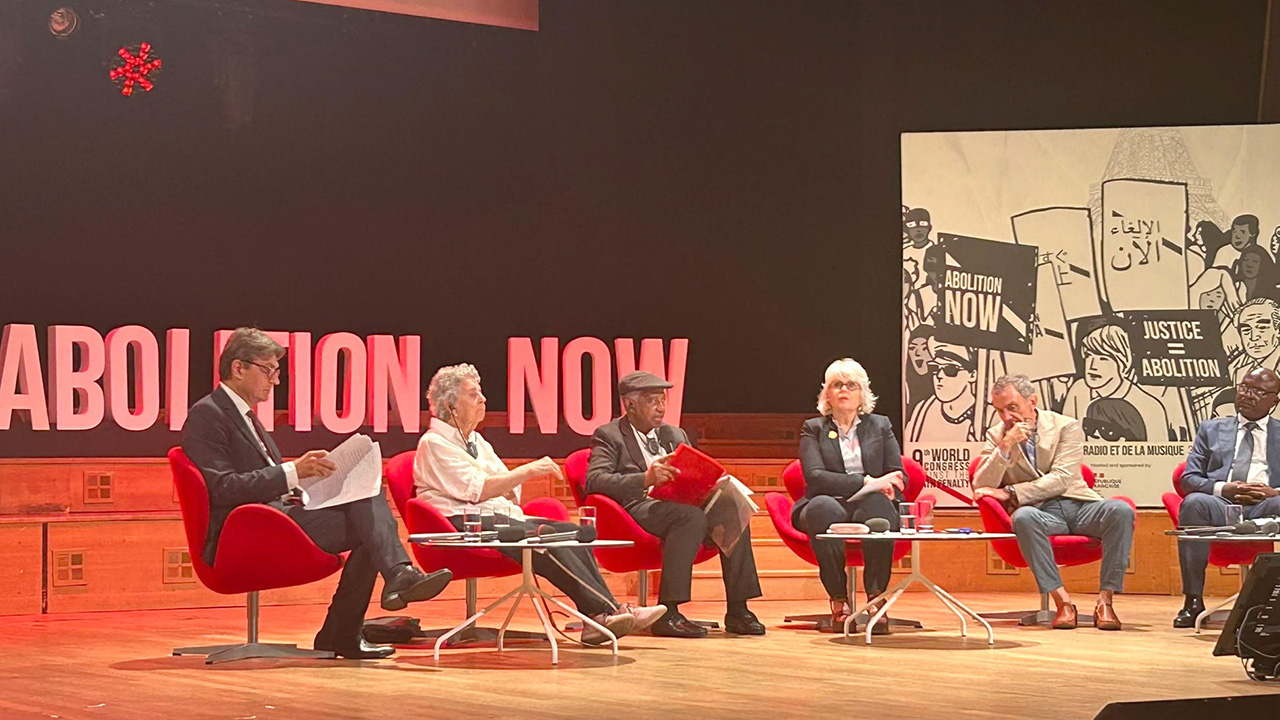
The 9th World Congress Against the Death Penalty, organized by Together Against the Death Penalty (Ensemble Contre la Peine de Mort - ECPM) in Paris, took place from June 30 to July 2, 2026. It brought together around 1,300 people from about a hundred different nationalities. It was the first World Congress held without its patron, Robert Badinter.
The Council of Europe played a major role in the abolition of the death penalty in Europe and co-organized the first World Congress Against the Death Penalty in 2001 in Strasbourg. The Council of Europe is therefore deeply committed to this event, which brings together the abolitionist community every three years, and took an active part in this edition, which marked its 25th anniversary.
The participants of the World Congress welcomed the overall dynamic in favor of abolition over several decades, but also pointed out the current concerning context marked by setbacks: a recent global increase in executions caused by a small number of countries, the lifting of moratoria, and a resurgence of pro-death penalty rhetoric. Against this backdrop, the abolitionist struggle must continue, including in countries where abolition has already been achieved. During his speech, the President of the French Republic addressed this issue, emphasizing that “it is never a given.” This World Congress highlighted two thematic priorities which are likely to help address the current challenges: firstly, the role of youth, and secondly, the importance of the Judiciary as an actor of abolition.
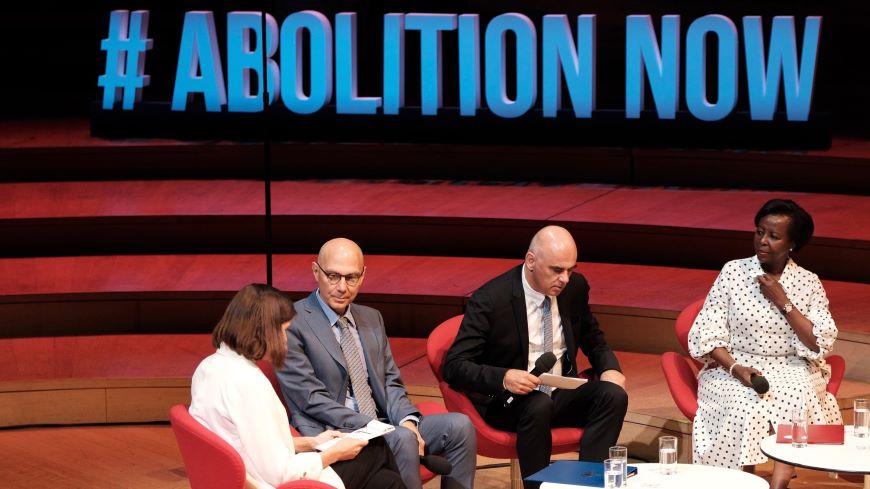
The Secretary General of the Council of Europe, Alain Berset, participated in the official opening ceremony of the World Congress. He spoke on the first high-level panel alongside the United Nations High Commissioner for Human Rights and the Secretary General of the International Organisation of La Francophonie. He notably reaffirmed the Council of Europe’s position, opposing the death penalty everywhere and under all circumstances, emphasizing that abolition in Europe is one of its greatest achievements: "No single execution has been carried out in our member states since 1997; a whole generation has grown up in Europe without knowing the death penalty." He also encouraged the continuation of the abolitionist fight, particularly by relying on youth.
The President of the European Court of Human Rights, Mathias Guyomar, took part in one of the two main plenary sessions of the Congress, the one focused on the role of the Judiciary as an actor of abolition. More specifically, he spoke in a segment dealing with regional courts and the impact of their decisions on the application of the death penalty, alongside judges from the Inter-American Court of Human Rights and the African Court on Human and Peoples’ Rights.
The PACE General Rapporteur on the abolition of the death penalty, Gala Veldhoen, participated in a roundtable entitled "The death penalty in a shifting world: how to respond to the current resurgence?" in which she inter alia provided an overview of the situation of the death penalty around the world.
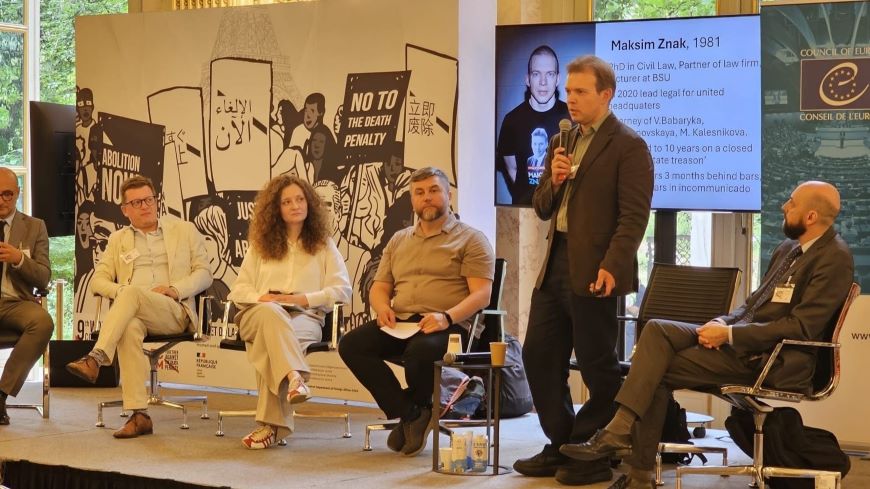
The Council of Europe also organized on July 2 at the World Congress a public meeting regarding the situation of the death penalty in Belarus, which remains the only country in Europe still applying capital punishment. This meeting was part of the activities of the Council of Europe Contact Group on cooperation with Belarusian democratic forces and civil society. The meeting was opened by the Council of Europe’s Coordinator for the abolition of the death penalty, and gathered representatives of Belarusian democratic forces and civil society in exile (Viasna, Rada), who addressed inter alia the evolution of the use of capital punishment by the authorities, established a link between democracy and abolition, and highlighted the role of youth. In his keynote speech, lawyer and former prisoner of conscience Maksim Znak explained how the existence of the death penalty fosters an atmosphere of terror and alters the punitive system. Sharing his personal experiences with this legal atavism, he noted: “Belarus is not only notorious for being the only country in Europe and the sole ex-USSR state to retain the death penalty, but it also has many tragic pages in its history—times when irrevocable mistakes were made and thousands of innocent people were ‘lawfully’ executed.”
As part of the project "Death is not Justice", the Council of Europe has worked for several years, together with its civil society partners—particularly ECPM—to create a network of young ambassadors against the death penalty, which was involved throughout the World Congress. A representative of the network was a member of the academic committee responsible for preparing the Congress programme. The young ambassadors also participated in the opening ceremony in a segment paying tribute to Robert Badinter, who, at the previous World Congress, had called on youth to take up his fight, thus symbolizing a transition between generations. Members of the network were able to participate as speakers in debates and take the floor at the closing ceremony. They also had the opportunity to work on their projects during a workshop, which was opened by the Council of Europe's Coordinator for the abolition of the death penalty.
The Council of Europe has also recently been cooperating with the National Human Rights Council (CNDH) of Morocco in creating a network of young Moroccan ambassadors against the death penalty, which has already provided abolitionist advocacy training to around 250 young people. A delegation of four young Moroccans was able to attend the World Congress and, notably, take part in the aforementioned workshop. This network will be able to work in view of the next World Congress, which will take place in Marrakech in 2029, following the announcement by Morocco’s Minister of Justice in Paris.
Other Council of Europe initiatives on the abolition of capital punishment were presented or promoted at the World Congress in Paris:
- The study on the abolition of the death penalty in history teaching, which was recently published by the Observatory on History Teaching in Europe, was presented by the Coordinator for the Abolition of the Death Penalty during the meeting of the International Network for Education on Abolition and discussed during other segments of the Congress ;
- The report “Between Retention and Abolition: Understanding the Death Penalty Without Executions” was presented by our partners, Oxford University and the Death Penalty Project, during a workshop on “consolidating achievements : how to prevent a return of the death penalty ;
- Our HELP module devoted to the abolition of the death penalty, a free online training course for legal professionals and students, was presented during a side event on the meaning of punishment organized by France’s National School for the Judiciary.


 Coordinator for the Abolition of the death penalty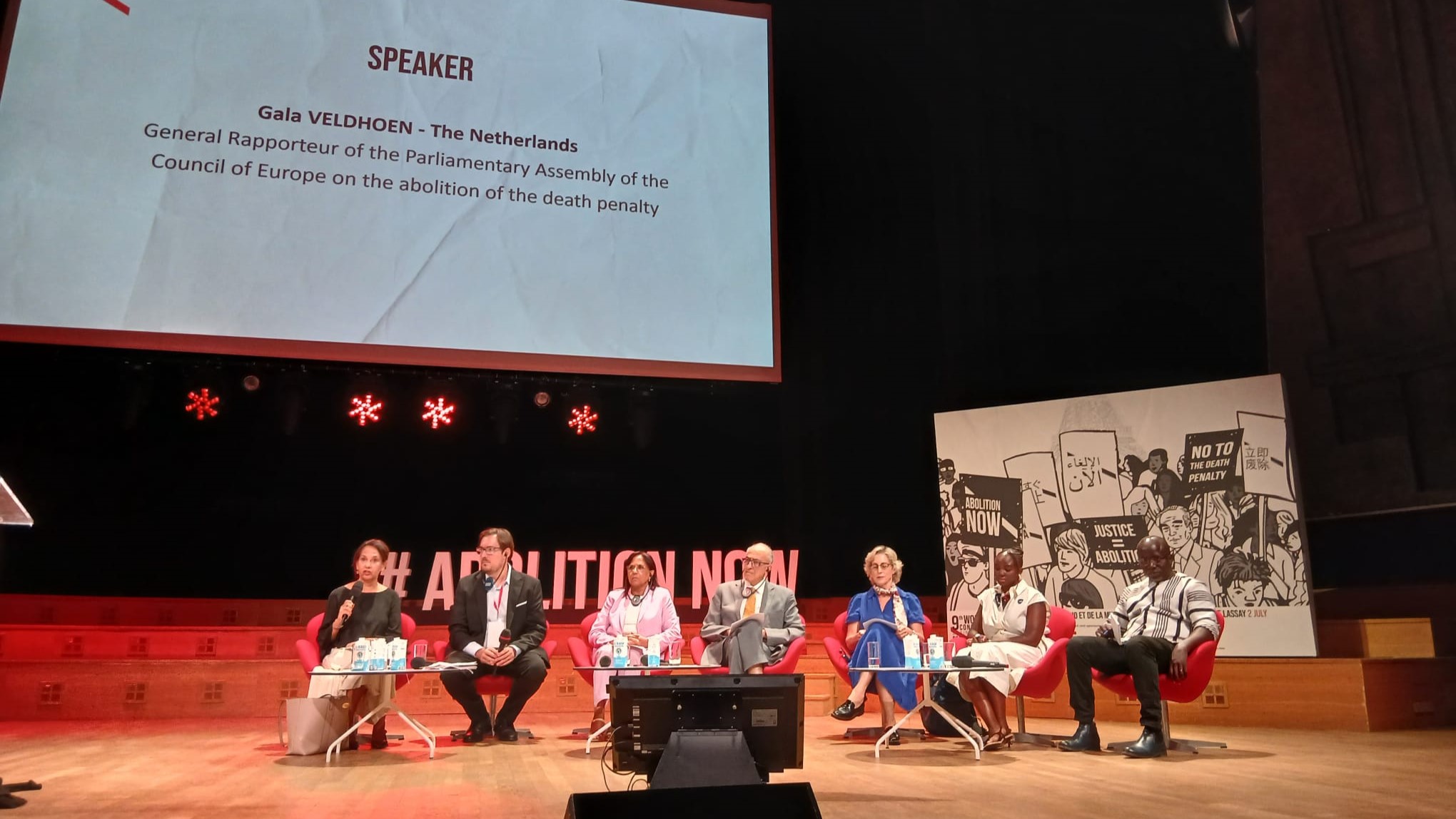
.jpg/e90aef76-c912-b734-2653-ae899e64536a?version=1.0)