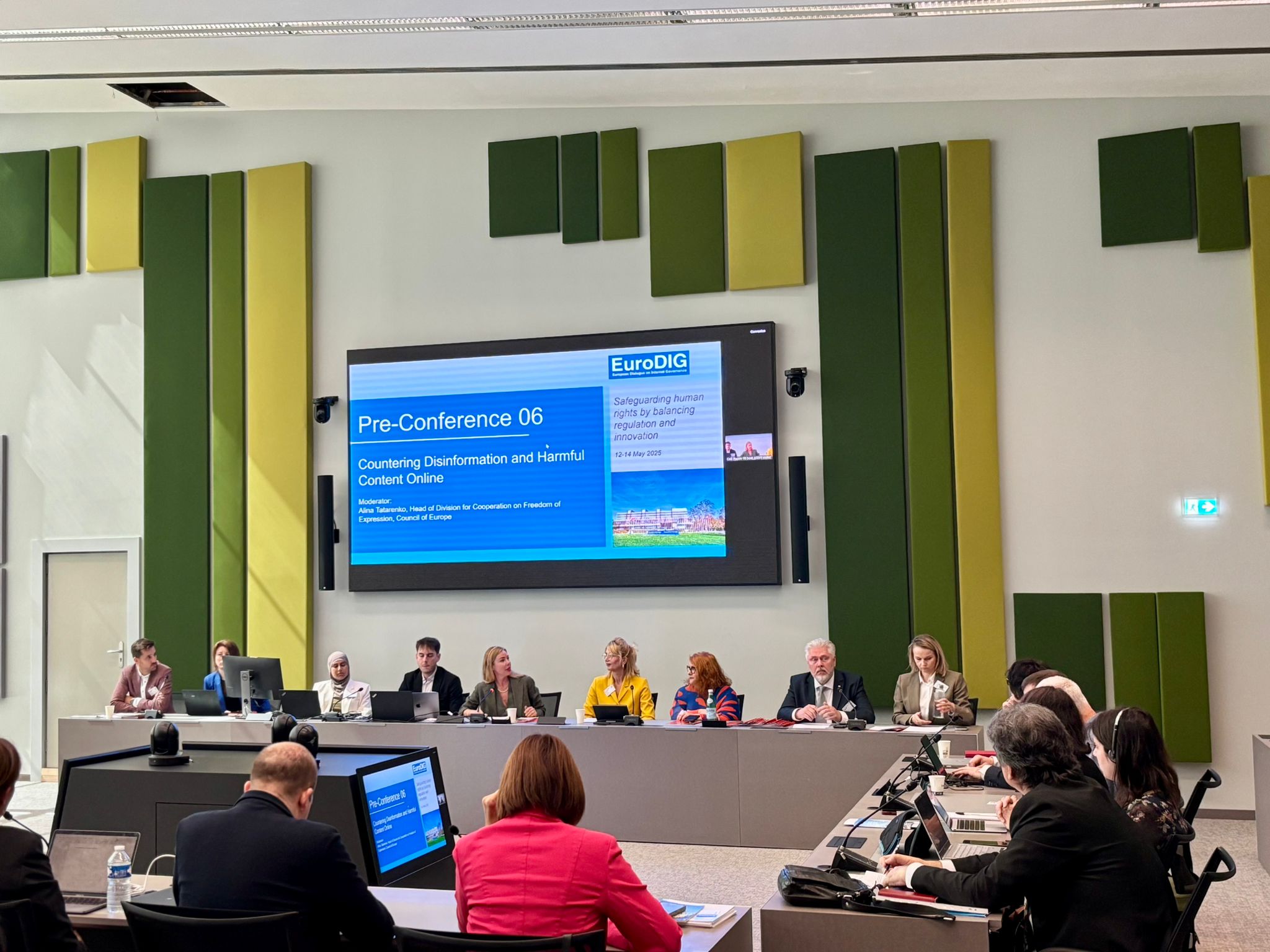
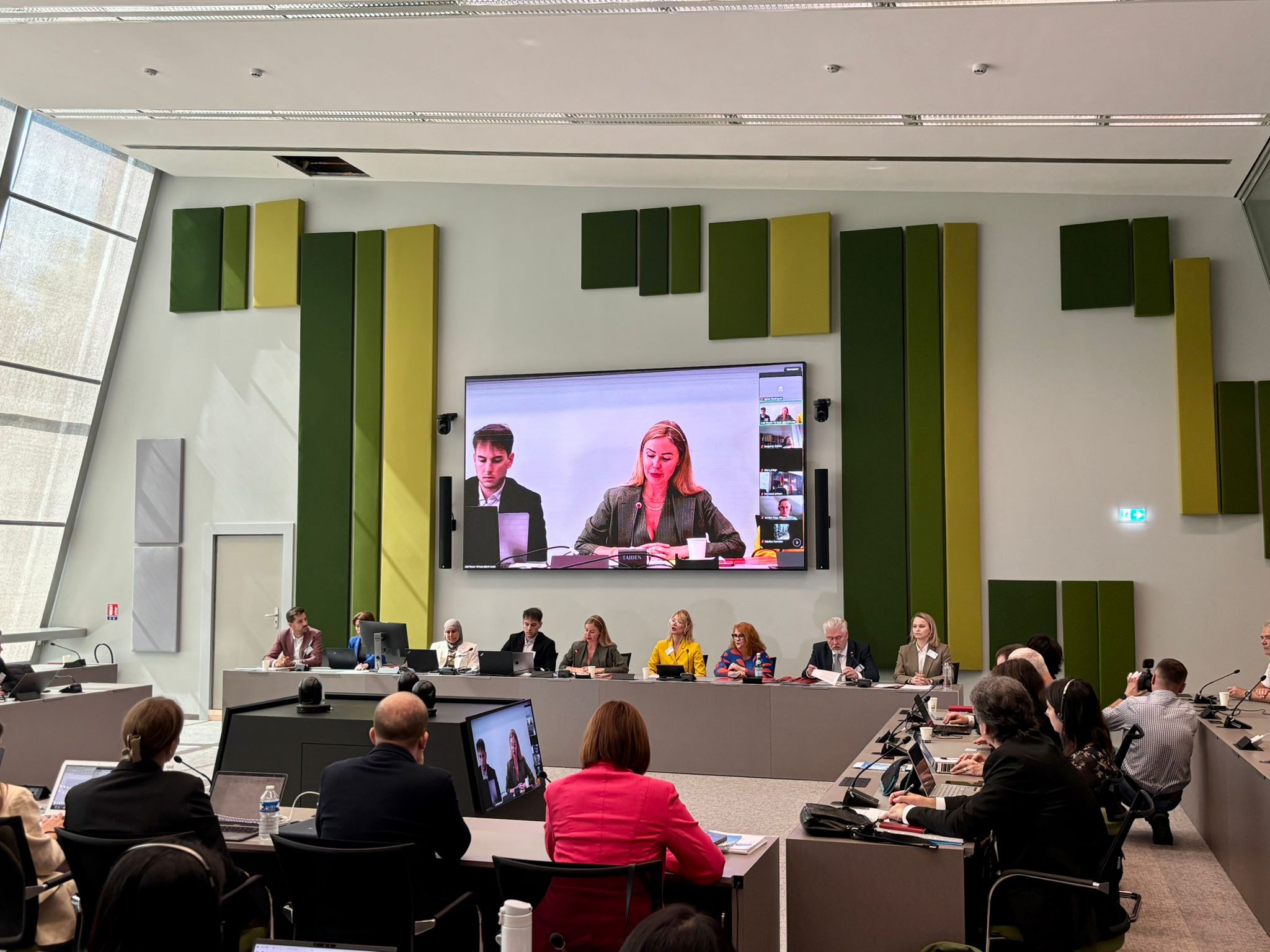
As part of its ongoing commitment to supporting freedom of expression and access to reliable information, the Council of Europe facilitated high-level Ukrainian participation at EuroDIG 2025, the European Dialogue on Internet Governance. Ukraine’s engagement in this forum comes at a time when the country continues to face profound challenges in the information space, including the impact of Russia’s ongoing war of aggression against Ukraine, structural barriers in engaging with Very Large Online Platforms (VLOPs) and Significant Very Large Online Search Engines (SVLOSEs) due to its non-member status in the European Union, and the global spread of Russian propaganda, which undermines democratic values and demands a coordinated international response.
This year's EuroDIG focused on the theme: “Safeguarding human rights by balancing regulation and innovation.” The event was organised by the Council of Europe in co-operation with the Luxembourg Presidency of the Committee of Ministers of the Council of Europe.
One of the key sessions in the programme was "Countering Disinformation and Harmful Content Online", organised by the Council of Europe’s Division for Co-operation on Freedom of Expression. This session brought together media regulators, policymakers, journalists, digital platform representatives, and civil society actors to explore practical and regional approaches to tackling online disinformation and harmful content, while safeguarding democratic resilience and fundamental rights.
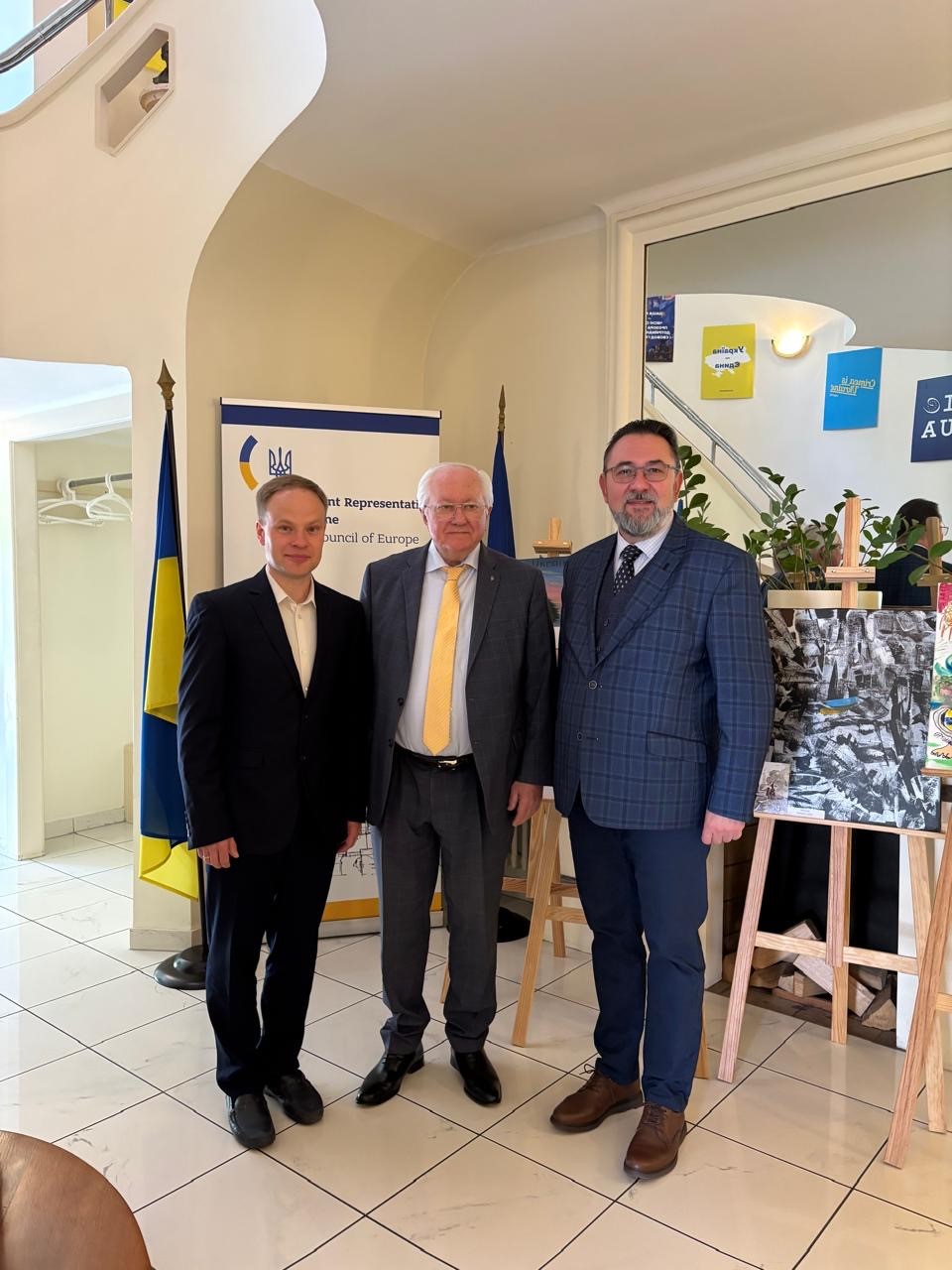
Against this backdrop, Ukrainian representatives contributed their experience and perspectives to pan-European discussions on online content governance and democratic resilience. Valentyn Koval, First Deputy Chair of the National Television and Radio Broadcasting Council of Ukraine, delivered a keynote intervention. He shared Ukraine’s regulatory and practical experiences in addressing disinformation, particularly in the context of Russia’s ongoing war of aggression against Ukraine. Mr Koval highlighted the difficulties of engaging with Very Large Online Platforms (VLOPs) and Significant Very Large Online Search Engines (SVLOSEs), the importance of wartime communication strategy, and mechanisms for regulatory co-operation.
“Ukraine’s fight against Russian disinformation underscores the challenges democracies face in protecting national security while respecting freedom of expression,” Mr Koval remarked. He outlined key reforms, including the 2022 media law expanding regulatory powers, joint actions with the Centre for Countering Disinformation, and efforts to promote media literacy and strengthen institutional responses.
He additionally highlighted Ukrainian contributions to counter-disinformation efforts included:
- Launch of the English-language project “Hate Speech” in partnership with the Centre for Countering Disinformation, aimed at exposing Russia’s propaganda narratives to international audiences;
- Signing of a regional declaration on co-operation against disinformation in Warsaw in October 2023, involving Ukraine, Poland, Latvia, Lithuania, and Romania;
- Ongoing monitoring of online and foreign media platforms, with findings shared with Ukrainian authorities and security agencies.
The Ukrainian delegation also included Members of Parliament of Ukraine Mykyta Poturaiev, Chair of the Committee on Humanitarian and Information Policy of the Verkhovna Rada, and Yaroslav Yurchyshyn, Chair of the Committee on Freedom of Speech. Their presence and contributions reinforced Ukraine’s commitment to aligning national policies with European standards and to ensuring a coordinated response to the evolving challenges in the digital information space.
Participation in EuroDIG not only allowed for engagement with global platforms and international stakeholders but also provided an important opportunity for Ukraine to contribute to shaping pan-European discussions on content governance and digital rights.
Discussions also reflected key Council of Europe standards and recent policy developments, including:
- Resolution 2567 (2024) on Propaganda and Freedom of Information in Europe
- Resolution 2590 (2025) on Regulating Content Moderation on Social Media to Safeguard Freedom of Expression
- Doc. 16131 – Foreign interference: a threat to democratic security in Europe
This participation was supported by the Council of Europe Project “Safeguarding Freedom of Expression and Freedom of Media in Ukraine – Phase II” (SFEM-UA), implemented in the framework of the Council of Europe Action Plan for Ukraine “Resilience, Recovery and Reconstruction” 2023–2026.