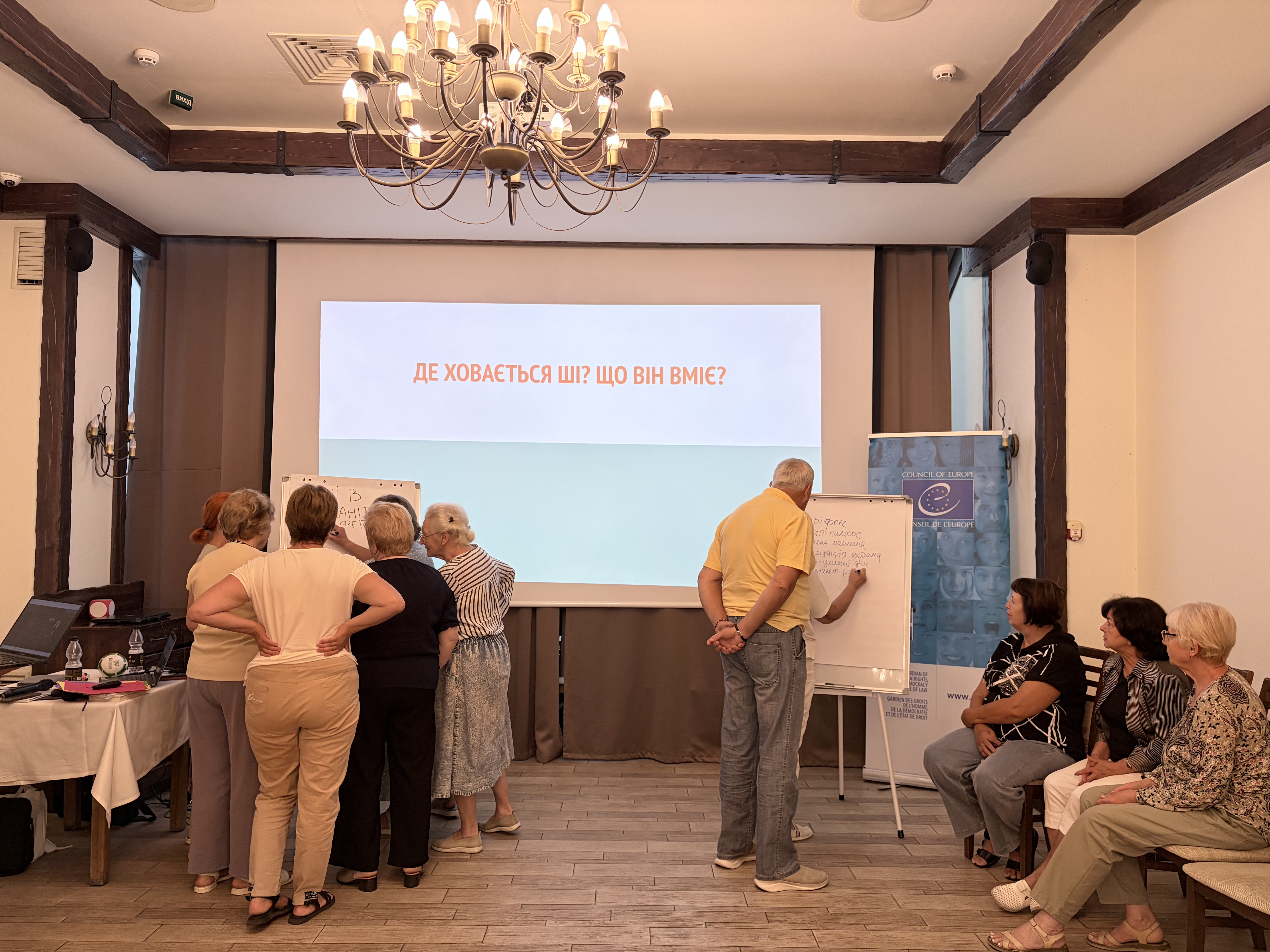
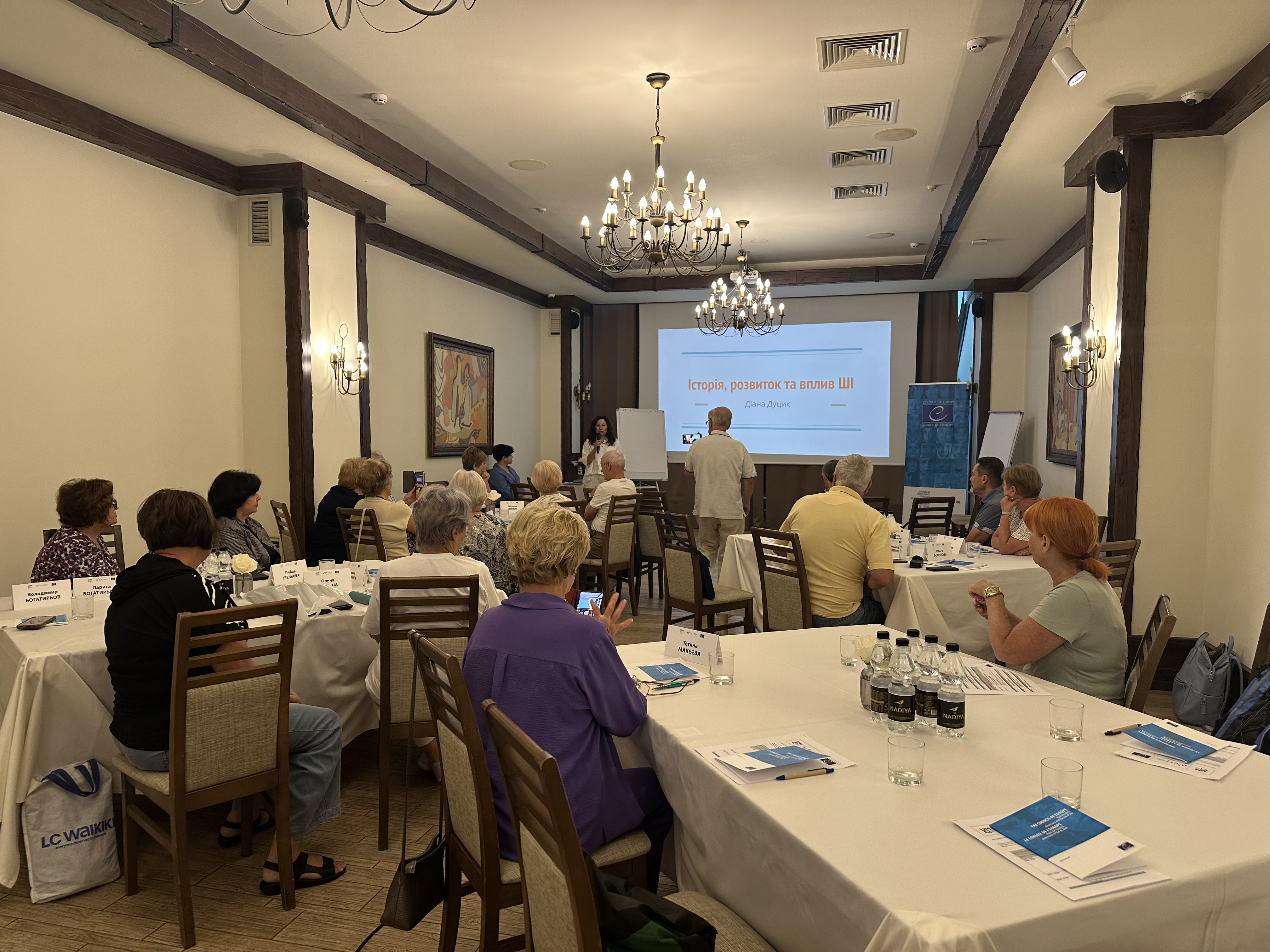
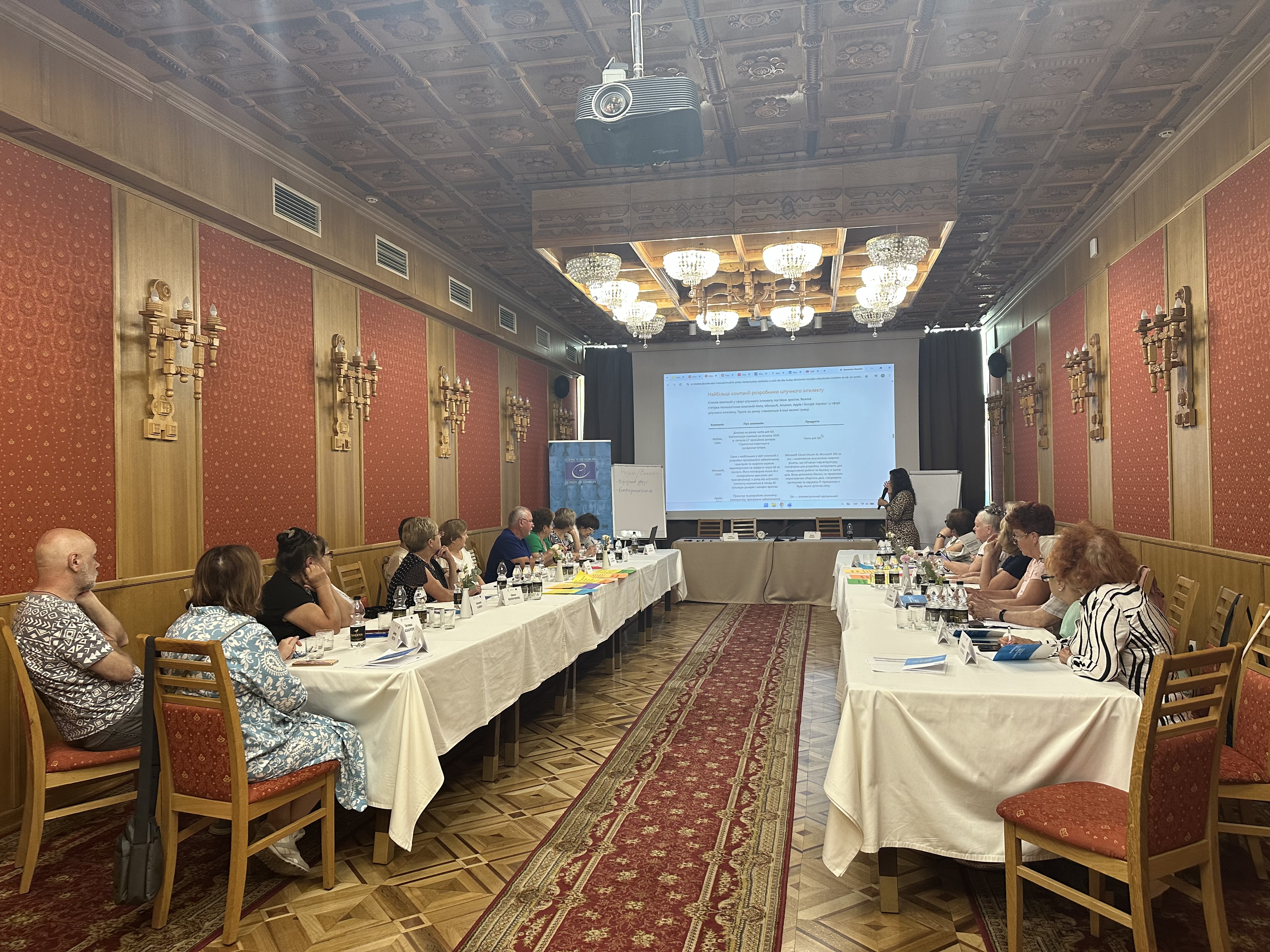
Media literacy is increasingly important in today’s fast-changing information landscape, where people are confronted with an ever-growing amount of information, misleading content and new forms of disinformation. For older persons in particular, the rapid development of digital technologies and artificial intelligence presents both new opportunities and new challenges. Strengthening their ability to critically assess information, recognise manipulation and use digital tools responsibly is therefore an important part of building their resilience to disinformation.
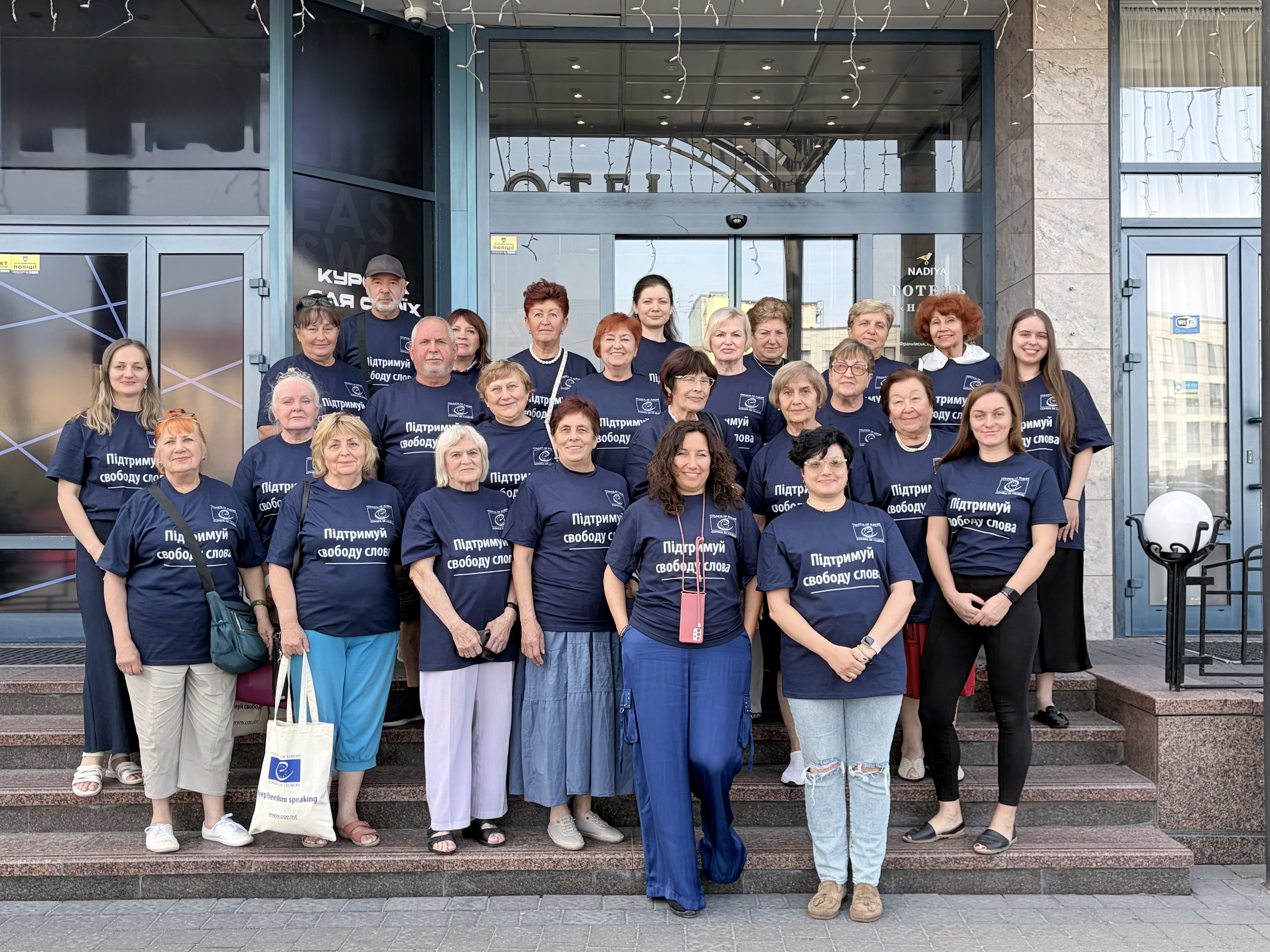
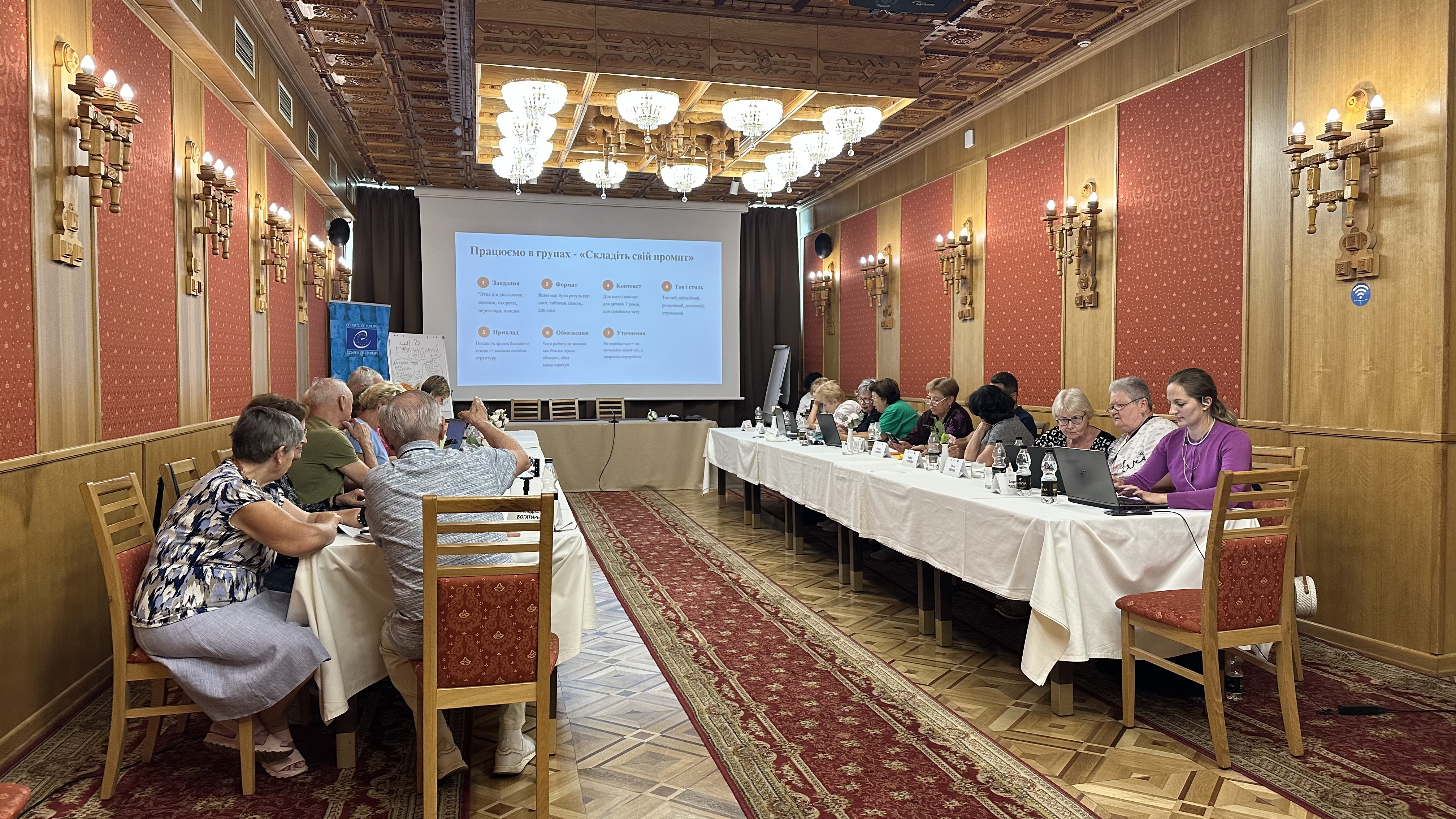
With this objective, the Council of Europe’s project “Safeguarding Freedom of Expression and Freedom of Media in Ukraine – Phase II”, in co-operation with the Ukrainian Media and Communication Institute, organised two offline media literacy trainings for people aged 60+. The trainings were held in Ivano-Frankivsk on 17–19 August 2026 and 19–21 August 2026, bringing together 40 participants from different regions of Ukraine. The training sessions combined an introduction to AI with practical exercises exploring its everyday uses, limitations and potential risks. The programme built on the “AI Manual for Older Persons to Enhance Media Literacy and Build Resilience to Disinformation”, developed with the support of the Project.
Participants were introduced to the history and development of artificial intelligence, as well as its ethical and legal aspects. They explored different types of AI tools and considered how they can support everyday tasks such as writing and translating texts, creating visual content and working with documents. A significant part of the programme focused on how to communicate effectively with AI. The sessions also highlighted the limitations of AI and the importance of verification. Participants discussed AI “hallucinations” – confident but incorrect or fabricated answers and learned to question AI-generated information, particularly when it concerns health, money or legal matters. They were encouraged to verify important information through official sources or qualified professionals.
The activity also addressed AI-generated disinformation and manipulated content, including deepfakes, voice cloning and fabricated images, videos and texts. Participants learned practical approaches to checking suspicious content and discussed AI-enabled scams, including schemes using cloned voices to impersonate relatives. These activities strengthened their ability to distinguish between reliable and unreliable information and to approach new technologies with an informed and critical perspective.
Digital safety was another important element of the programme. Participants discussed the risks of sharing passwords, banking information, identity documents and other sensitive data with AI tools. The training also introduced the emerging distinction between AI assistants and AI agents and emphasised the importance of keeping human judgement and control at the centre of AI use.
By combining an accessible introduction to artificial intelligence, hands-on experience with AI tools, prompt-writing skills, media literacy, fact-checking and digital safety, the trainings gave older persons practical knowledge for navigating an increasingly AI-driven information environment and supported them in becoming more confident and informed users of digital technologies.
The Council of Europe Project “Safeguarding Freedom of Expression and Freedom of Media in Ukraine – Phase II” (SFEM-UA - Phase II) is implemented by the Council of Europe Division for Co-operation on Freedom of Expression in the framework of the Council of Europe Action Plan for Ukraine “Resilience, Recovery and Reconstruction” 2023-2026.