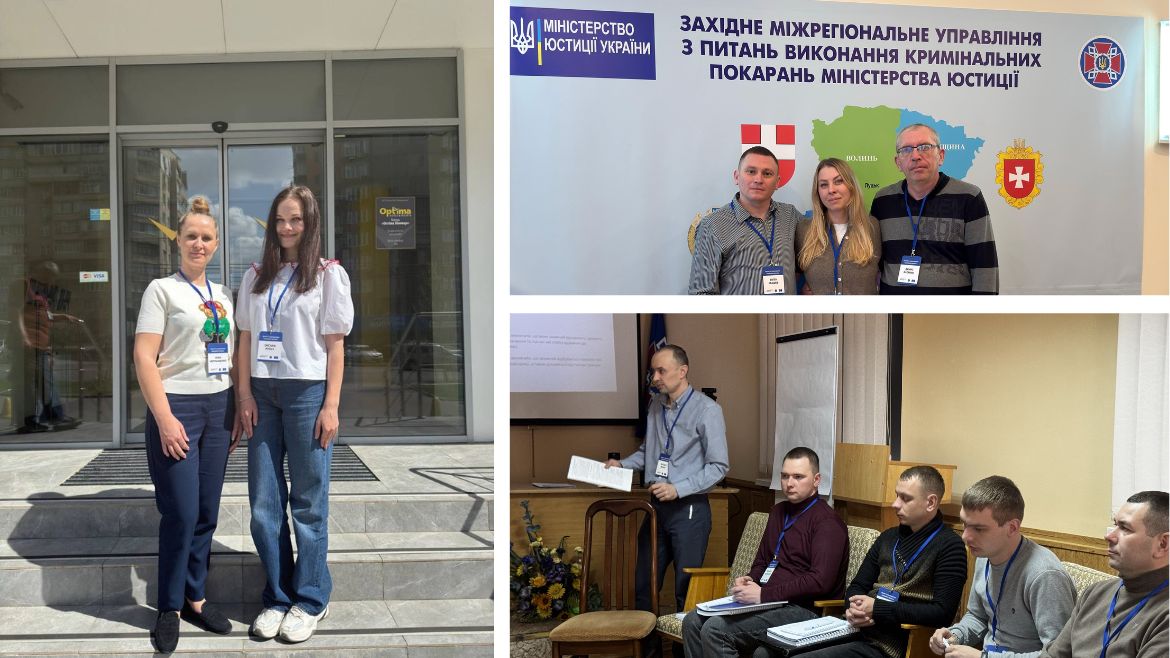
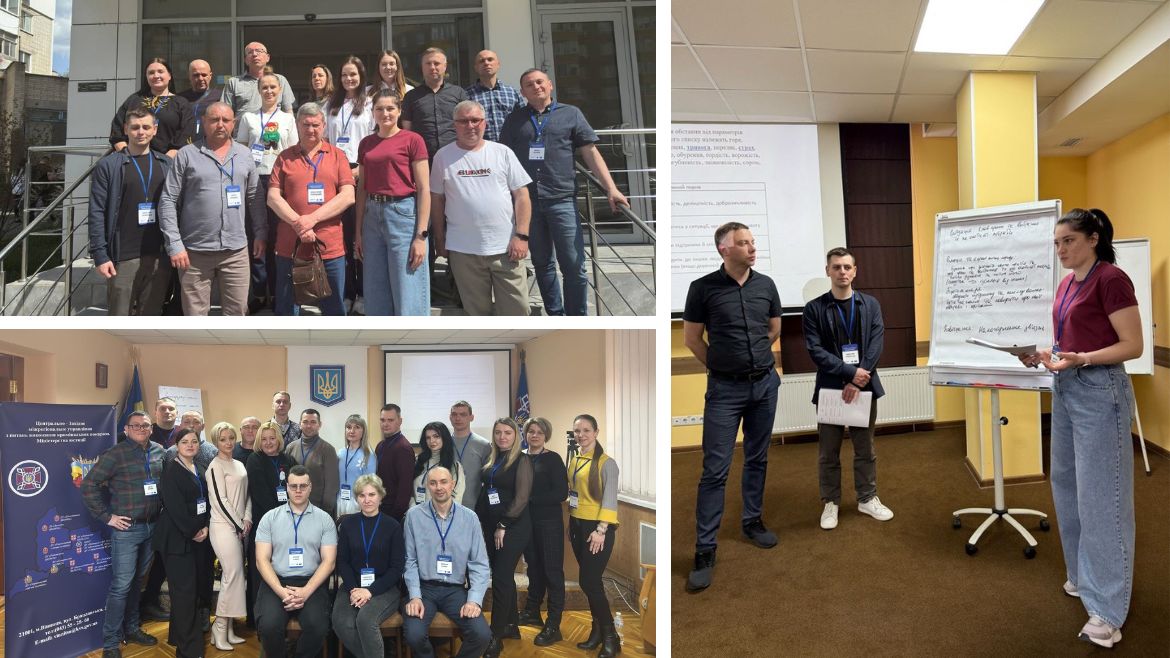
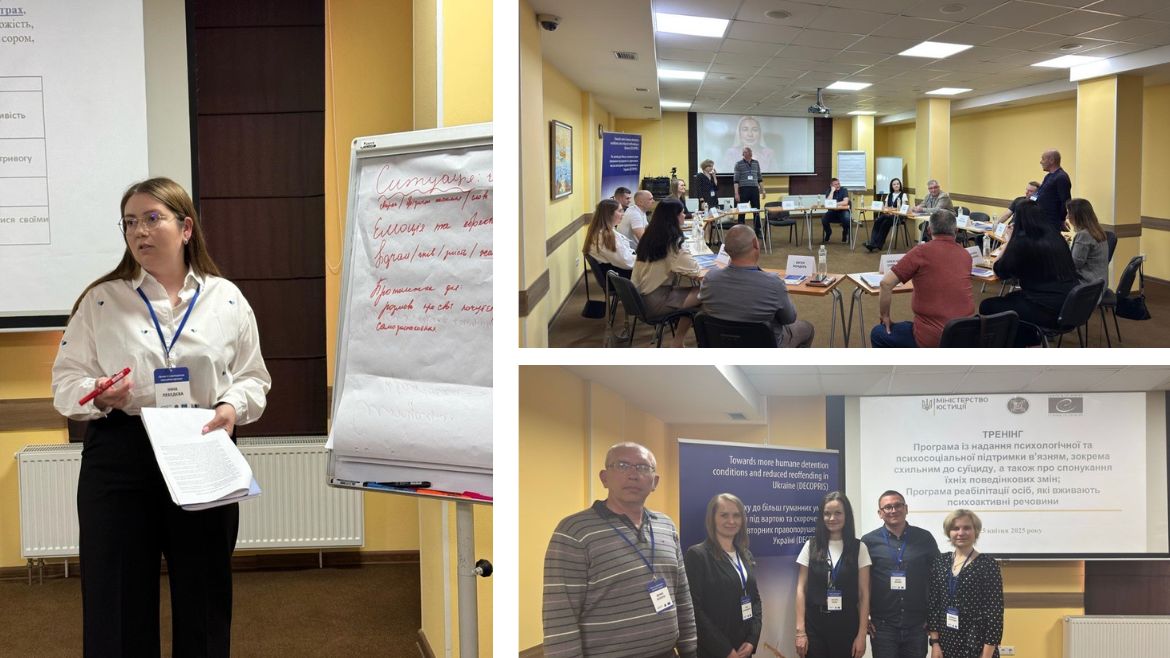
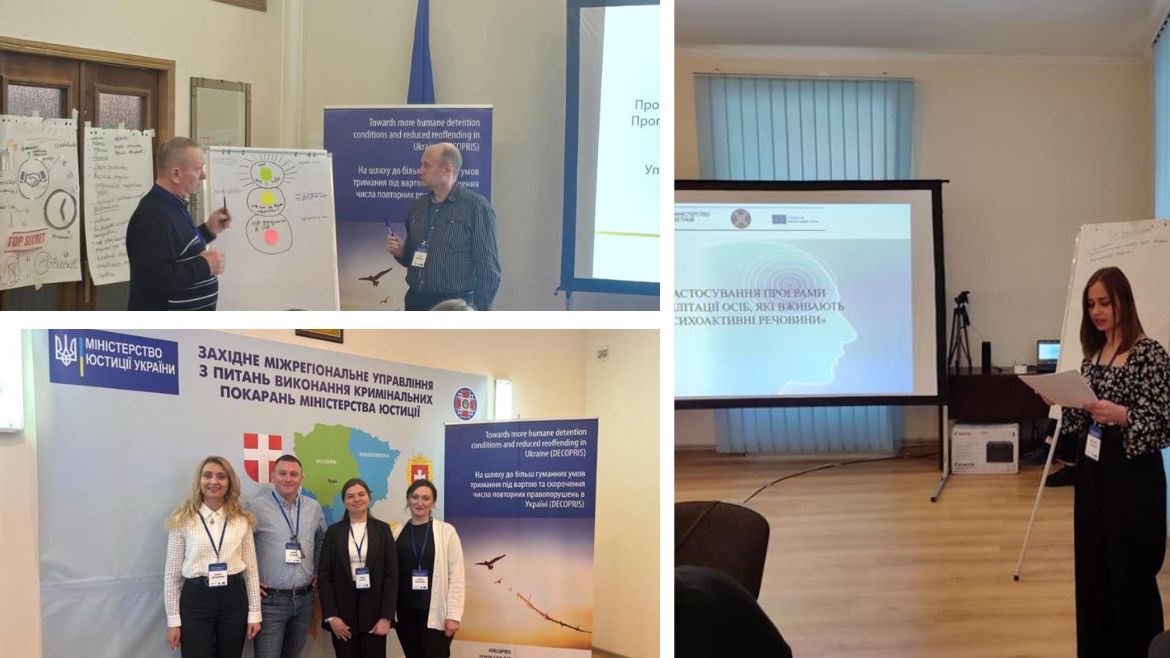
The Council of Europe's DECOPRIS project continues to support the implementation of rehabilitation programmes in penitentiary institutions in Ukraine. 92 psychologists, heads of units in prisons and pre-trial detention centres, and representatives of interregional departments from 84 institutions, including 72 correctional colonies and 12 pre-trial detention centres have now an increased knowledge in this field and ready to apply it to their daily practice.
To date, two key programmes have been developed and tested:
- Rehabilitation of people who use psychoactive substances helps prisoners to understand the nature of their addiction, overcome it and form a new behavioural pattern.
- Psychological and psychosocial support for prisoners - aimed at reducing suicide risks, supporting the emotional state of prisoners and creating positive changes in their lives.
To ensure these programmes are implemented effectively and sustainably, DECOPRIS introduced a cascade training model. This model enables psychologists from penitentiary institutions who piloted the programme and completed the training of trainers to become trainers for their colleagues.
Six cascade training sessions were held in March and April 2025, involving the 92 participants, including 49 men and 43 women.
Key gains and achievements included:
- Improved training skills and confidence: the new trainers enhanced their ability to structure sessions, manage groups, and adapt content—often overcoming fears of public speaking and stepping fully into the trainer role. As one trainer shared, “I arrived with anxiety – but returned with a victory over myself.”
- Knowledge transfer rooted in practice: Trainers and participants shared insights from their day-to-day work with prisoners, enriching the learning process with real life practical examples and tested methods.
- Stronger professional identity and peer support: The experience helped participants see themselves not only as psychologists, but also as capable trainers contributing to reform. Co-training fostered collaboration and mutual trust.
- A growing community of changemakers: The initiative sparked a cohesive professional network committed to improving rehabilitation efforts. As one participant noted, “The cascade training format is a significant investment in the capacity of penitentiary staff.”
The cascade training sessions revealed not only professional growth, but also powerful personal transformation among participants. As one trainer shared, “I had many fears, but I realised: I am a professional, I am a trainer, and I can do this.” Others highlighted the shift in perspective: “The most important part for me was the feeling that I could support my colleagues. It changed my professional and personal identity.”
We thank all the dedicated participants and extend our deep appreciation to the Department for the Execution of Criminal Sanctions and the Interregional Departments for their commitment to improving professional standards and resocialisation efforts in Ukraine's penitentiary system.
Together, we are building a system where rehabilitation is real and sustainable.
The Council of Europe project “Towards More Humane Conditions of Detention and Reduced Reoffending in Ukraine” (DECOPRIS) is implemented within the framework of the Council of Europe’s Action Plan for Ukraine “Resilience, Recovery and Reconstruction” (2023–2026). DECOPRIS aims to enhance the protection of prisoners’ rights by improving prison management practices and advancing rehabilitation efforts.







 2781-2120-3725.1.jpg/7057c4df-e0a9-d956-ee24-b9f0dd2757f6?version=1.0)