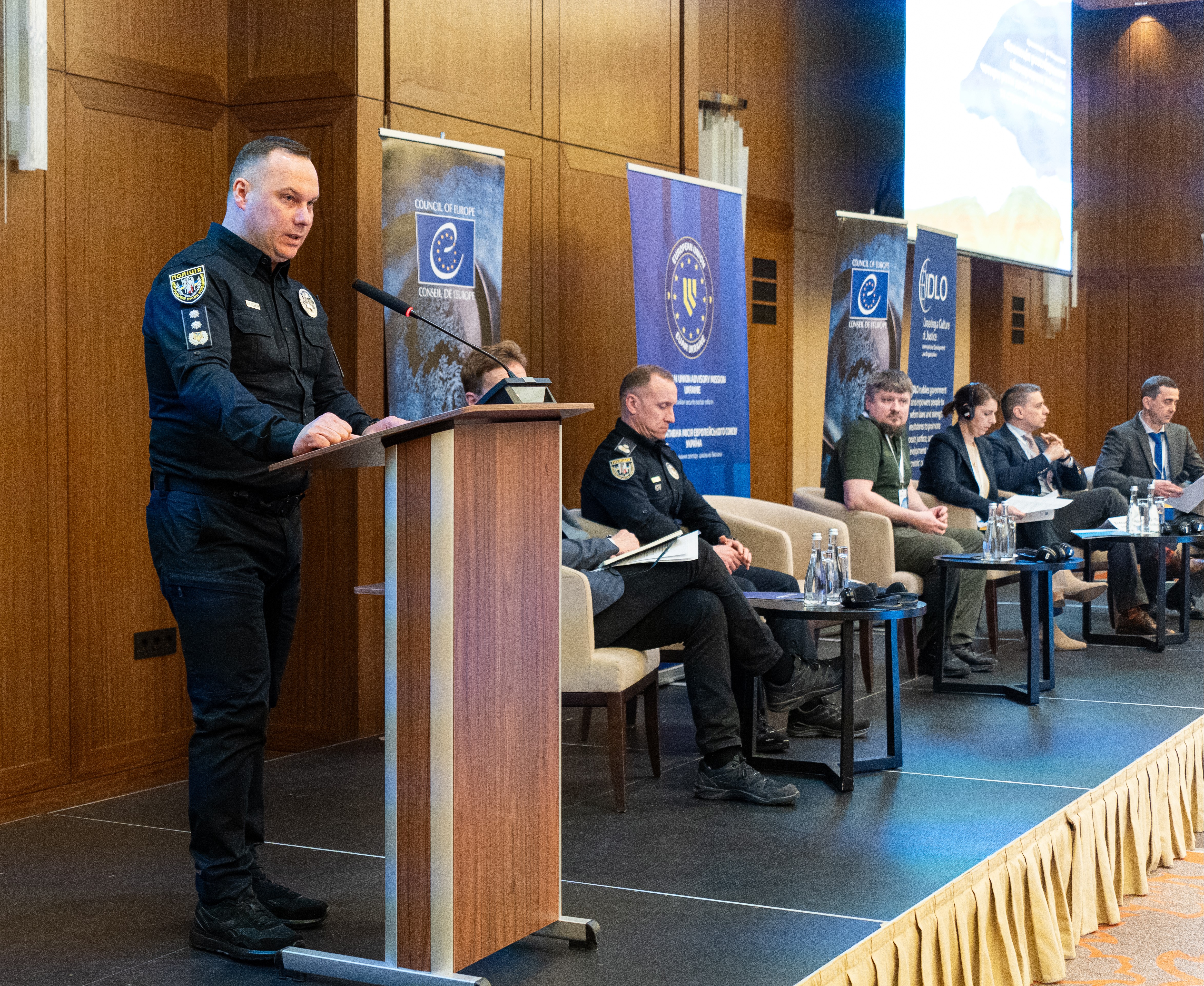
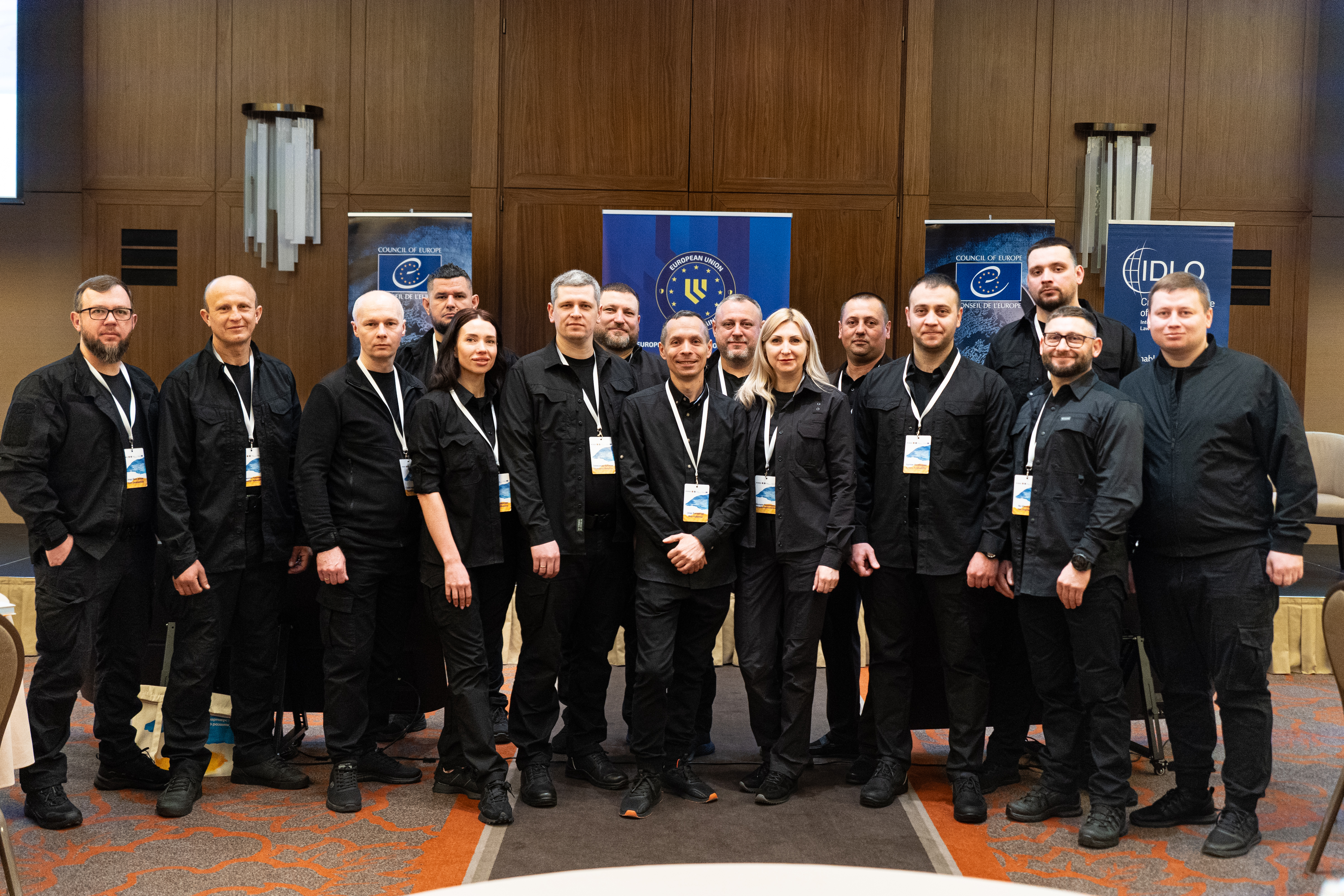
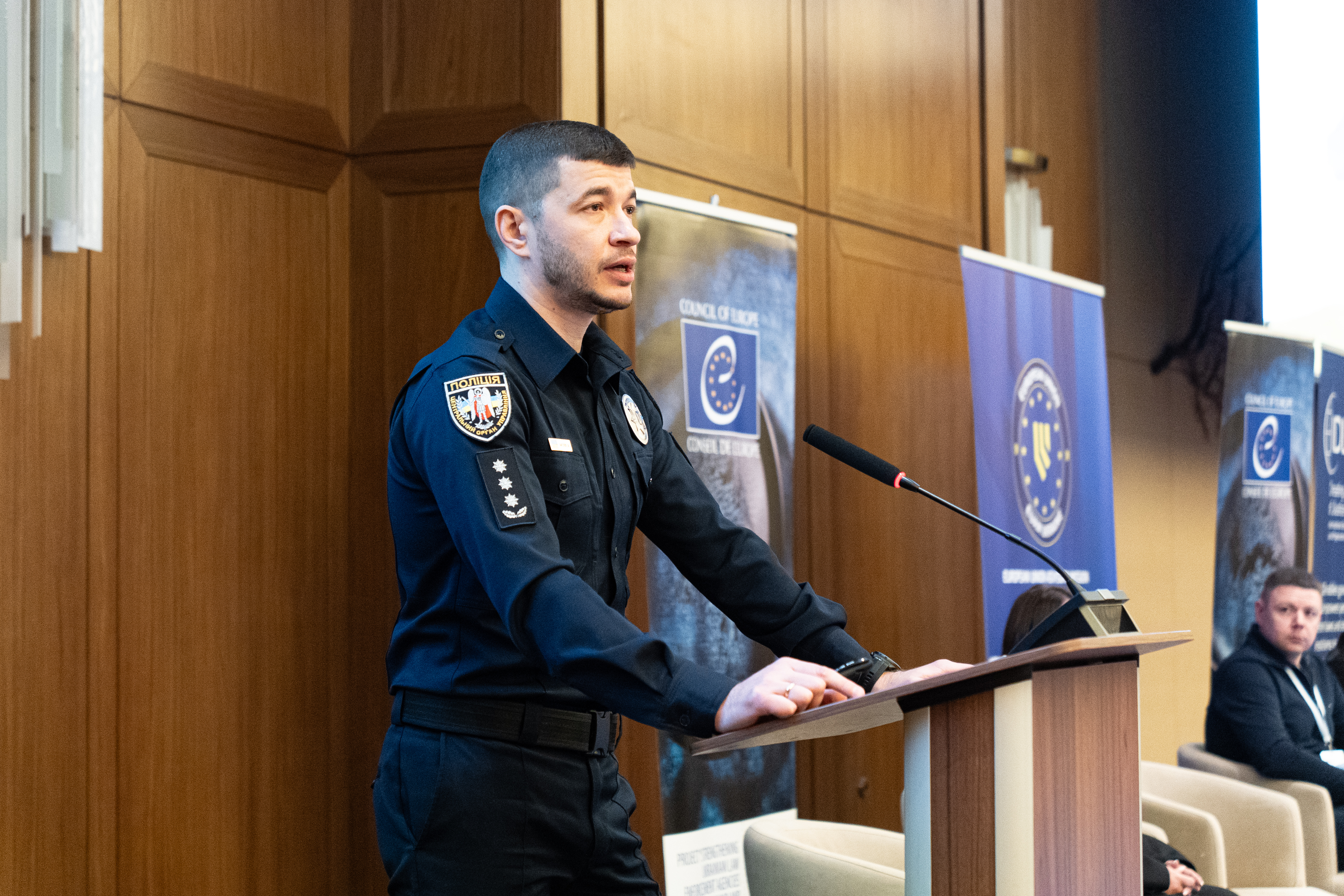
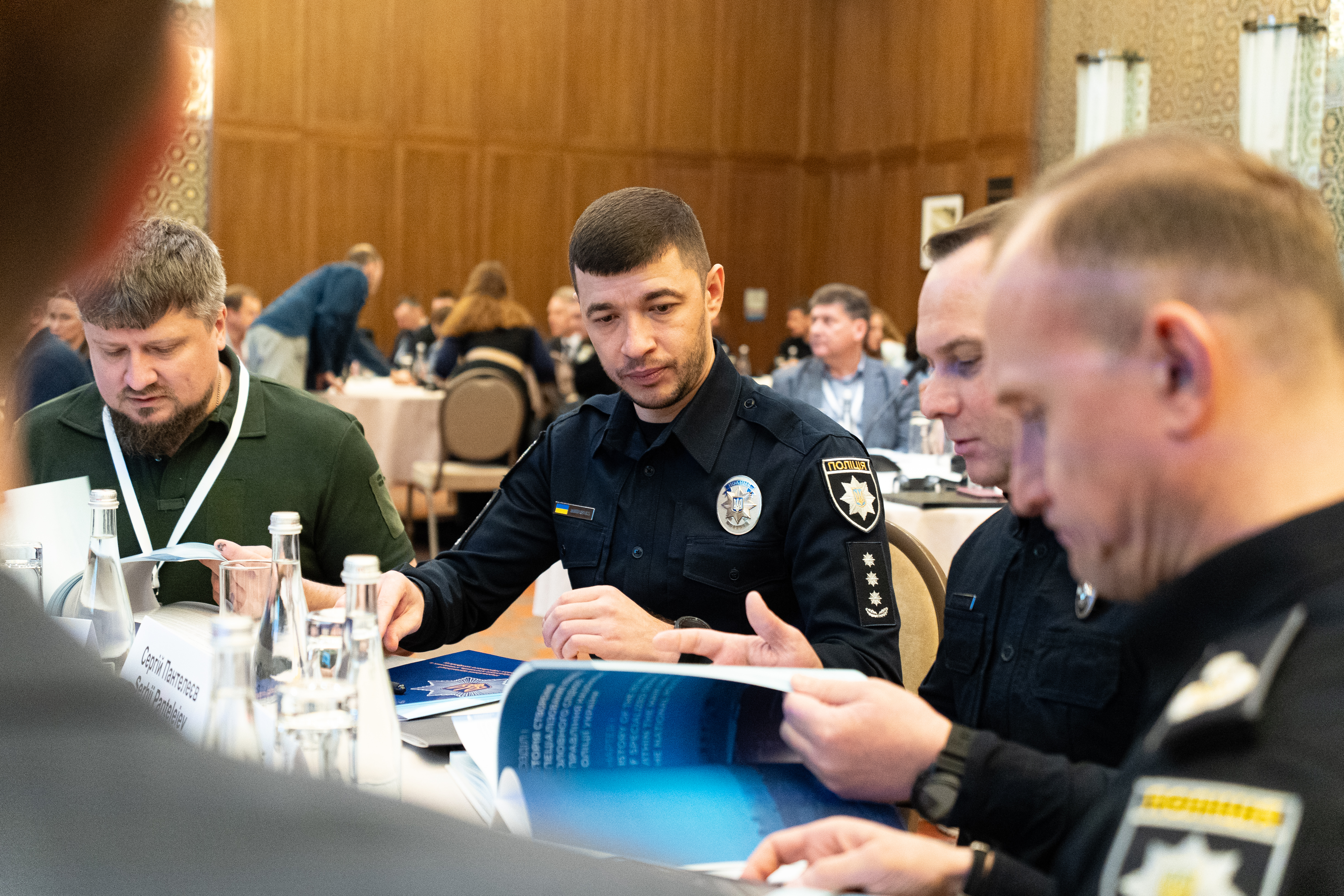
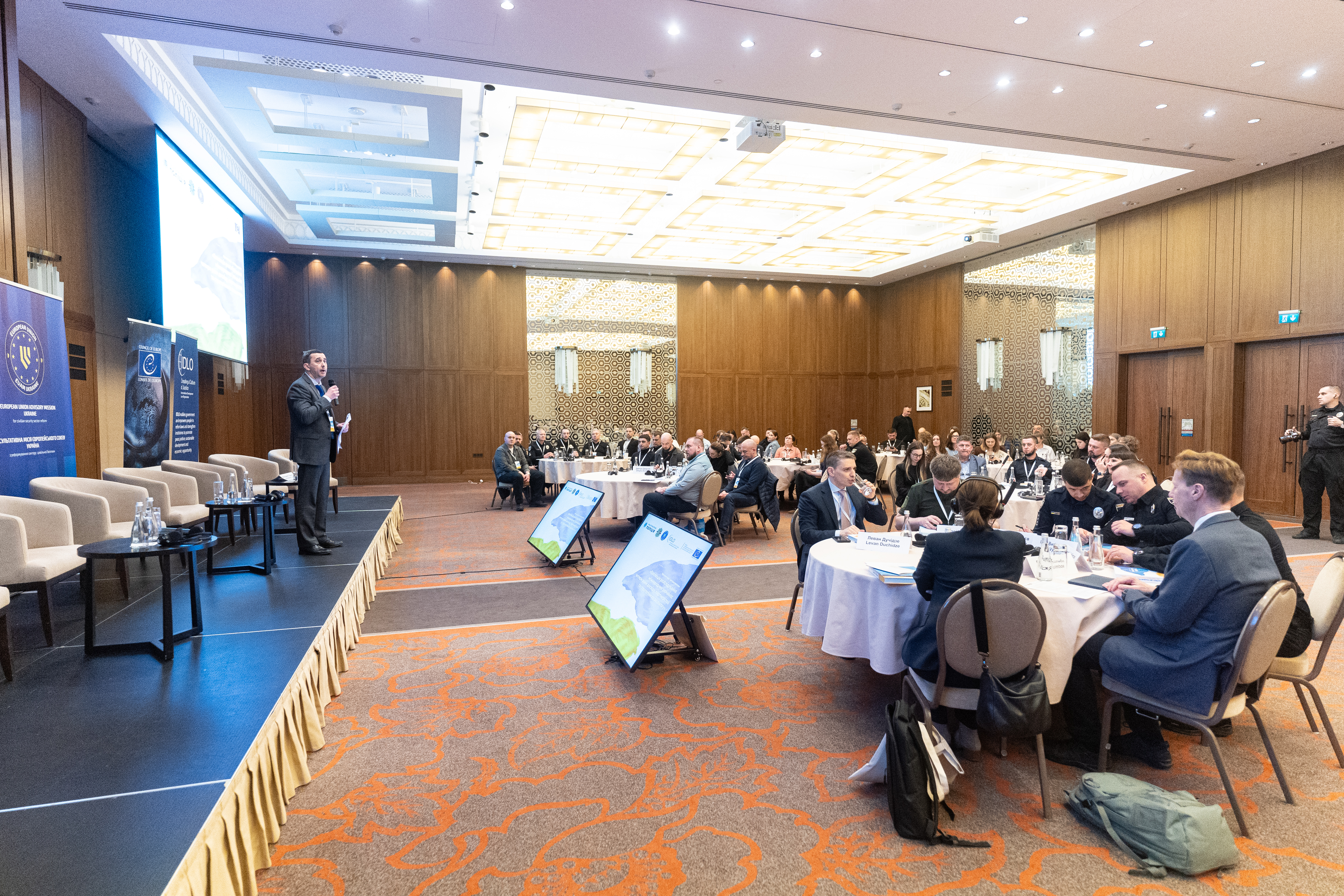
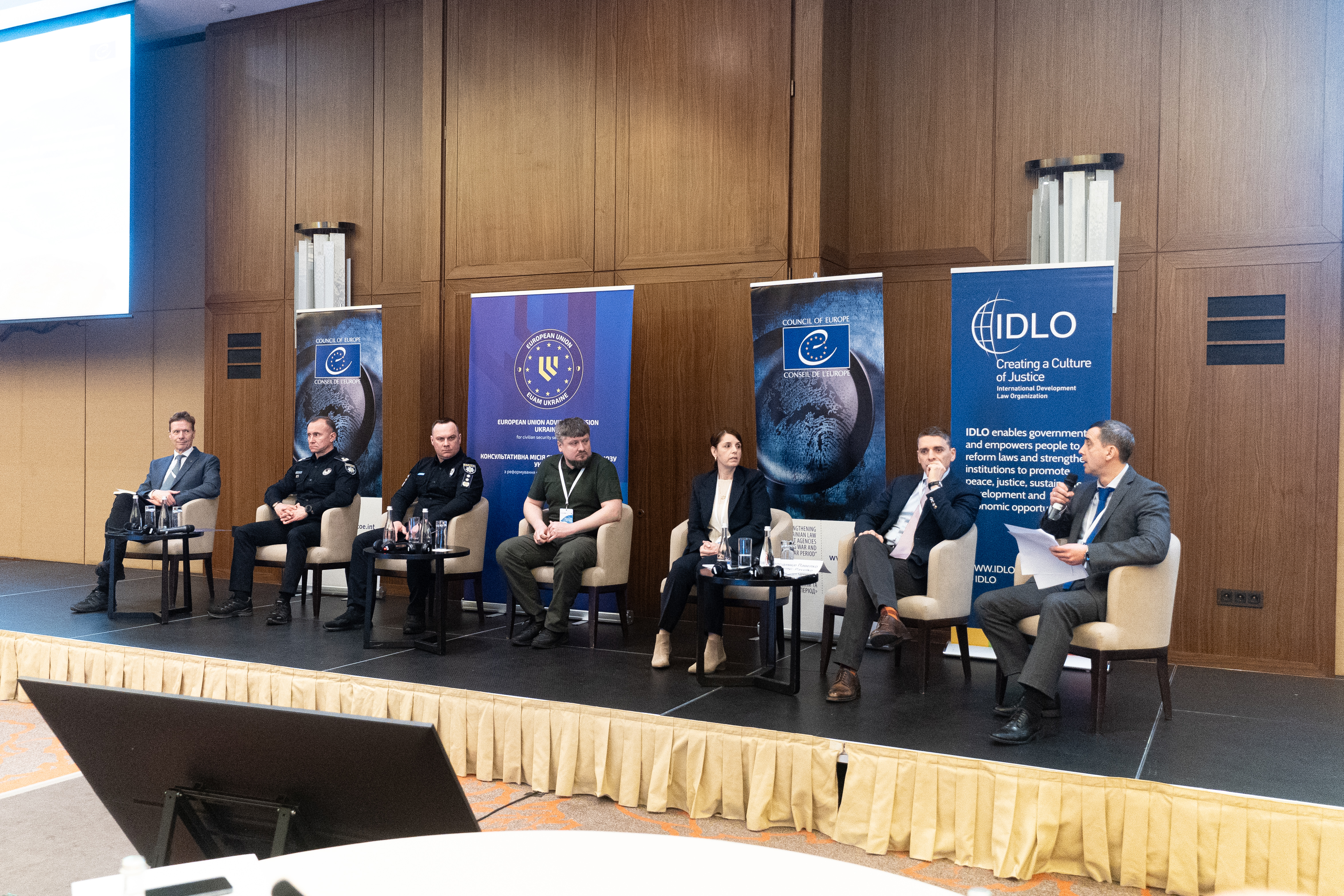
On 1 April 2026, an event, entitled “The Evolution of Investigations into International Crimes: Four Years of Experience, Partnership and Strategic Development”, was held in Kyiv marking four years since the establishment of specialised war crimes investigation units within the National Police of Ukraine. The conference brought together around 100 participants, including representatives of law enforcement and state authorities, international partners, civil society organisations and experts involved in documenting and investigating war crimes. It also presented progress in implementing the War Crimes Investigation Management Strategy, developed with the support of the Council of Europe.
Since the start of the full-scale invasion of Ukraine, investigators of the National Police of Ukraine have initiated over 205,000 criminal proceedings concerning crimes committed on the territory of Ukraine by members of the armed forces of the Russian Federation and their accomplices. Over the past four years, the National Police of Ukraine has built a structured and increasingly coordinated system for investigating war crimes. The Strategy has played a key role in eventually shaping this process, helping to ensure consistency, prioritisation and alignment with international standards. The National Police investigators are the first-responders to war crimes and war-related crimes and their work on these on the national level is a cornerstone of the accountability and justice mechanisms. The Council of Europe has supported both the development of the Strategy and its implementation, contributing to strengthening institutional capacity and investigative practices.
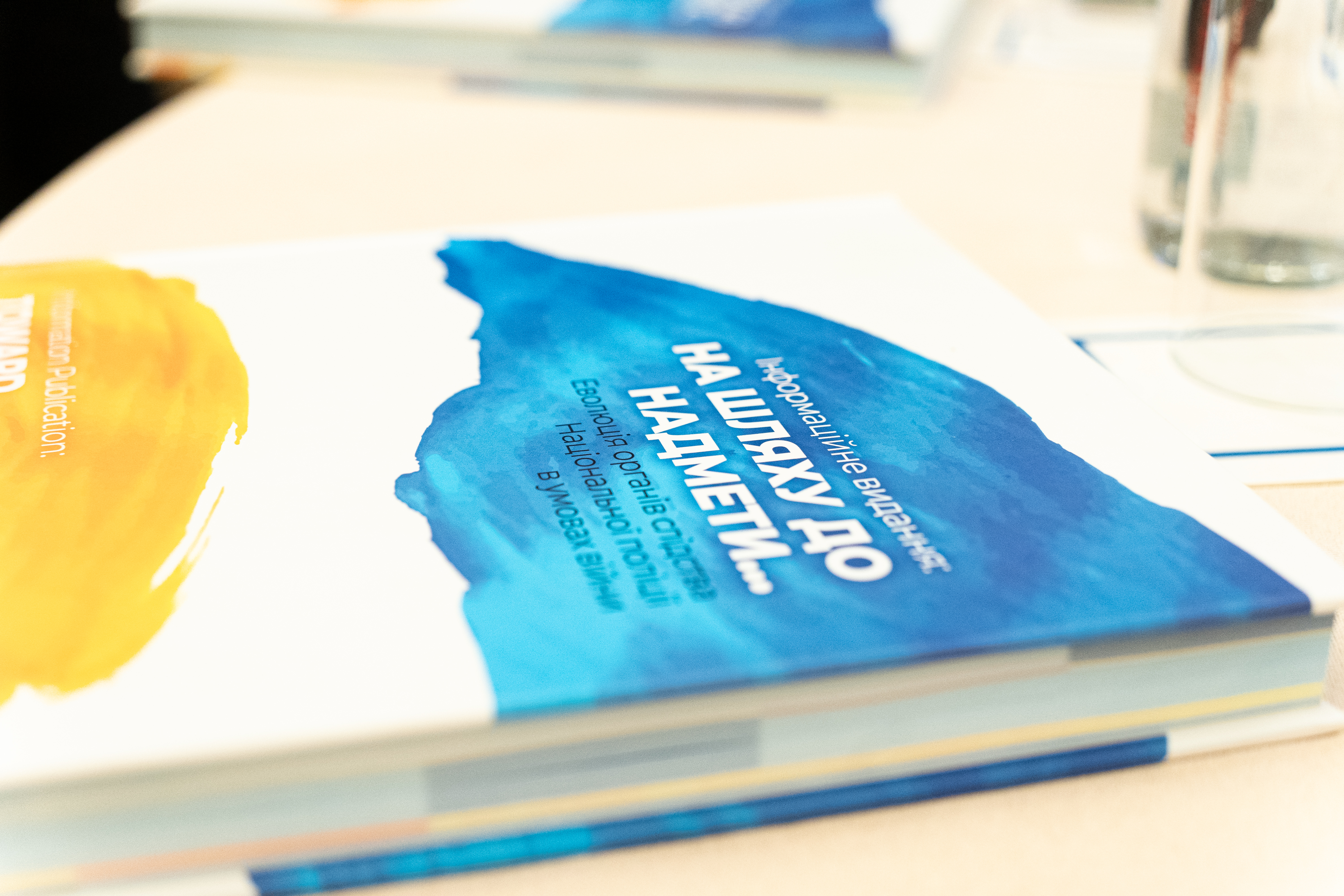
The conference provided a platform to present the results achieved so far, discuss remaining challenges and identify further priorities. It also featured the presentation of the publication “Towards the Ultimate Goal… The Evolution of the Investigative Bodies of the National Police in the Conditions of War”, which reflects the accumulated experience of investigating international crimes and the development of institutional capacity over the past four years.
During the conference, the leadership of the National Police of Ukraine and international partners emphasised the importance of a systematic and sustained approach to war crimes investigations:
“Today, we are not only talking about the number of documented war crimes, but also about the qualitative changes in approaches to investigating them. This Strategy is not just a declaration; it is a practical tool for day-to-day work, approved by the Order of the National Police of Ukraine. It ensures consistency and continuity in the extremely complex work of documenting crimes, providing a clear understanding of the direction we are heading in. Thanks to this, we are steadily moving towards our main goal of ensuring justice and accountability,” emphasised Ivan Vyhivskyi, Head of the National Police of Ukraine.
The establishment of specialised war crimes investigation units within the National Police of Ukraine was unprecedented and required rapid institutional adaptation in response to the scale and complexity of crimes. The Council of Europe has played an important role in supporting this adaptation, and its project team in Ukraine continues to assist national counterparts in strengthening investigative capacity and aligning practices with European standards. At the broader level, the efforts of the National Police of Ukraine to document and investigate war crimes in a systematic manner will form a crucial contribution to ongoing international initiatives to ensure accountability, including work on the establishment of the Special Tribunal for the Crime of Aggression against Ukraine, supported by the Council of Europe.
“This is not just about four years of work; it's about making decisions and being held accountable. We could have confined ourselves to documenting the facts and handing over the materials, but instead we chose to build a new system for investigating war crimes. In a short space of time, we have not only established a structure, but also a team that operates in wartime conditions, never stops, and already possesses unique experience. It is coordination rather than competition and partnership rather than fragmentation that has enabled us to bring together state bodies, international partners, and civil society,” said Serhii Panteleev, First Deputy Head of the Main Investigation Department of the National Police of Ukraine.
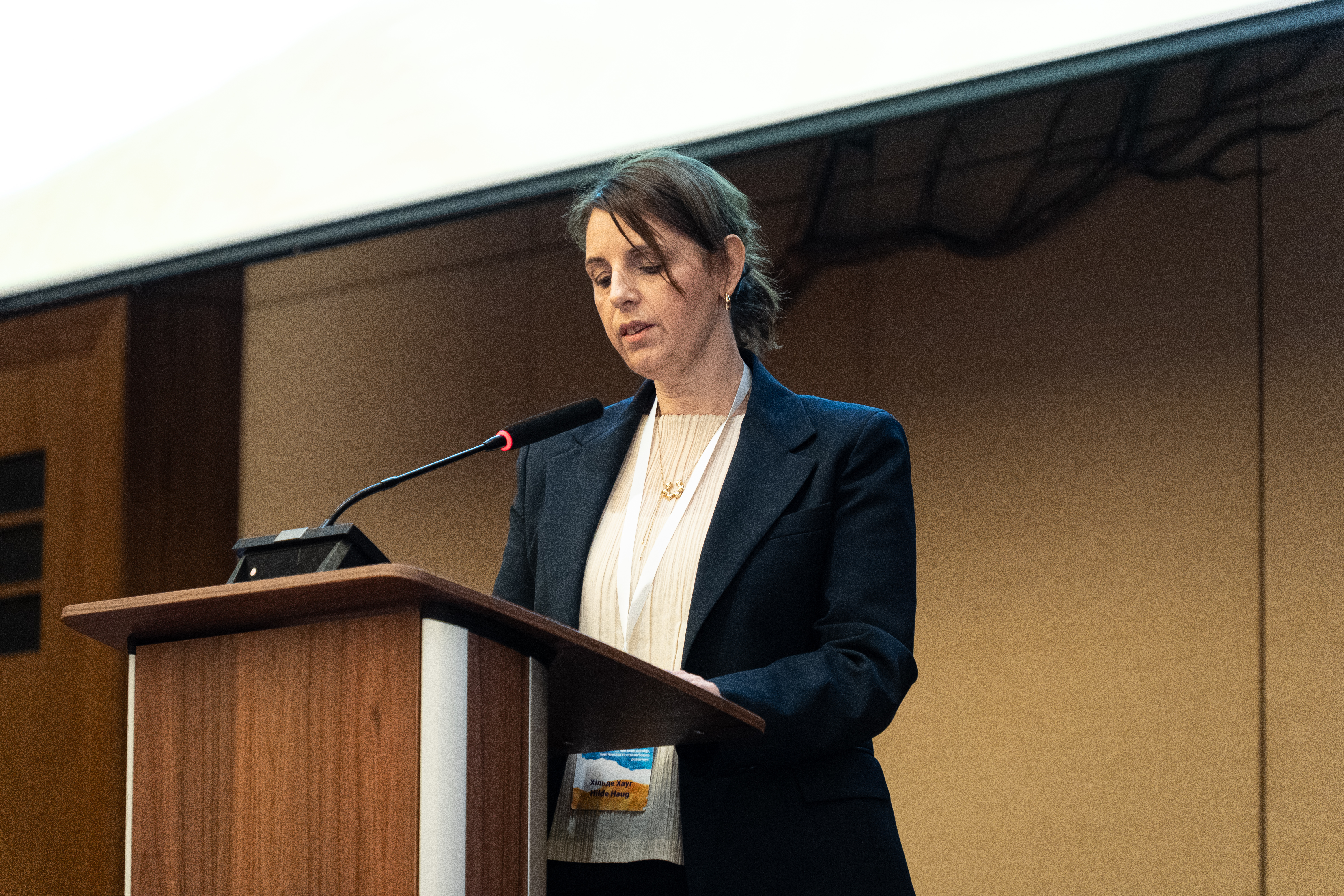
“We are grateful to the National Police of Ukraine for entrusting the Council of Europe with supporting the development and implementation of its Strategy. Today, we are already seeing tangible and significant results. I would like to assure you that all the needs and priority areas for cooperation identified during recent discussions with law enforcement representatives will be taken into account in the Council of Europe’s new Action Plan “Democratic Security for Ukraine” for the period 2027-2030. This means that we will continue to work with you providing ongoing support and expert assistance,” emphasised Hilde Haug, Deputy Head of the Council of Europe Office in Ukraine.
During the conference, representatives of the Main Investigation Department of the National Police of Ukraine also presented practical results of their work, including the development of specialised units across regions, improved methods of documenting crimes, as well as procedures for locating missing persons and identifying bodies in wartime. Participants also discussed ways to further strengthen cooperation, coordination and investigative tools.
The event was organised by the Council of Europe within the framework of the project “Strengthening Ukrainian Law Enforcement Agencies During War and Post-War Period – Phase II” (Project) in cooperation with the National Police of Ukraine, the European Union Advisory Mission in Ukraine (EUAM), and the International Development Law Organisation (IDLO). The Project is being implemented within the framework of the Council of Europe Action Plan for Ukraine “Resilience, Recovery and Reconstruction” for 2023-2026 in cooperation with the National Police of Ukraine, the State Bureau of Investigation and the Security Service of Ukraine.