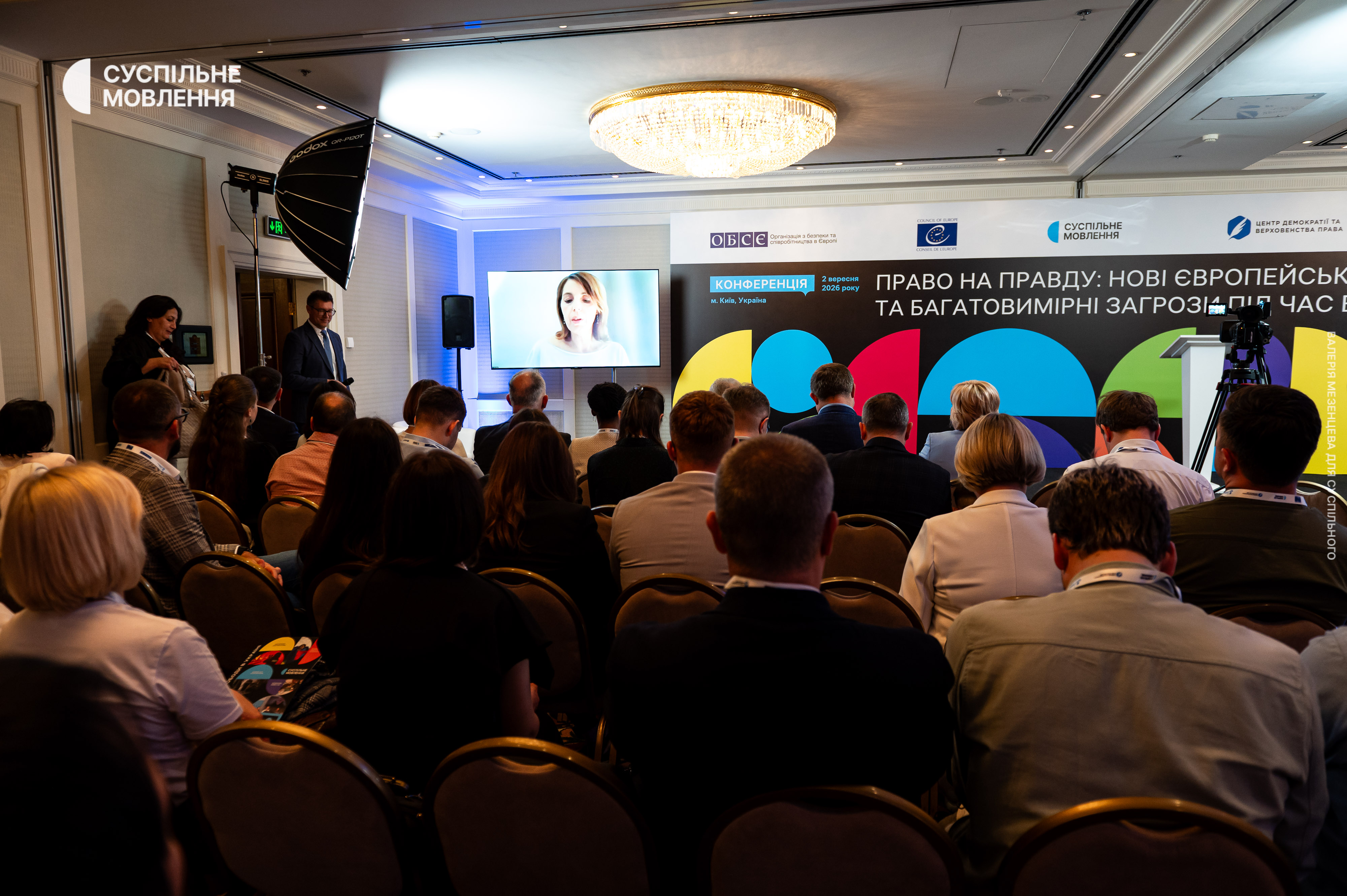
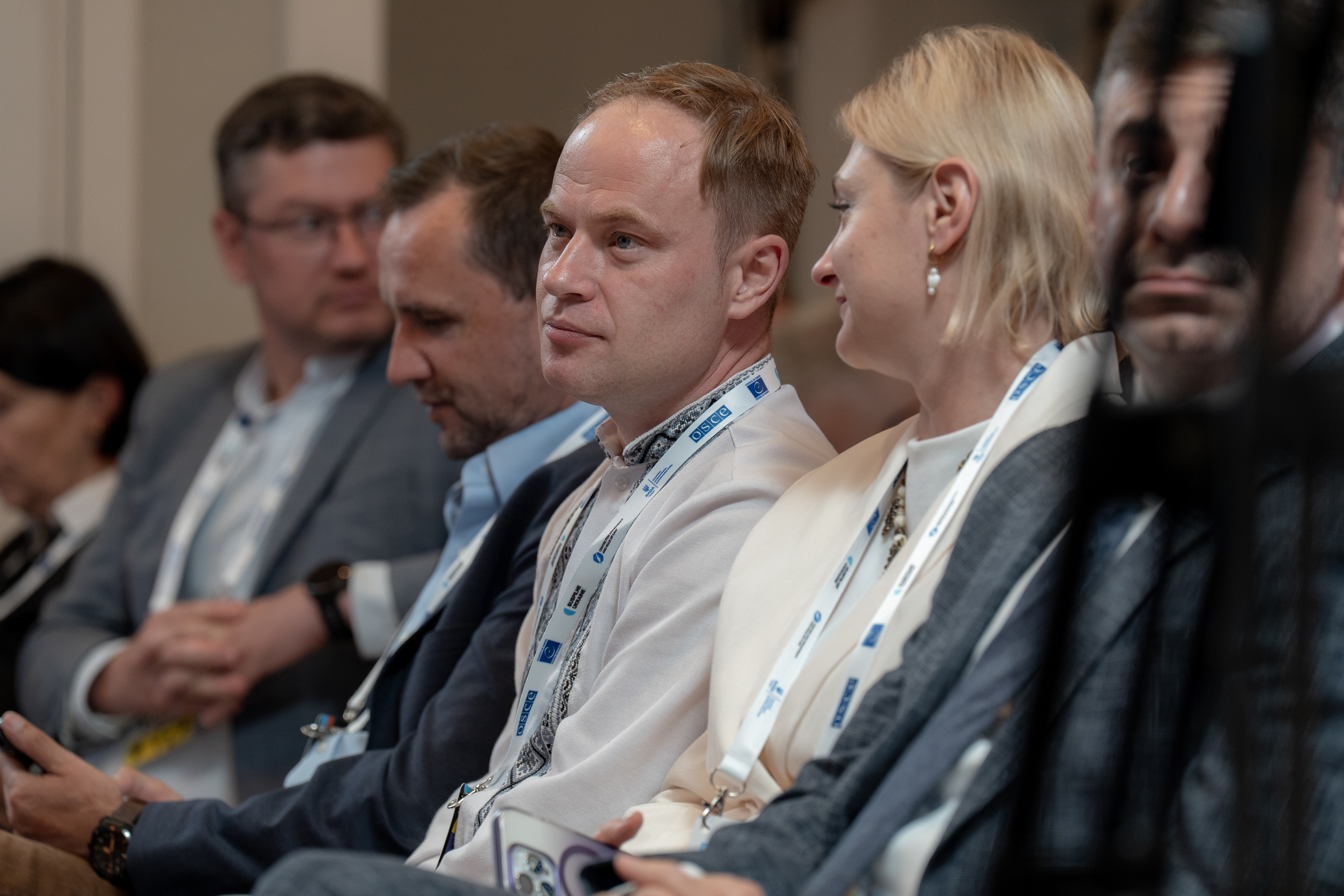
The advocacy conference “The Right to Truth: New European Regulations and Multidimensional Threats During Wartime” in Kyiv, on 2 September, began in a shelter during the sixth air-raid alert of the day. Despite the security challenges, participants discussed how Ukraine can continue to strengthen media freedom, journalists’ safety and the resilience of the information environment during wartime.
The conference, which was supported by Council of Europe Project “Safeguarding Freedom of Expression and Freedom of Media in Ukraine - Phase II” (SFEM-UA - Phase II), brought together around 160 participants online and in person, including representatives of the Ukrainian Parliament and state institutions, international organisations, civil society, expert community, Ukrainian and international media. Discussions explored how changes in the way people consume information are affecting the media landscape, the importance of ensuring access to independent information, and the role of European media standards in responding to these developments.
Participants also considered the growing impact of AI on journalism, from changes in newsroom practices to its potential to reshape how media content reaches audiences. Against this backdrop, the discussions underlined the continued importance of independent media and public service broadcasting in maintaining media pluralism and ensuring access to trustworthy information.
Participants also drew attention to less obvious forms of influence from Russian propaganda, including the dissemination of content for minors that may appear neutral but at the same time contributes to Russia’s information influence on Ukrainian audiences.
The security situation remains number one challenge not only for the media but for the country as a whole. At the same time, having an appropriate legal framework does not in itself guarantee its implementation: in wartime, it is crucial to maintain the capacity of the institutions and people responsible for ensuring the functioning of the media environment.
Hilde Haug, Deputy Head of the Council of Europe Office in Ukraine, emphasised the importance of preserving the public’s right to access trustworthy information in times of war. She has also highlighted the Council of Europe’s long-standing co-operation with Ukrainian public broadcaster Suspilne, recognising the essential role that a strong, independent and pluralistic public service media play not only to media pluralism and informed public debate, but also to social cohesion and resilience in a democratic society. In today’s wartime reality the role of Suspilne as an indispensable source of reliable and diverse information for citizens across Ukraine becomes even more important.
Another issue in the focus of the conference was the independence of the public service broadcaster, which is an important pillar of media pluralism and democratic resilience, including the need for stable, adequate and predictable funding.
In line with the Council of Europe’s standards on the independence, mission and good governance of public service media, the SFEM-UA Phase II project has supported Suspilne in strengthening its institutional and strategic capacity, including through expert advice on governance, strategic planning, inclusive content and the development of educational, sports and regional broadcasting.
The project has also provided expert support on key developments in Ukraine’s media legislation, including the implementation the European Media Freedom Act (EMFA), Digital Services Act (DSA) and Digital Markets Act (DMA), as well as on strengthening safeguards against strategic lawsuits against public participation (SLAPPs).
The Council of Europe Project “Safeguarding Freedom of Expression and Freedom of Media in Ukraine – Phase II” (SFEM-UA - Phase II) is implemented by the Council of Europe Division for Co-operation on Freedom of Expression in the framework of the Council of Europe Action Plan for Ukraine “Resilience, Recovery and Reconstruction” 2023-2026.