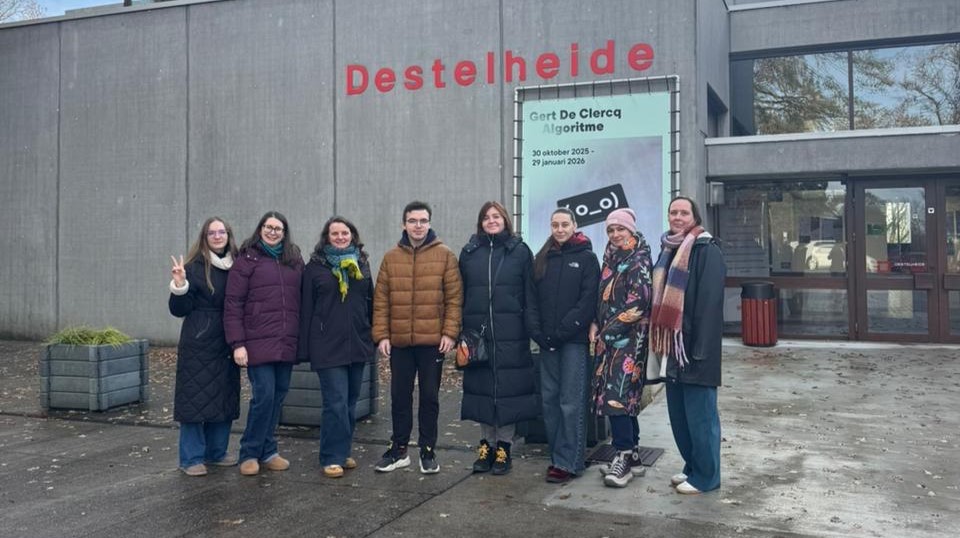
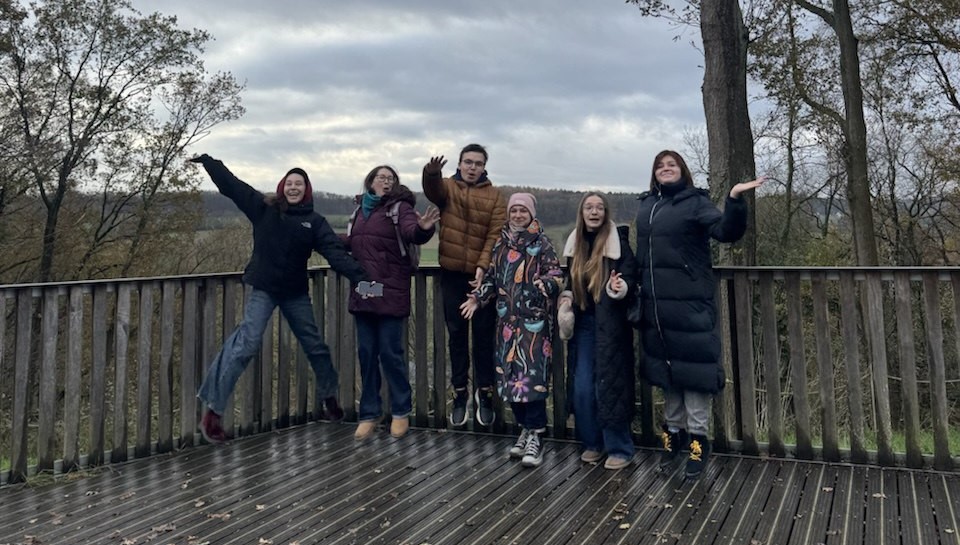
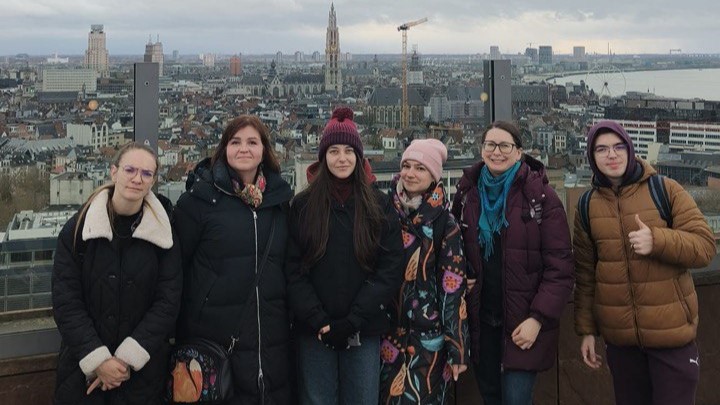
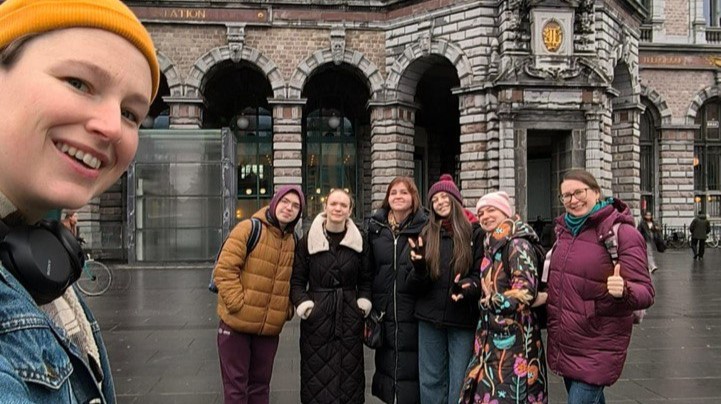
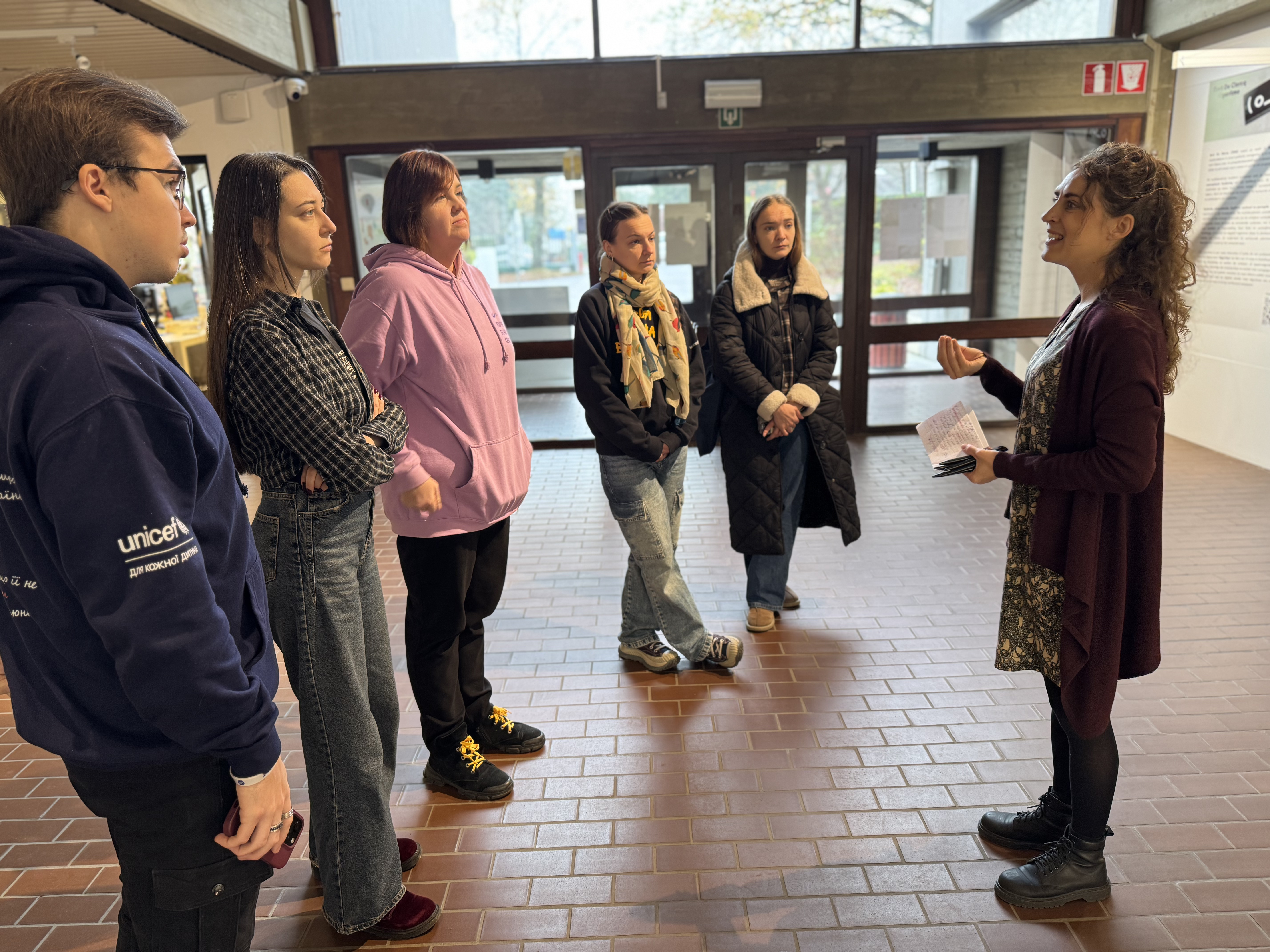
The week from 24 to 29 November 2025 became a period of deep immersion into the world of European youth work for the Ukrainian delegation, who visited three influential youth centres in Belgium. Destelheide, Hanenbos, and De Hoge Rielen - each bearing the Council of Europe’s Quality Label - demonstrate what contemporary youth development infrastructure can be.
The first stop for the delegation was Destelheide, a centre with over half a century of history. Established back in 1971, the space has become a genuine laboratory of creativity for young people. With nine versatile workspaces, a podcast studio and art workshops, the centre provides up to 30,000 overnight stays annually.
It is important to note Belgium’s distinction between youth centres and youth houses. ‘Youth centres’ are large infrastructural complexes with accommodation facilities, such as Destelheide, Hanenbos and De Hoge Rielen. In contrast, ‘youth houses’ are local youth spaces within communities, similar in essence to Ukrainian youth centres: meeting places for activities and youth work, but without residential infrastructure.

Oksana Cherviakova, a participant of the visit and head of the “Youth Development Centre” in Zolotonosha, remarked: “We wish that Ukraine had at least one such centre - for youth work, training and supporting youth workers.”
Anna-Maria Mykhailiuk, head of the Association of Youth Centres of Ukraine, describes her first impressions: “Our acquaintance with Destelheide began with settling into rooms usually occupied by camp participants, creative project members, long-term volunteers, or, as in our case, study visit participants.”
She highlighted the centre’s accessibility: “We were accommodated in a large three-storey building, each floor with about four two-person rooms. The premises were entirely barrier-free, with a lift, clear navigation and rooms adapted for persons with disabilities. Physical accessibility was ensured to a high standard.”
A standout experience for the Ukrainian delegation was the exhibition “Algorithms” by Belgian artist Gert de Clercq. As Oksana explains, this piece of conceptual art explores creativity, its logic and how intuition merges with structure: “For many centre visitors, such exhibitions serve as their first foray into conceptual art, introducing new perspectives on self-understanding and vision.”
Anna-Maria enthusiastically recalls the live creativity at the centre: “We were fortunate to witness a band rehearsal—a remarkable moment to observe the creative process in the music hall. This was art in its living form.”

A theatre performance left a lasting impression on Anna-Maria: “The evening programme included a final rehearsal by a theatre group residing at the centre. The show, performed on a round revolving stage, portrayed a struggle to catch up with time: without words, using only movement and action. It was a powerful emotional journey underscoring the impact of art.”
The delegation also shared Ukrainian culture, as Anna-Maria narrates: “At the centre’s exhibition, where every item had its creation story, one of our delegates, Iryna Tkachenko, presented the Ukrainian technique of vybiykarstvo - painting on fabric with traditional stamps. It was a true cultural exchange.”
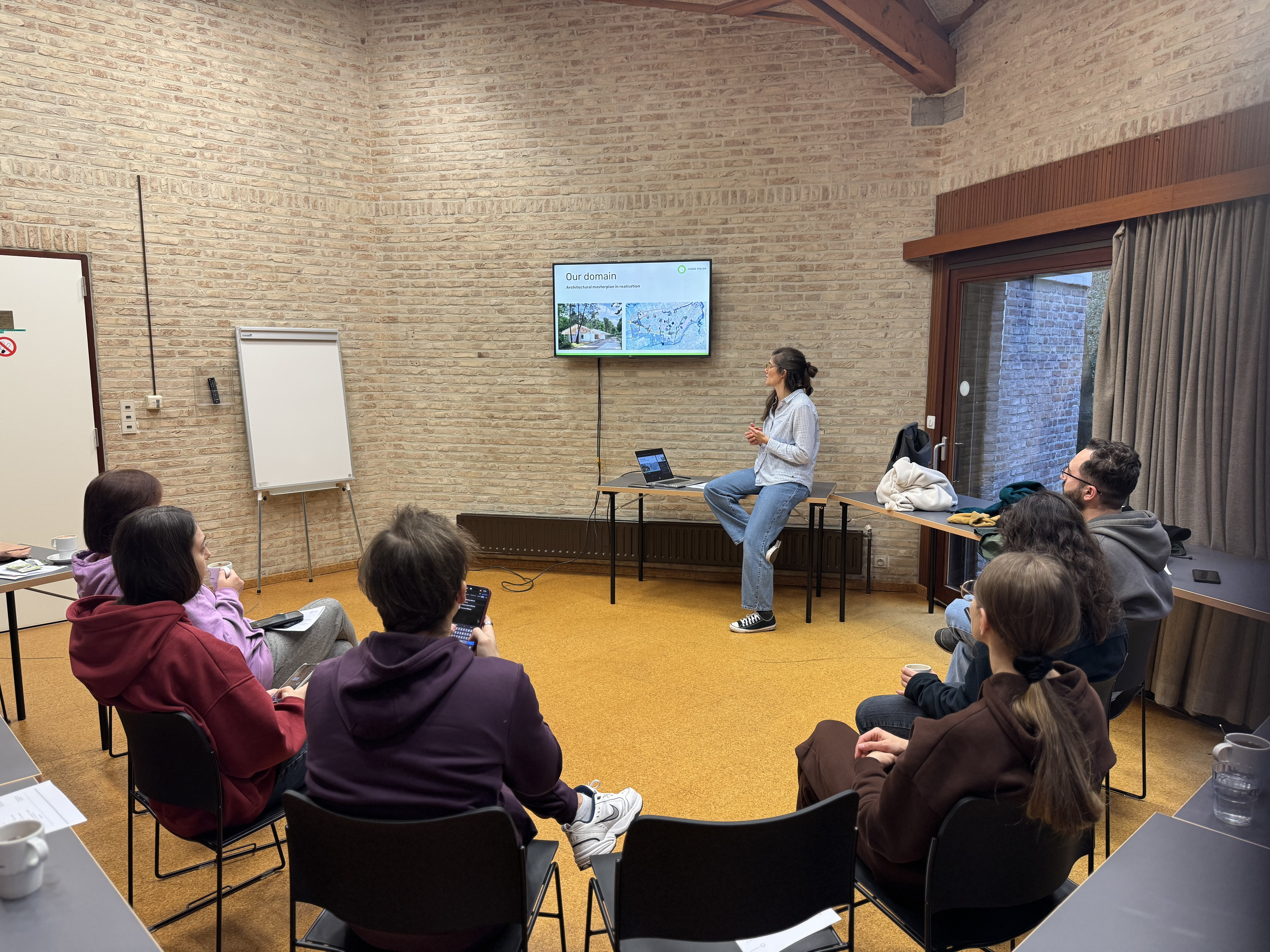
The visit’s programme included detailed insight into youth policy in the Flemish region: “On the second day, we met with representatives of Belgian youth policy and centre staff who introduced us to the country’s youth work system,” Anna-Maria Mykhailiuk shares. “It was a valuable dive into a context previously unfamiliar to me.”
She details what struck the delegation: “We were presented with key components: the structure of the Ministry for Youth Policy, instruments of influence and achievements. Particularly impressive was the volume of public funding. Resources support NGOs and youth organisations, non-formal education, centre and event funding, volunteering and civic engagement, youth tourism, international exchanges and skill-development innovations—including collaborations under Erasmus+ and the European Solidarity Corps.”
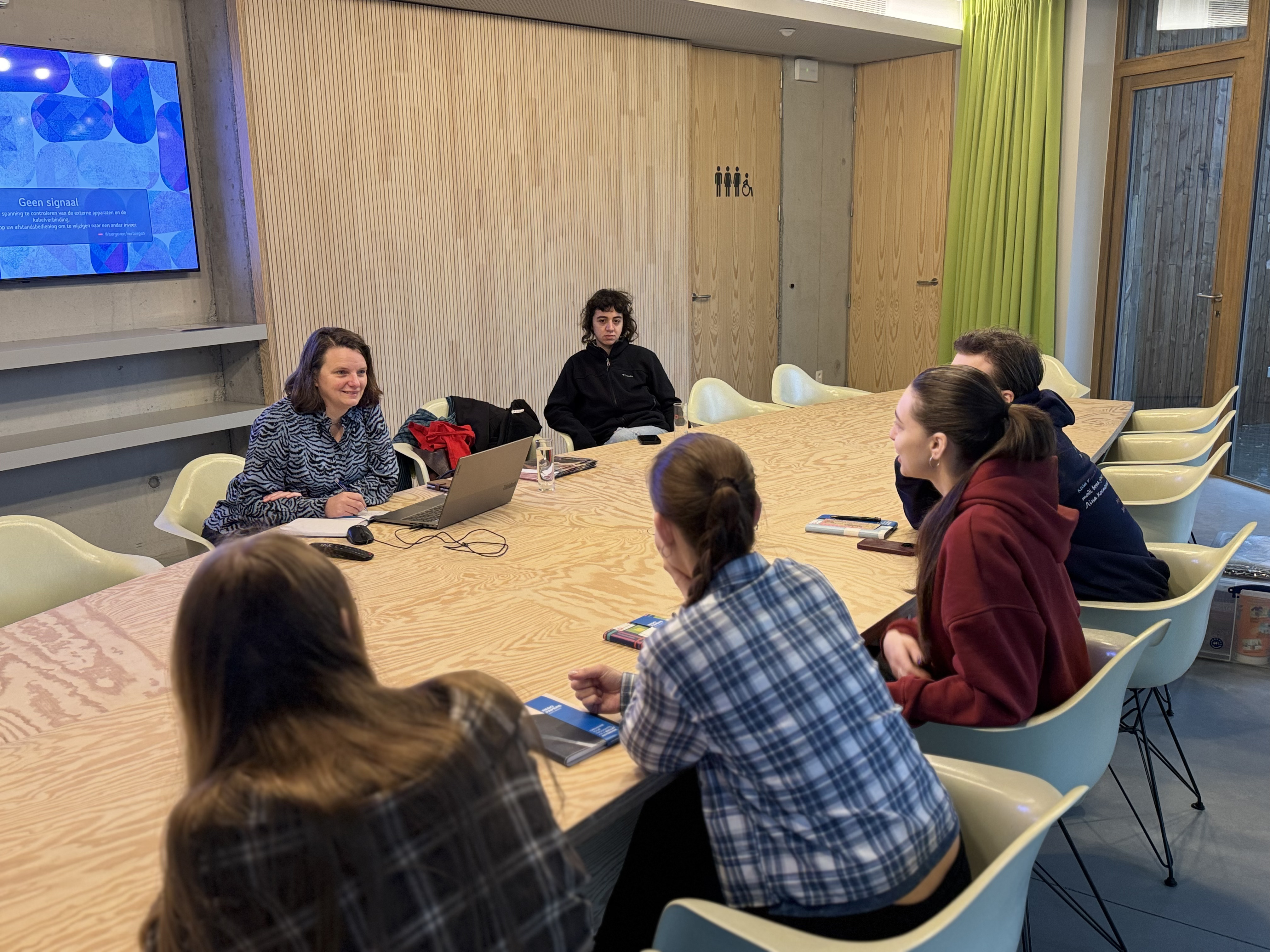
The group also had the chance to meet Christophe Cooreman of the Flemish Government: “Hearing directly about their working principles, local government interaction, and approaches to youth engagement was particularly valuable,” says Iryna Tkachenko, youth worker and trainer (“Khmarochos” Agency for Sustainable Development, Creative Space “KOWO”, Kropyvnytskyi).

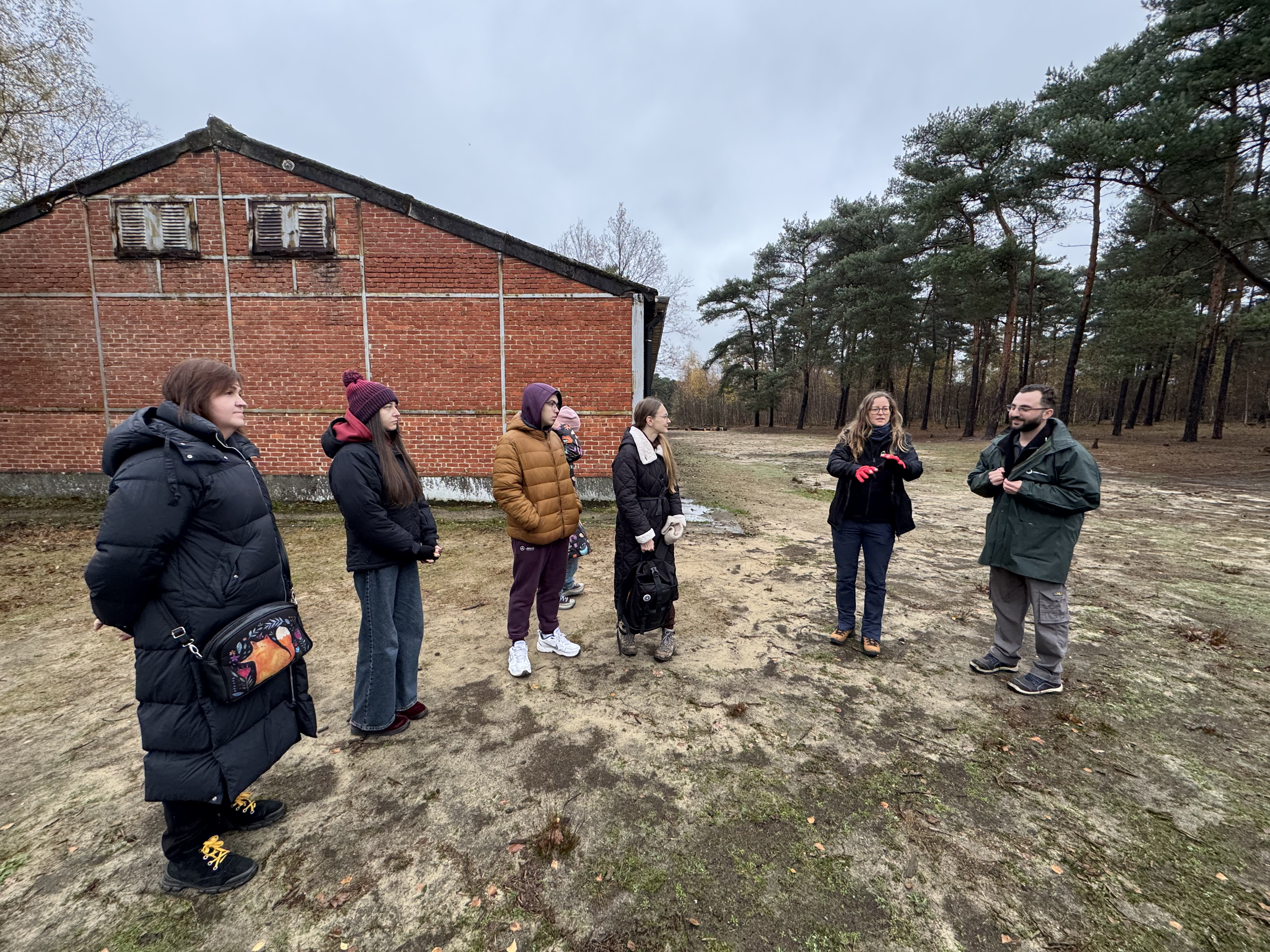
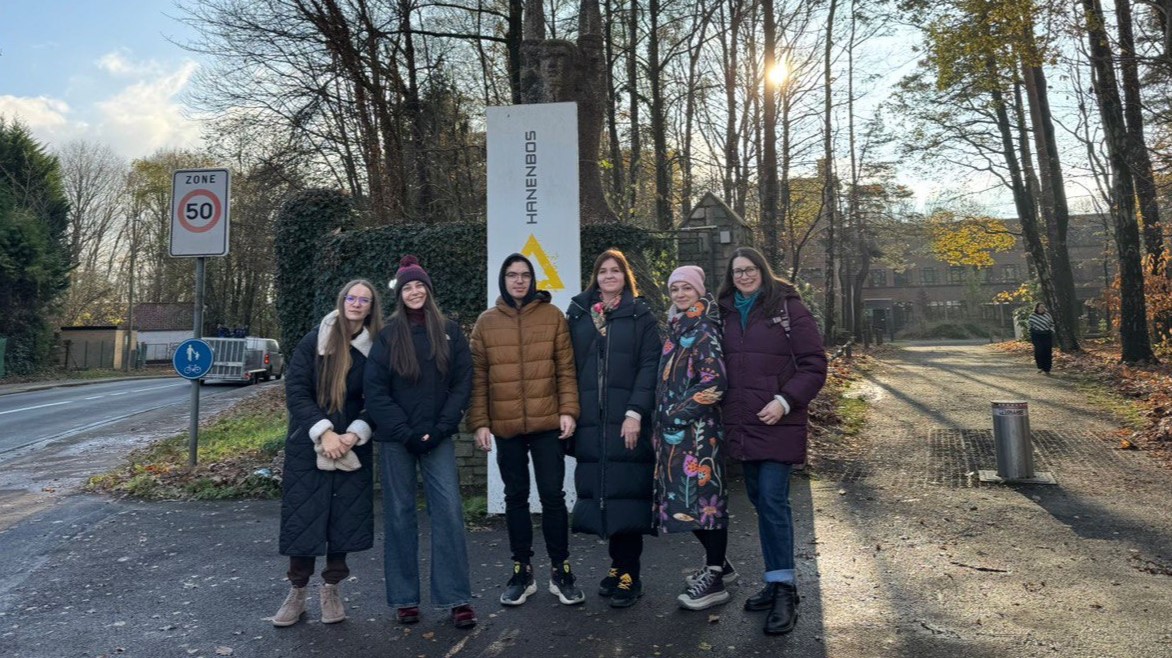
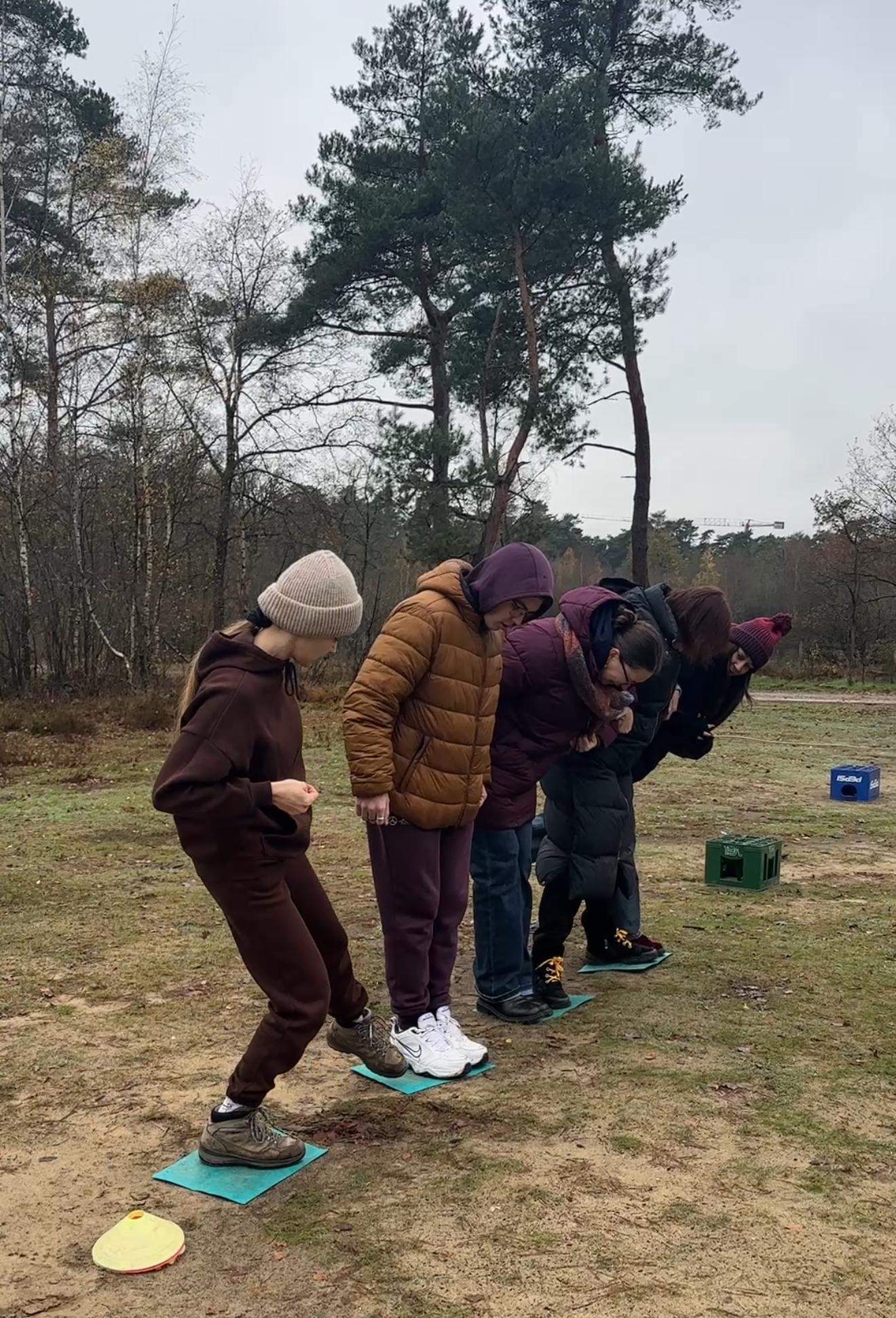
The third day brought fresh discoveries: “We took a nature walk to Hanenbos, another large centre focused on camps,” Anna-Maria explains. “The centre provides all necessities for sports or creative activities. However, as the centre had no current guests, we could view only the facilities.”
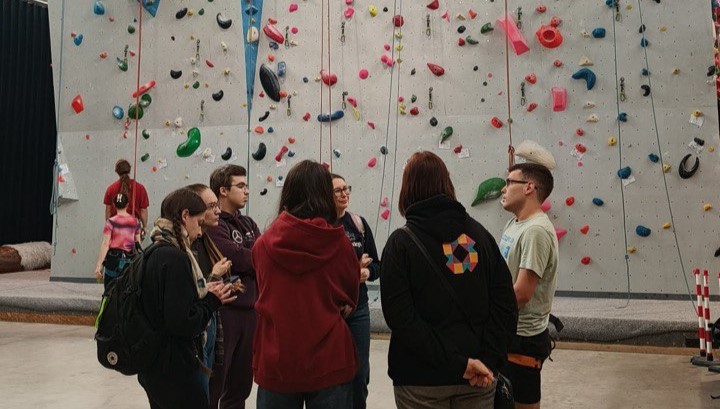
The next stop was De Hoge Rielen youth centre, impressive for its scale and history: Seventeen former military base buildings, repurposed as a modern youth complex with 751 beds, located in a forest near Antwerp. Facilities cater to a wide spectrum—from sport to theatre, non-formal education to camping.

Oksana Cherviakova notes: “It’s reminiscent of our summer camps but adapted for children, youth, adults and socio-cultural groups—highlighting different approaches to organisation and activity.”
Iryna Tkachenko adds: “De Hoge Rielen remains my favourite: vibrant with young people, active teamwork and a lively centre atmosphere.”
Participants especially noted similarities with Ukrainian camp work: “We’ve always viewed this [camping] as recreation, but not as youth work in a broader context. This is food for thought. There’s much creativity, art and nature involved.”
For many, the visit was transformative. As Rodion put it: “This was my first overseas journey, not as a tourist but in a conscious and professional capacity.” He especially appreciated the philosophy in Belgian centres: “These are spaces of respect and trust in young people’s potential, not formal institutions but living environments blending non-formal learning, creativity, initiative support and space for communication. Young people co-design activities and decisions; they are partners, not passive participants.”

Iryna Tkachenko highlights: “Interactive sessions and practical demonstrations, such as the COMPASS manual on human rights or sports tourism, enriched our understanding greatly.”
An important part of the programme was a meeting with the Ukrainian diaspora in Antwerp: “We discussed the challenges of adaptation, maintaining ties with Ukraine and the responsibility each carries for the country’s future,” relates Rodion Overko.
Meeting the PLAST organisation in Belgium was particularly meaningful: “It was valuable to discuss activity principles, cultural preservation, and support for Ukraine,” Iryna Tkachenko adds.
On trauma-informed approaches during war, Iryna reflects: “We showed our Belgian colleagues how we work, our methods, and the vital role of trauma-informed and creative approaches, community building, and participatory practices, especially in social adaptation for internally displaced families.”

Upon returning, the delegates brought back concrete plans. Oksana Cherviakova set out strategic directions: strengthening institutional resilience at the Zolotonosha youth centre, developing an inclusive co-working space for youth and internally displaced people, launching creative residencies and art platforms, and integrating camping and outdoor activities.
The visit initiated new partnerships. Iryna Tkachenko shared her experiences within the trainers’ community and participated in media discussions.
Alina Kasianova, trainer of the “Youth Worker” programme and board member of the Association of Youth Centres of Ukraine, recommends: “Having heard from volunteers Tata and Beka, I’d encourage young people to volunteer at Belgian youth centres, and our group is considering online exchanges on certain topics with Ukrainian centres.”
Rodion Overko summarises: “Belgian youth work can be bold, structured, and deeply humane. I now understand that this experience should not remain a memory but a foundation for further action and change.”
Main conclusion: Youth work in Ukraine is currently at a commendable level. The focus should be on continuing to build a strong national youth centre with accommodation facilities for training youth workers, developing local centres operating to unified standards and values, integrating camp work and non-formal education, and providing public support for infrastructure whilst maintaining the autonomy of organisational programming.
Author: Kateryna Bezhina, youth worker at “Prostir Idei” Youth Centre, established by the “Kremenchuk Informative-Elucidative Centre – European Club” NGO (Poltava region)
*The views expressed herein are those of the authors and may not reflect the official position of the Council of Europe.
This visit was organised by ADJ (Flemish non-profit), the “Kremenchuk Informative-Elucidative Centre – European Club” (Prostir Idei Youth Centre), and the Council of Europe’s “Youth for Democracy in Ukraine: Phase IV” project.
More information about the Council of Europe “Youth for Democracy in Ukraine” project, news, resources, and open calls for participation can be found here.