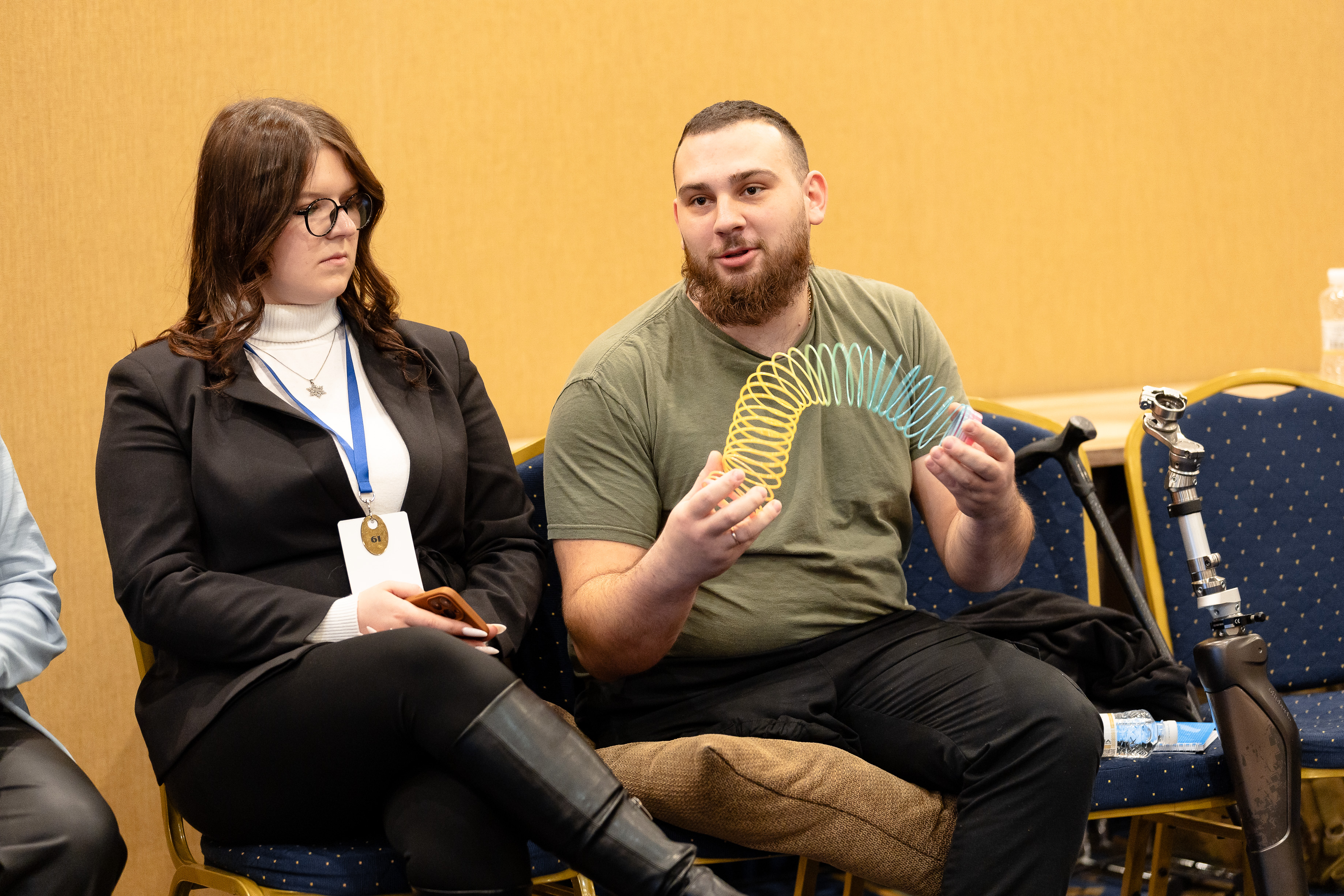
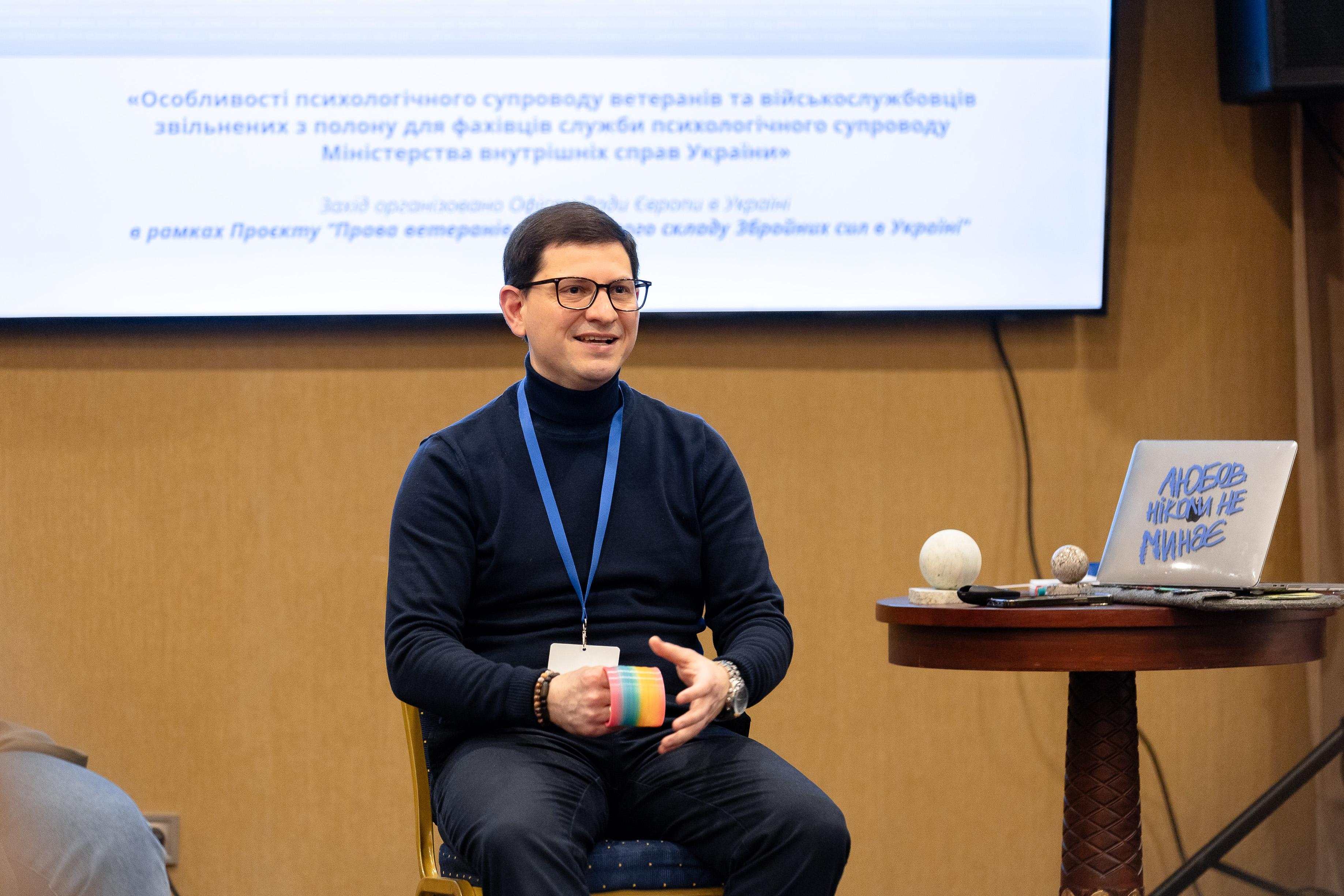
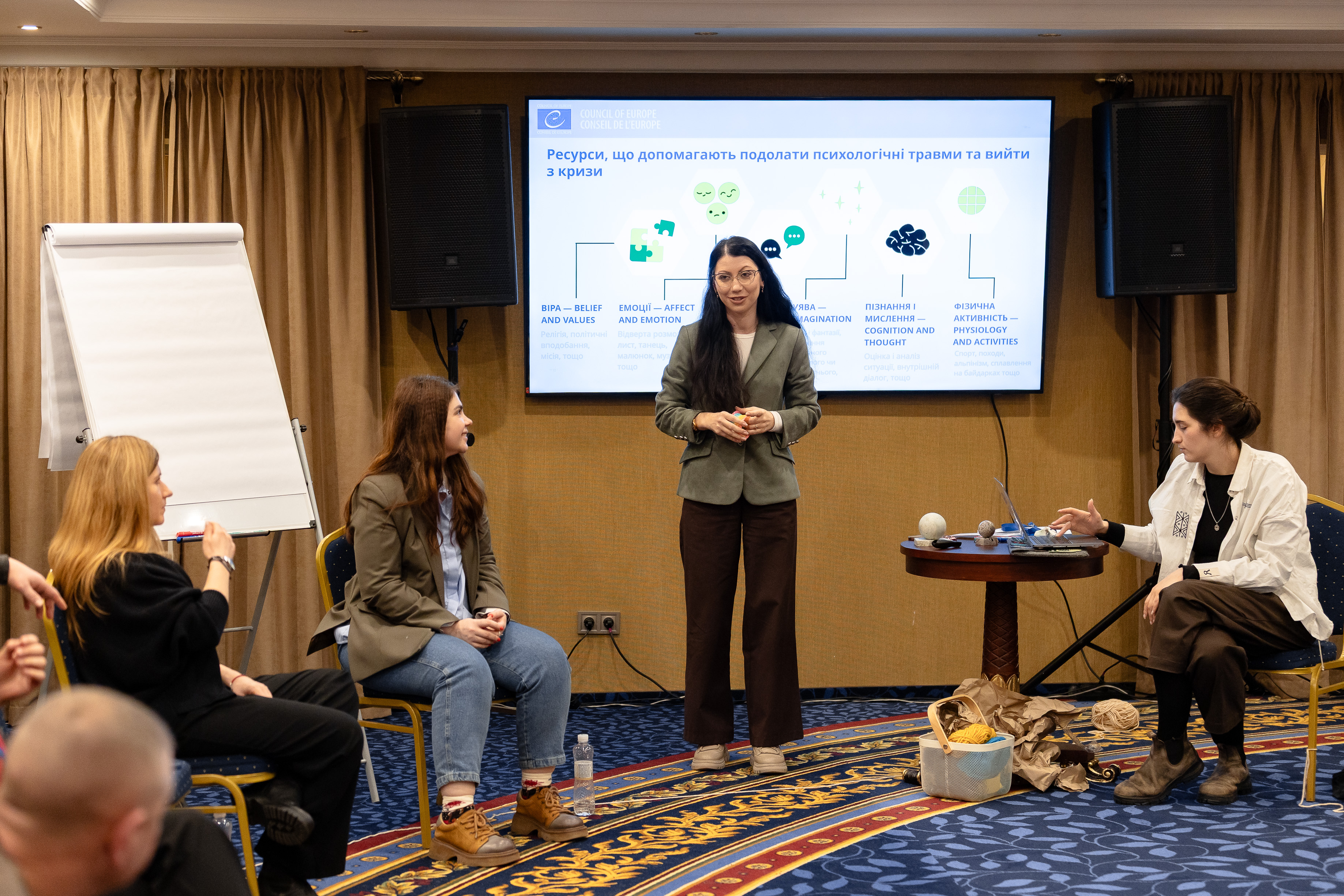
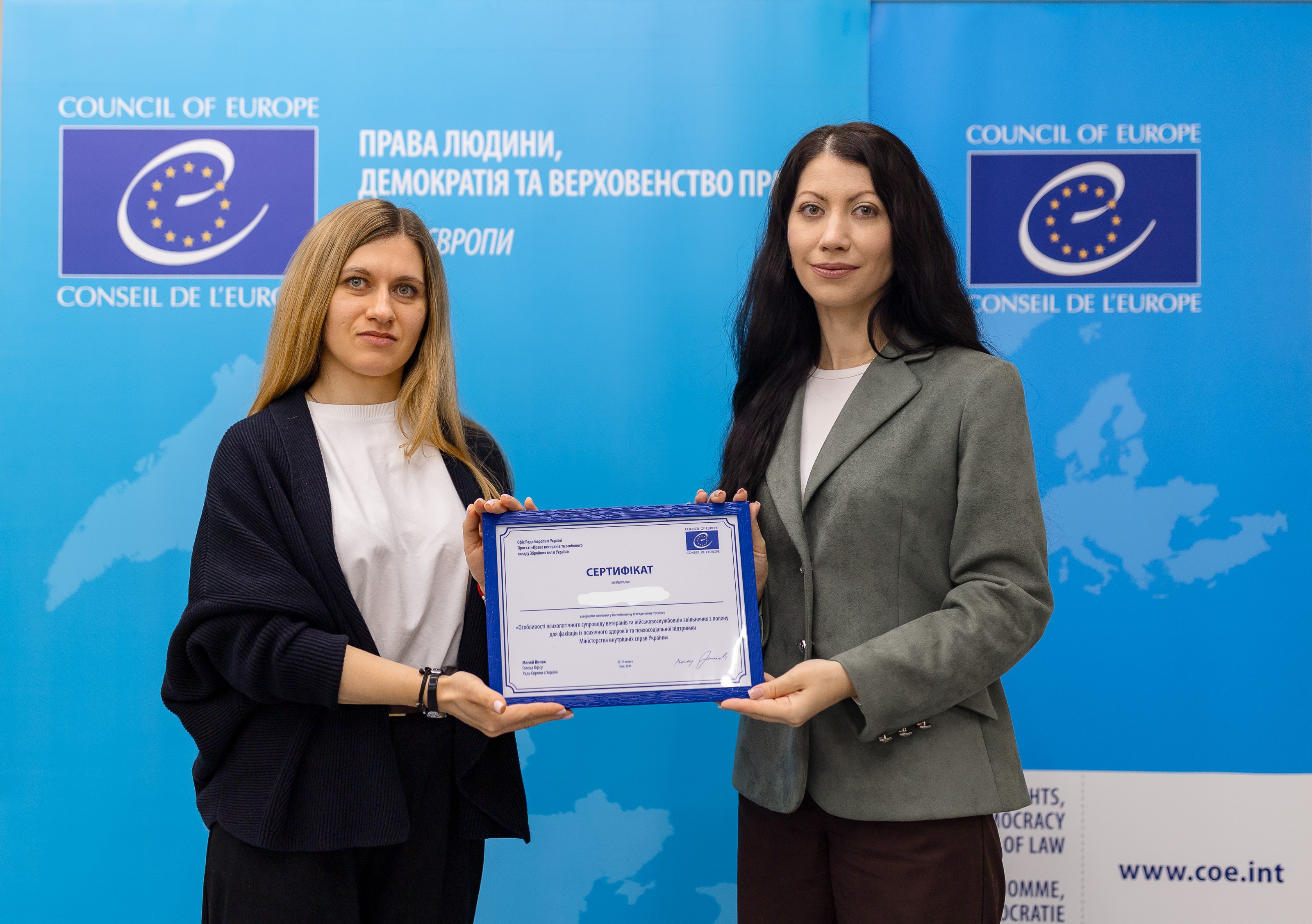
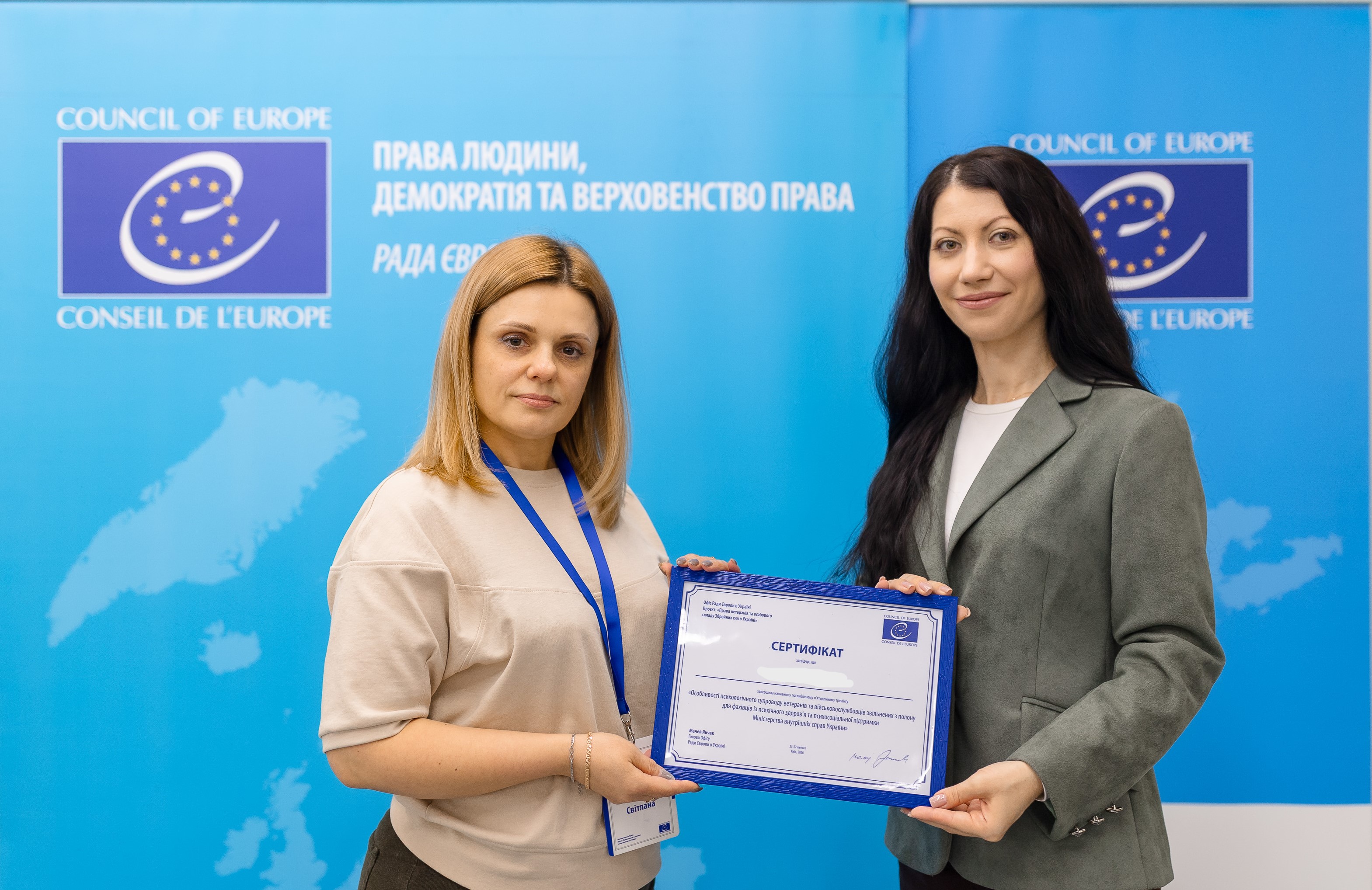
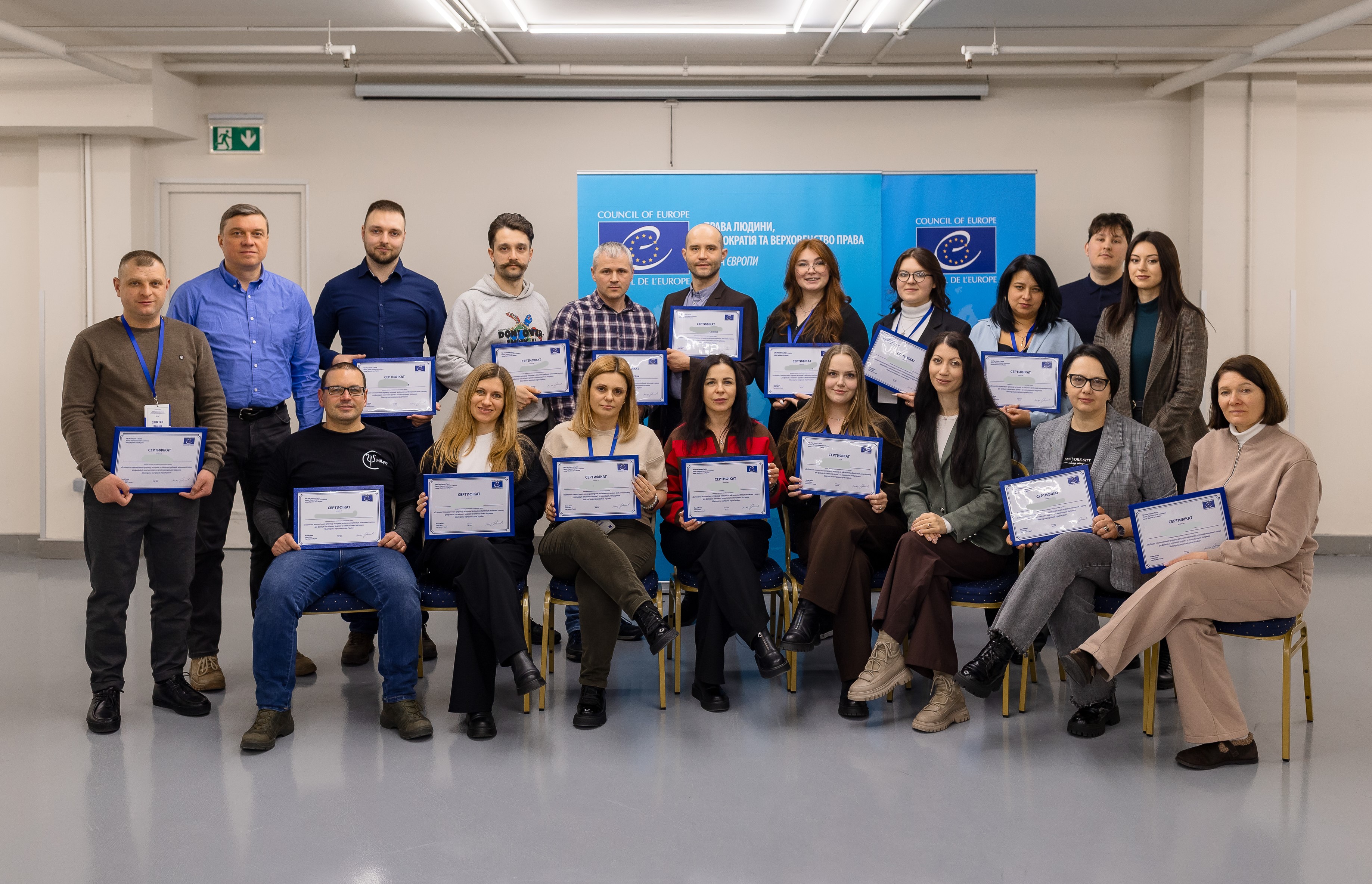
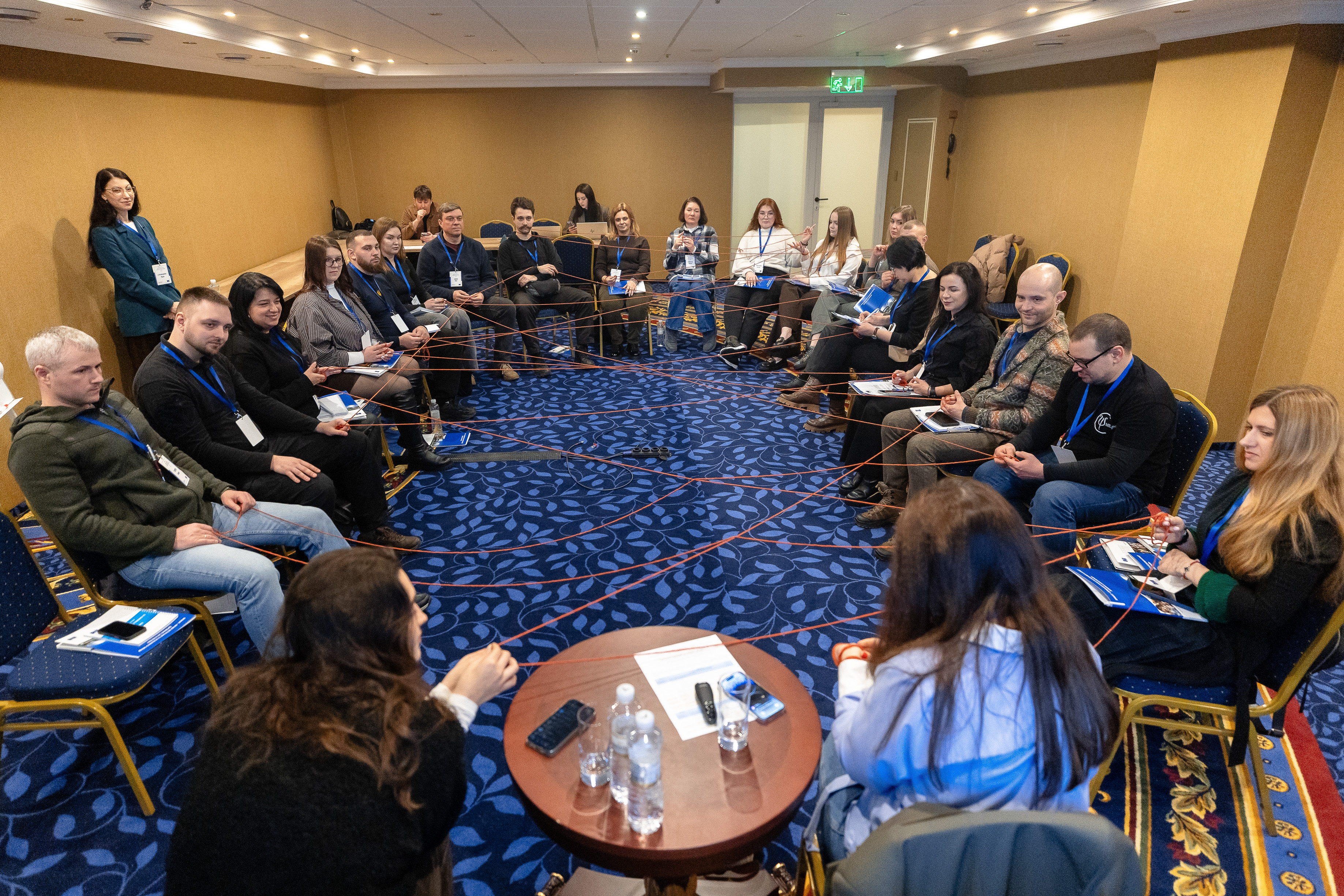
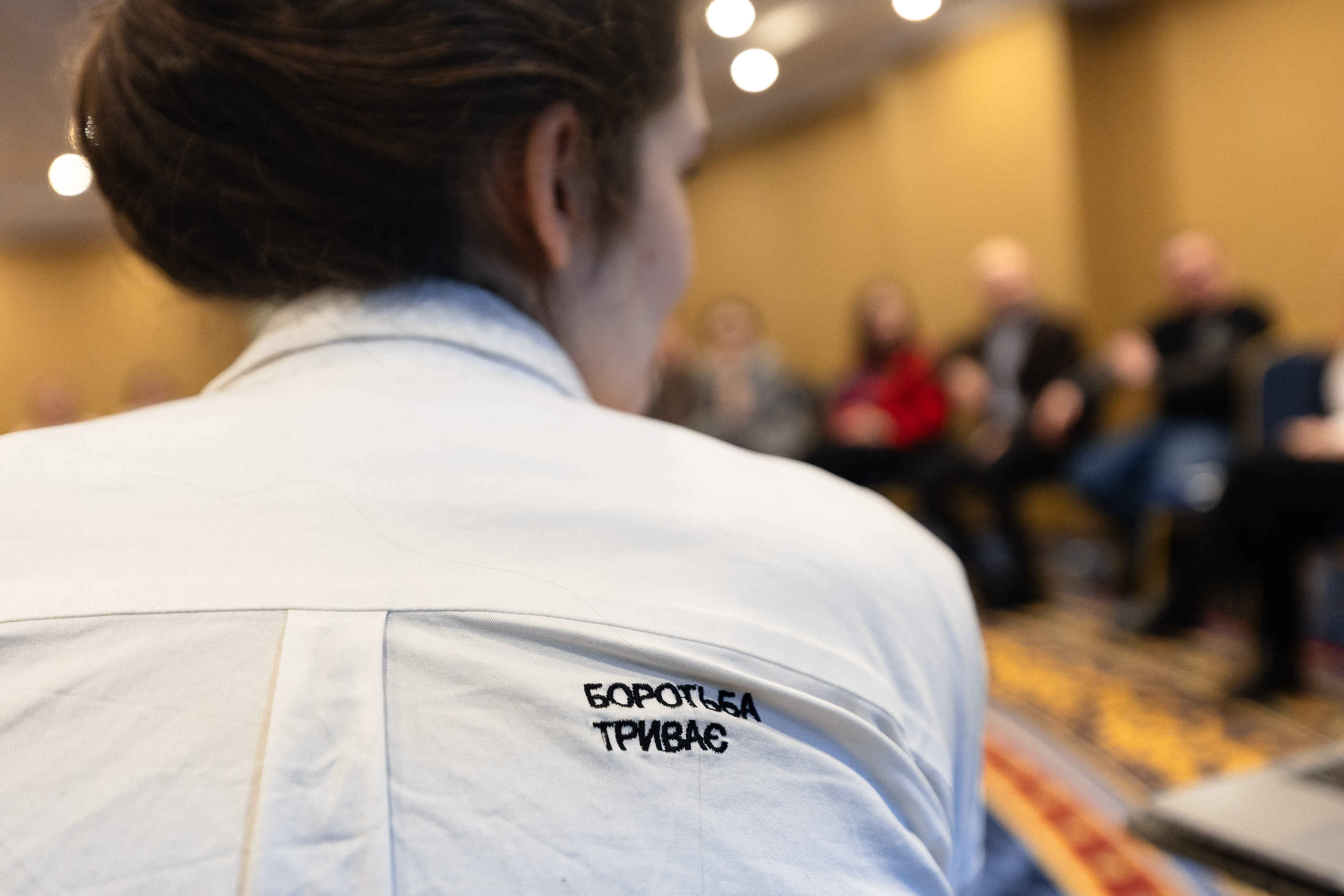
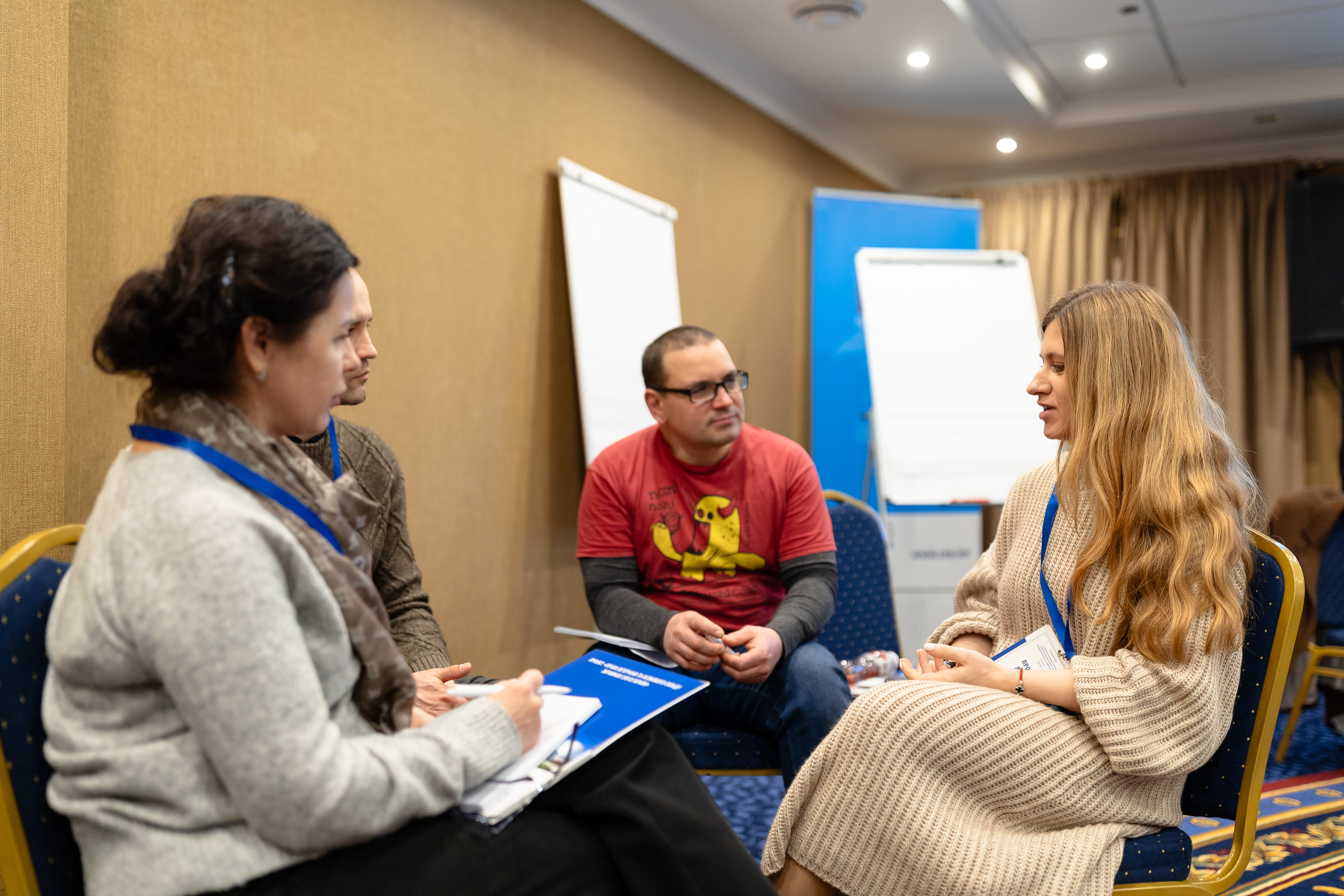
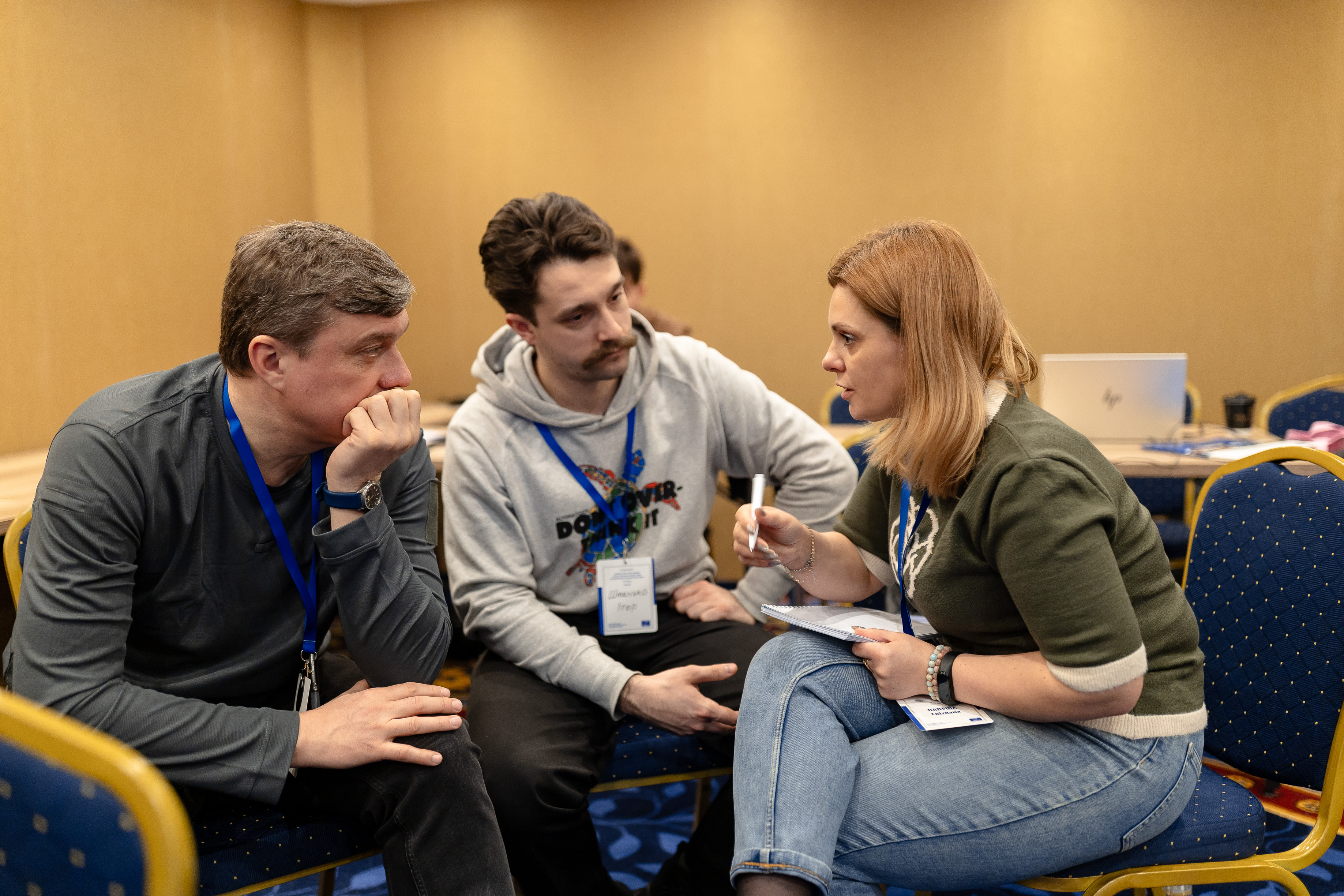
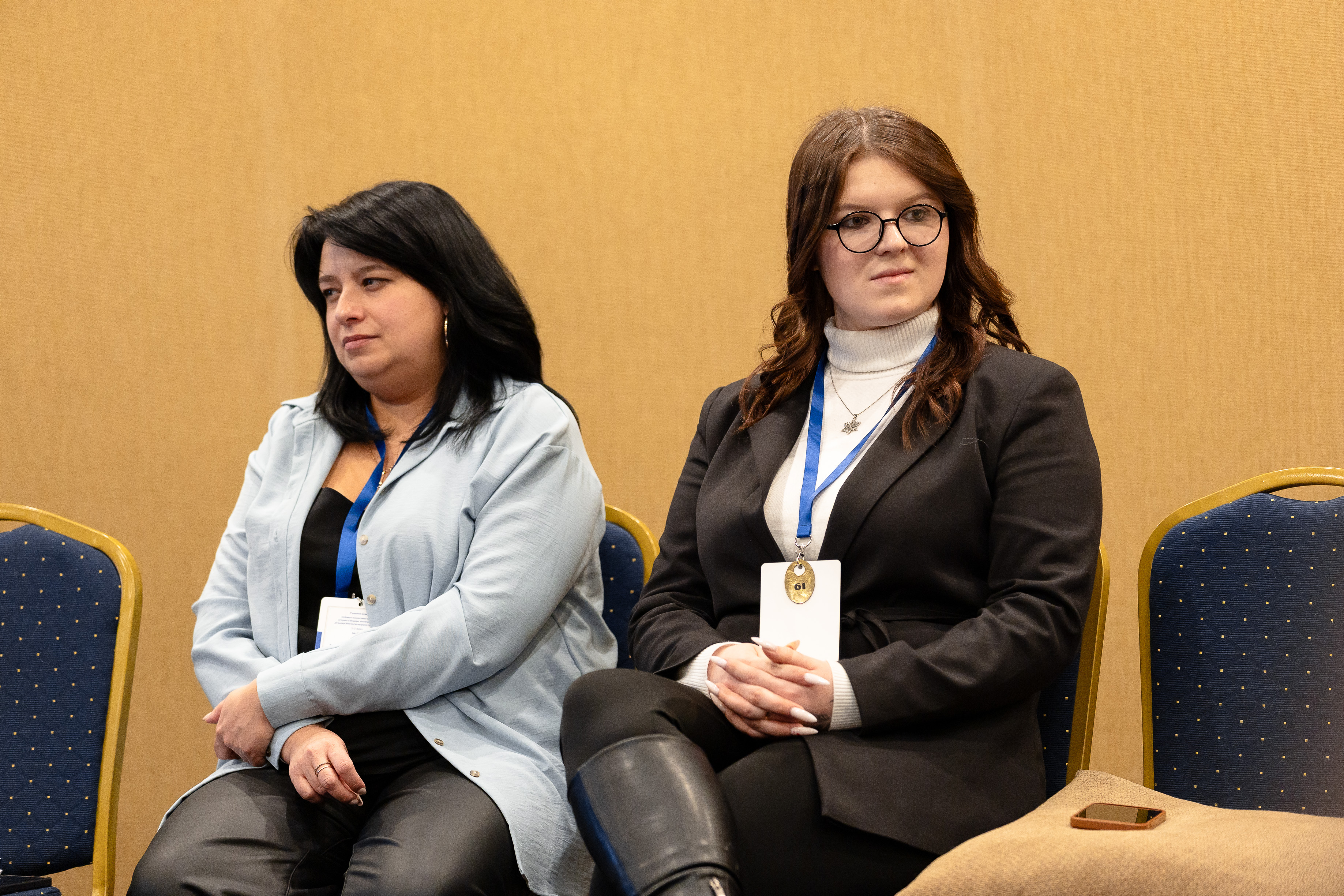
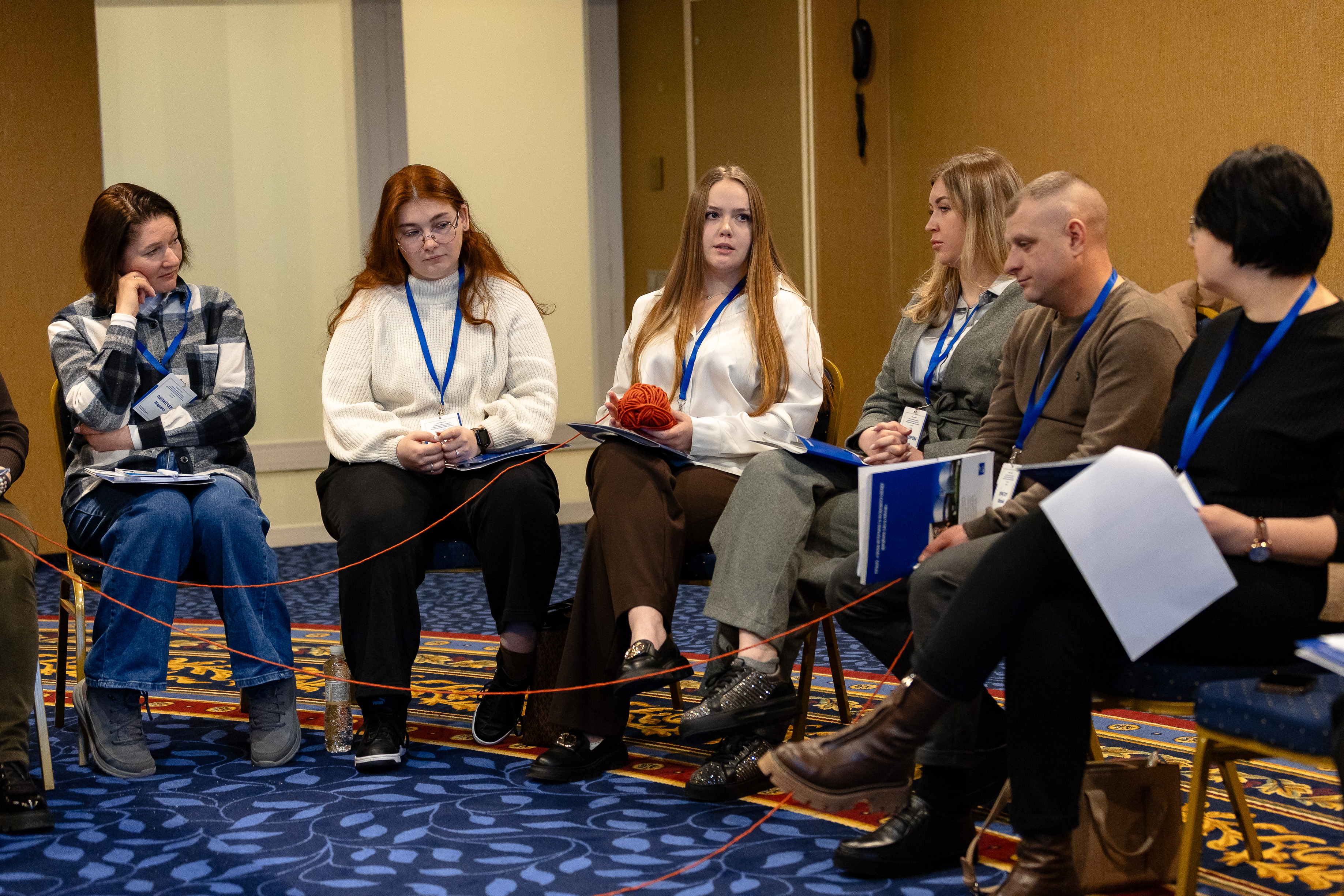
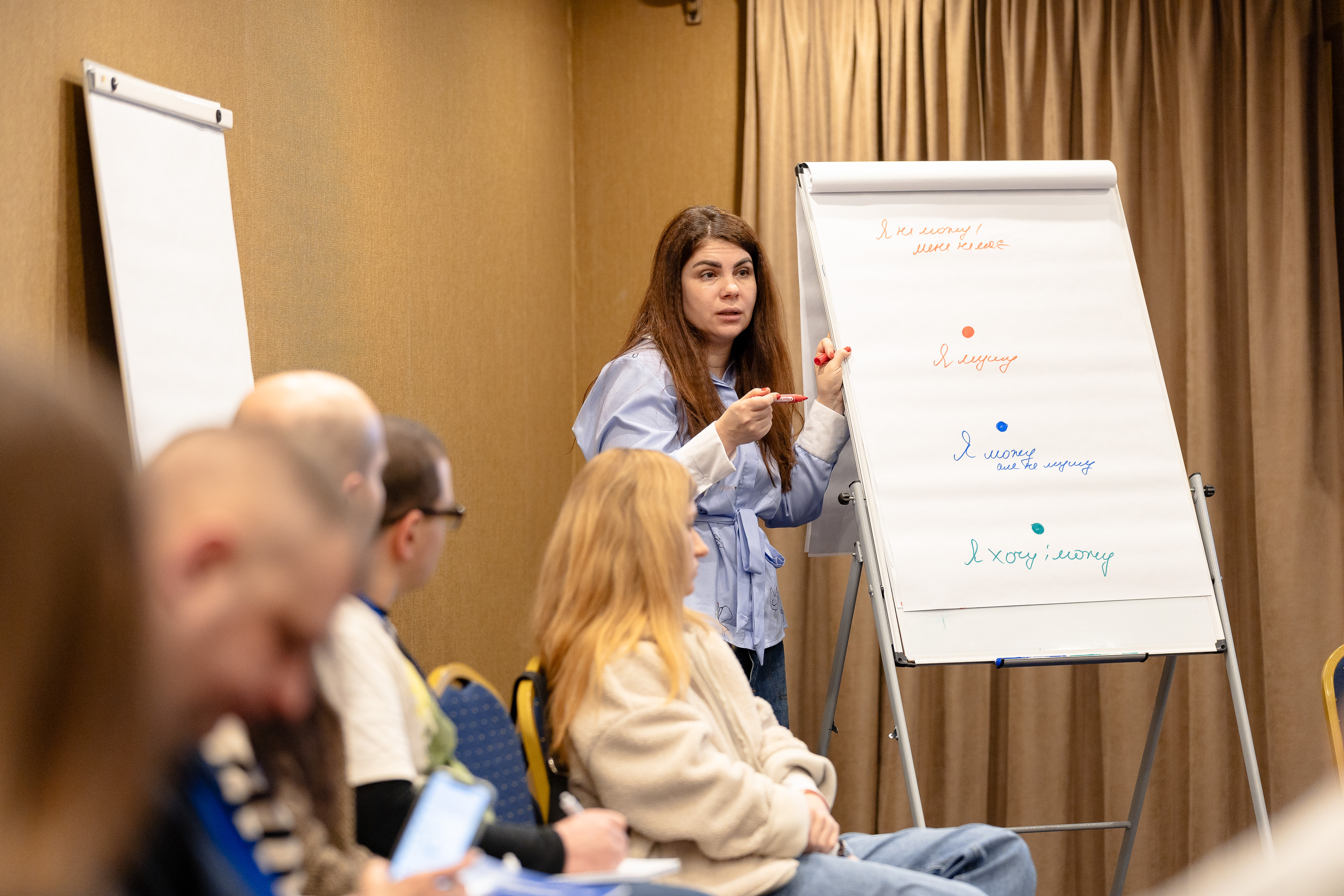
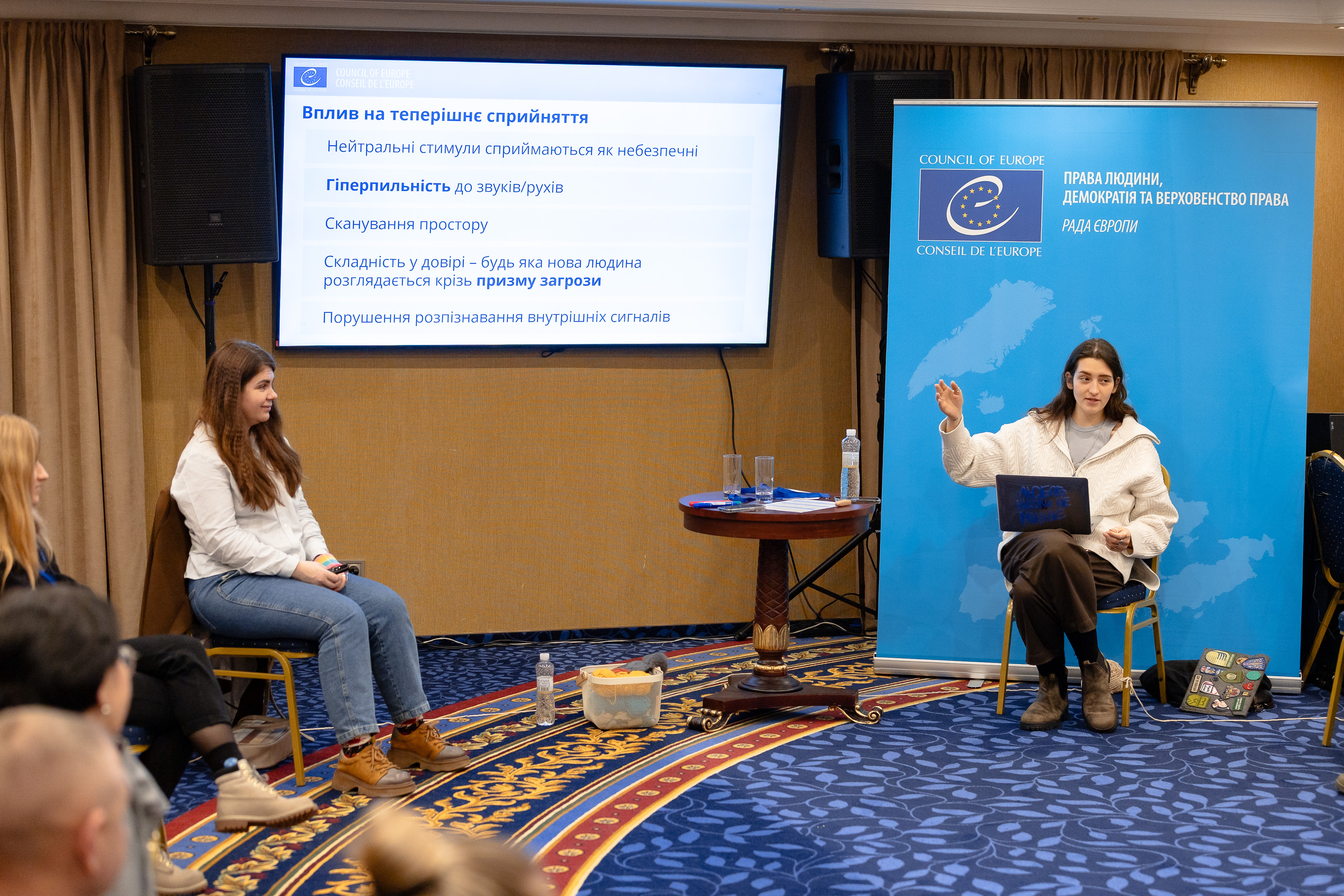
20 psychologists from the Ministry of Internal Affairs of Ukraine enhanced their theoretical knowledge and practical competencies during the second phase of advanced training entitled “Psychological Support for Veterans and Servicemen Released from Captivity.”
The second five-day programme was held in Kyiv from 23 to 27 February 2026. Organised within the framework of the Council of Europe (CoE) Project “Rights of Veterans and Personnel of Armed Forces in Ukraine,” the training aimed to strengthen the professional capacity of specialists from the Ministry of Internal Affairs Psychological Support Service who provide assistance to released servicemembers, veterans, and their family members. Particular attention was given to trauma-informed approaches and effective methods for addressing the profound psychological impact of captivity, torture, and prolonged isolation.
The programme addressed a wide range of key issues, including:
- legal, methodological, and ethical standards for supporting survivors of captivity and victims of torture;
- provision of immediate psychological assistance following release and the role of psychologists at this critical stage;
- characteristic behavioural responses of veterans and servicemen after captivity;
- application of stage-based support models for individuals released from detention;
- advanced therapeutic approaches, including stabilisation techniques and narrative exposure therapy (NET).
In addition, participants explored the human rights–based approach to psychological support and examined key Council of Europe instruments, such as the European Convention on Human Rights and the European Convention for the Prevention of Torture, with particular emphasis on the principle of the absolute prohibition of torture.
The initial five-day training programme was conducted from 1 to 5 December 2025. Together with the second session, it forms part of the Council of Europe Office in Ukraine’s ongoing efforts to establish a comprehensive and high-quality system of psychological support for military personnel and veterans, especially those who have experienced captivity and torture.
The training was organised under the Project “Rights of Veterans and Personnel of Armed Forces in Ukraine,” a component of the Council of Europe Action Plan for Ukraine “Resilience, Recovery and Reconstruction” (2023-2026)