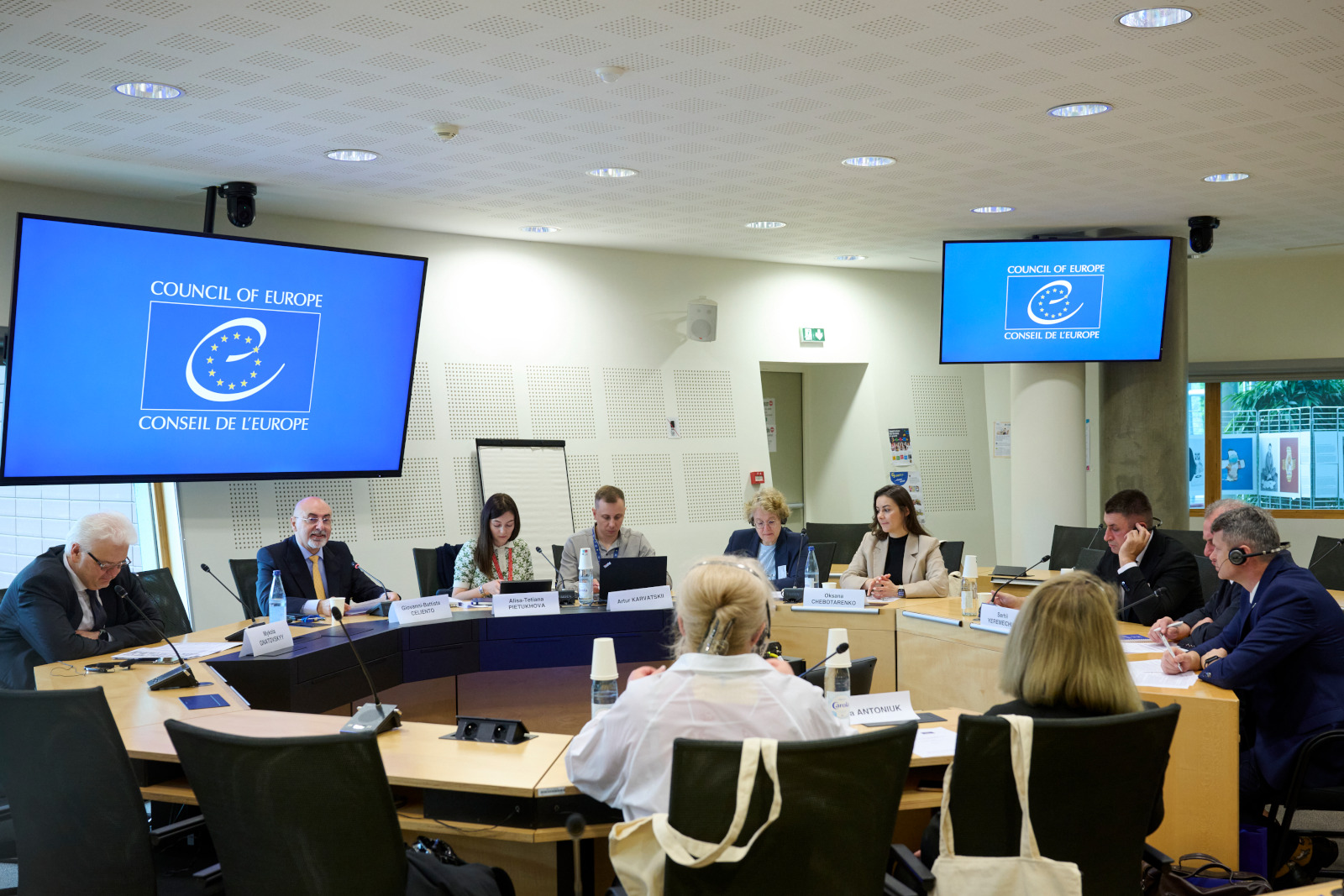
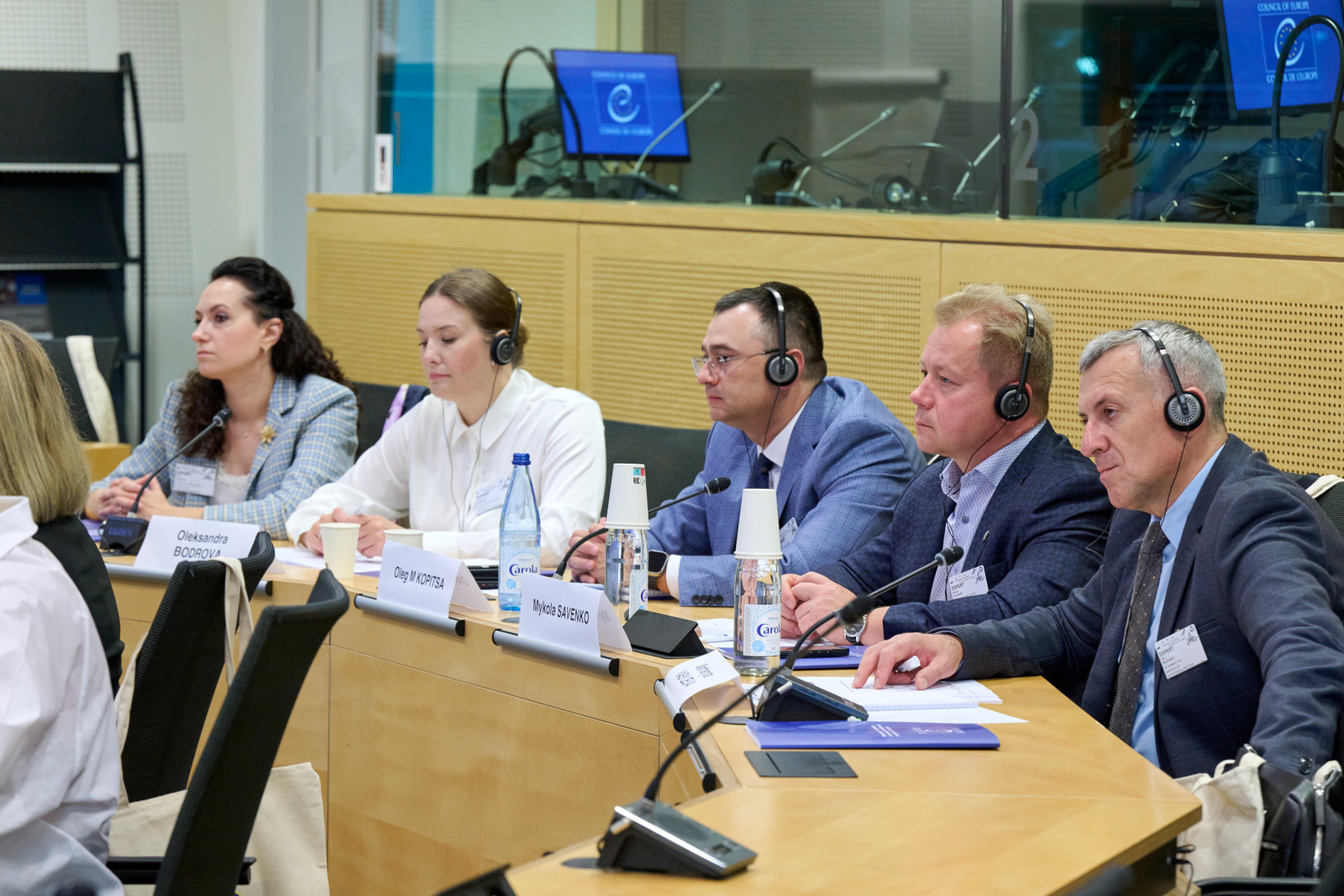
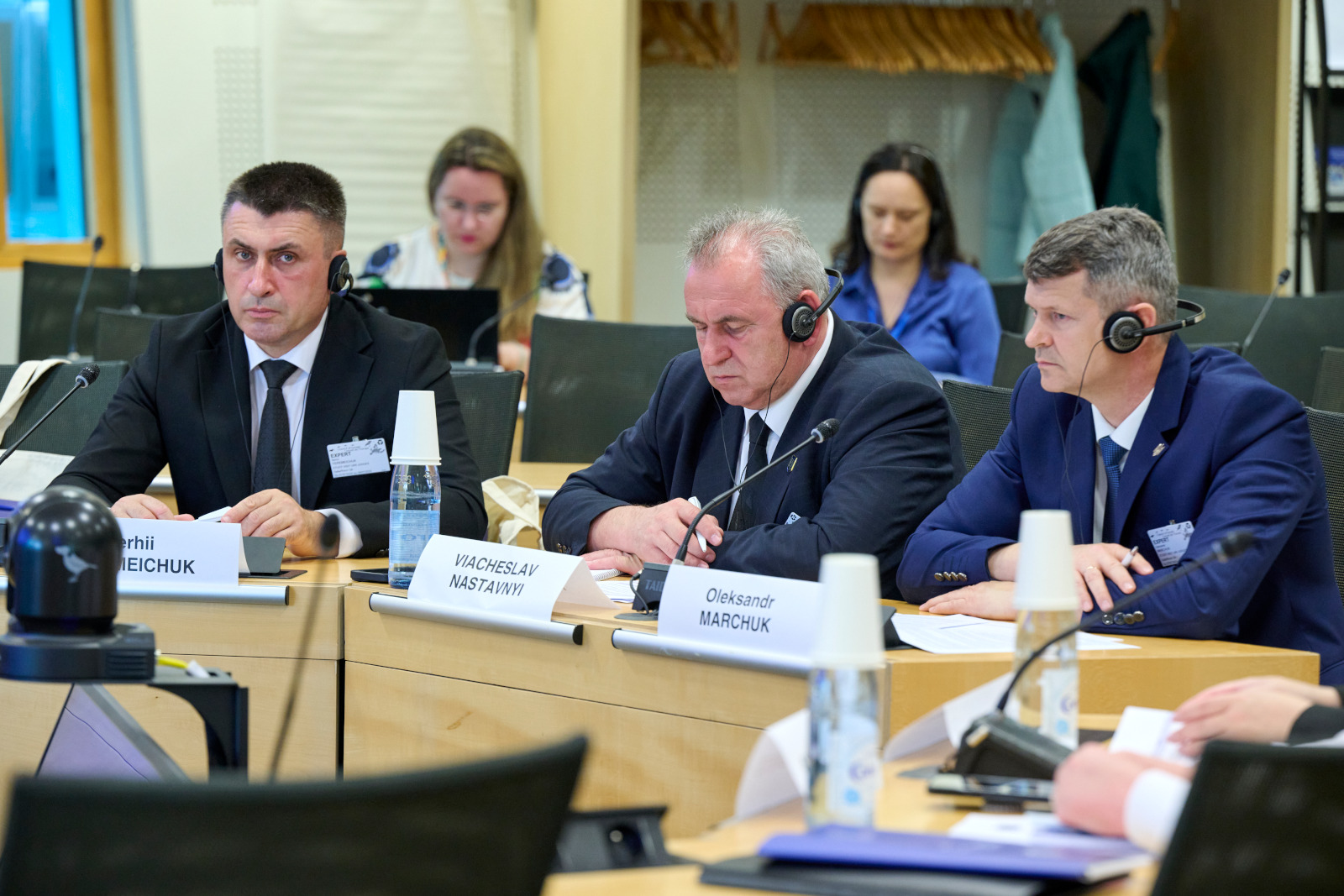
A delegation of Ukrainian judges specialising in criminal cases has completed a study visit to the Council of Europe Headquarters in Strasbourg, France. Organised by the Council of Europe in co-operation with the European Union Advisory Mission (EUAM) in Ukraine, the visit brought together judges from the Supreme Court, appellate and local courts to explore contemporary challenges in adjudicating war crimes and other international crimes in the light of European human rights standards.
Beyond war-related adjudication, the two-day programme also addressed the efficiency of the justice system and issues concerning the implementation of the Court’s judgments.
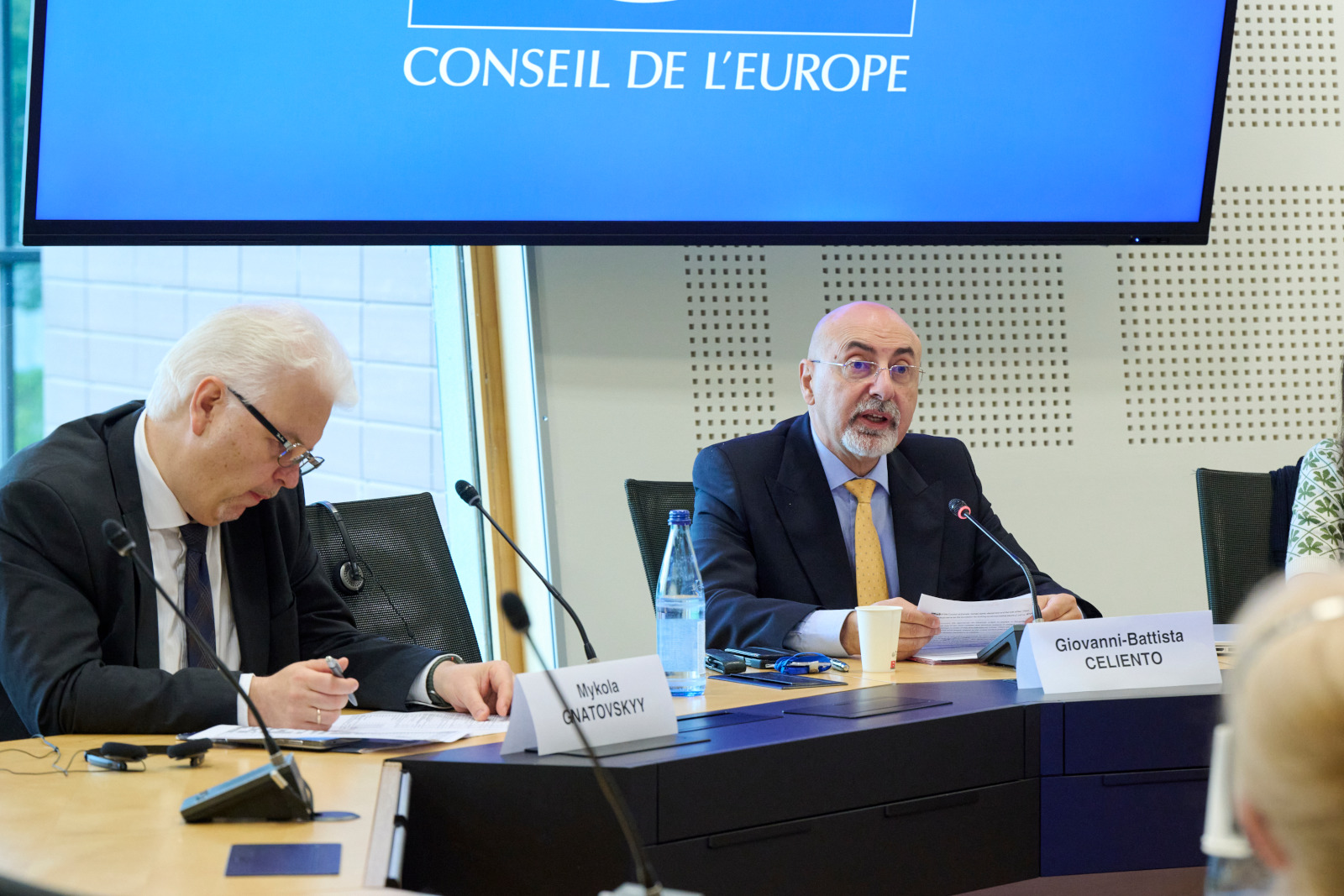
In his welcome address, Giovanni Battista Celiento, Head of the Co-operation Programmes Division, highlighted some of the most pressing issues facing Ukraine’s criminal justice system, including proceedings in absentia, collaboration-related offences, crimes against national security and the deportation of children. "This visit provides the opportunity for Ukrainian judges to engage in a thoughtful exchange on one of the most complex and sensitive subjects in modern justice: criminal proceedings in cases of war and international crimes. These are matters of significant legal and moral weight, shaped by the unique context of the ongoing war of aggression by the Russian Federation on Ukraine", Mr Celiento concluded.
The delegation held direct exchanges with judges of the European Court of Human Rights: Mr Mykola Gnatovskyy, Ms Anna Adamska-Gallant and Mr Péter Paczolay – who are well acquainted with Ukraine’s legal landscape. Meetings were also held with lawyers from the Court’s Registry, who provided additional insight into the Strasbourg Court’s internal processes and case law on various aspects of the right to a fair trial.
Discussions throughout the visit were dynamic and thought-provoking, sparking constructive debate around some of the most complex legal dilemmas Ukraine currently faces. These exchanges enabled participants to consider different angles, rooted in both national practice and international legal standards.
Ukrainian judges also met with representatives of the Department for the Execution of Judgments of the European Court of Human Rights and the Venice Commission, engaging in in-depth dialogue on systemic shortcomings and compliance-related issues.
One of the sessions was dedicated to the creation of a Special Tribunal for the Crime of Aggression Against Ukraine, discussing the latest developments and steps ahead in its establishment.
The event was organised within the framework of the Council of Europe Project “Fostering Human Rights in the Criminal Justice System in Ukraine – Phase II”, which is part of the Council of Europe Action Plan for Ukraine “Resilience, Recovery and Reconstruction” for 2023–2026.
Agenda: