All Different - All EqualCombating racism and discrimination with young people
Our colonial pasts, our institutions today
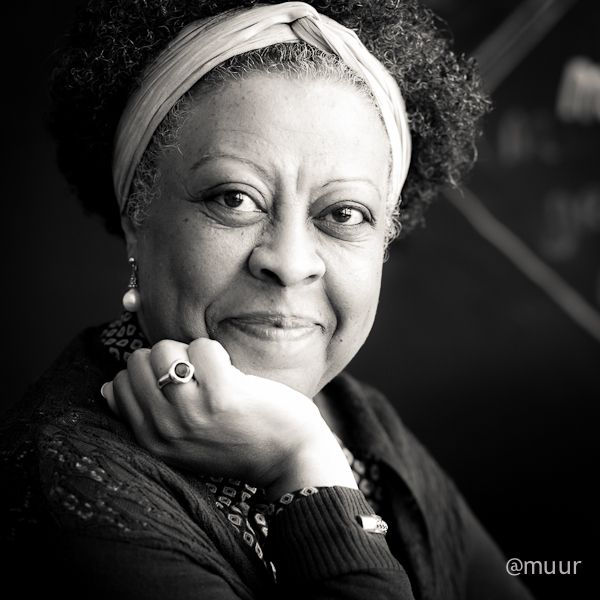
Domenica Ghidei Biidu (ECRI)
The present EU Commissioner for Home Affairs, Ylva Johansson, recently said that people think that Europeans are white, but that this is a myth. She is right. Trade, colonialism or exile, for instance, have linked Europe to other continents, including Africa and Asia, South and North America for millennia. This has created heterogeneous societies; black and brown people, as well as those of Asian descent, make up the global majority of the world and very large sections of European societies in many countries.
At the same time, it is no secret that the Commission of the European Union itself needs a workforce which is representative of our society as a whole. Unsurprisingly, this is one of the objectives of a recently published EU 2020-2025 Action Plan. Similar needs may exist all over Europe in national ministries, government offices, municipalities, and in shining high-rise bank headquarters in Frankfurt and London and in other business enterprises across Europe. At the top level of society, figuratively speaking in the skyscrapers of power, the people remain white. Metaphorically we can call it the “Mont Blanc”. I have been actively contributing to co-create diverse workplaces for the past 35 years. It is challenging to shift the make-up of power and dismantle longstanding hegemonies and privileges. Therefore, we need to “decolonialise” our institutions and make them better reflect the make-up of the population in the streets of Europe. Stated intention of more diversity and inclusion in institutions abound, but still we need to do much more to practise what we preach.
Thinking colonialism today
This publication is about youth. What do youngsters have to do with colonialism? Colonialism and decolonisation are not only of importance to be looked at and be acknowledged by the colonised populations. It is about all of us. It is about our common past, our common present and our common future.It is about how we all are victims and perpetrators. When the Universal Declaration of Human Rights was proclaimed by the United Nations General Assembly in Paris on 10 December 1948, most African countries and many other countries around the world were still colonised by European states, including the populations. Thus, we were not practising what we were preaching back then. Nevertheless, the values in the Universal Declaration are indee ‘universal’, and are our compass to this day. The privileges and power bases of many European states and their citizens remained even after those formerly colonised states became independent, even to this very day. Not only did white European citizens migrate to the south, to Africa, Asia and South America, but the citizens of those colonised populations offered their lives by fighting in both World Wars, as well as in other wars, on behalf of their colonisers, though it was called “for the motherland” in the propaganda of the colonial powers. For example, we should remember specific infantry regiments like the famous "tirailleurs sénégalais", who fought in the ranks of the French army during both World Wars and also in the wars in Indochina and Algeria. Neither should we forget the Eritrean “Askari” who fought for the Italian army in Libya, Ethiopia and Somalia, or “the Royal Netherlands East Indies Army (KNIL)”, who fought for the Netherlands in its former colony of the then Netherlands East Indies. All the young people in Europe too have inherited this legacy.
One of the legacies of that past is that the European elite have dehumanised entire populations. The myths we have been teaching and telling ourselves are the reason why, for example, slavery, the persecution of Roma, and the Holocaust were possible. So, it is very important that all of us, especially the young people, because they are the future, are aware of how all this layered past is still impacting our thinking and actions, and influencing us in how and with whom we connect and feel at one with, as well as the unease when we are confronted with the “unknown other”.
Diversity and decolonisation?
It is up to us and the next generation in Europe to find a common ground to assume our responsibility now to work together with what we have inherited, and to dismantle the unfair power structures and decolonise our institutions. More concretely, we should create equitable, diverse and inclusive institutions; decolonise our educational institutions and curricula; teach an inclusive history of our common past, including its dark pages; make just and fair trade agreements, combat contemporary forms of slavery in our trade and commerce; pursue just, bold and fair migration policies; be aware of the price that the environment elsewhere (e.g. in Africa, Asia, South America and Latin America) has to pay for Europeans to have products which are environmentally sustainable in Europe, such as electric cars. Last, but not least, we must be accountable and measure progress in achieving a just and equitable society.
On a different level, second, third and fourth generation youngsters whose parents have migrated to Europe harbour justified feelings of entitlement, not entitlement to privilege, but entitlement to equity and equality. It was not they, but their parents, grandparents or great-grandparents who took the decision to emigrate or flee to Europe, or who, in some instances, were simply brought to Europe because of the economic needs we had in Europe for cheap labour. Many of these youngsters have almost no links to the countries from which their parents, grandparents or great-grandparents came, except their skin colour and the values that have been passed on to them. They have gone to school in western European capitals and their suburbs. They have played music and participated in sports competitions with their white peers, and they have done volunteer work, but they are not, they experience, treated as if they belong to the country they are citizens of.
I hope that by the time the All Different – All Equal campaign’s achievements are reviewed next time, perhaps in 10 years’ time, there will have been a decisive change in the opportunities black and brown young people, as well as people of Asian descent, have in European societies, and in their feeling of belonging.
Learning from Black Lives Matter
The Black Lives Matter movement has shown that there is a significant potential for solidarity in our societies. Arguably, young people, including young white Europeans, are more tolerant and open-minded than older generations. They need a bit of support though, to maintain that attitude and make those inspiring and inclusive alliances sustainable, including campaigns such as All Different – All Equal. Exposure to diversity, having opportunities to work together regardless of backgrounds, experiencing that they are co- and interdependent and experiencing at times (uncomfortable) dialogues, usually help young people to maintain and promote bonding, solidarity and connection.
It is vital for European institutions and national ministries, government offices, and municipalities to take the lead in this regard. Perhaps the EU, the Council of Europe and national ministries, government offices and municipalities should encourage young people who are racially excluded to apply for traineeships and similar opportunities. However, they need to assess the biases which have constituted barriers up until now and eliminate them first. Furthermore, when embarking on diversity action, institutions need to acknowledge what these young people’s added value can be for the institutions, and encourage the use of their experiences and knowledge. Another crucial aspect is that the workplaces need to be prepared to be inclusive so that these young people and all the other employees can thrive. Consideration should be given to introducing quotas if necessary. Existing de jure or de facto requirements, such as double-masters’ degrees, should be reviewed, as they can constitute hurdles. An additional aspect is also that we need to introduce traineeship allowances to make young applicants able to apply for traineeships, regardless of the economic status of their parents. These actions would mitigate the educational disadvantages black and brown children, as well as children of Asian descent in Europe, often disproportionately experience in European societies.
Concluding thoughts
I am a member of the Council of Europe’s European Commission against Racism and Intolerance (ECRI). I am proud of its important work, which must continue. ECRI’s work is focused on changing legislation and procedures, which are necessary to bring about more tolerance. At its most practical level, ECRI pays particular attention to fighting racism and intolerance in and through schools, something which is reflected in its General Policy Recommendation No. 10.
Yet more needs to be done to create a feeling of those racialised as non-white in European societies. To use a term deprived of emotion, there needs to be more ‘social cohesion’ in European societies. To use an emotionally charged and simple term, all young people, regardless of where their parents or grandparents were born, need to ‘feel loved’, by the societies that surround them.
Belonging is closely linked to trust. Young people must be able to trust the authorities, including the police, prosecution services and judiciaries. They need to experience that their complaints are taken seriously and trust that the institutions are also there for them. This is very important for combating underreporting, discrimination and outright crimes.
Finally, we should be aware, when speaking of young people, that, for better or worse, their lives in present times to a large extent play out on the Internet, which is not always a very tolerant place. People with latent racist views do not hesitate to express such views on the Internet, whereas they would think twice before doing so in a face-to-face discussion. ECRI has recognised this in that it adopted its General Policy Recommendation No. 6 on Combating the dissemination of racist, xenophobic and Antisemitic material via the Internet. Another helpful instrument is the Additional Protocol to the Council of Europe Convention on Cybercrime, concerning the criminalisation of acts of a racist or xenophobic nature committed through computer systems. Nonetheless, cyberspace remains a space not sufficiently policed and protected against racist abuse, directed as much against black and brown youngsters, as well as those of Asian descent, in Europe as anywhere else.
Speaking of policing and new technologies and realities, the use of artificial intelligence algorithms in policing has turned out often to have a negative bias towards black and brown Europeans. Any biases of those designing the algorithms (unintentionally or by default) affect the new technologies, with all its implications. This should be another front of our efforts against racism.
Although a lot of work still needs to be done to make European society more equitable, equal and inclusive, the All Different – All Equal campaign deserves to be commended for its sustained and long-term positive impact. Yet, there is a sense of urgency for more measures to be taken. I also see that with my children and their friends. Black and brown young Europeans and young migrants living in Europe are increasingly impatiently waiting for their lives to matter. Let us be their allies!
Domenica Ghidei Biidu
Domenica Ghidei Biidu is an independent strategic adviser, coach and trainer on Equity, Inclusiveness and Diversity. At the moment she is the Vice-Chair of the European Commission against Racism and Intolerance (ECRI) and member of ECRI in respect of the Netherlands.
She was an Equal Treatment Commissioner and a Human Rights Commissioner (2005-2017) at the Netherlands Institute for Human Rights and its predecessor, the Dutch Equal Treatment Commission.