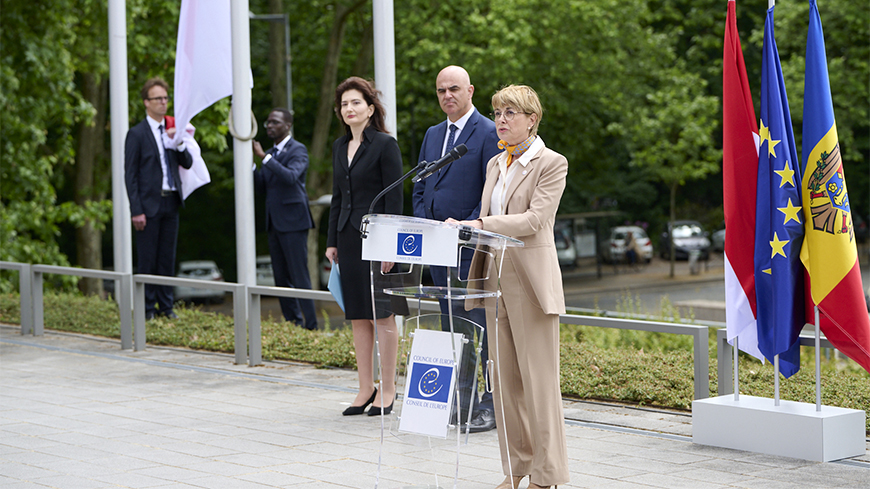
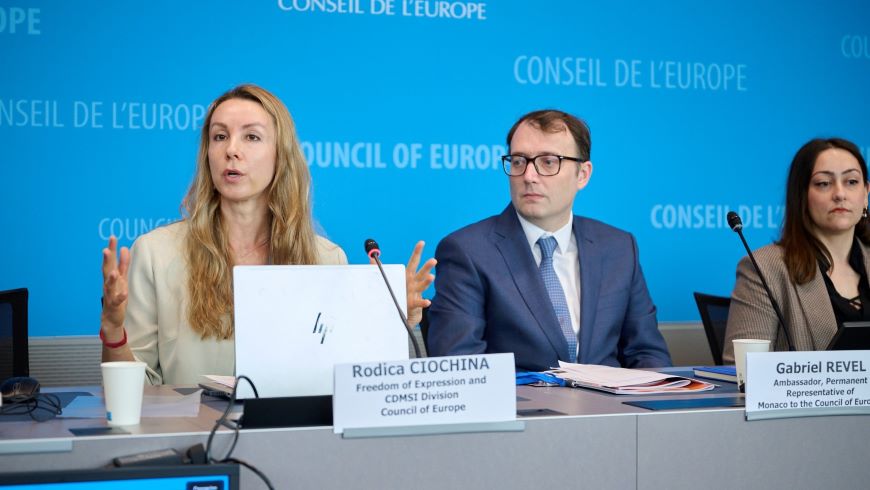
On 18-19 May 2026 the Council of Europe hosted a conference entitled Human rights in immersive realities (XR): freedom of expression, justice, children’s rights and well-being in Strasbourg, under the auspices of the Monaco Presidency of the Committee of Ministers. The event brought together representatives from European countries, the European Court of Human Rights, academia, civil society, and technology experts, alongside Council of Europe specialists in various areas, to discuss how immersive technologies are reshaping human rights, democracy and the rule of law.
The conference built on the work of the Steering Committee on media and information society (CDMSI), including the recently adopted feasibility study on benefits and challenges to freedom of expression in immersive realities.
Discussions confirmed that while the European Convention on Human Rights provides a flexible and robust framework for addressing technological developments, immersive environments also raise novel questions requiring further reflection and awareness-raising.
Across two days, participants explored themes including freedom of expression and freedom of thought, mental autonomy, children’s rights and age-appropriate design, justice and rehabilitation, mental health, neurotechnologies and emerging regulatory challenges. Discussions highlighted both the opportunities and risks of immersive technologies and the importance of ensuring that human rights safeguards evolve alongside innovation.
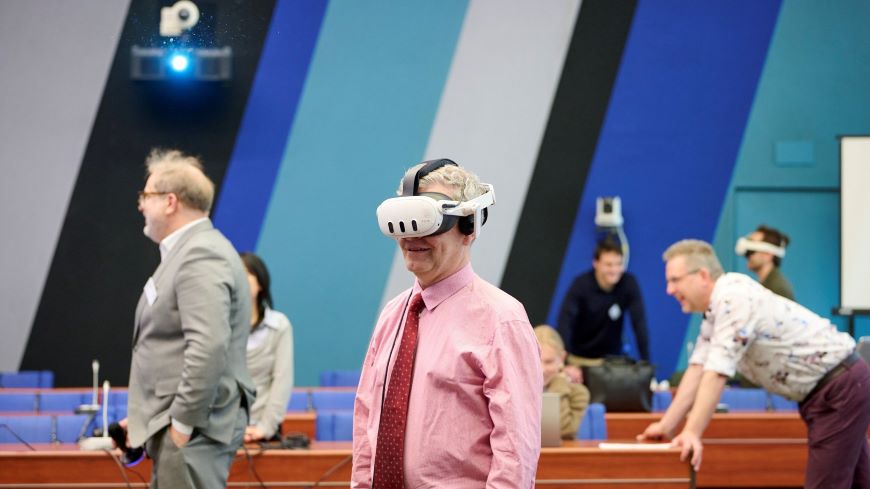
A distinctive feature of the conference was its interdisciplinary format, developed in cooperation with the European Metaverse Research Network (EMRN) and Open Council of Europe Academic Networks (OCEAN), combining policy discussions with contributions from researchers selected through a call for papers, poster presentations and hands-on XR demonstrations.
The conference contributes to the Council of Europe’s broader efforts to anticipate the impact of emerging technologies and promote human-rights-based approaches to digital innovation.
The discussions also contributed to broader reflections under the New Democratic Pact process, notably on how emerging technologies may influence democratic participation, trust and the future of public debate.
 Monaco’s Presidency of the Committee of Ministers
How does the Council of Europe protect democracy?