When Dr Mariam* fled her home and crossed the border into Armenia, she brought with her over a decade of medical experience. What neither the system nor her medical training had prepared her for was bridging the gap between her own experience of displacement and the expectations of a new healthcare environment, as well as between her patients’ needs and their ability to navigate the healthcare system.
Like many refugee healthcare professionals, Mariam found herself caught between two worlds: trained to practise medicine, but unfamiliar with a different system and unsure how to help patients facing a similar problem. She is far from alone. Across Europe, nearly half of the population – especially people in most vulnerable situations – struggle to find, understand, and use basic health information. This deficit widens inequalities and puts additional burden on healthcare systems and society.
What is health literacy?
This term describes the ability of individuals to find, understand, and use health information. But achieving that requires more fair, resilient, and rights-based health systems, because health literacy is often framed as a patients’ “problem” where people need to change and understand the system better. What if, however, institutions and the system itself are what needs to change?
The missing link in health literacy is communication
That shift in thinking is at the heart of a Council of Europe event that took place in Gyumri, Armenia. Mariam joined dozens of other healthcare professionals for an intensive workshop. The goal was not to learn more about medicine, but to better understand how to empower patients to participate in the decisions concerning their health, how to communicate the decisions taken, and thus reduce stigma and discrimination in the field of healthcare.
Through role-play, guided debates and real-life scenarios, participants practised skills that rarely feature in standard medical training: how to make patients feel safe, respected, and understood from the moment they walk in; how to explain a diagnosis in an understandable way; how to support patients in making an informed decision about their own care; and how to ensure that services, including digital, are accessible to all, including people in vulnerable situations. This responds to the needs of everyone, including people in vulnerable situations, including migrants and refugees.
By supporting refugee medical professionals to become “bridges” between public institutions and displaced communities, the Council of Europe is ensuring that the right to health has substance for everyone.
A system that speaks people’s language
The results are beginning to show. Participants left not only with new tools, but with a different understanding of their role.
“We learned that health literacy is a two-way street,” says Mariam. “Institutions usually expect the public to understand them. But we are the ones who should help our patients understand the system. When patients leave the clinic truly understanding their care, they don't just get healthier, they regain the trust in the system.”
Armenia, with the Council of Europe’s support, is working to strengthen the relationship between health institutions and the people they serve and to ensure that access to healthcare is not determined by where someone was born, what language they speak, or what their journey to Armenia looked like. The Council of Europe work in this area is guided by the European Social Charter and the Convention on human rights and biomedicine (Oviedo Convention), and builds on the Council of Europe Guide to health literacy and the Report Promoting health literacy and human rights to reduce stigma and discrimination.
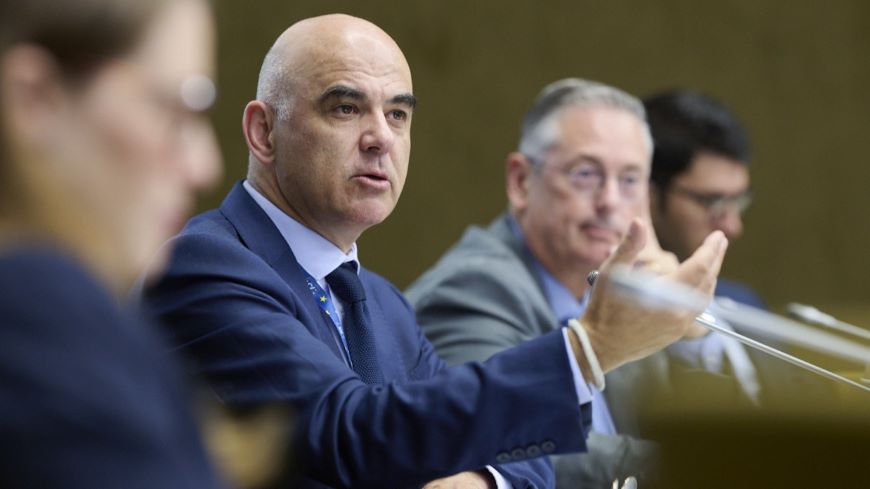
As Secretary General Alain Berset highlighted on World Health Day 2026: “Through strengthening equitable access to care, promoting health literacy, and safeguarding human dignity, we reinforce the foundations of resilient, inclusive, and stable communities. Protecting health protects the democratic values that unite us.”
*Name changed for privacy reasons
The event was organised by the Council of Europe as part of its project “Protection of Human Rights in Biomedicine III”, implemented within the Council of Europe Action Plan for Armenia 2023-2026. The initiative is part of the Council of Europe’s €2.8 million comprehensive package launched in 2024 as a response to the refugee influx Armenia faced in 2023. Under this component of the project, 200 refugee healthcare professionals received accredited training on national and European human rights standards in biomedicine, aligned with the Oviedo Convention to enable them to pursue their professional activities in Armenia.
 Read more about the Council of Europe’s work to keep Europeans healthy