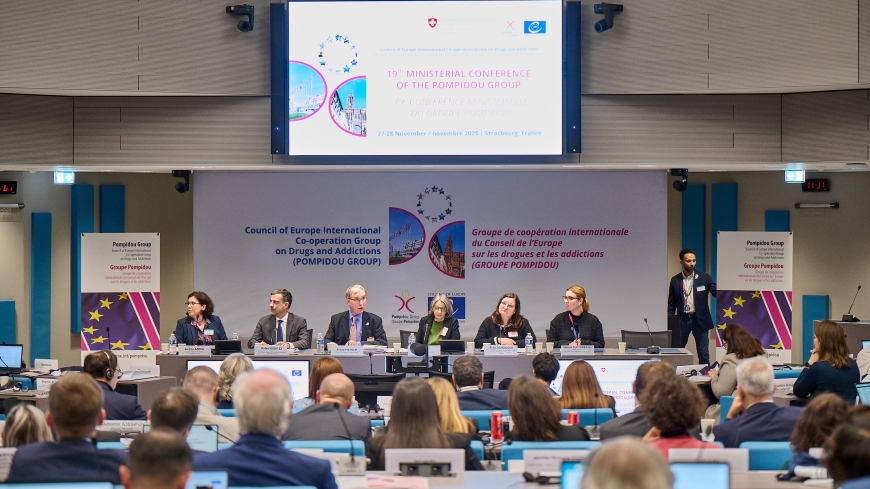
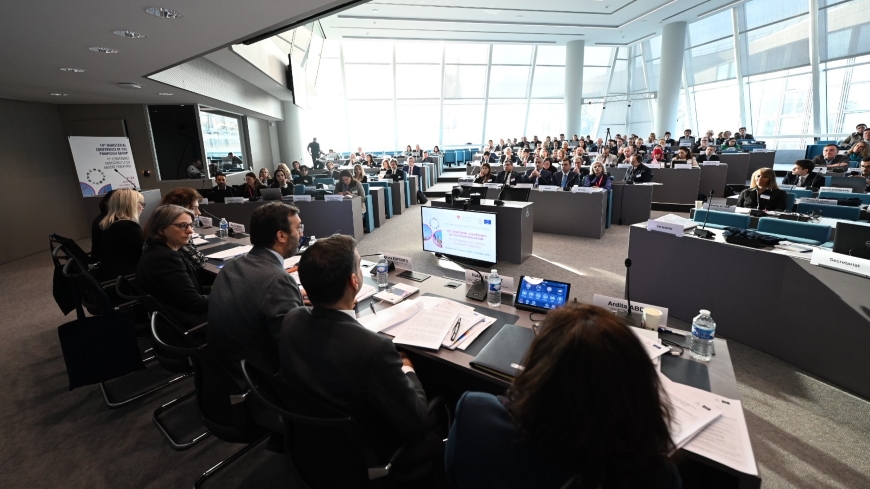
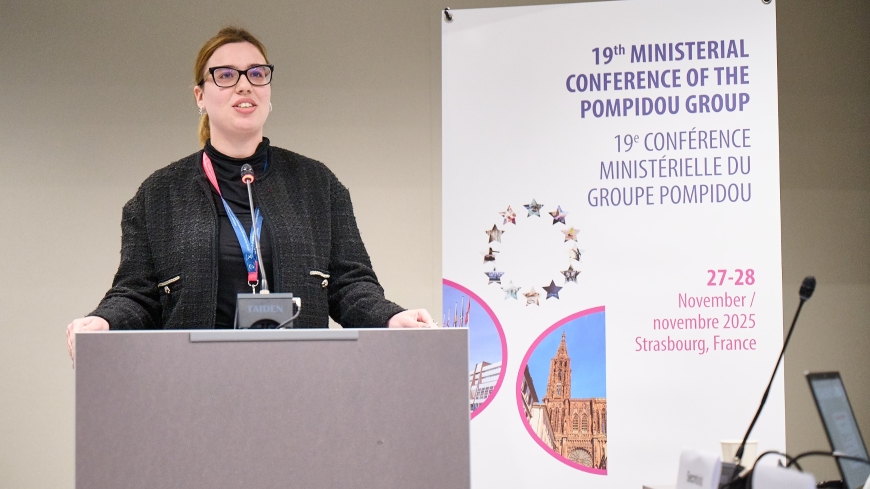
Ministers and senior officials from across Europe and beyond gathered at the Council of Europe for the 19th Ministerial Conference of the Pompidou Group, the Organisation’s platform for international cooperation on drug policy and addiction. The conference confirmed the group’s Presidency for 2026–29: Austria will preside in 2026–27, followed by Czechia in 2028–29, with Mexico serving as Vice-President throughout the four-year cycle.
The meeting took place at what Gianluca Esposito, Director of Human Rights and Rule of Law, described as a “crucial juncture”, noting that the entire landscape – from precursor production to trafficking routes and consumption patterns – is evolving at unprecedented speed. While fully implementing the newly adopted 2026–29 Work programme, he called on member countries to navigate this rapidly shifting environment.
The conference also welcomed Spain’s joining the Pompidou Group, effective 1 November 2025. Francisca Sureda Llull, Government Delegate for the National Plan on drugs, underlined the importance of addressing both the supply and demand dimensions of drug policy. She highlighted Spain’s view of the Pompidou Group as a unique platform that combines long-standing human-rights-based expertise on addiction with support for international efforts to counter the criminal networks behind drug trafficking.
The 2026–29 Work programme is an ambitious roadmap centred on four pillars: prevention; harm reduction; treatment and recovery; and supply reduction. It reinforces the group’s commitment to balanced, evidence-informed and human-rights-centred drug policies aligned with the Council of Europe’s core values.
It places a strong emphasis on human dignity and fundamental rights, including support for member countries to integrate gender equality, child-sensitive approaches and non-stigmatising language into legislation and practice. Building on this foundation, work is underway – drawing on Pompidou Group expertise – to develop a Committee of Ministers Recommendation on human rights in drug and addictions policies. This process will be guided by an enhanced human rights assessment tool, with completion expected by the end of 2026.
The programme tackles emerging threats such as synthetic and high-potency substances, rapidly evolving drug markets and rising digital addictions, particularly among young people. It foresees a new Recommendation on online/digital addiction, research on legal and regulatory models, and will ask to explore new tools to address addictive behaviours beyond illicit drugs.
Complementing these efforts, the Committee of Ministers tasked the Pompidou Group in May 2024 with preparing policy guidelines to address organised crime linked to drug trafficking. A joint expert group, gathering experts from the Pompidou Group, Council of Europe committees, independent academia and the Pompidou Group secretariat, has developed draft Guidelines on combating organised crime related to drug trafficking, informed by analysis of legal frameworks, human-rights standards and emerging criminal trends. Finalised this month, the draft guidelines provide a rights-based and evidence-informed framework to help member countries respond more effectively to the evolving dynamics of the drug market. They will lead the Pompidou Group next year to work on a recommendation related to cooperation to combat crime related to drug trafficking.
In their conference declaration, Ministers reaffirmed their support for all member countries of the Pompidou Group as the Council of Europe’s intergovernmental platform on drugs and addictions, recognising more than 50 years of experience. They renewed their commitment to develop a new standard-setting instrument on human-rights in drug and addiction policies, enhance cross-border cooperation and develop policies to fight drug trafficking, and promote evidence-based responses including harm reduction, treatment and recovery.
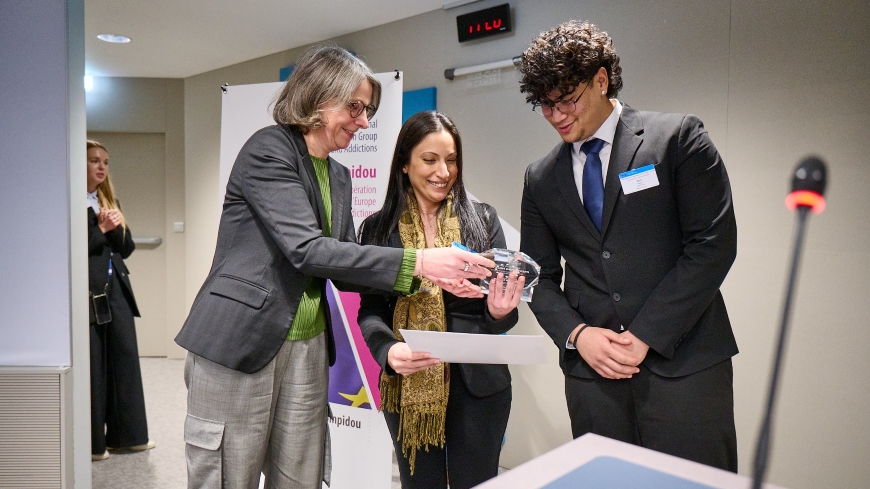
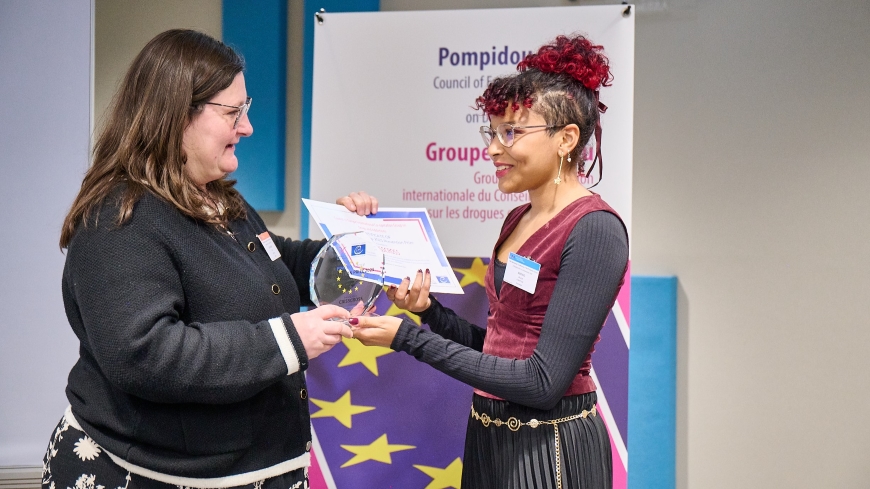
The conference moreover featured the Pompidou Group Drug prevention prize ceremony. Three projects – one from Cyprus and two from Portugal – received the prize, which recognises outstanding youth-focused drug and addiction prevention initiatives. A jury selected Sistema Cyprus, and Crisscross and Gabinete de Apoio Psicossocial from Portugal, from among 27 applications from 12 countries. Each winner received a trophy, diploma and €6,000 to support the further development of their work.