This part of our web site is dedicated to aspects of intercultural understanding and education
Firstly all the training activities of the Pestalozzi Programme by nature also opportunities for intercultural encounters and we would like to bring these intercultural aspects of our work to the forefront.
Secondly, we are also working on a project on “Intercultural education and exchanges” which promotes the development of intercultural competence as one of the key competences needed in today’s world
The general aim of this project is to offer an educational rationale and conceptual framework for the development of intercultural competence as well as the necessary instruments for the full integration of the development of this key competence
for mutual understanding in diversity as a constituent part into mainstream education.
The expected result of this project is the introduction of a systematic description of intercultural competence in school curricula as well as the dissemination of teaching and training resources for intercultural education.
OVERVIEW
Recognising intercultural competence: What shows that I am interculturally competent ?
We invite you to test a new, draft tool to support you on the way to a fuller understanding of yourself in the context of diversity.
It was developed in a long process coordinated by the Pestalozzi Programme and the Intercultural Cities project of the Council of Europe and the European Wergeland Centre with the help of a team of experts/ trainers:
Ms Ildikó Lázár, coordinator, HungaryMs Olena Styslavska, PolandMr Hugo Verkest, Belgium
Being interculturally competent has widely been recognised for decades as
essential for peaceful coexistence in a diverse world. Numerous recent policy
papers and recommendations of international organisations, such as The White
Paper on Intercultural Dialogue (Council of Europe, 2008) have also expressed
this need very clearly. Intercultural competence is a key competence that every
individual should work on for the development and maintenance of sustainable
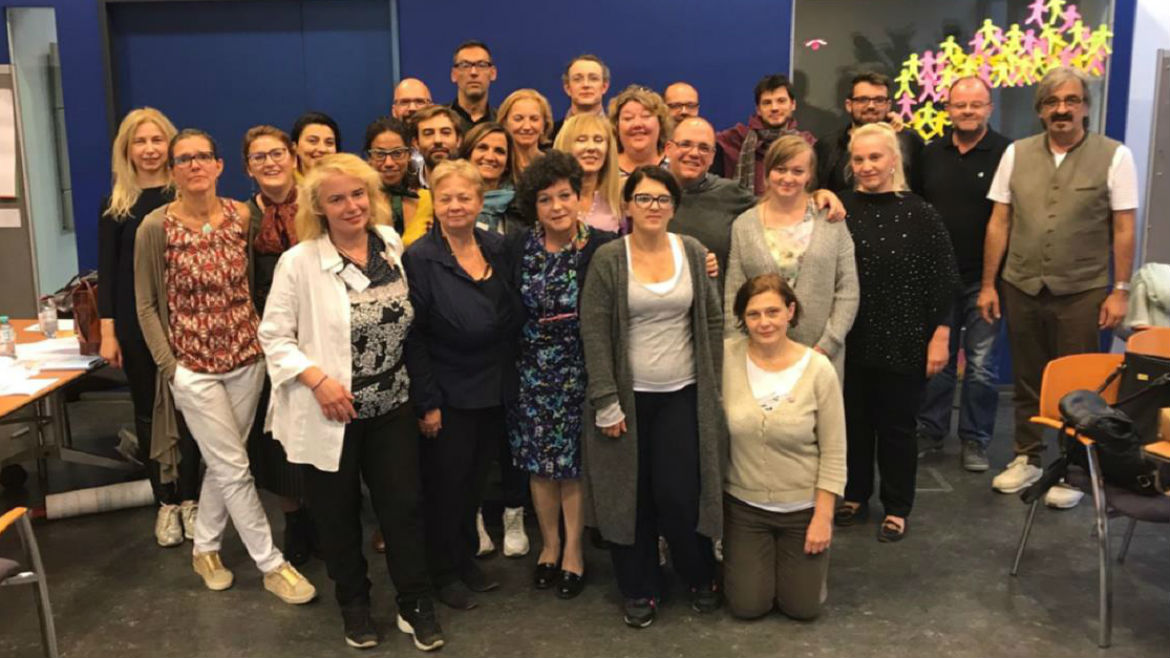
democratic societies. A group of 30 teachers, school heads and experts from all
over Europe met in a three-day Think Tank, drawing on the shared expertise of
the participants and on the recent results of research and project work within
the Council of Europe and other international organisations. The tool was then
tested by teachers and school heads in a large number of countries and it was
then finalized taking into account the rich feedback received during the testing
period. The main components which make up intercultural competence - attitudes,
skills and knowledge - are described in the form of I-statements describing
observable behaviour that can be associated with specific aspects of the
components. Naturally, the components are interconnected since the knowledge we
have about the world and about human interaction as well as our attitudes
towards these can only be made visible and observable through our behaviour.
Moreover, skills development and knowledge acquisition can only increase
intercultural competence if we have the right attitudes and use the knowledge
and skills we have acquired accordingly. It is precisely for this reason,
because of the importance of attitudes, that these sub-components outnumber
those of the skills and the knowledge described in our list of indicators. What
shows that you are interculturally competent? The tool is intended to help you
look at yourself, at your intercultural competence, and recognise your strong
points as well as areas which need further development. Recognising Intercultural competence –
the tool (pdf)
Who we are?
The PESTALOZZI Programme is the Council of Europe programme for the professional development of teachers and education actors.