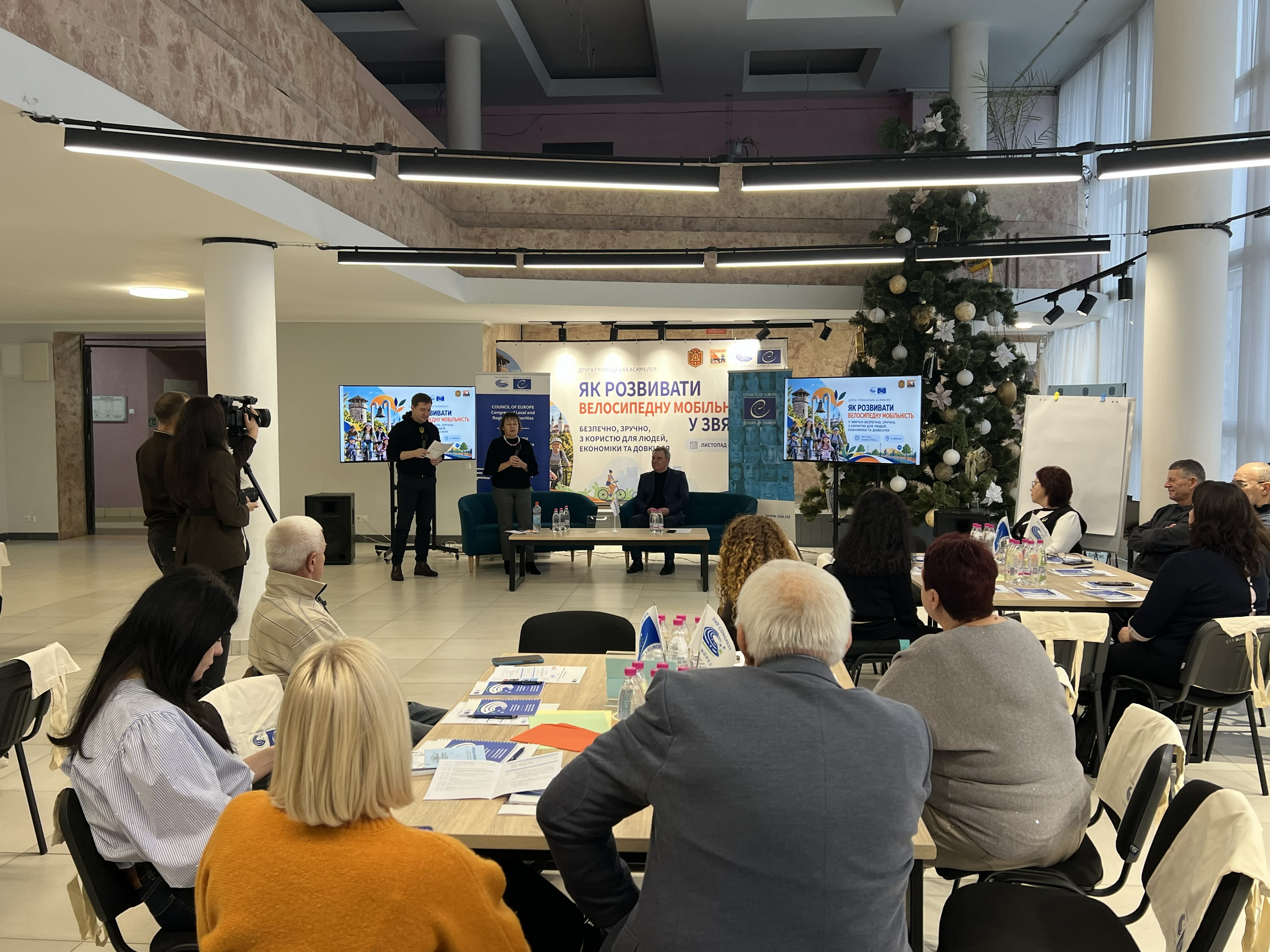
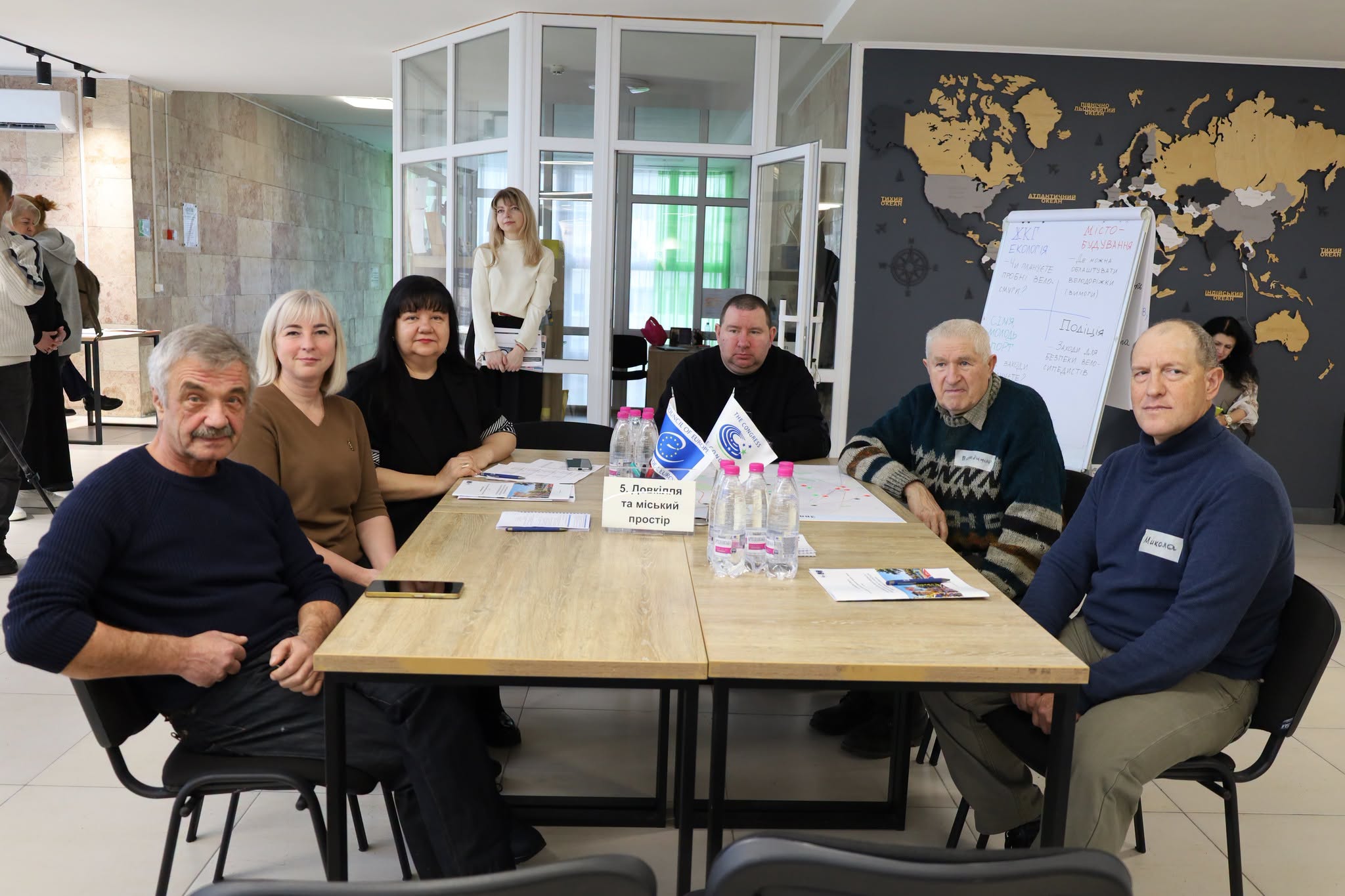
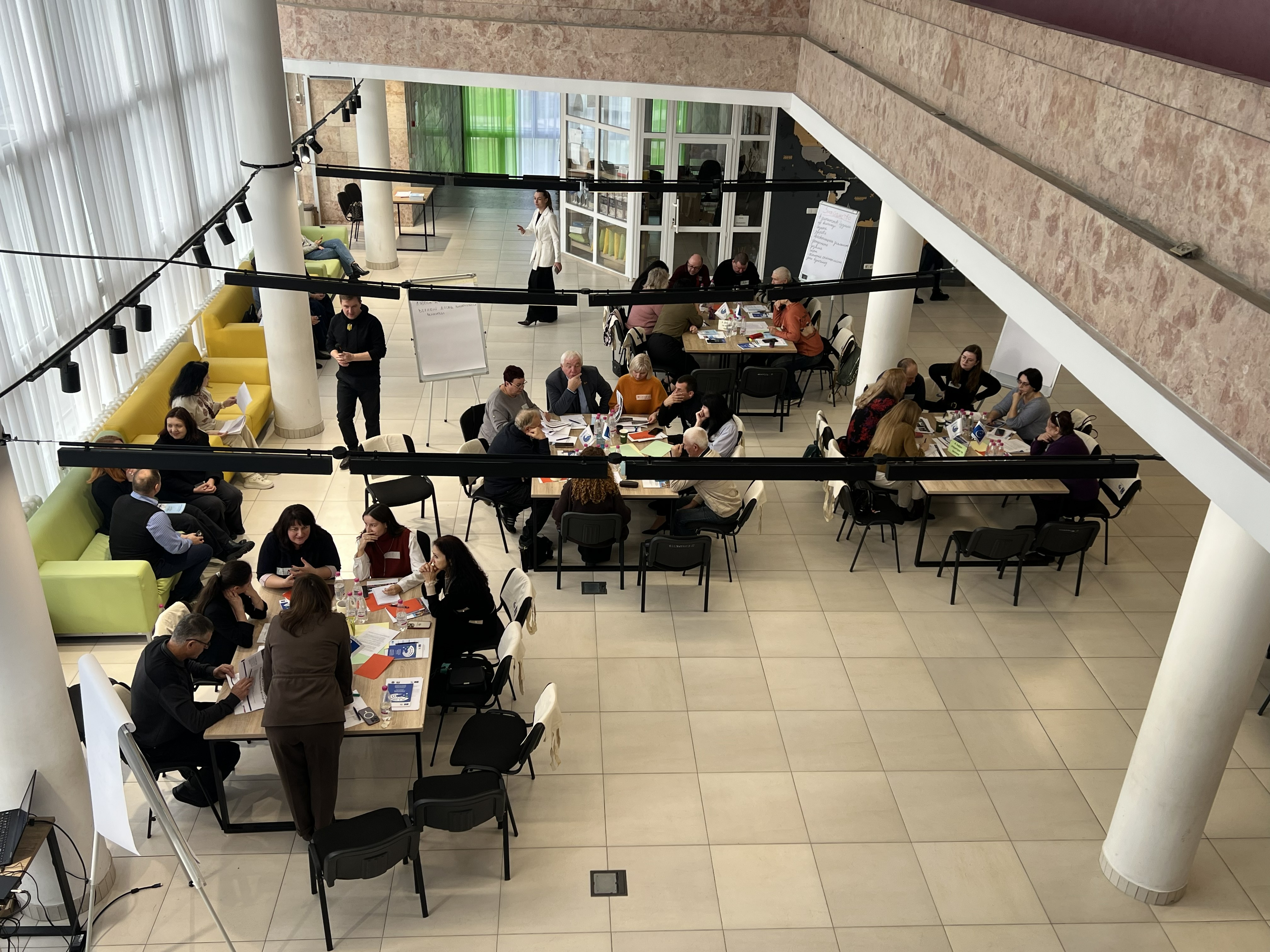
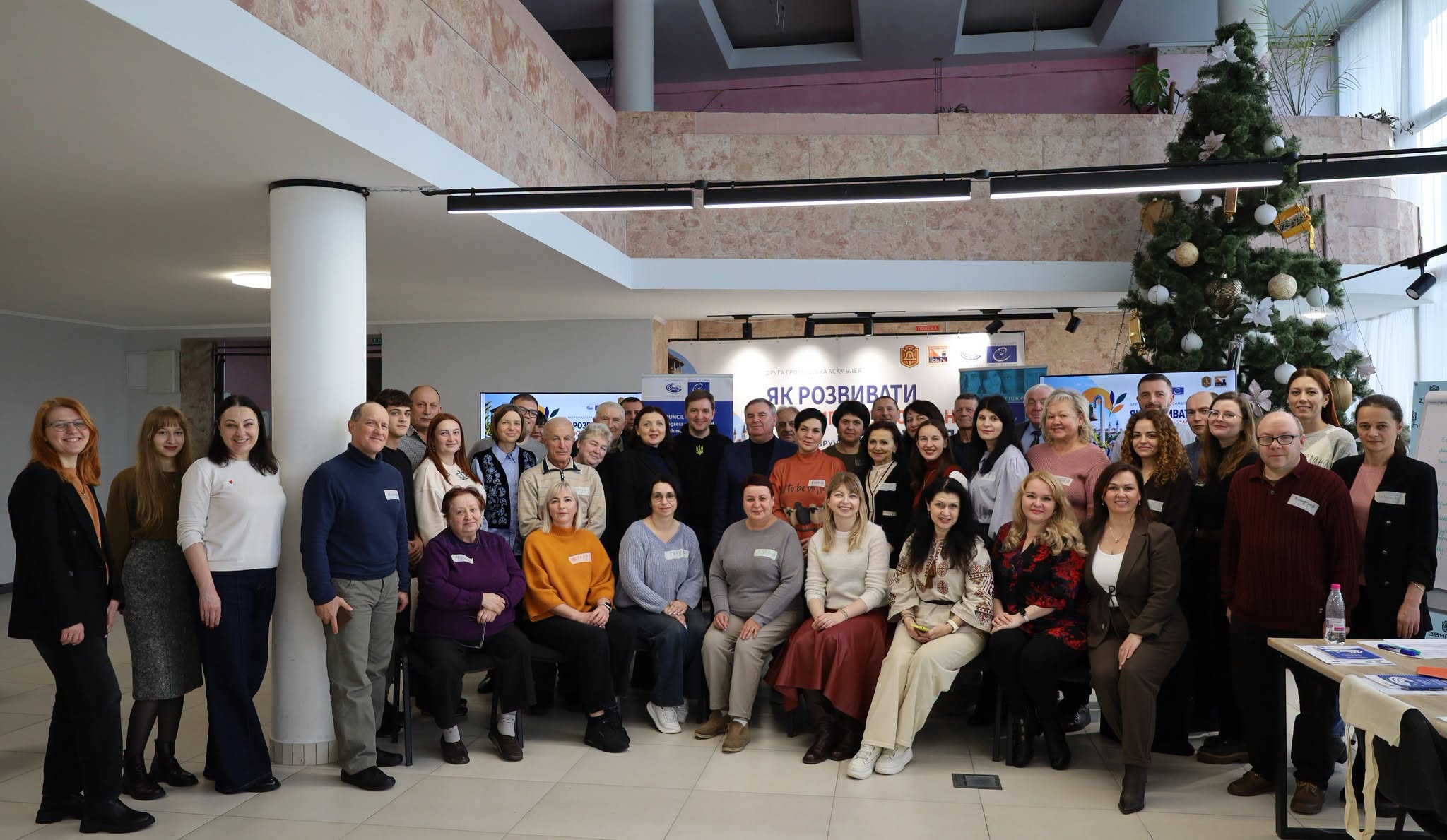
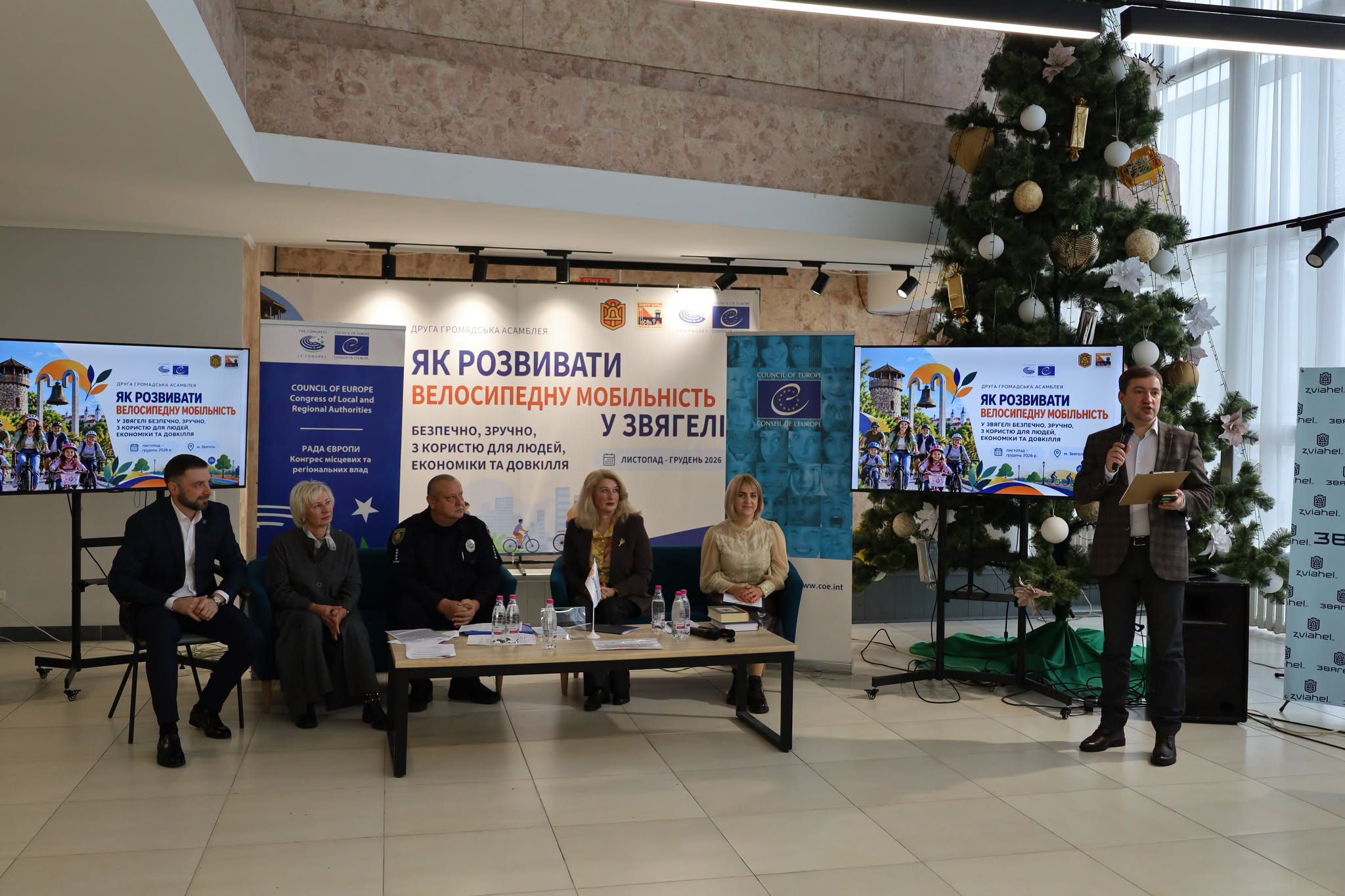
On 21–22 November 2026, the citizens’ assembly in Zviahel (Zhytomyr region) held its opening session. The assembly addresses the question “How can we develop cycling mobility in Zviahel in a way that is safe, convenient and beneficial to people, the economy and the environment?”
The assembly will continue over two further weekends, on 5–6 and 19–20 December, with expert, methodological and financial support from the Council of Europe project “Strengthening multilevel governance and local democracy to support Ukraine’s recovery”.
Zviahel has become the first and currently the only city in Ukraine to hold a citizens’ assembly for a second time. In 2024, Zviahel municipality became the first in Ukraine to pilot this deliberative democracy tool with Council of Europe support. Its first citizens’ assembly focused on creating urban spaces for social interaction and recovery and developed 40 recommendations. In 2026, Zviahel municipality enshrined citizens’ assemblies in its updated municipal statute as a form of civic participation, establishing a regulatory basis for their continued use and institutionalisation at local level. Using this format again marks an important step towards embedding it in local governance practice.
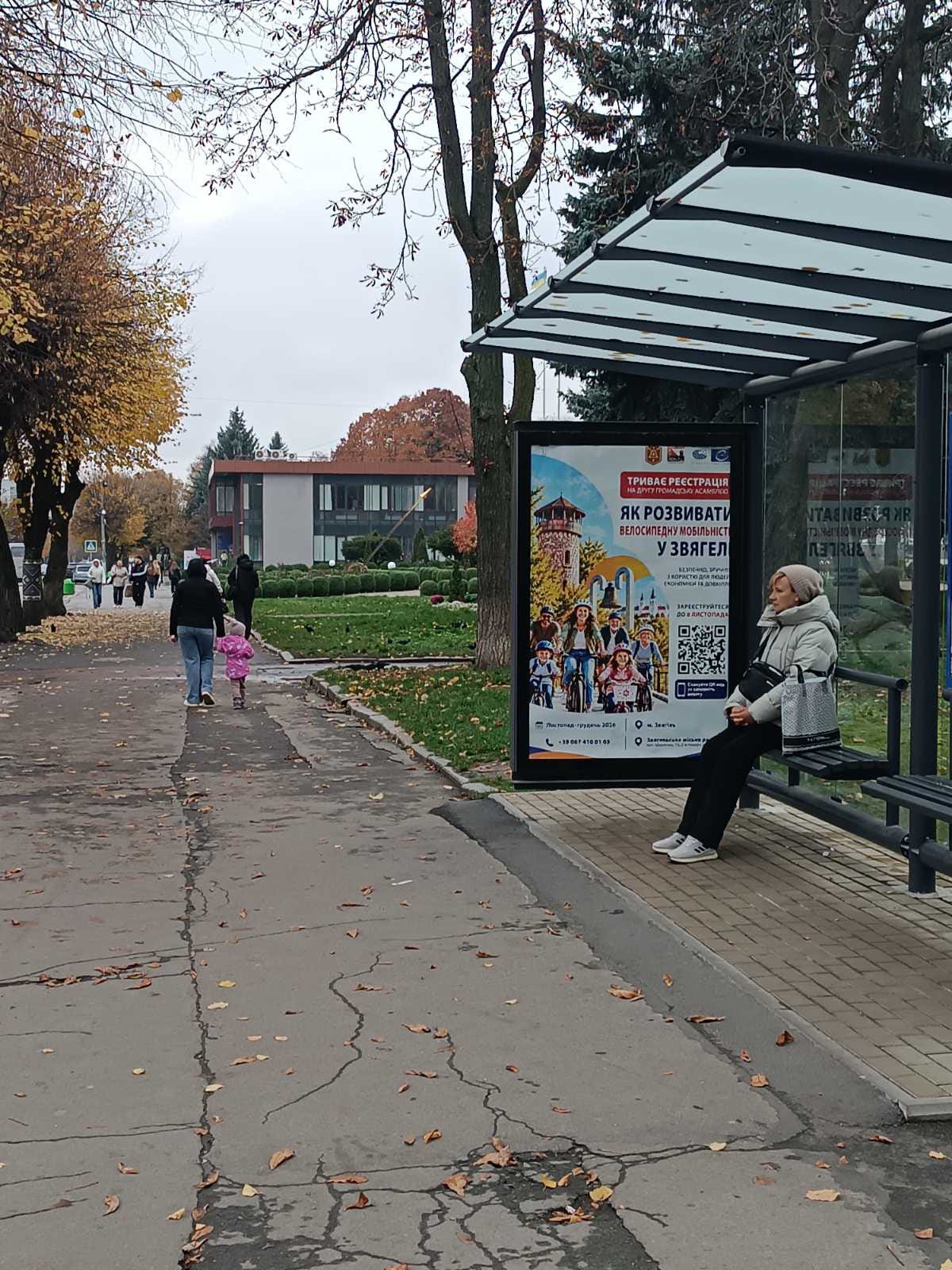
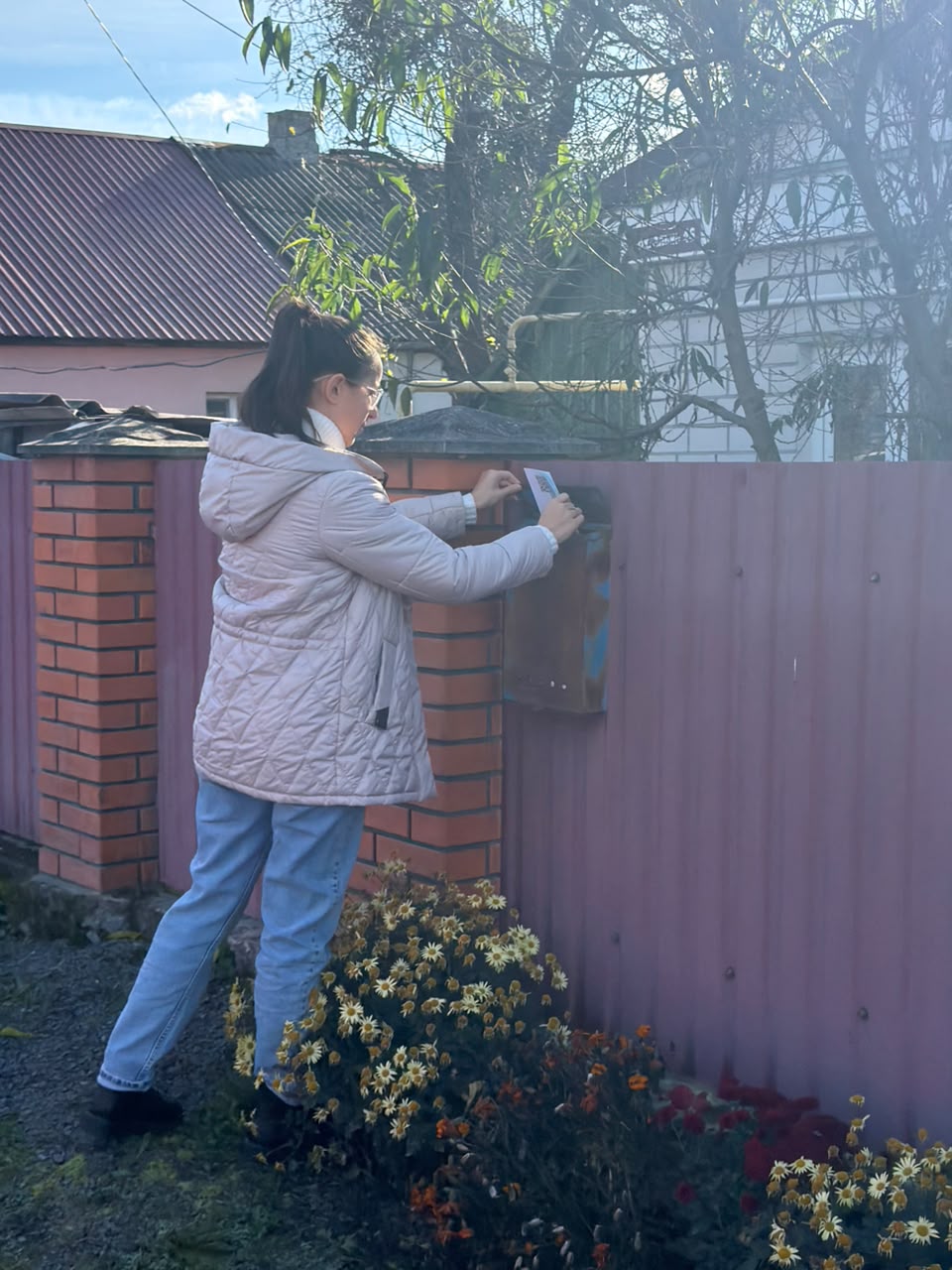
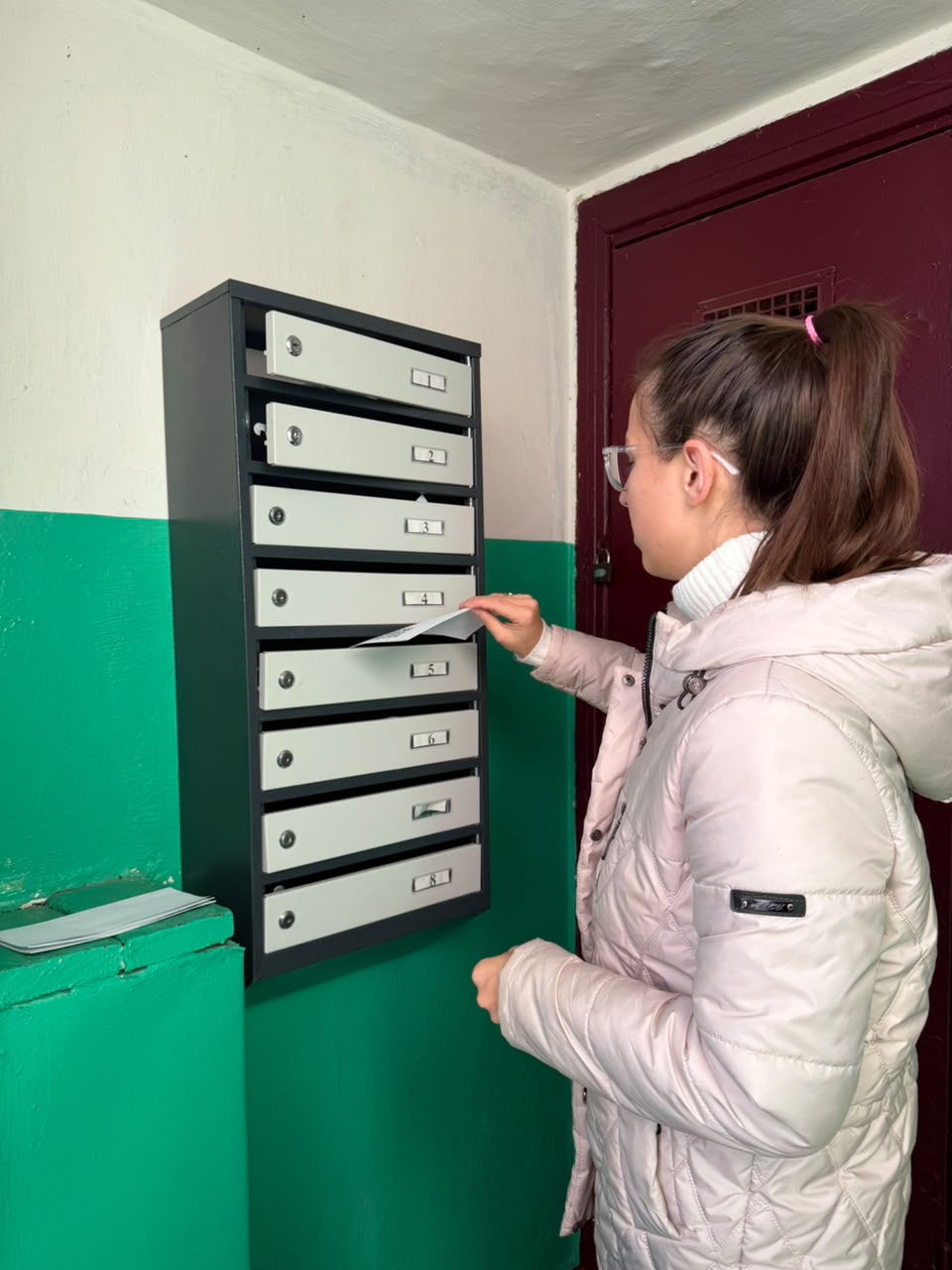
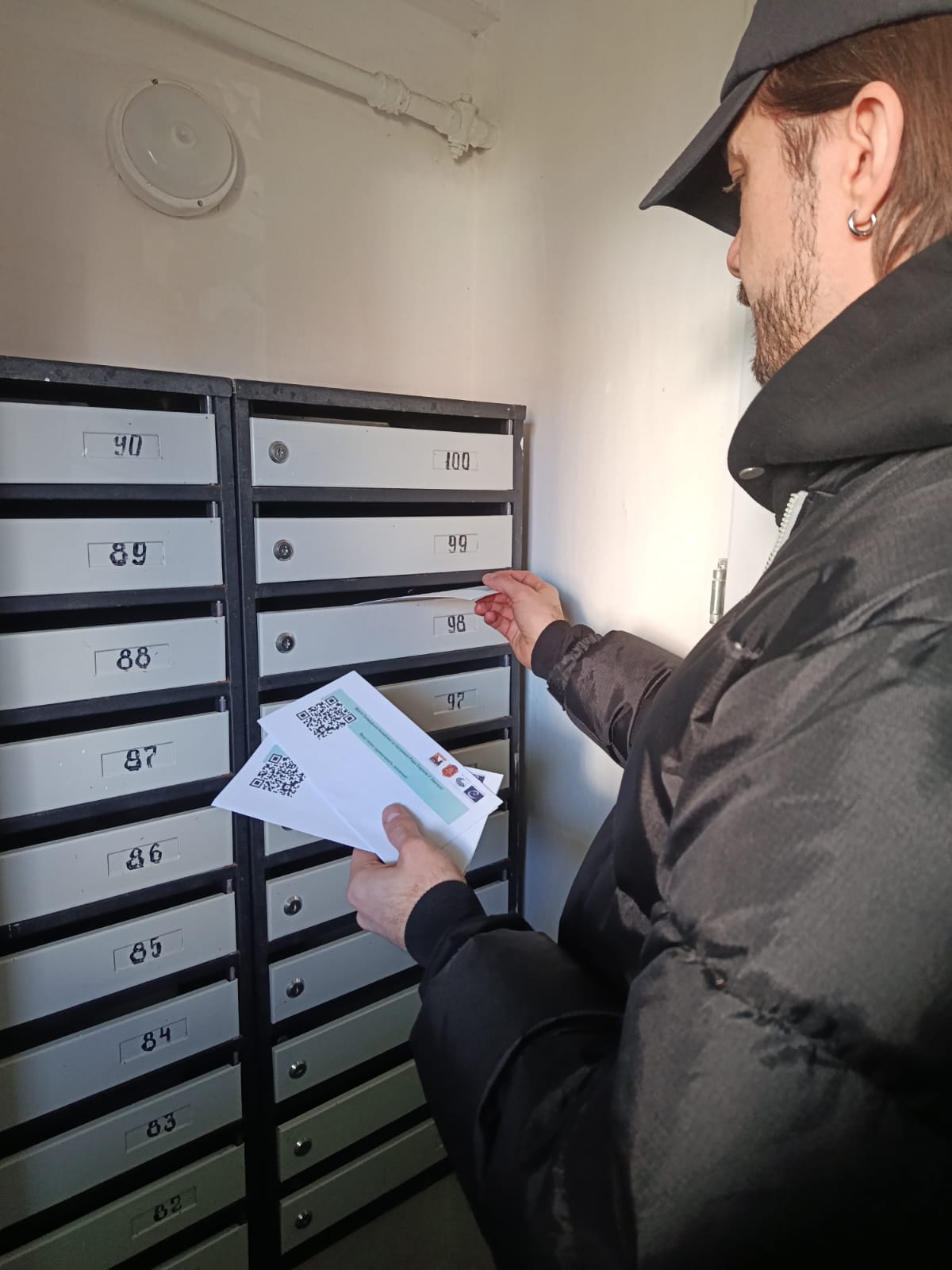
The main preparations for the second citizens’ assembly took place in October–November 2026. A total of 3,000 invitation letters were sent to randomly selected households. Registration was also open to all city residents aged 18 and over. An outreach campaign included a billboard, backlit advertising panels and posters informing residents about the assembly and inviting them to register.
35 residents were selected from 185 people who registered. Selection was conducted through stratified sortition using the Panelot platform. This method combines random selection with predefined socio-demographic criteria, including age, gender, educational attainment and area of residence. It helps form a group that reflects the diversity of the city’s population and brings together residents with different perspectives, life experiences and needs. Throughout the assembly, members will work together to develop recommendations on cycling mobility and present them to the local authorities. The local authorities have committed to considering the assembly’s recommendations.
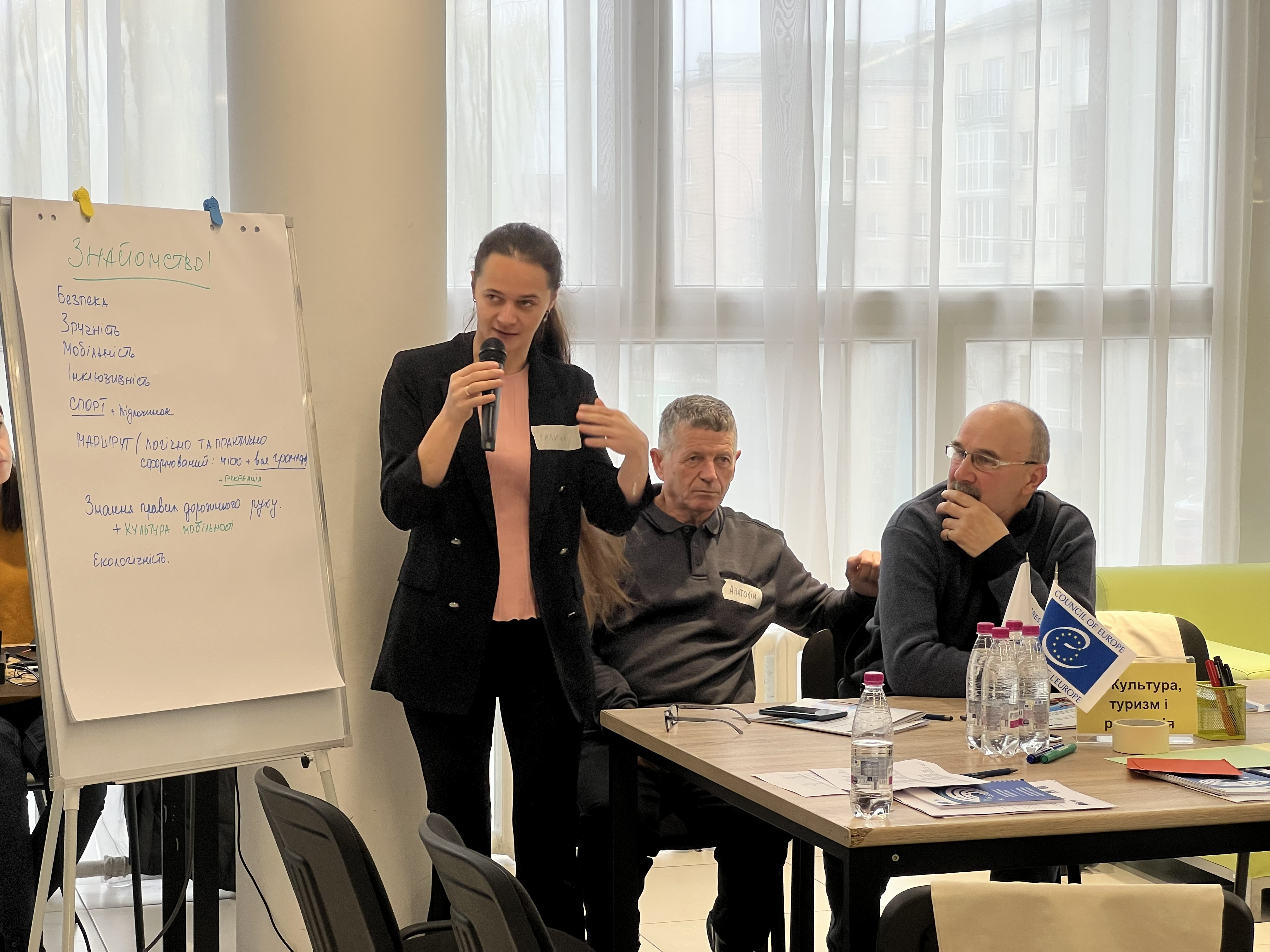
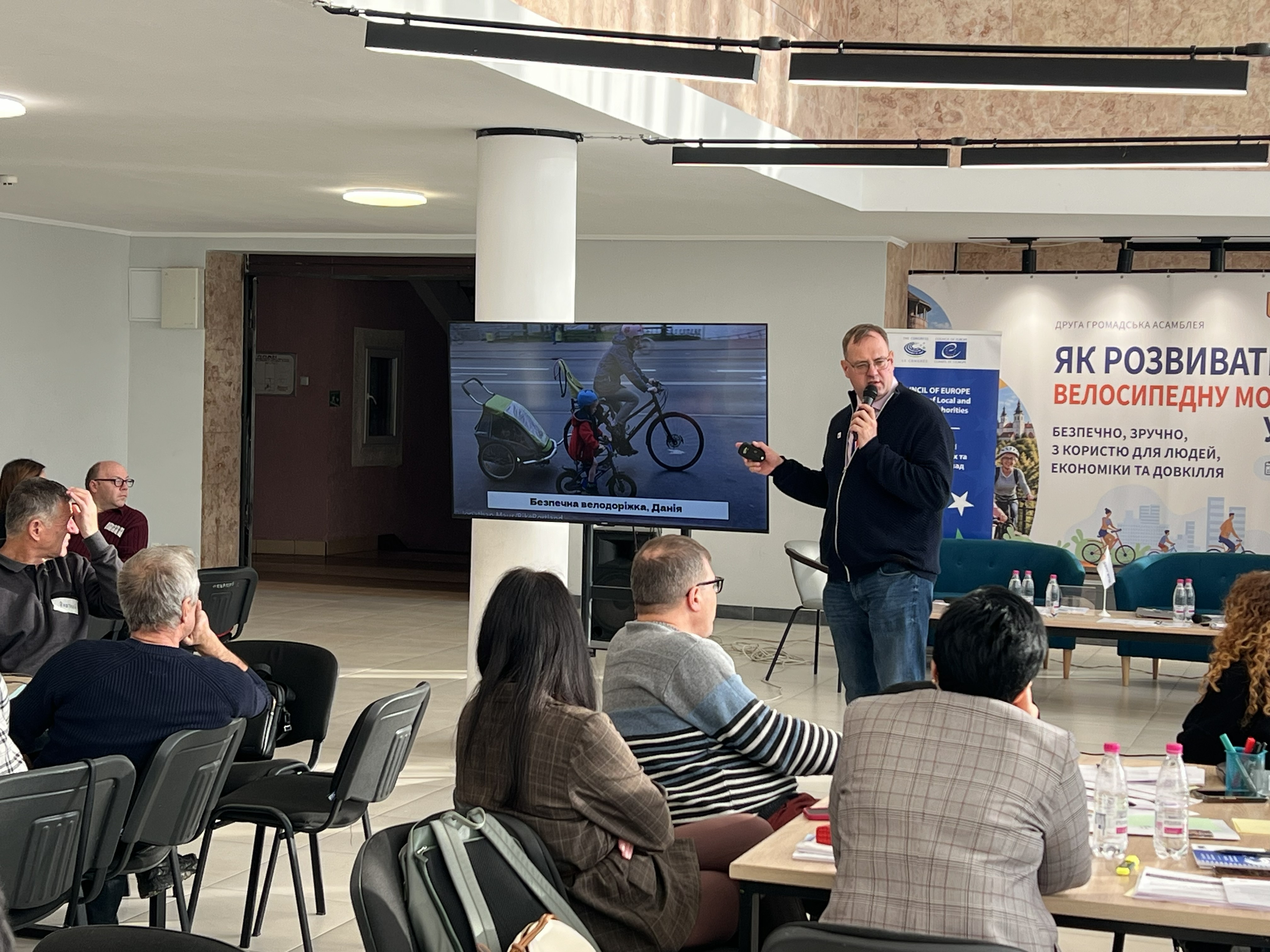
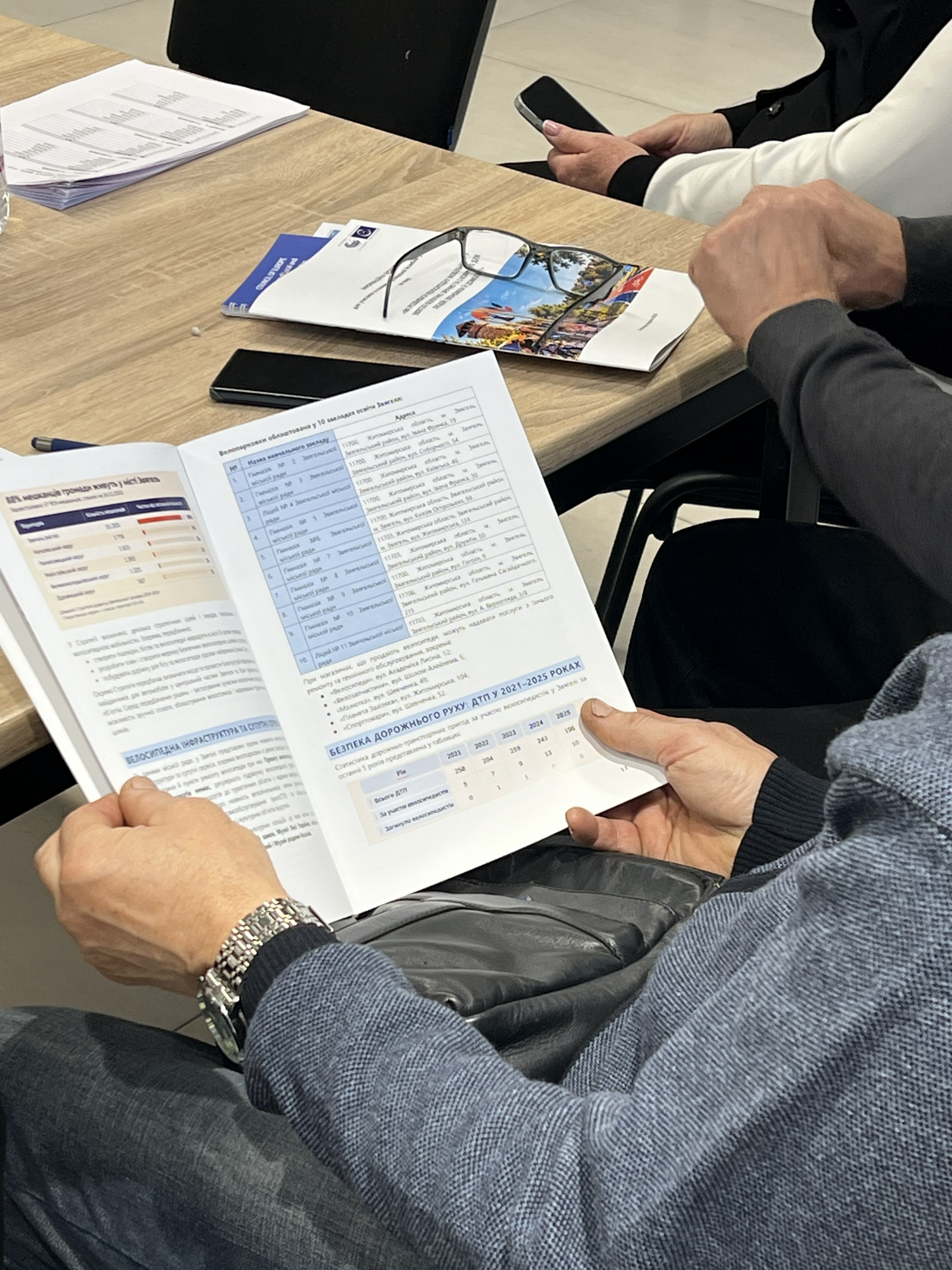
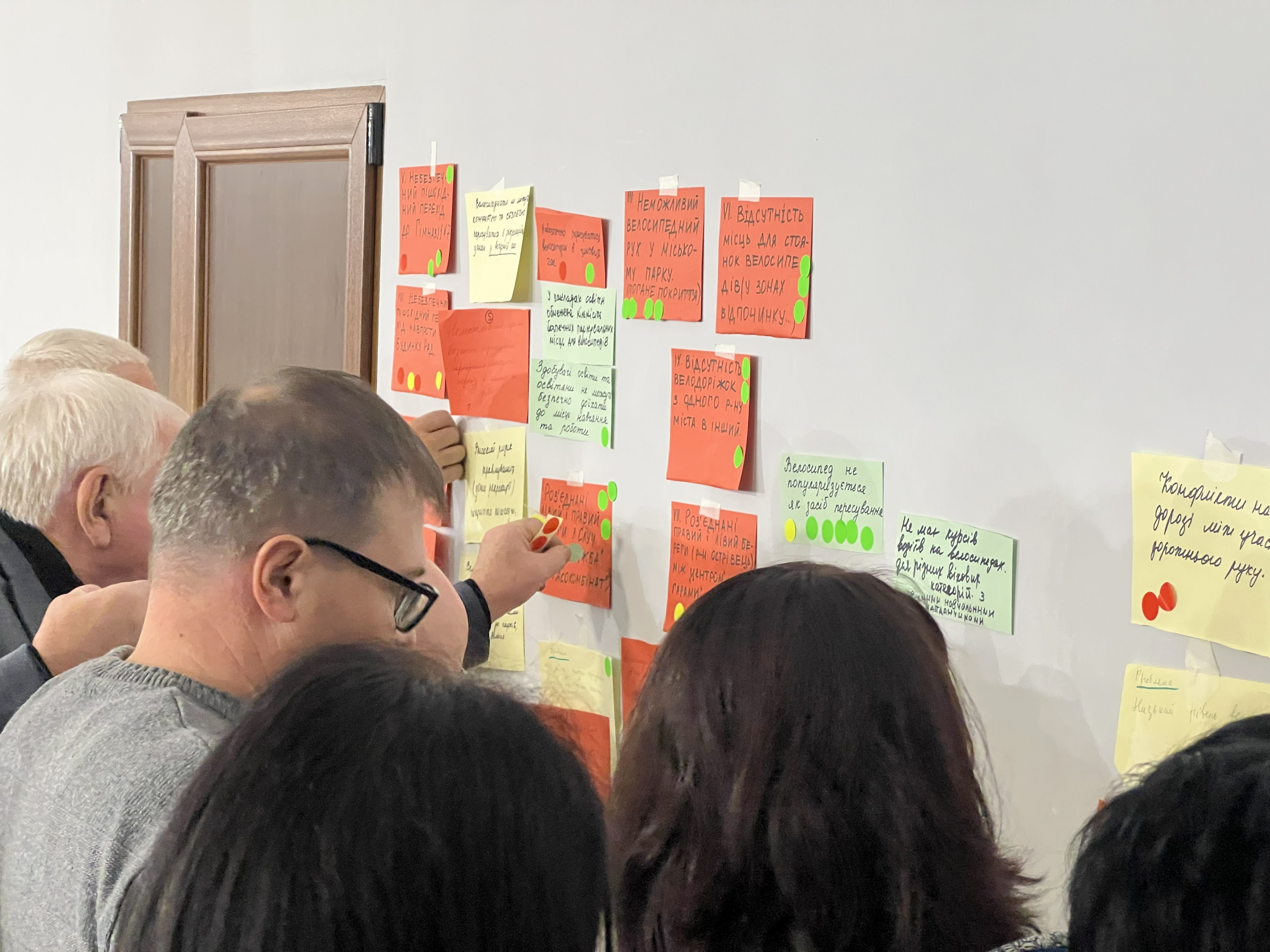
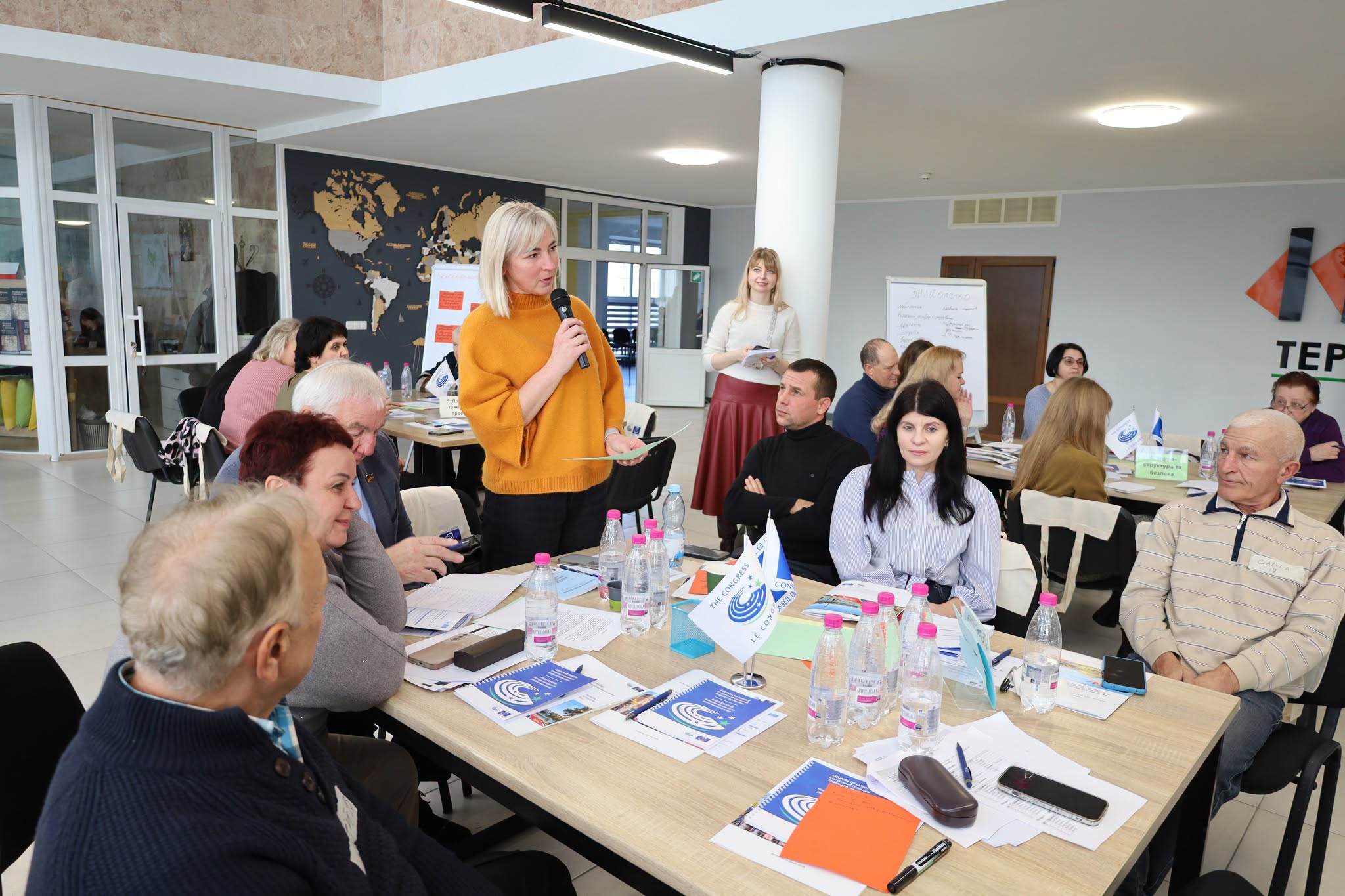
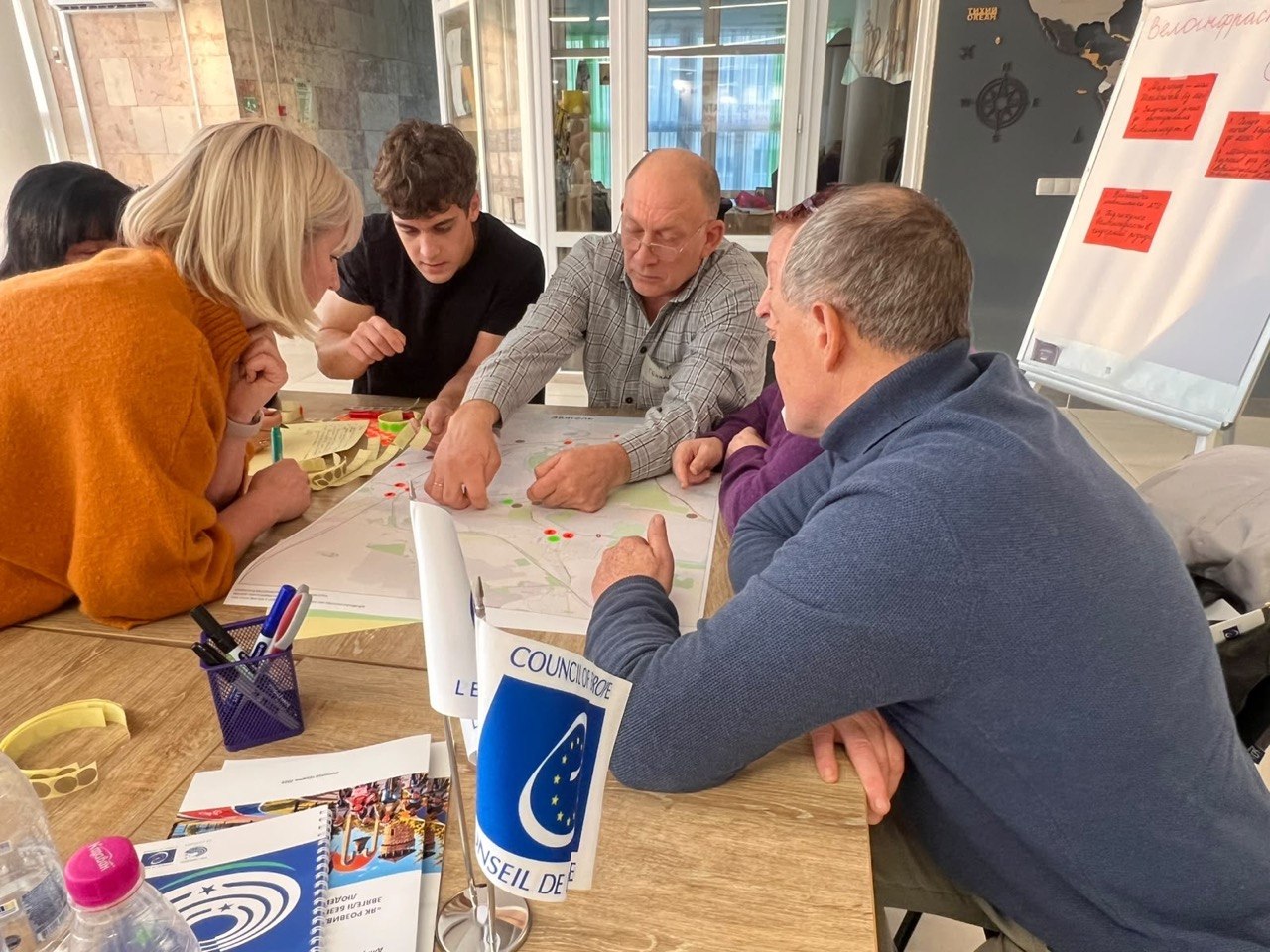
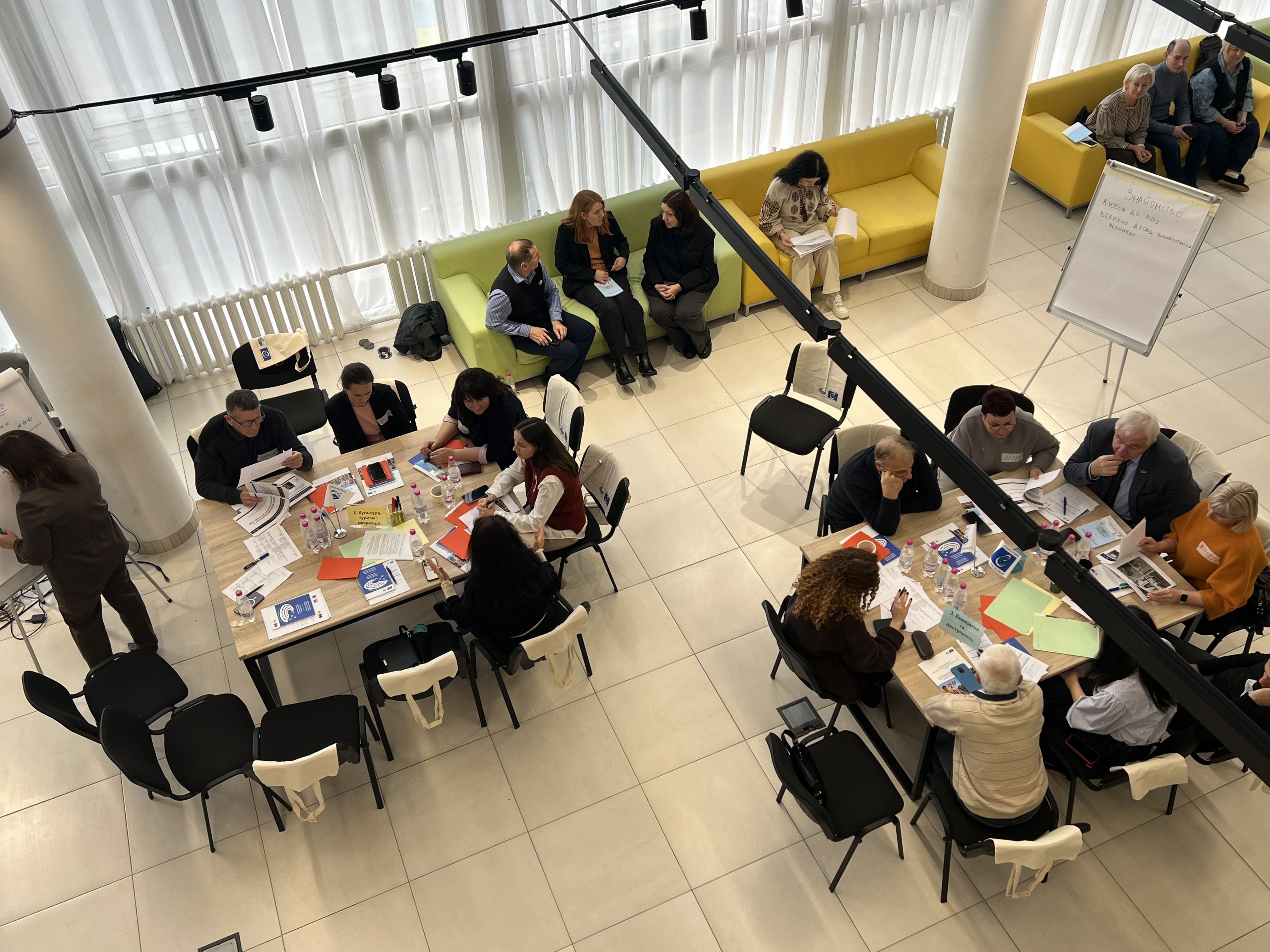
During the first session, assembly members explored the assembly’s mandate and the principles of deliberation, and deepened their understanding of cycling mobility and its importance for safety, accessibility, the local economy and the environment. Through dialogue with experts, city council representatives and the police, they examined cycling mobility from several perspectives, including urban planning, infrastructure development and road safety. They also assessed Zviahel’s existing cycling infrastructure and opportunities for its further development. In practical group work, members mapped key cycling routes, existing infrastructure and problem areas across the city. Through joint discussion, they agreed on a shared list of problems and identified priority issues for further consideration during the assembly.
The citizens’ assembly is organised by Zviahel City Council with expert, methodological and financial support from the project “Strengthening multilevel governance and local democracy to support Ukraine’s recovery”, implemented by the Centre of Expertise for Multilevel Governance at the Congress of Local and Regional Authorities of the Council of Europe under the Council of Europe Action Plan for Ukraine “Resilience, Recovery and Reconstruction” 2023–2026.