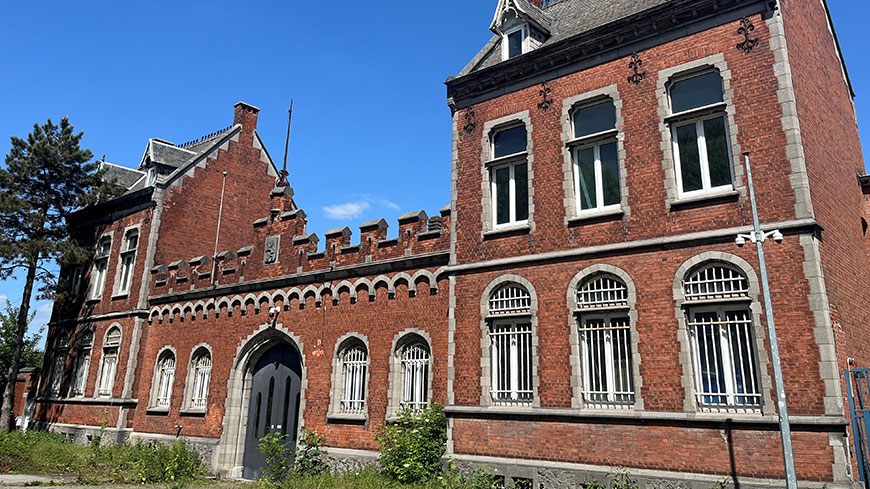
European Heritage Days (EHD) will bring together people across Europe to confront one of the continent’s most urgent challenges: protecting cultural heritage at risk. Under this year's theme, “Heritage at Risk: Revive, Resist, Reimagine,” the European Heritage Days initiative will highlight both the challenges facing Europe's cultural heritage and the inspiring initiatives that are protecting, revitalising and reimagining it. Through thousands of events across Europe, communities will showcase how heritage at risk can be safeguarded and passed on to future generations.
Climate, conflict, conurbations, and other threats
Europe’s cultural treasures are increasingly vulnerable to climate change, environmental disasters, conflicts, neglect, rapid development, and the loss of traditional ways of life. Without swift action and renewed commitment, many of these irreplaceable legacies could be lost to future generations.
Highlights of European Heritage Days 2026
European Heritage Days 2026 will mobilise citizens, experts, and communities to protect, revive, and reinterpret heritage at risk. Across participating countries, a vibrant programme of events will encourage public engagement and inspire collective responsibility.
Among this year’s highlights, in Spain and Hungary, coordinated guided heritage visits will invite participants to explore the lives of medieval women who shaped diplomacy and peacebuilding, connecting historic sites across Europe through a shared narrative of governance, dialogue and cultural exchange. In Brussels, an immersive experience at a former brewery will demonstrate how industrial heritage can be reimagined through artistic creation and community participation, while in Croatia participatory activities will invite local communities to rediscover the tradition of the Saints’ Guard through the documentation and interpretation of roadside chapels and devotional monuments.
“Heritage at Risk” aims not only to raise awareness but to empower action. Reflecting the principles of the Faro Convention, events across Europe will highlight the role of communities in identifying, safeguarding and transmitting heritage while showcasing innovative conservation approaches, traditional knowledge and creative solutions that help protect and revitalise heritage for future generations.
By encouraging people to engage with the heritage they value, European Heritage Days strengthen democratic participation, social cohesion and intercultural dialogue across Europe.
Launched in 1985 in France, the European Heritage Days have been organised as a joint initiative of the Council of Europe and the European Union since 1999. Enabling citizens to explore a wide range of cultural assets through a number of themed events, European Heritage Days help uncover histories of people and places that have contributed to shape the culture and heritage of Europe. Each year, the European Heritage Days revolve around a theme that all participating countries are encouraged to adopt for their annual programme.
Known by many names across Europe
European Heritage Days are being celebrated in over 50 European countries and can sometimes bear a different name. In different countries we are also recognised as: Tag des Denkmals (Austria), Journées du Patrimoine (France), Open Monumententdag (Belgium and Netherlands), Muinsuskaitsepäevade (Estonia), Tag des offenen Denkmals (Germany), Kulturális Örökség Napjai (Hungary), National Heritage Week (Ireland), Kulturminnedagene (Norway), Kulturarvsdagen (Sweden), Heritage Open Days, Open House London, Doors Open Days and Drysau Agored (United Kingdom).
 Learn more about European Heritage Days