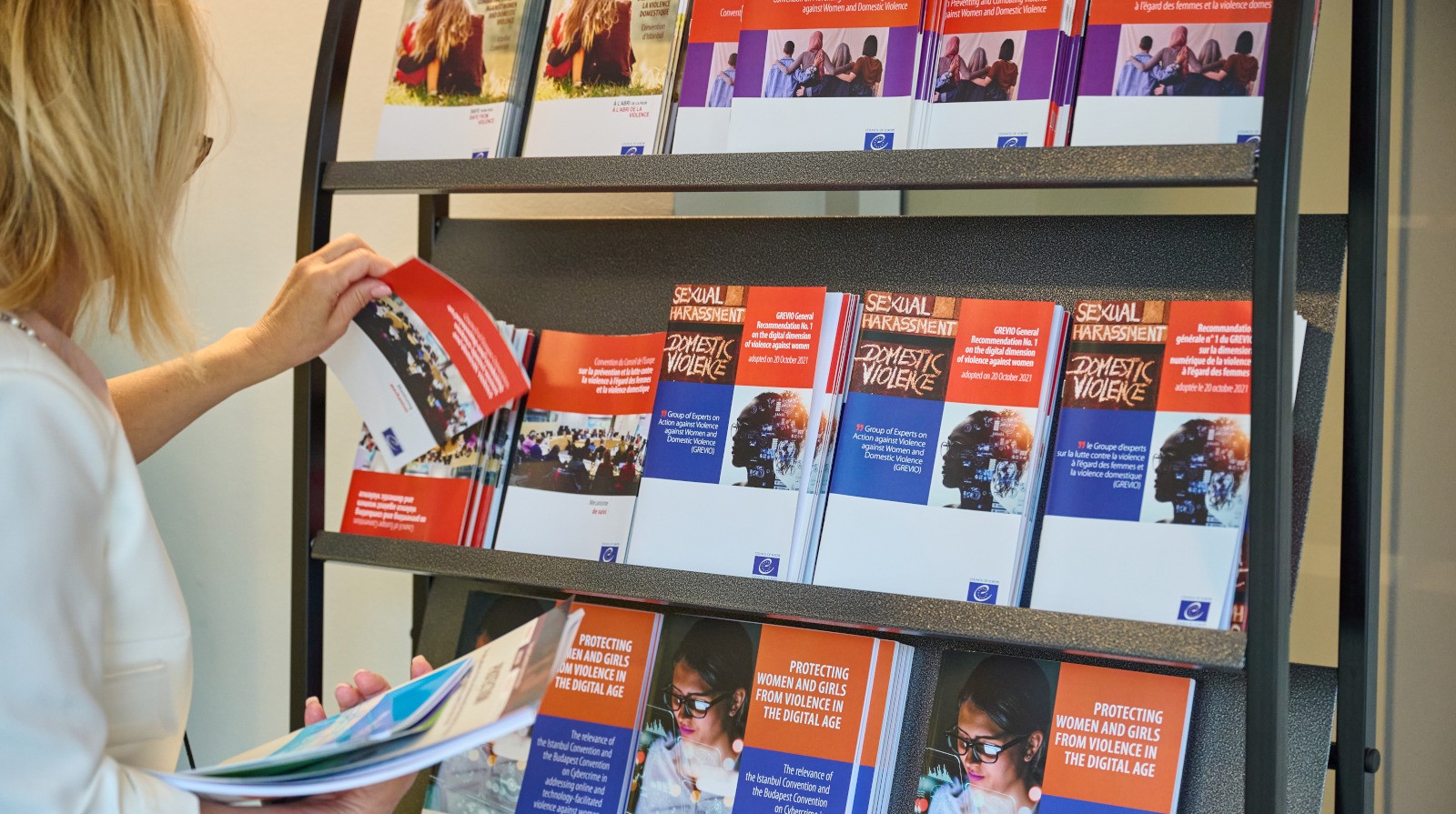
Ahead of International Women’s Day, marked on 8 March, the Committee of Ministers of the Council of Europe has adopted two new recommendations to member states addressing the problems posed to gender equality and non-discrimination, and the increase in violence against women and girls, by the structure of new technologies.
The Recommendation on equality and artificial intelligence (AI) will guide European countries in preventing and combating discrimination within the lifecycle of AI systems – from their design, through their use, and at all points up to their retirement.
AI can increase discrimination, including against women
Discrimination has been identified as one of the major human-rights risks of AI systems. AI has the potential to be used to promote equality, including gender equality. At the same time, it also poses a risk to equality. AI models can be built upon data that reproduce and exacerbate existing stereotypes; and they can have significant discriminatory effects.
The central question is: how can we ensure that the growing use of AI systems can support and promote equality, including gender equality? Furthermore, how can discrimination be identified and remedied?
Special attention is given to transparency of AI systems and their ability to provide clear explanations to humans for their actions (“explainability”), as well as to strengthening procedural safeguards and remedies. The explanatory memorandum to the recommendation identifies policy fields in which AI may have a particularly acute impact on equality including gender equality. The recommendation focuses on three types of discrimination: gender and sex, racism, and sexual orientation, gender identity and expression, and sex characteristics (SOGIESC). It was prepared by the Council of Europe’s Steering Committee on anti-discrimination, diversity and inclusion (CDADI) and the Gender Equality Commission.
An online environment of impunity for violence against women and girls
The Recommendation on accountability for technology-facilitated violence against women and girls is the first international legal standard focused on this topic.
Technology-facilitated violence against women and girls often persists – and becomes normalised – in an environment of impunity. Anonymity of perpetrators, fragmented legal frameworks, complex reporting processes, risk of victim-blaming, cross-border challenges and difficulties in securing digital evidence allow harmful conduct to continue unchecked. Strengthening accountability helps to ensure that victims can access justice, and reinforces trust in institutions and in their ability to respond effectively to digital harm.
The recommendation provides guidance for member states on enhancing their legal, institutional and regulatory responses to technology-facilitated violence against women and girls. It proposes a comprehensive notion of accountability, extending beyond criminal law to civil and administrative fields.
Central points of the recommendation are its victim-centred and trauma-informed approach, together with an emphasis on the engagement of multiple stakeholders – civil society, victims, the private sector, the media, education institutions. The recommendation also calls for accessible justice systems to prevent secondary victimisation, and for a safety-by-design approach to make sure that products and services of technology companies do not facilitate violence. The recommendation was prepared by the Council of Europe’s Gender Equality Commission and the European Committee on Crime Problems.
The recommendation will be officially launched on 10 June 2026 at the Palais de l’Europe in Strasbourg at an event entitled “From standards to action: making accountability for technology-facilitated violence against women and girls a reality”.
 Read the Recommendation on equality and artificial intelligence in full
Read the Recommendation on accountability for technology-facilitated violence against women and girls in full
 Learn more about the work of the Council of Europe on gender equality