


From Zurich to Strasbourg
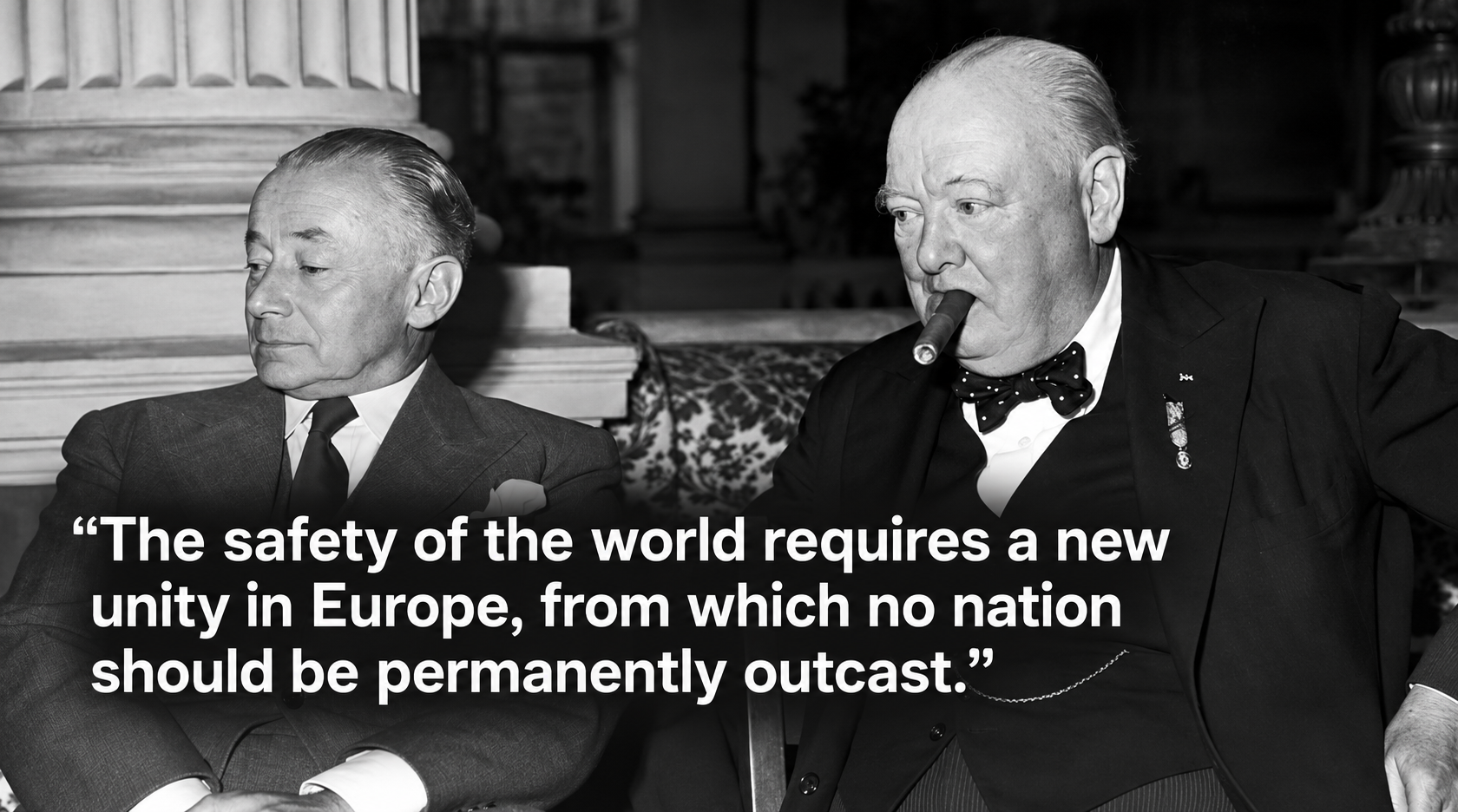
 We must recreate the European family in a regional structure, and the first practical step will be to form a Council of Europe. Let Europe arise!
University of Zurich, 19 September 1946
Eighty years ago, sickened by the effects of war across the continent, Winston Churchill spoke at the University of Zurich. There, he called for a united Europe. It was a turning point in the discussion that would lead to the foundation of the Council of Europe.
Churchill’s first recorded mention of a Council of Europe had been during an address broadcast on BBC radio, in early 1943. But in the summer of 1946, he travelled to Switzerland, where he used his time to rest, to paint — and to urge European unity.
Treated like a contemporary rock star, Churchill drew crowds of tens of thousands into the streets. His status as a hero gave him a platform from which to advocate for his vision.
Delivering his powerful speech in Zurich, Churchill returned to a theme he had discussed in his “Sinews of Peace” speech that March: a new world order, presided over by the United Nations supported by a united Europe. As the twin shadows of the Iron Curtain and nuclear war loomed, nations would retain their culture and heritage while bound by common values and the desire for peace and stability.
Less than three years later, 10 nations signed the Treaty of London, and the Council of Europe was born. An enduring legacy of Churchill’s fight against tyranny, today the Council remains a bastion of human rights, democracy and the rule of law.
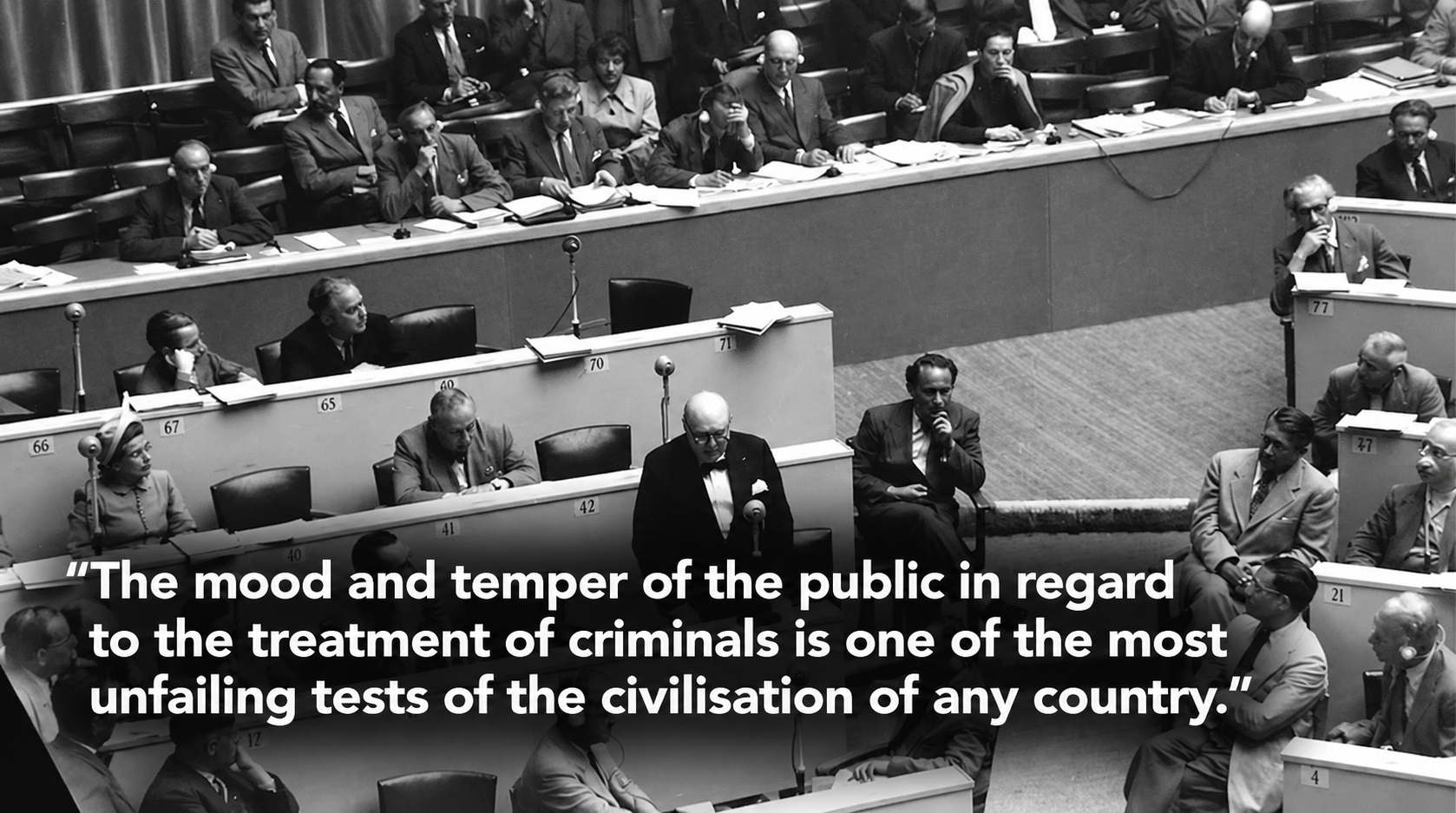
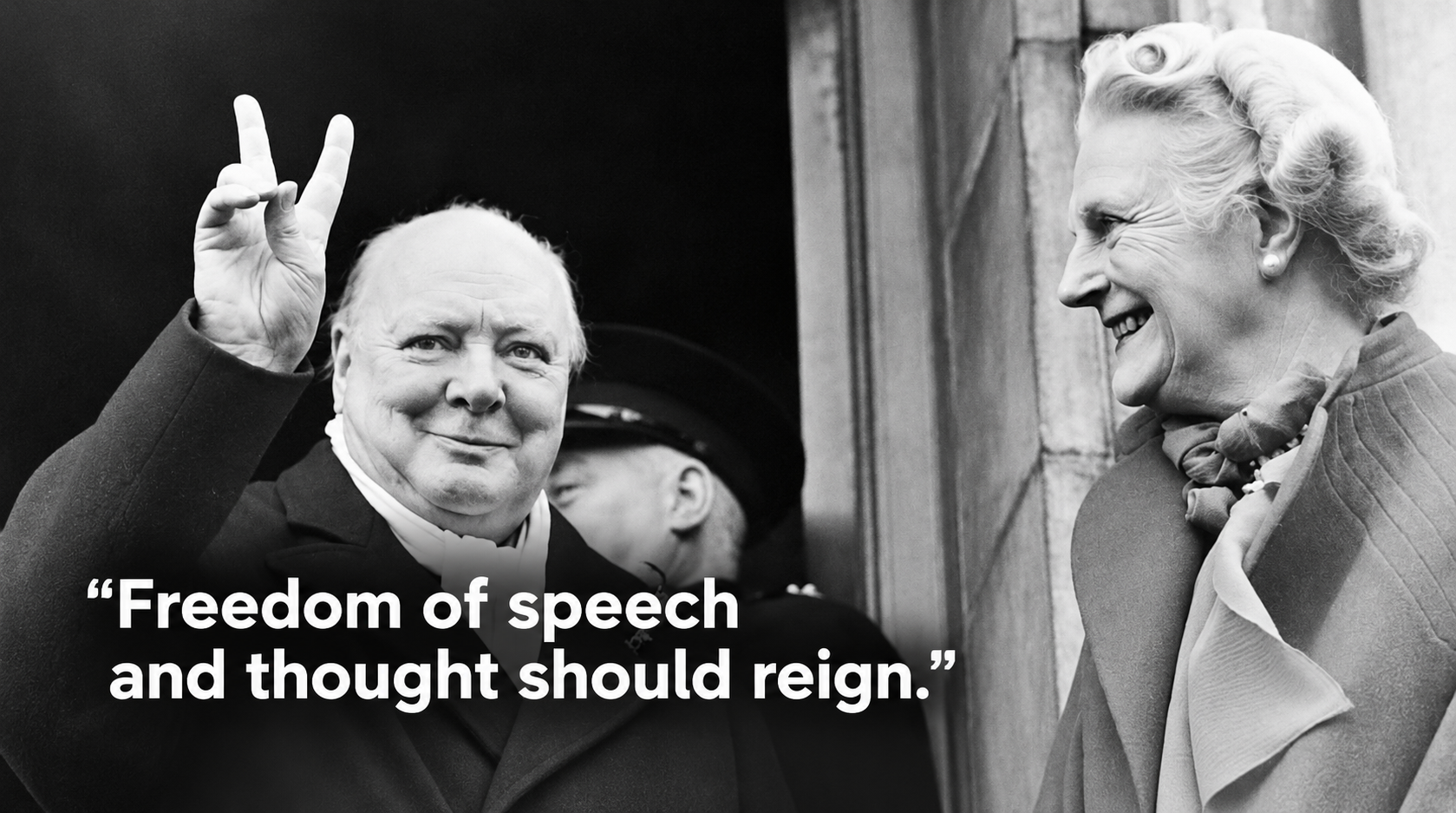
On 17 November the Council of Europe will hold a high-level event commemorating Churchill’s legacy, reflecting on its continued global relevance, and asking, “What next?” for Europe.
What next for human rights, democracy and the rule of law?
16:00 – 18:00 CET
Hemicycle · Palais de l’Europe
Strasbourg
Uniting the states of Europe through shared values
We must take as our foundation the lofty conception of freedom, law and morality.
BBC National Address, 12 March 1943
Appalled by the destruction wreaked across the continent and observing the open wounds torn by fascism and the Holocaust, Churchill was haunted by the thought that the Second World War could have been avoided. Recognising the threat posed by the closing off of swathes of Europe under brutal communist dictatorships, he feared for the future. But he believed that the “permanent prevention of war” could be achieved through uniting the countries of Europe.
The decision to situate the Council of Europe in Strasbourg, a historically contested and cross-cultural city on France’s border with Germany, was symbolic of the possibility of harmony.
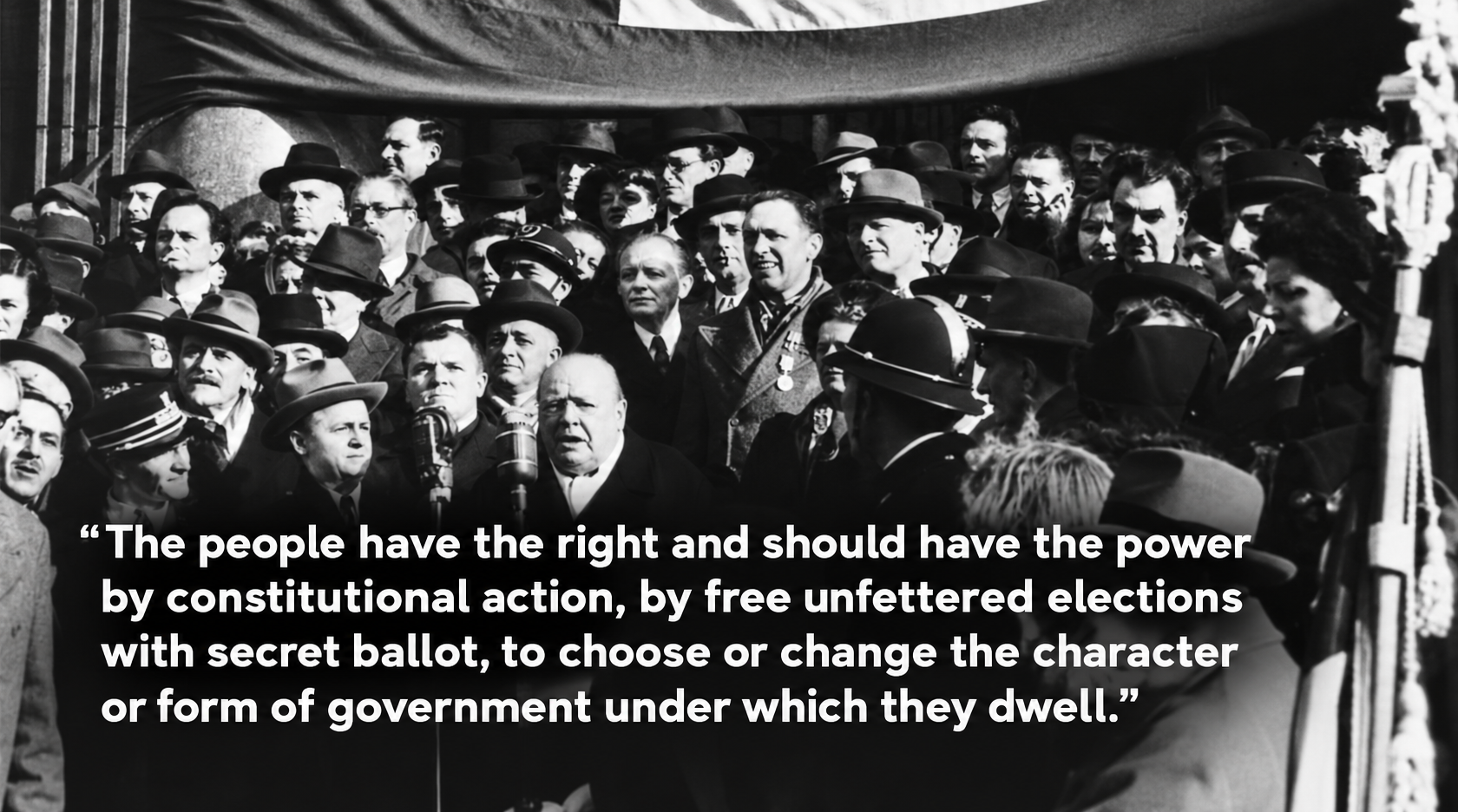
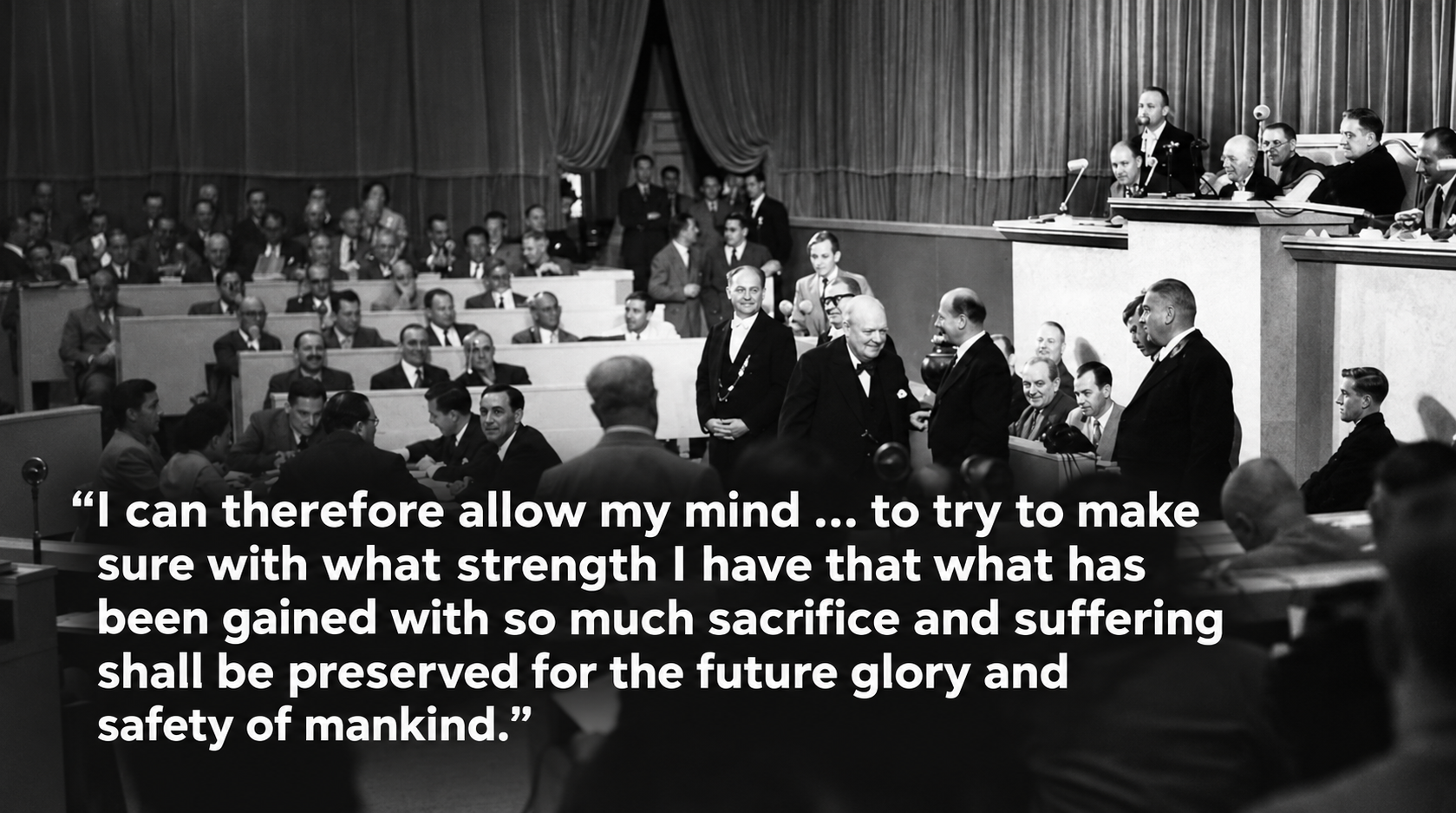
In 1949, Churchill visited Strasbourg, addressing a crowd of more than 25,000 on Place Kléber. Just a few years before, the same square had been the scene of Nazi rallies. But Churchill urged that ostracising former aggressors could only lead to further conflict, using a speech at the inaugural meeting of the Consultative Assembly of the Council of Europe that week to plead that the Council lose no time in bringing Germany “into our circle”.
The Federal Republic of Germany would soon join as an associate member, becoming a full member in 1951. Churchill would have been delighted to see the Iron Curtain fall and a reunified Germany take its place in the Council of Europe, 40 years later.
Through the years of the Cold War and beyond, the Council of Europe would grow to encompass 46 member states. Those states, bound by the European Convention on Human Rights, contribute to a democratic and legal space that includes political assemblies, monitoring bodies and a multinational European Court of Human Rights, protecting citizens across Europe.
How can Europe safeguard Churchill’s vision?
Our supreme task and duty is to guard the homes of the common people from the horrors and miseries of another war.
Sinews of Peace, 5 March 1946
Inspired by Churchill’s legacy, the Council of Europe’s many achievements include the abolition of the death penalty across much of the continent; inspections of prison conditions; binding treaties on themes from violence against women to cybercrime and from the responsible use of artificial intelligence to the protection of the natural and built environments. Its conferences and events cover protection of democracy, history teaching, child protection and almost every area of interest that falls under democracy, human rights and the rule of law.
Churchill’s envisioned safety net for Europe is woven into the threads of the Council of Europe. Ideals of peace and stability drive the Council’s aim for democratic security, founded on the shared values of 46 member states.
Eighty years after the Zurich speech, Europe faces myriad challenges. Rocked once more by war, the continent is grappling with existential threats including those posed by artificial intelligence and climate change. Driven by disinformation, the very foundations of democracy are shaking, and distrust in public institutions and in multilateralism is on the rise. The twin pillars of international law and accountability are increasingly undermined. Once solid democracies are being shaken by foreign interference and global turmoil.
At this time of profound geopolitical and societal change, the role of the Council of Europe in promoting and protecting human rights, democracy and the rule of law is more important than ever.
-
21 March 1943
Churchill suggests the creation of a “Council of Europe”, during a BBC radio broadcast.
-
5 March 1946
Churchill delivers his “Sinews of Peace” speech, coining the term, “Iron Curtain”.
-
19 September 1946
Churchill speaks at the University of Zurich, calling for European unity and the first practical step, a Council of Europe.
-
5 May 1949
The Treaty of London is signed. 10 nations found the Council of Europe.
-
12 August 1949
Churchill addresses a huge crowd in Place Kleber, Strasbourg.
-
17 August 1949
At the inaugural session of the Consultative Assembly, Churchill argues for Germany to be admitted as a member of the Council of Europe.
-
4 November 1950
The European Convention on Human Rights is signed in Rome.
-
2 May 1951
The Federal Republic of Germany becomes a full Member State of the Council of Europe.
-
3 October 1990
Germany is reunified. A slew of new Member States follows the fall of the Iron Curtain.
-
16 September 2026
Council of Europe Secretary General Alain Berset commemorates Churchill’s speech in Zurich.

Who was Winston Churchill?
Born in 1874, Winston Churchill was a British war correspondent, army officer, and politician. He served two terms as Prime Minister of the United Kingdom: the first from 1940 until 1945, and the second from 1951 until 1955.
Venerated for his opposition to fascism and for guiding the UK through World War II, he is renowned for his inspirational speeches and his writing. Churchill won the Nobel Prize for Literature in 1953. He died in 1965, and was given a state funeral.
Churchill and the Council of Europe: a soundscape