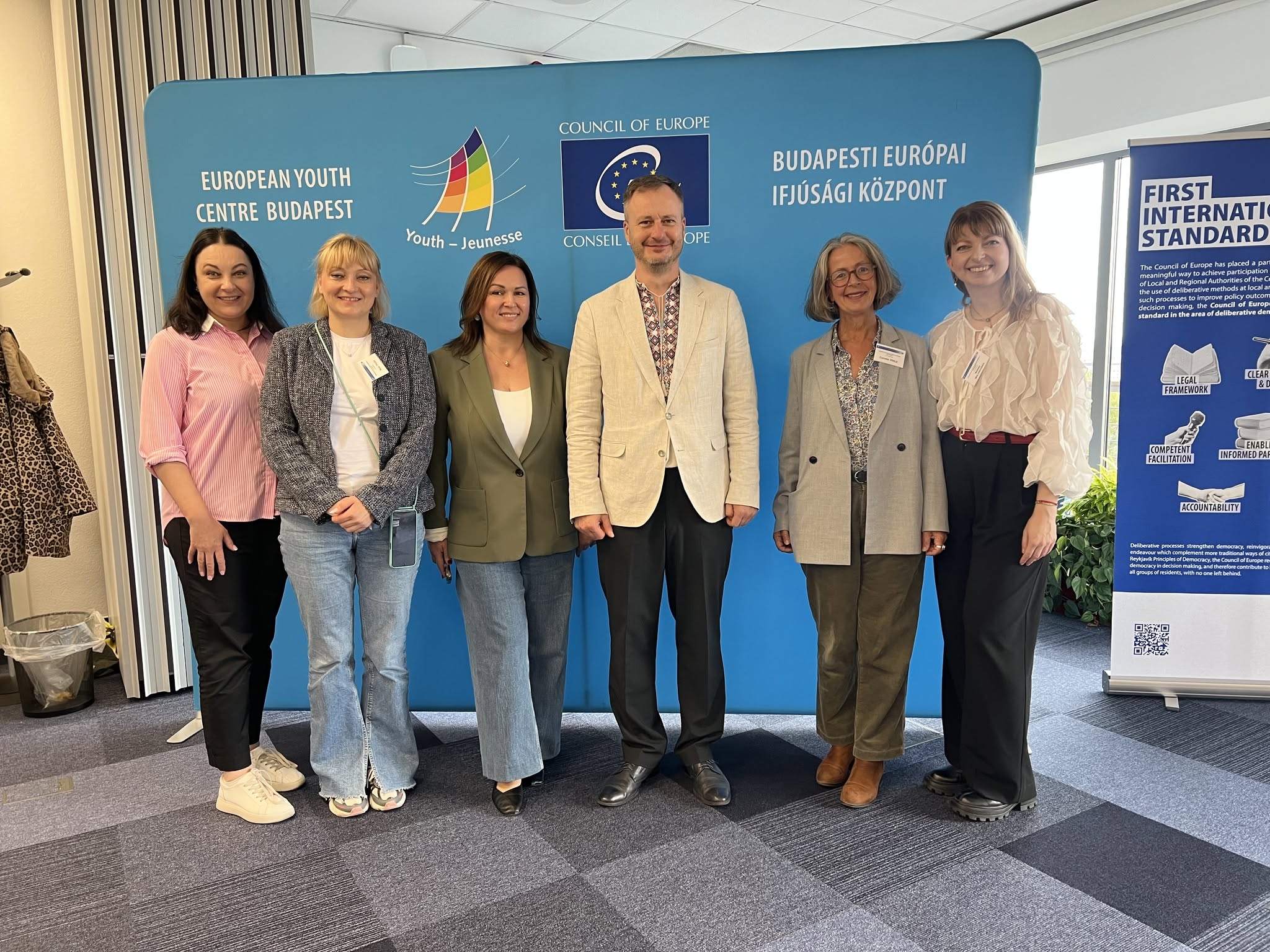
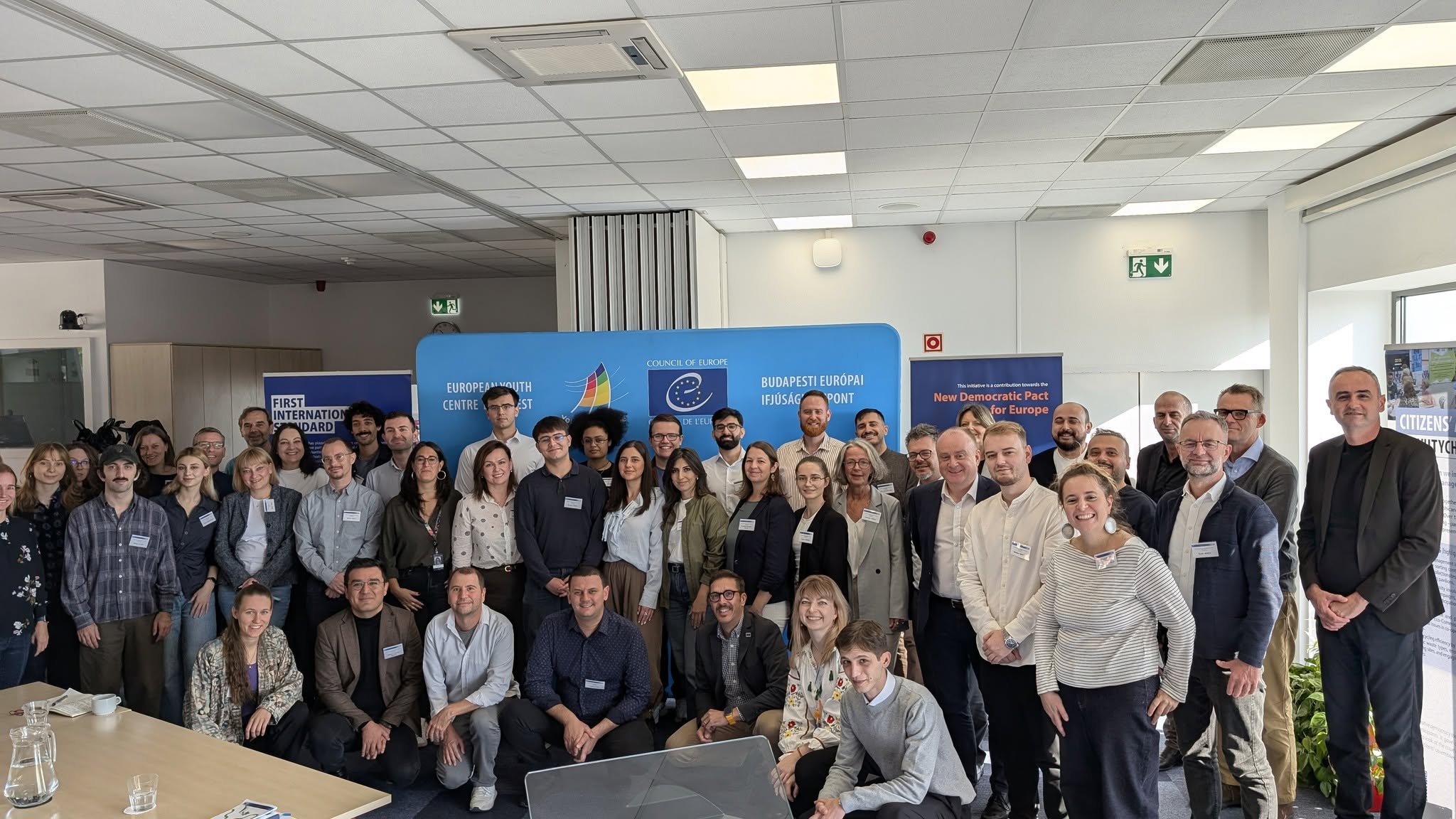
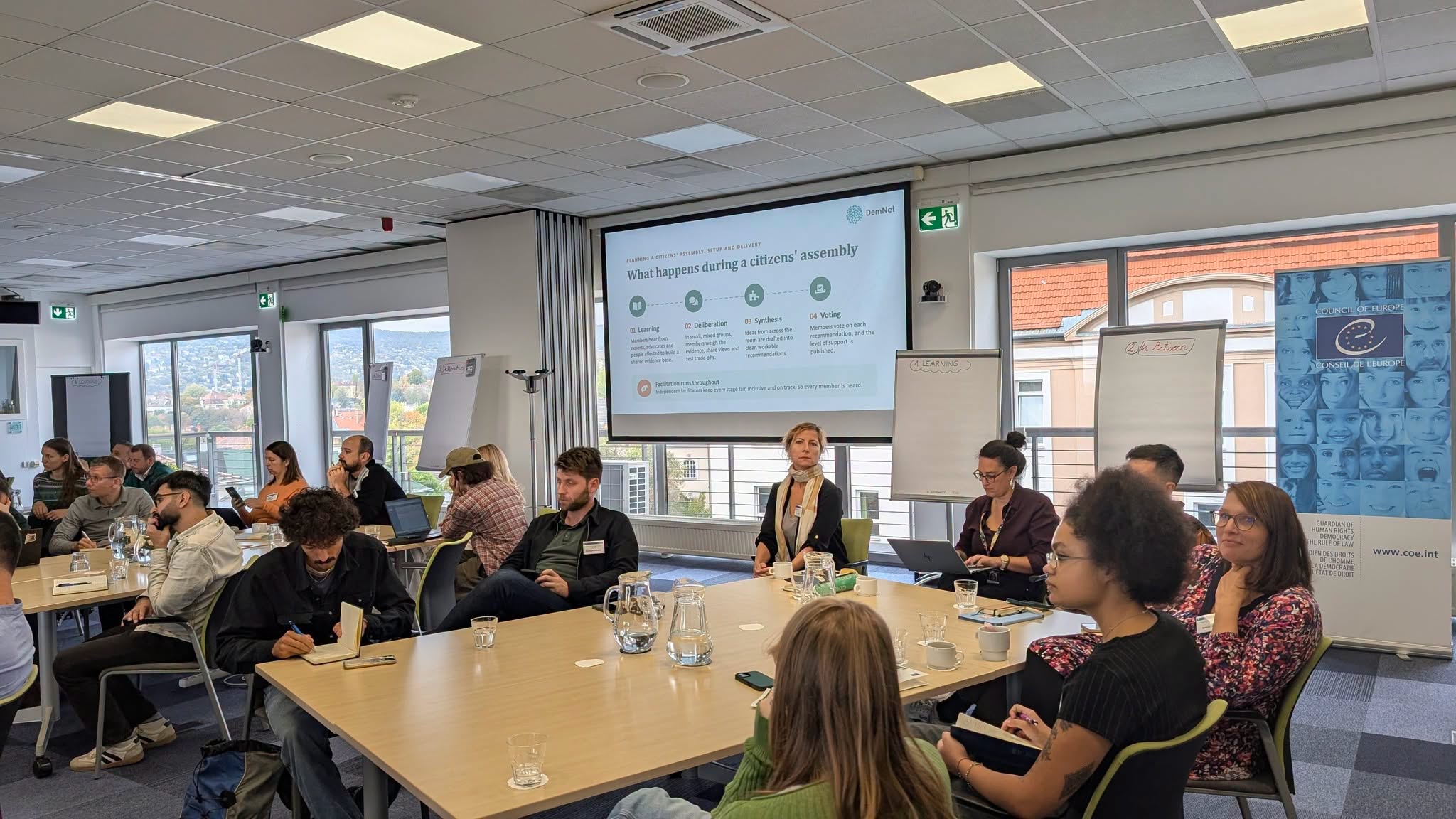
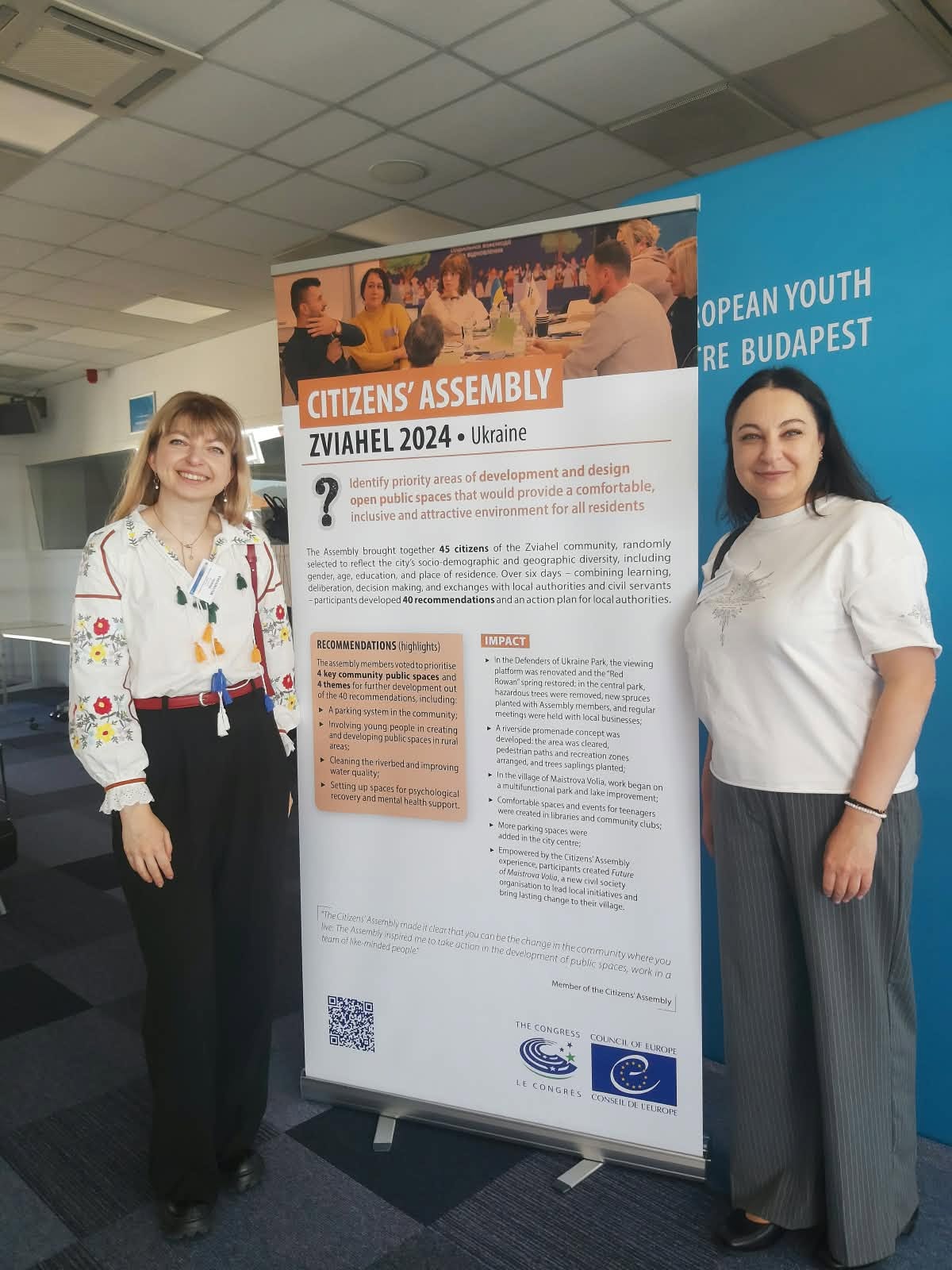
From 19 to 21 October 2026, Ukrainian representatives of local self-government, civil society and the expert community participated in the international capacity-building workshop “Deliberative Democracy and Citizens’ Assemblies – How to Start?”, held in Budapest. The event provided an opportunity not only to deepen knowledge and practical skills in organising deliberative processes, but also to share Ukraine’s experience of conducting citizens’ assemblies with an international audience.
Organised by the Youth Department and the Congress of Local and Regional Authorities of the Council of Europe, in partnership with DemNet, the workshop brought together more than 30 representatives of local and regional authorities, civil society and youth organisations from different countries.
Over three days, participants explored practical aspects of preparing and organising citizens’ assemblies, from defining the topic and randomly selecting a representative group of participants to facilitating discussions, developing recommendations and ensuring their subsequent consideration by the relevant authorities. Particular attention was paid to the potential of deliberative processes to strengthen trust between citizens and public authorities and to engage young people in decision-making.
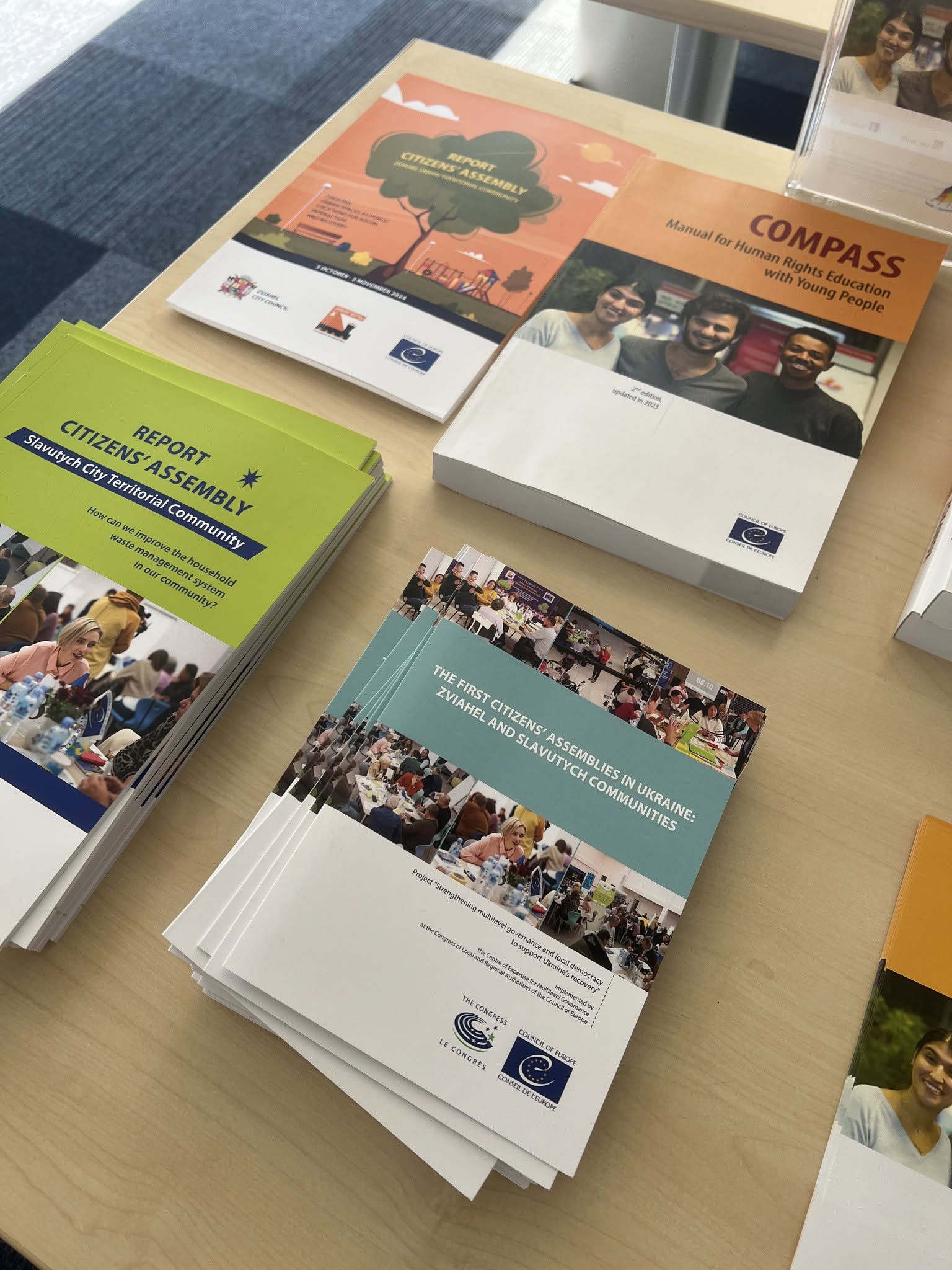
An important component of the event was the presentation of Ukraine’s experience in organising and conducting citizens’ assemblies, which have been implemented in the country since 2024 with the support of the Council of Europe.
Volodymyr Hrebonkin, Acting Head of the Department for Strategic Development and Investments of Rivne City Council, presented the results of the citizens’ assembly held in the Rivne municipality in spring 2026. During the assembly, 45 randomly selected residents developed 20 recommendations aimed at creating conditions that would encourage young people to stay, live and build their future in the community.
The motivation of residents to participate in citizens’ assemblies attracted particular interest among international participants.
“Residents take part in the Assembly because they want to do something meaningful for their community and want their views and proposals to be heard,” said Volodymyr Hrebonkin.
Discussions of the Rivne municipality’s experience during several sessions of the workshop demonstrated how Ukrainian communities, despite the challenges of Russia’s full-scale war of aggression, are not only introducing new tools for civic participation but also gaining valuable practical experience that they can share with the international community.
The participation of Ukrainian representatives in the workshop also contributed to strengthening national capacities in deliberative democracy.
Ukrainian participants, including representatives of civil society organisations, local self-government and consultants working with the Council of Europe project, had the opportunity to enhance their knowledge, exchange practical experience with international colleagues and explore approaches to organising high-quality and inclusive deliberative processes.
“During the workshop, I shared my experience of preparing citizens’ assemblies and the challenges of conducting them in the context of the full-scale war, ranging from security considerations to ensuring representativeness and the inclusion of different population groups. I was particularly interested in Switzerland’s experience of developing common standards for citizens’ assemblies, which also allow the process to be adapted to the needs of each community,” said Nataliia Malynovska, the Council of Europe project's local consultant.
The Congress of Local and Regional Authorities of the Council of Europe provides continued support for strengthening national expertise in deliberative democracy in Ukraine, including through practical assistance in organising citizens’ assemblies, involving Ukrainian experts in their preparation and implementation, and facilitating international exchanges of experience.
These efforts aim to develop a pool of Ukrainian professionals equipped with the knowledge, methodologies and practical tools needed to independently organise and support deliberative processes in line with international standards.
Within the framework of the Council of Europe Action Plan for Ukraine “Resilience, Recovery and Reconstruction” 2023–2026, the Centre of Expertise for Multilevel Governance at the Congress of Local and Regional Authorities of the Council of Europe is implementing the project “Strengthening multilevel governance and local democracy to support Ukraine’s recovery”.
One of the project’s areas of work is promoting democratic innovation and participatory governance, including by advancing deliberative democracy in line with Council of Europe standards and good practices in engaging citizens in decision-making processes.