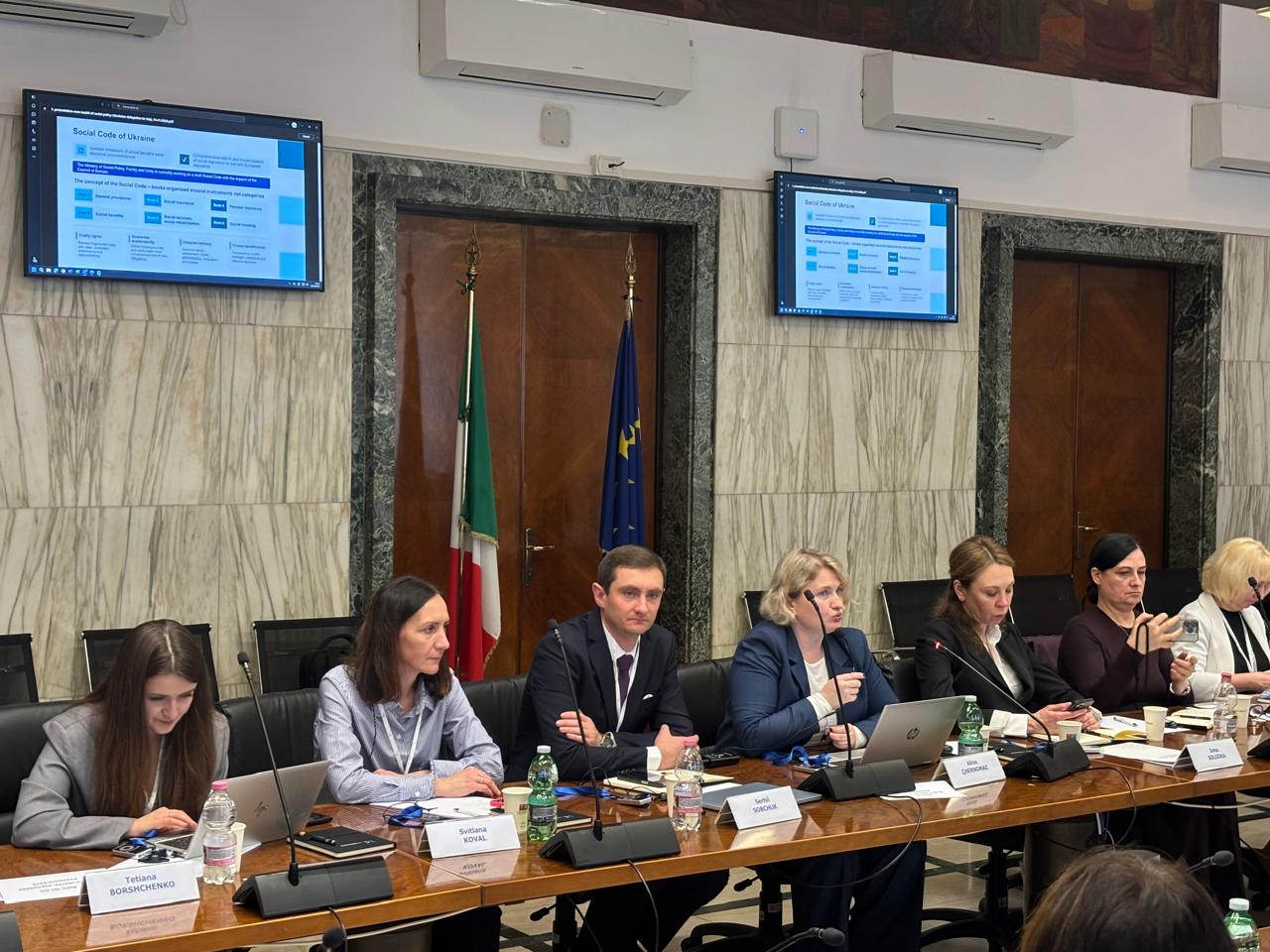
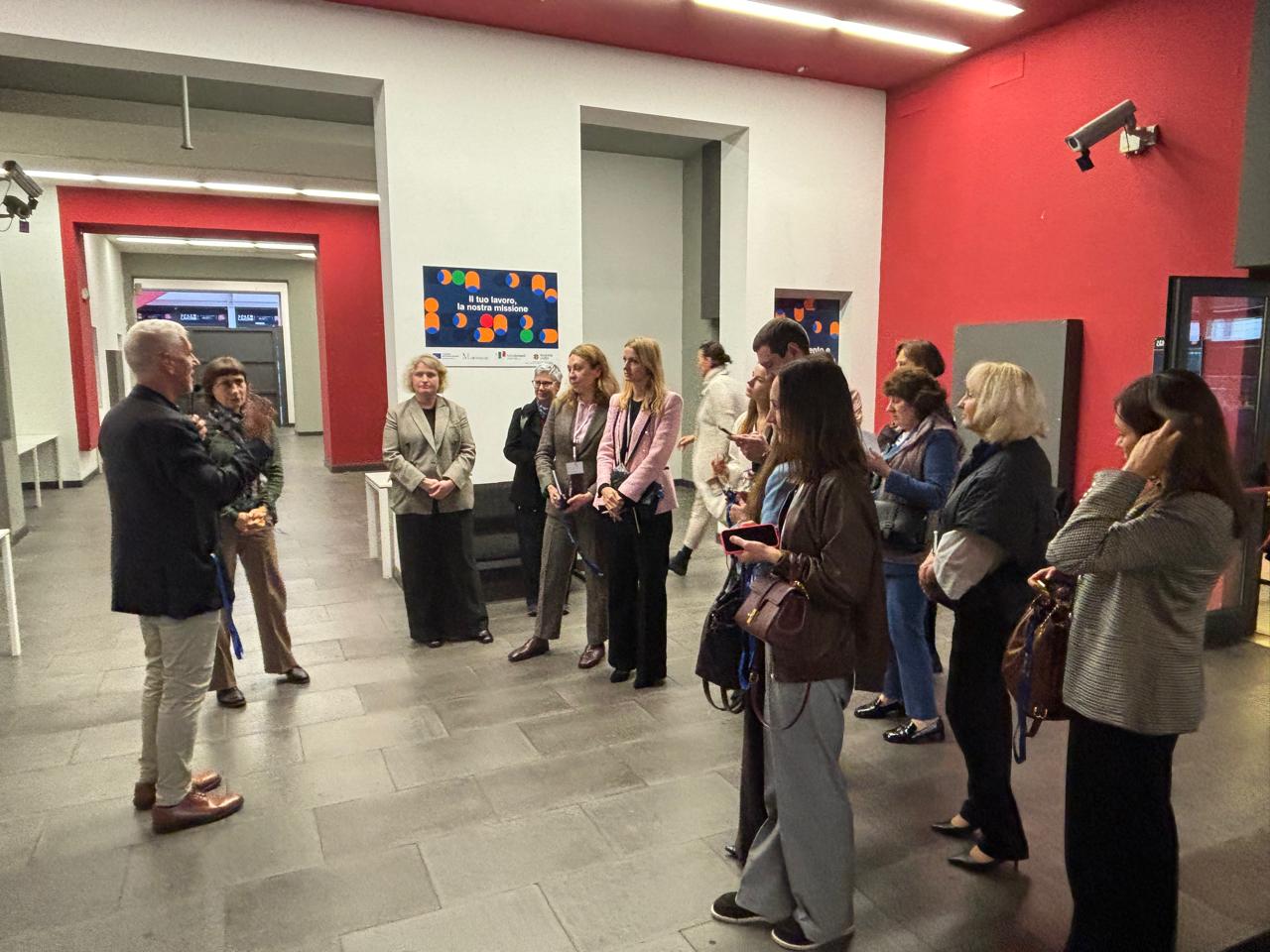
Ukraine is working towards a social protection system that not only helps people cope with difficult life circumstances but also empowers them to overcome these challenges. Central to this effort is the development of a new Social Code, which aims to establish a comprehensive, human rights-based framework that responds to people’s needs while taking into account the country’s financial capacity.
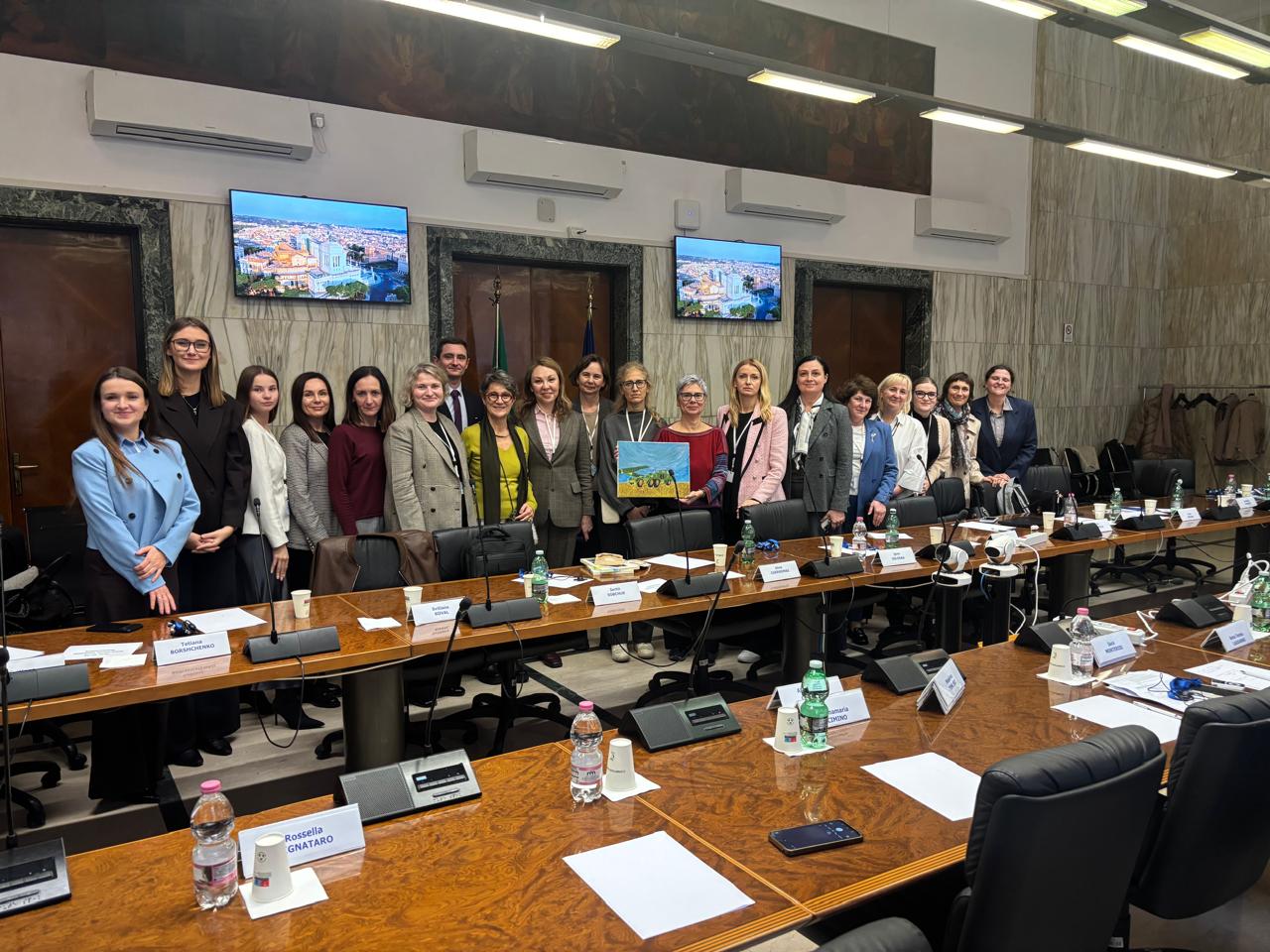
In this context, on 18–19 November 2026, a Ukrainian delegation visited Rome to learn from Italy’s experience in social protection reforms and explore how it could inform Ukraine’s new social policy model.
During the visit, the delegation explored how Italy combines financial assistance with personalised support to address poverty and social exclusion, particularly through two recently introduced measures – the Social Inclusion Allowance (ADI) and the Support for Training and Employment (SFL).
At the Italian Ministry of Labour and Social Policies, discussions focused on minimum social guarantees, eligibility criteria for social support, household needs assessments and individual case management for ADI beneficiaries. Particular attention was paid to digital solutions that simplify access to social benefits, reduce administrative barriers and facilitate information exchange between institutions.
The delegation also learned how social services and employment centres work together to help people, including persons with disabilities, overcome barriers to employment through personalised support, skills development and training opportunities.
Representatives of the Tuscany Region shared their experience of co-operation between national, regional and local authorities in ensuring equitable access to quality social services, regardless of where people live. The National Institute for Public Policy Analysis presented how data and evidence are used to evaluate the effectiveness of reforms and their impact on employment and social inclusion.
Italy’s experience will inform the further development and implementation of Ukraine’s Social Code, particularly in combining targeted financial assistance, individual needs assessments, social services, digital tools and employment support.
The Ukrainian delegation included representatives of the Ministry of Social Policy, Family and Unity of Ukraine, the Verkhovna Rada Committee on Social Policy and Protection of Veterans’ Rights, the Ministry of Economy and Environment of Ukraine, the Office of the President of Ukraine, the Office of the Ukrainian Parliament Commissioner for Human Rights, and national experts working on the draft Social Code.
The study visit was supported by the Council of Europe project “Strengthening the Social Dimension in Ukraine”, implemented by the Council of Europe under its Action Plan for Ukraine 2023–2026 “Resilience, Recovery and Reconstruction”.