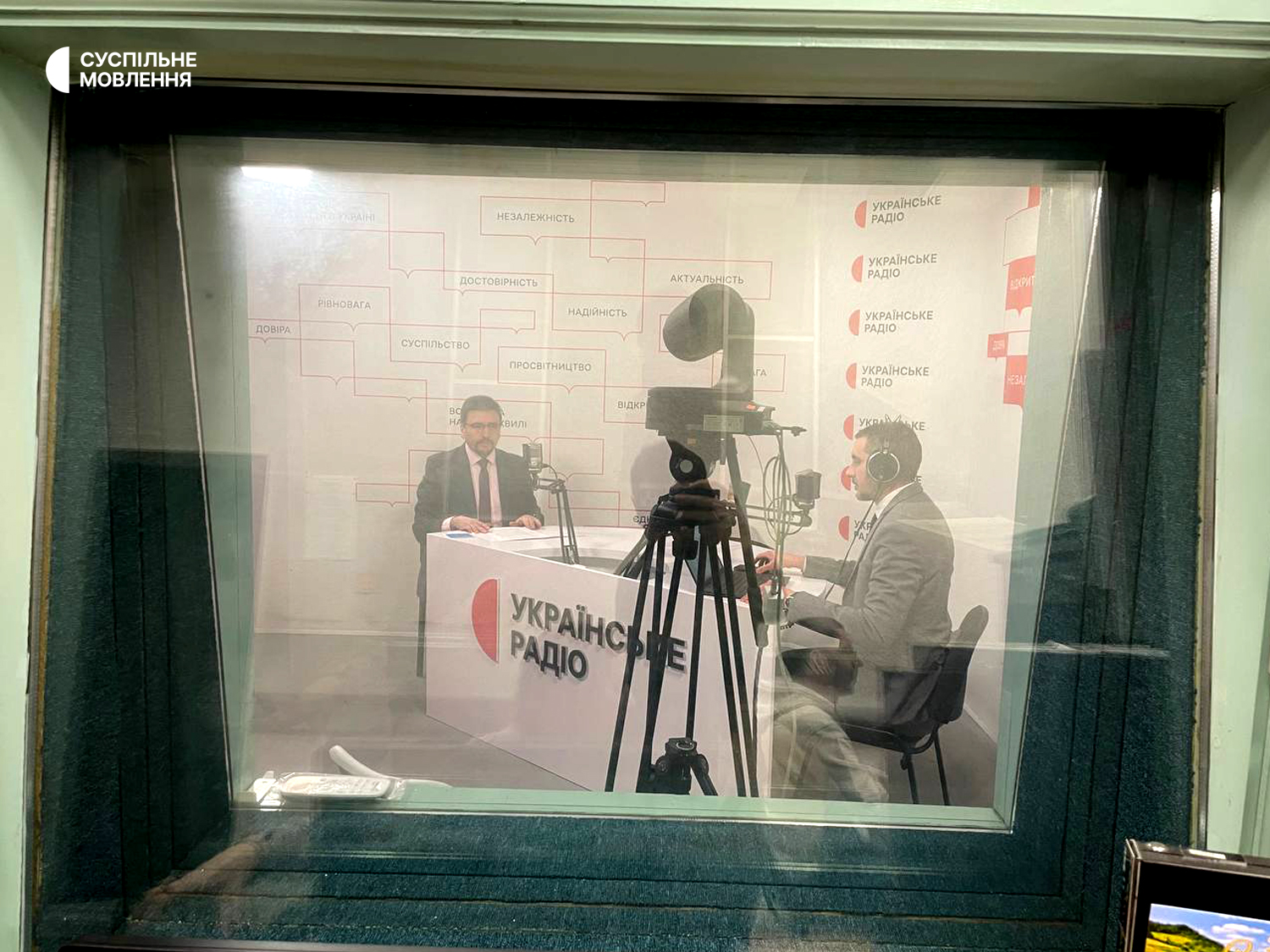
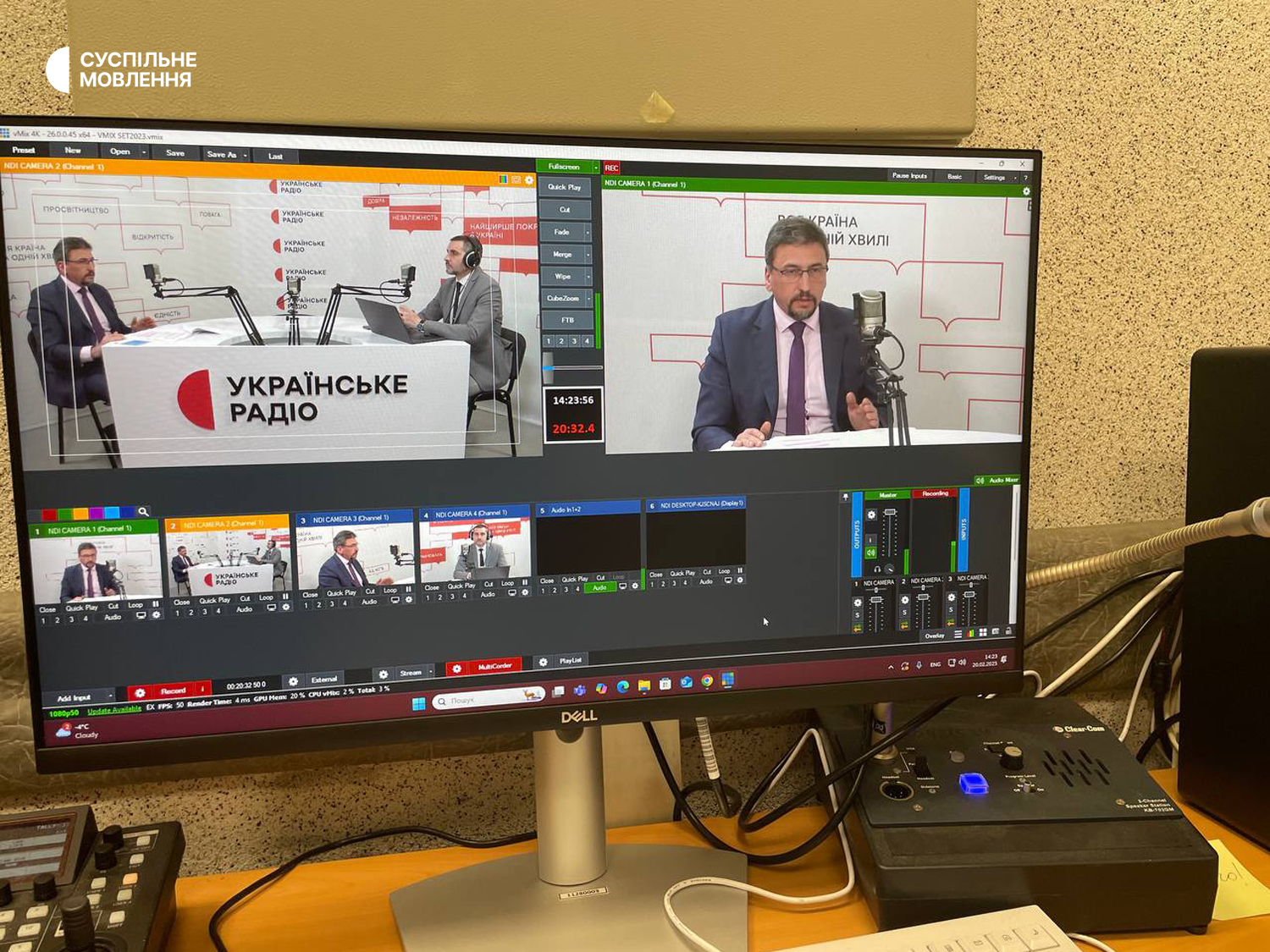
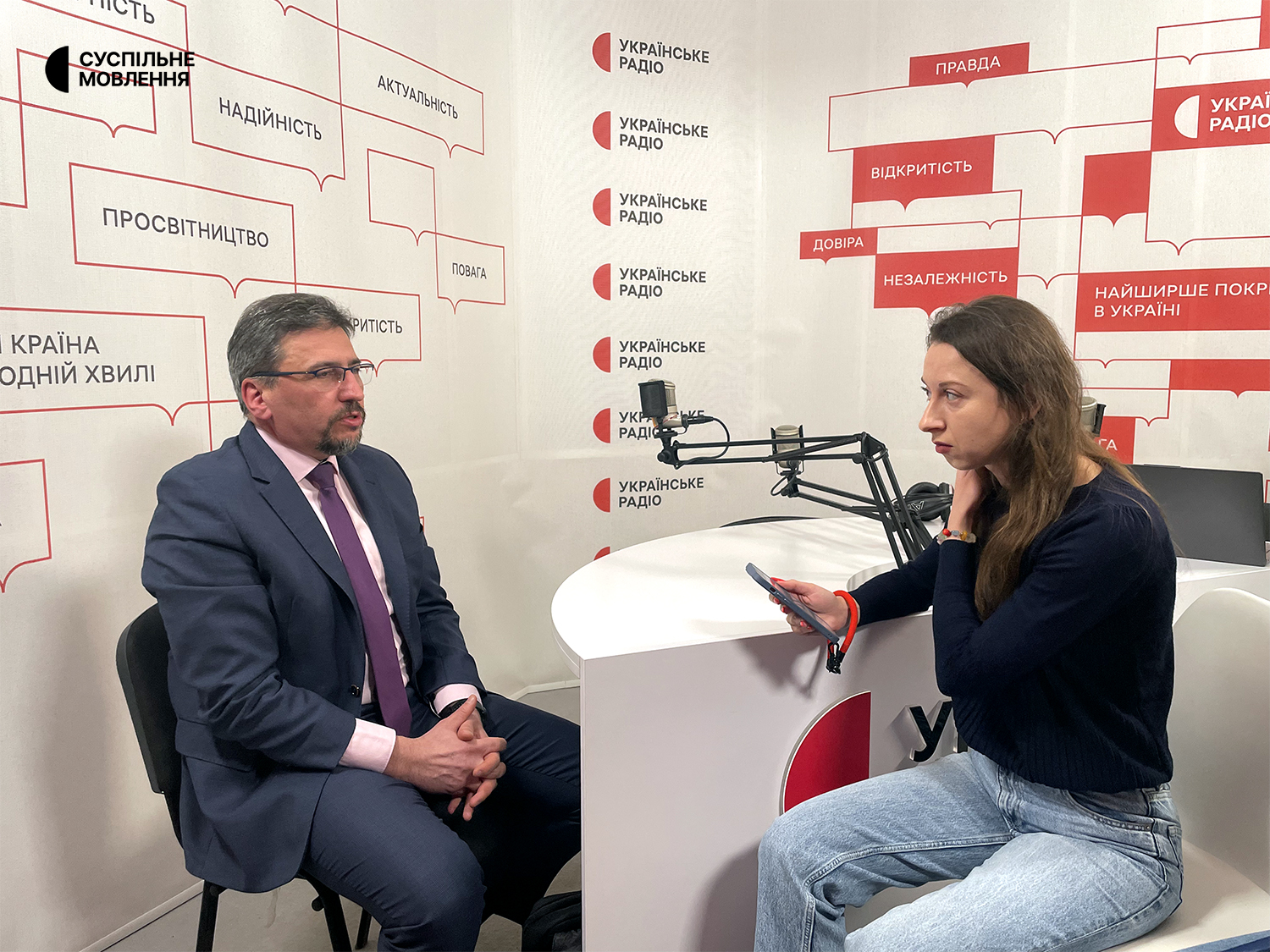
Maciej Janczak, Head of the Council of Europe Office in Ukraine, visited Suspilne Ukraine, spoke about key threats to information security, the role of public broadcasters in the world, and the systematic cooperation of the Council of Europe Office with Suspilne Ukraine. Maciej Janczak also gave an interview to Ukrainske Radio.
In your opinion, what are the most dangerous threats to information security today?
First of all it’s disinformation which is shaping the situation in the world. It's reaching different audiences, starting from very young people, who are really susceptible to taking this distorted information as the truth. They do not know how to verify the information yet. And this is also true for the people who have not been dealing with modern technology for their whole lives, and perhaps the people who are older, who have not been using the internet or AI for the longer parts of their lives. So they are very susceptible to these threats of treating disinformation as a reality without having the means of fact-checking and verifying the information.
Also I think we should really be careful on how we look at artificial intelligence. This is a tool as any tool which can be used for the benefit of the society or the human race in general, but it can also be used as a very dangerous weapon. So this is very important to clarify and to use it in a transparent but controlled way, which respects human rights, the right to privacy for example. And this needs to be done in an organised and orderly way.
For example, now we have the Framework Convention on Artificial Intelligence [and human rights, democracy and the rule of law], which is a new mechanism created under the auspices of the Council of Europe. We are encouraging member states, and Ukraine as well, to ratify it. We hope it will also help to deal with these threats you are asking about.
And, of course, another threat, currently very widespread, is propaganda and the work of different troll farms, which are reaching large audiences and constitute a very serious threat, especially in the situation of a country holding elections. We have seen examples in the recent past of this becoming a very serious threat to the stability of democracies in different countries.
Why do you think it’s important to have a public broadcaster in Ukraine?
It's important to have a public broadcaster everywhere, not only in Ukraine. I think it's important to have a broadcaster that is delivering balanced, objective, well verified, well structured material to the public. It's a broadcaster that is independent and has the highest standards of journalism in their activities. This is a broadcaster that can provide reliable information that people can rely on, especially in times of these threats which I have just mentioned, namely, fake news, distorted information which is likely to influence the functioning of societies.
A public broadcaster should serve as an example, setting the standard for how independent media functions in a country. To achieve this, adequate financing is necessary. And that's why a public broadcaster needs to be well financed, preferably from the state, but also needs to be independent from the state. This is an important balance which needs to be kept.
How do you assess the work of Suspilne after the beginning of the full-scale war?
Suspilne Ukraine is traditionally our partner. I don't want to say it's our baby, that would be an exaggeration, but we are definitely among those who have supported the creation of Suspilne. And we know that Suspilne has faced several challenges, but I think it came through with success, being able to deliver different types of content for different groups.
I realised how many channels you have, not only on television but also on radio. You are active on the internet, your relations with the European Broadcasting Union are also important. I've been trying to find more and more information about Suspilne and then I realised how important its work is for Ukrainians.
After the beginning of the full-scale aggression, we have seen the creation of the marathon and the operation of different channels which were grouped in this format. And, of course, we also followed how Suspilne decided to step out of this format within the telethon. It's an important step to start creating your own part of the information marathon on Pershyi channel. It's very encouraging for us to see that you managed to function very effectively after implementing these changes. I know that this was also linked to certain financial implications, but you managed to push through.
What you do for Ukrainians is very valuable. You maintain high standards of journalism and independence in your work. It is a pleasure to work with Suspilne and I hope that we will be able to support you in the future.
What would you say is the most effective in our cooperation?
The most effective aspect is that we have established very good working relationships, both with the Suspilne management and at the project level. We have no problem calling each other and explaining what problems we are facing and what areas of support we could provide. I think these working relationships have been established very effectively.
As long-standing proven partners we know about the situation that we are working in and we know the limitations of our cooperation. We would like to do more but the Council of Europe also has limitations, particularly financial limitations. I think our mutual understanding is a big success because we have managed to achieve mutual trust. We are working towards the same goal and working effectively I must say.
The Council of Europe Office in Ukraine systematically provides expert support to Suspilne Ukraine in many areas: development of policy documents; development of human resources; strengthening of organisational direction; promotion of reform; raising public awareness, etc. Since the beginning of the full-scale invasion, the CoE Office has been supporting the technical capacity of Suspilne Ukraine, covering the company's urgent war-related needs. The project “Safeguarding Freedom of Expression and Freedom of Media in Ukraine” is currently underway as part of the Council of Europe Action Plan for Ukraine “Resilience, Recovery and Reconstruction” for the period of 2023-2026.
Suspilne Ukraine is an independent media company with a strong coverage across all platforms: Pershyi, Suspilne Kultura, Suspilne Sport TV channels and a national network of regional channels; Ukrainske Radio, Radio Promin, Radio Kultura, Radiotochka radio stations. Read only verified news on the suspilne.media website, national and local digital platforms. We are broadcasting in the languages of national communities, representing Ukraine at the Eurovision Song Contest, developing the children’s resource Brobaks and teaching the media community at the Public Media Academy. We have Suspilne Mediateka which is a platform of Suspilne Ukraine’s unique video and audio from the 1950s until today. We’re defending freedoms in Ukraine.
Interview by Mariana Khemii
Photos by Dmytro Laskavyi / Council of Europe Office in Ukraine