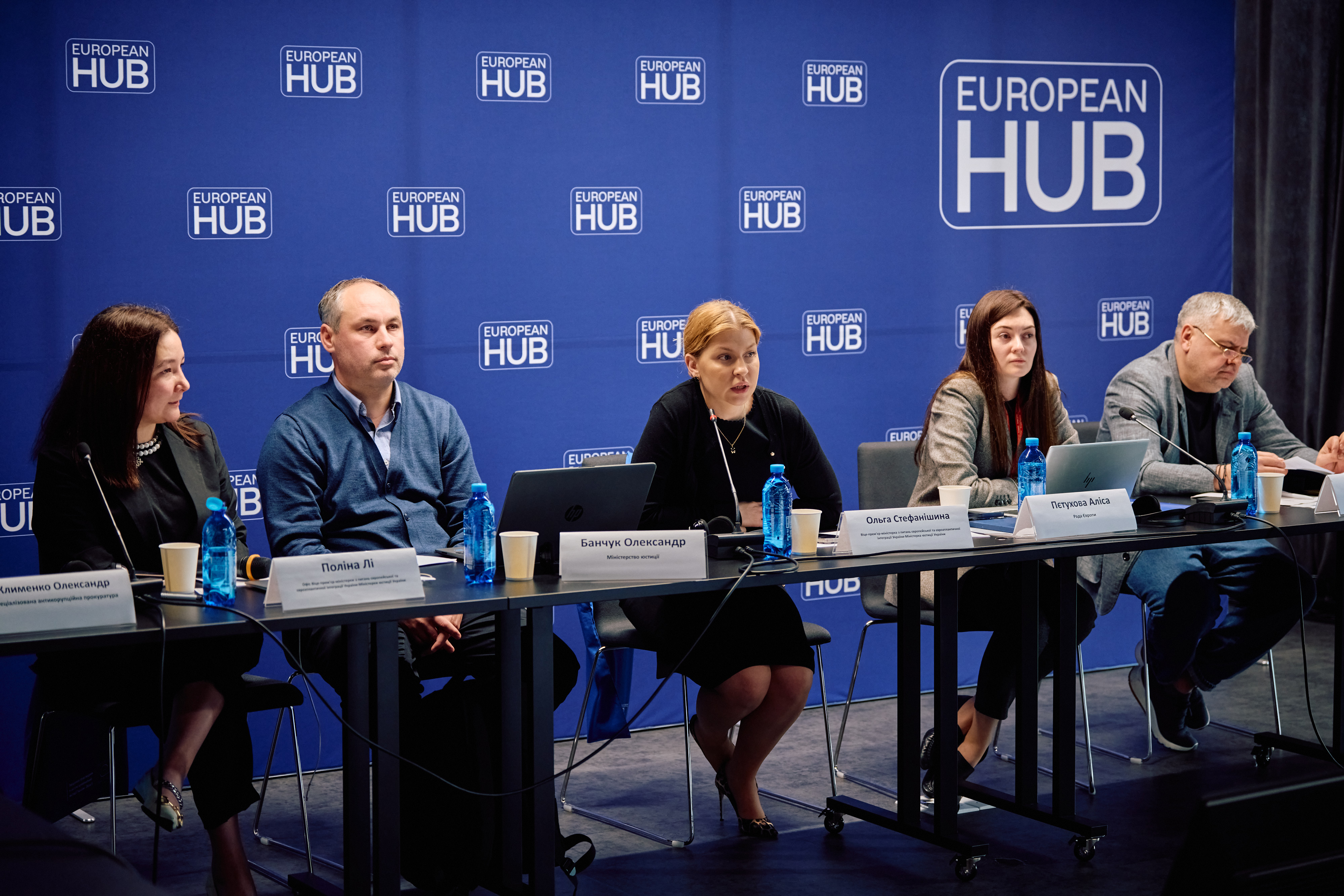
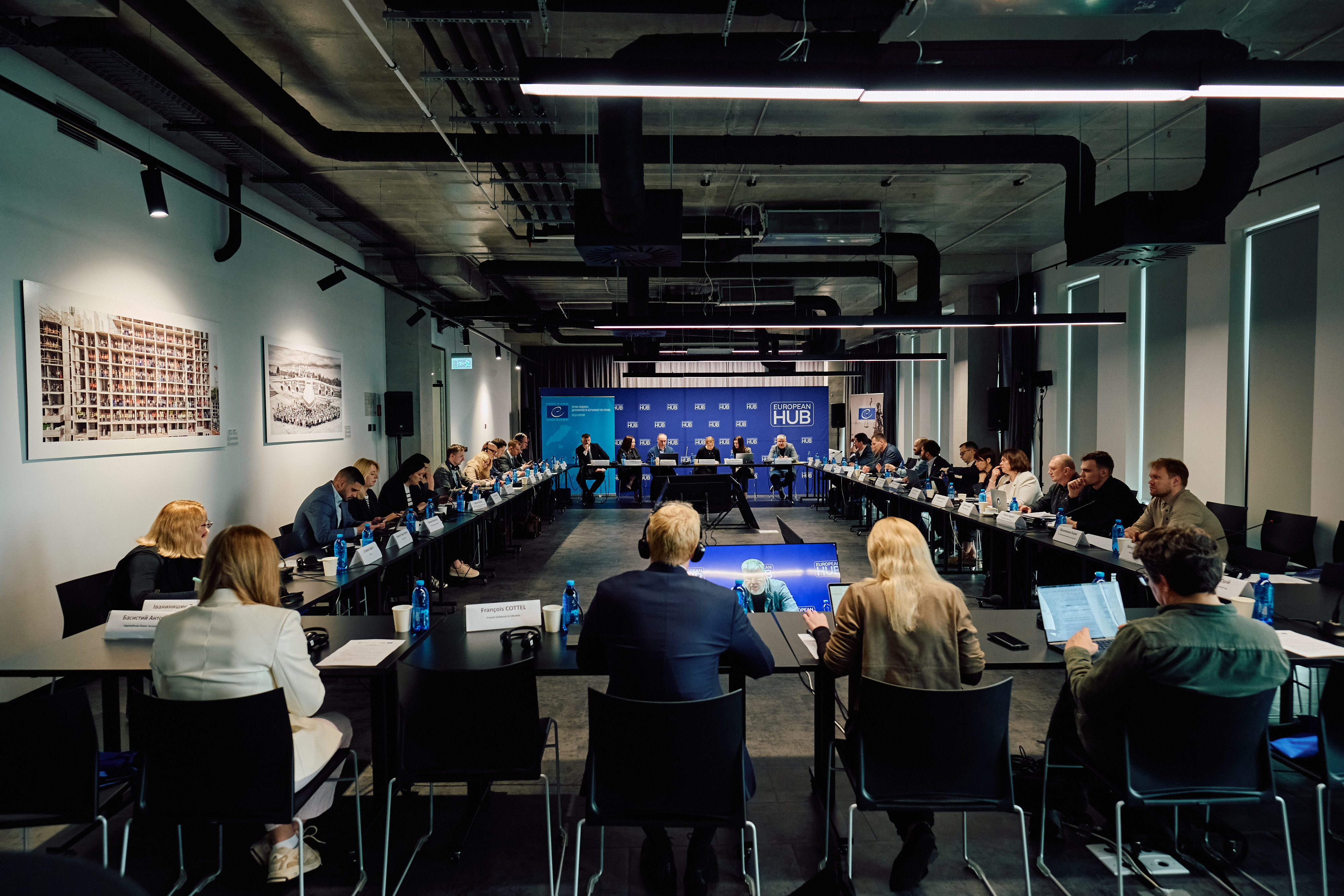
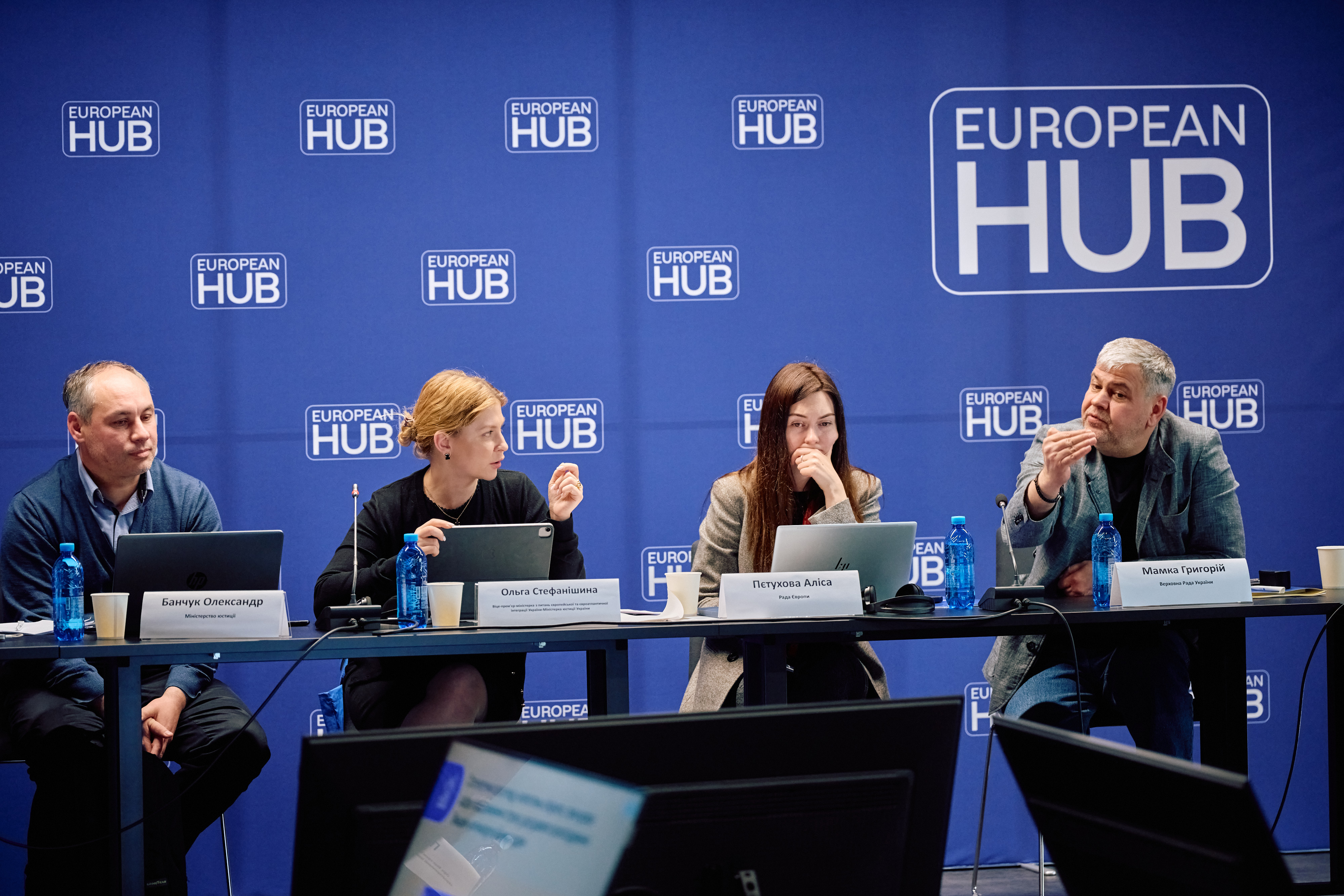
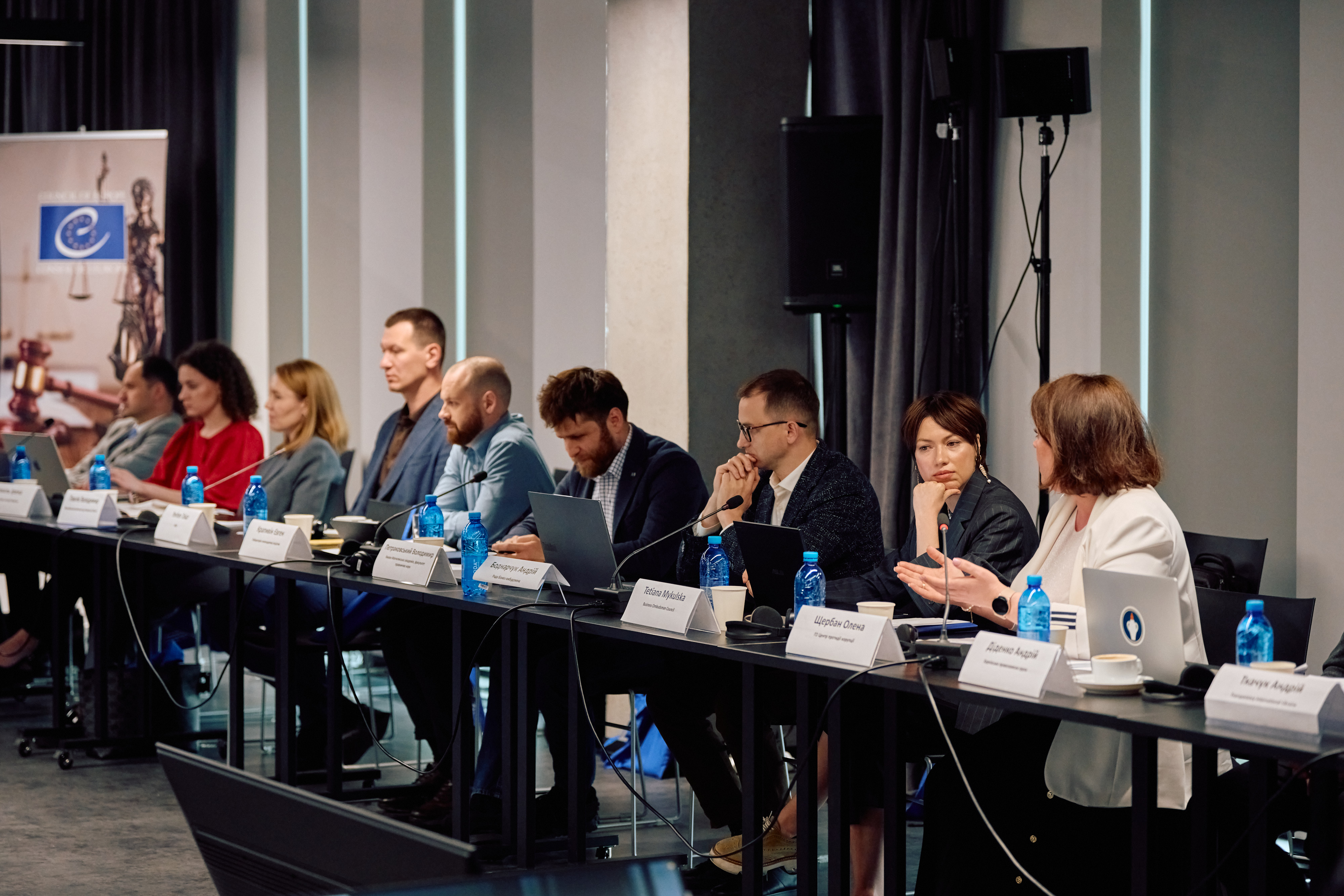
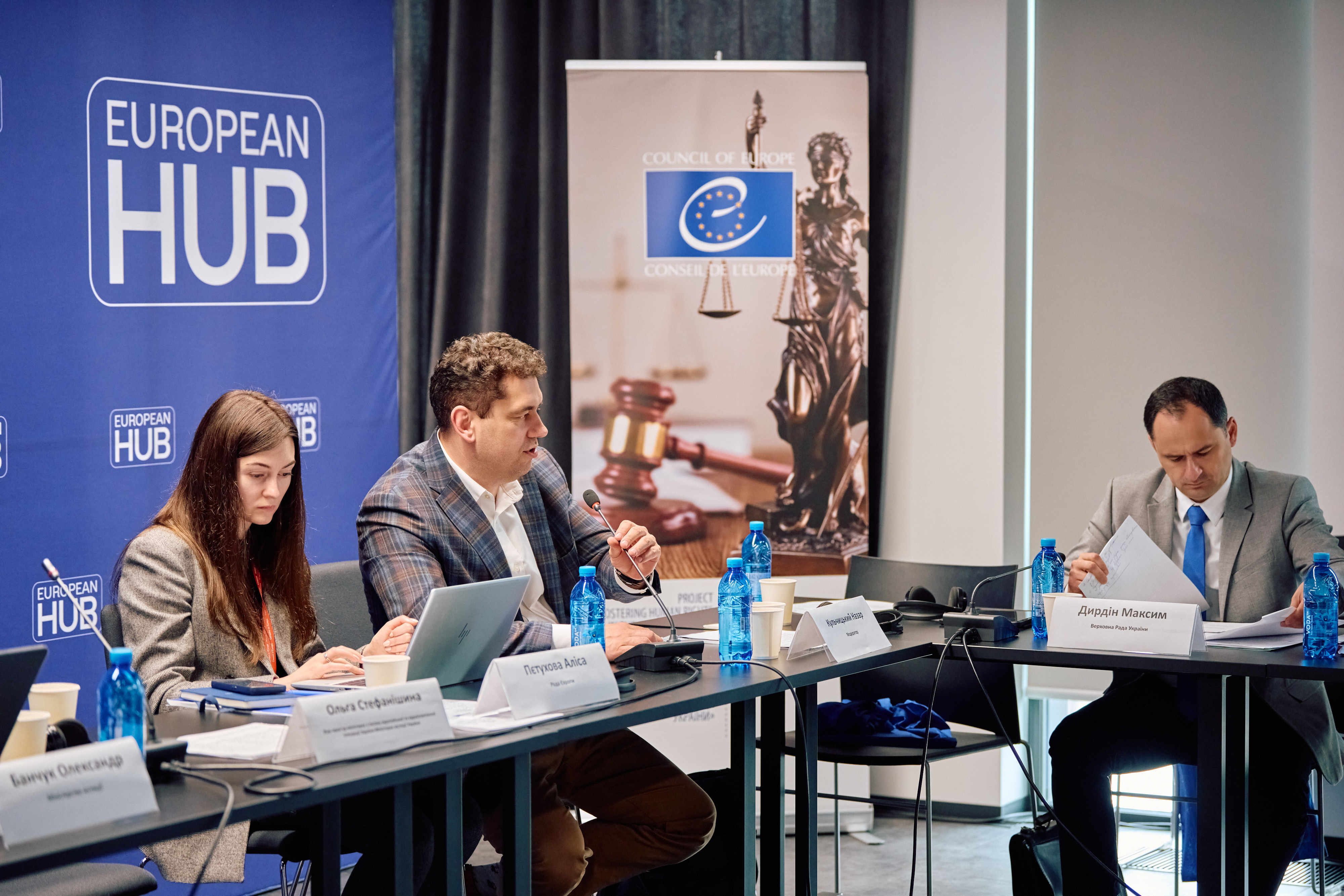
How can an effective and fair criminal proceeding be ensured within reasonable timeframes? This complex but critically important question was the focus of an expert discussion held on 28 May 2025 at the European Hub in Kyiv. The meeting addressed issues surrounding the legislative regulation of pre-trial investigation time limits in Ukraine, how those limits are calculated, and the consequences of their expiration – a topic that directly affects human rights, the efficiency of justice, and the adversarial nature of legal proceedings.
Legal professionals from various fields took part in the discussion, including judges, lawyers, prosecutors, representatives of pre-trial investigation bodies, civil society organisations, members of parliament, representatives of international organisations, technical assistance projects, and diplomatic missions. Among the participants were Deputy Prime Minister for European and Euro-Atlantic Integration and Minister of Justice Olha Stefanishyna, Head of the Specialised Anti-Corruption Prosecutor’s Office Oleksandr Klymenko, Deputy Minister of Justice Oleksandr Banchuk, and members of Parliament Serhii Ionushas, Maksym Dyrdin, and Hryhorii Mamka. This broad representation ensured a diversity of perspectives and enabled a critical rethinking of current approaches to calculating procedural time limits in criminal proceedings.
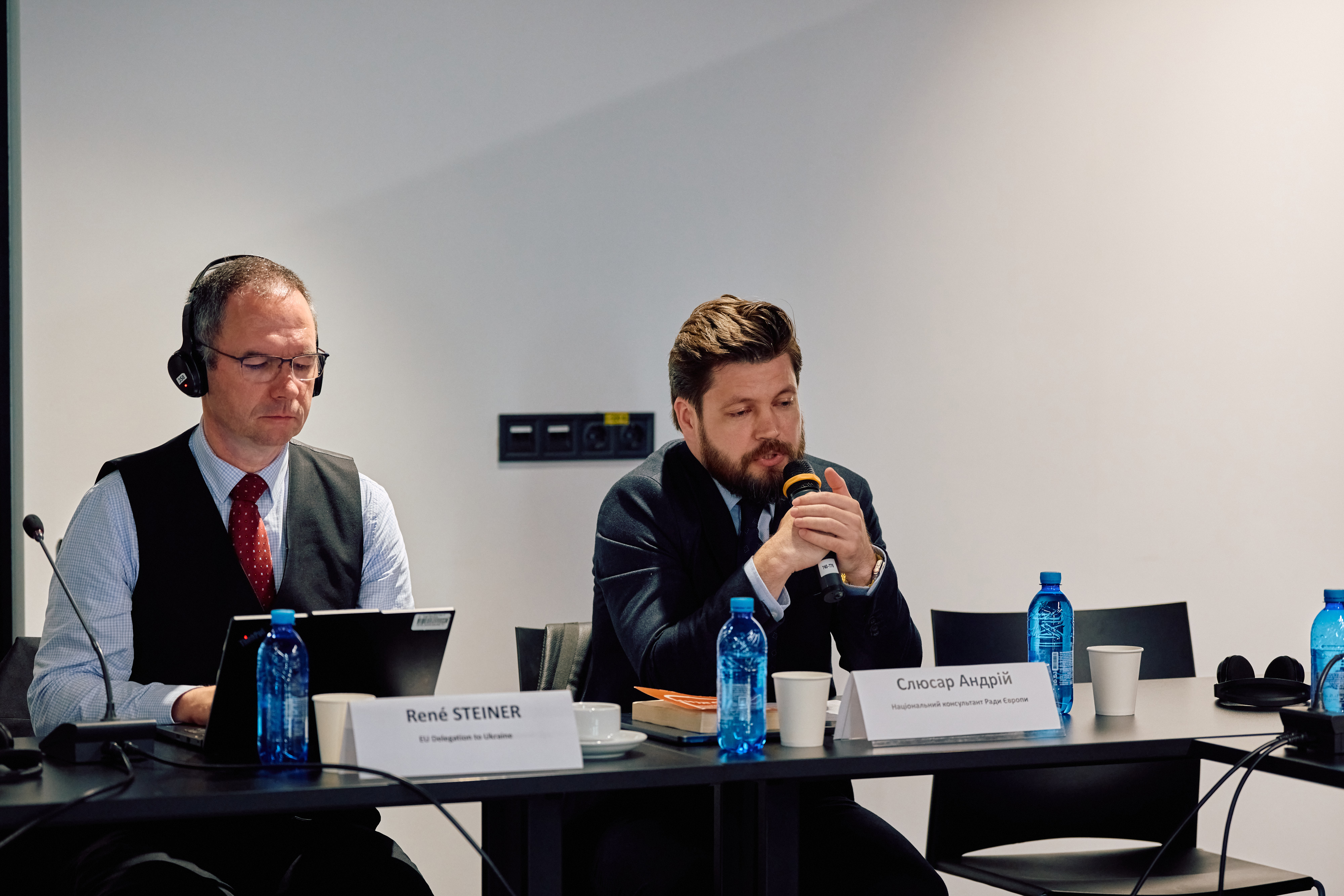
A key basis for the discussion was an analytical paper prepared by Mr Andrii Sliusar, a national consultant of the Council of Europe and practicing attorney.
The document also analysed four alternative draft laws registered in the Verkhovna Rada, which propose significant changes to how time limits are calculated and extended.
Particular attention was paid to potential risks to the balance between effective investigation and the protection of human rights if the control system for time limits is changed. As the practice of the European Court of Human Rights (ECtHR) shows, independent judicial oversight is a cornerstone of impartiality and a safeguard against violations – a point the Court emphasised, for example, in the case of Kaverzin v. Ukraine.
Participants also discussed a strategic question: can the proposed legislative regulation ensure real effectiveness of the criminal process without undermining human rights guarantees? This question is especially relevant given the European standards and Ukraine’s obligations as a member state of the Council of Europe.
This discussion represents another – but important – step toward thoughtful and high-quality reform of the criminal justice system, which must remain focused on the individual and their right to a fair trial.
The event was supported within the project "Fostering Human Rights in the Criminal Justice System in Ukraine – Phase II", which is part of the Council of Europe Action Plan for Ukraine "Resilience, Recovery and Reconstruction" for 2023–2026.