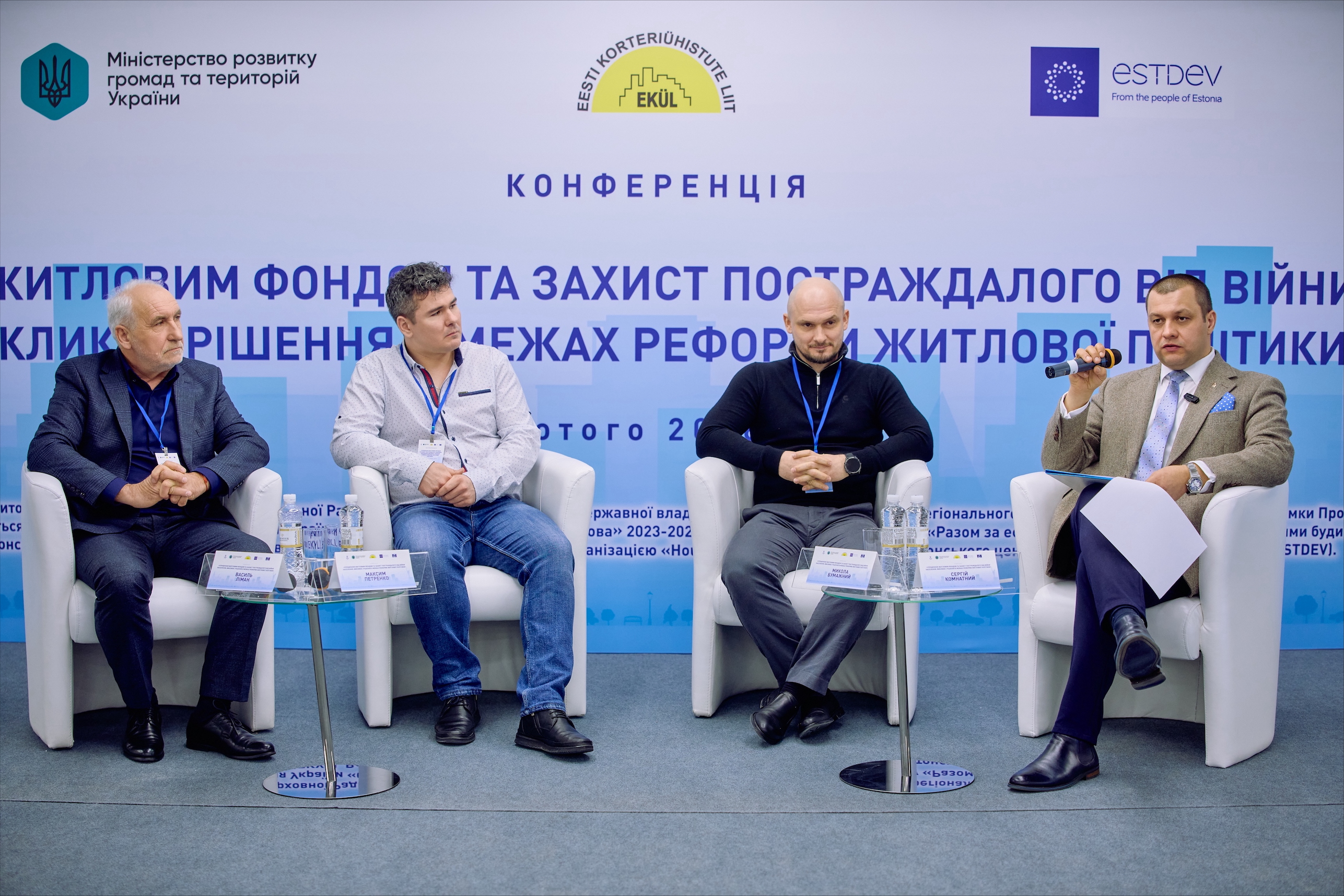
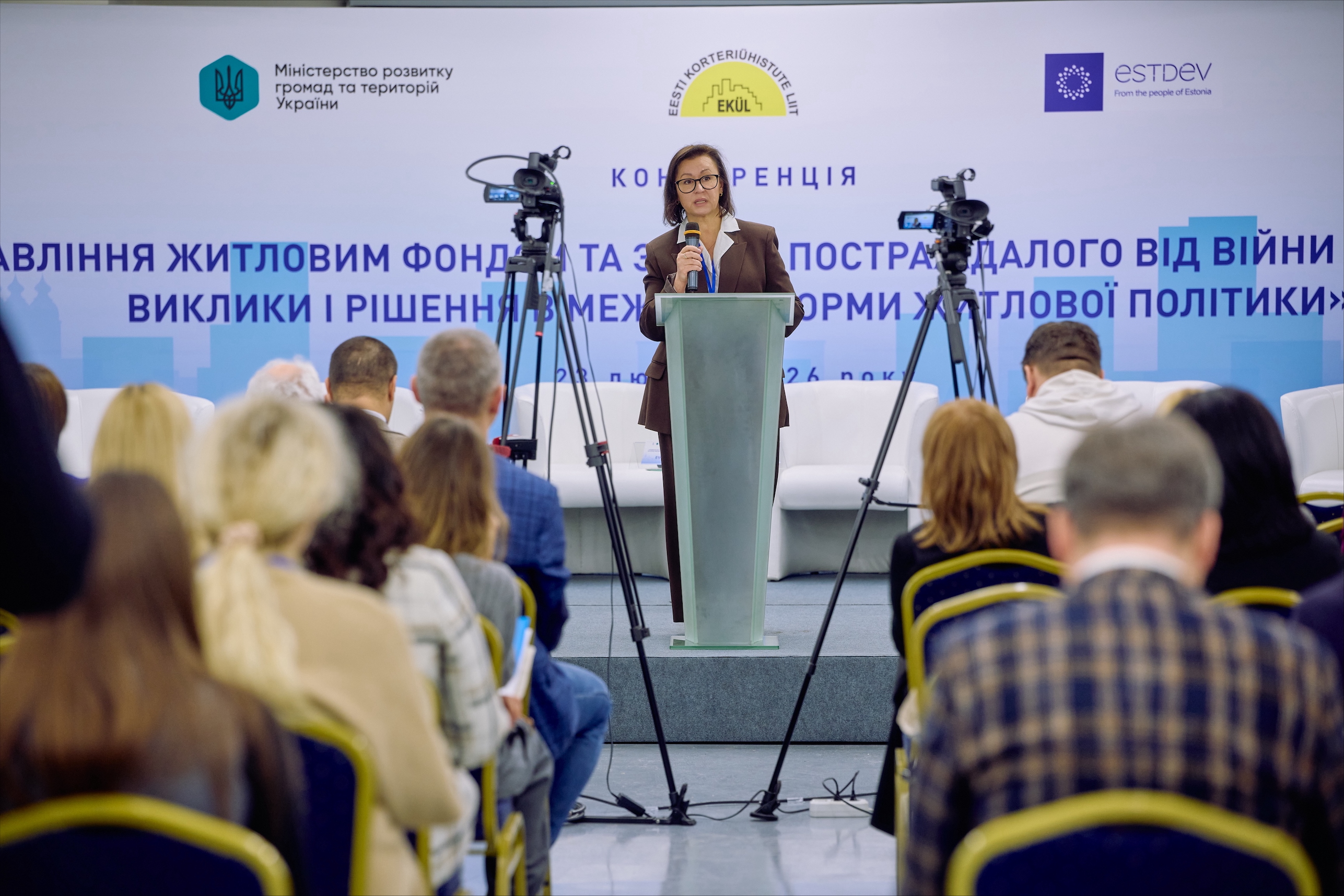
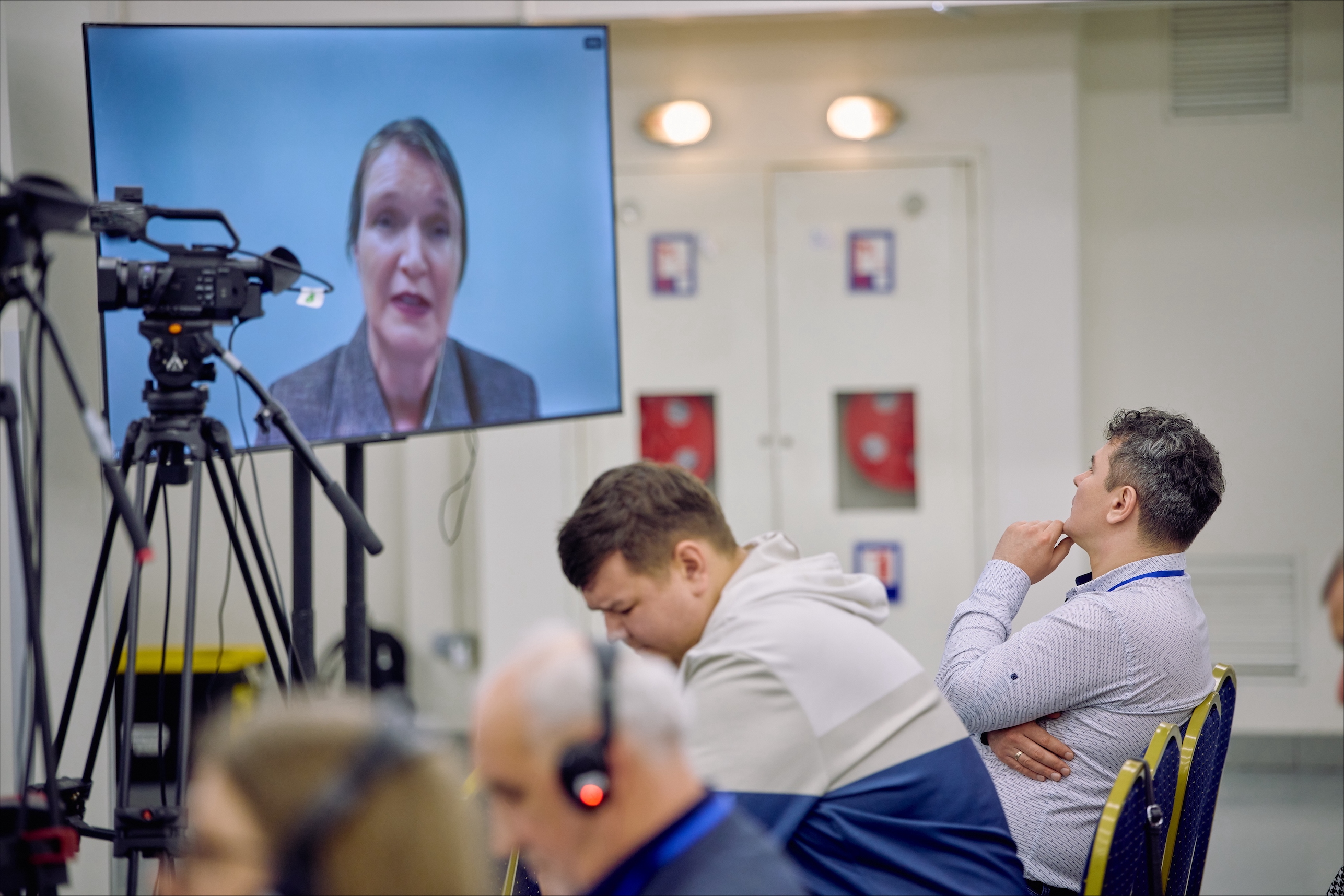
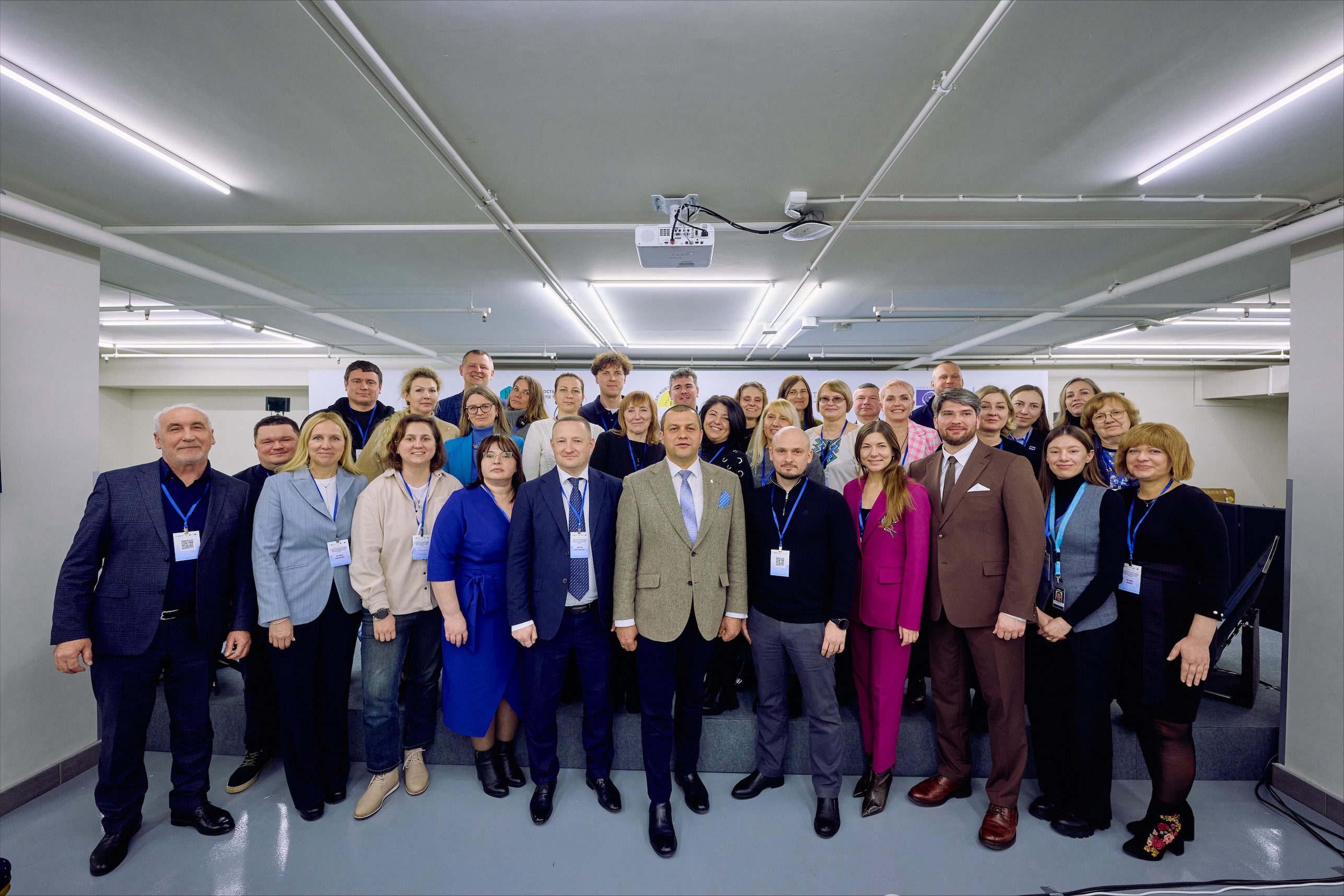
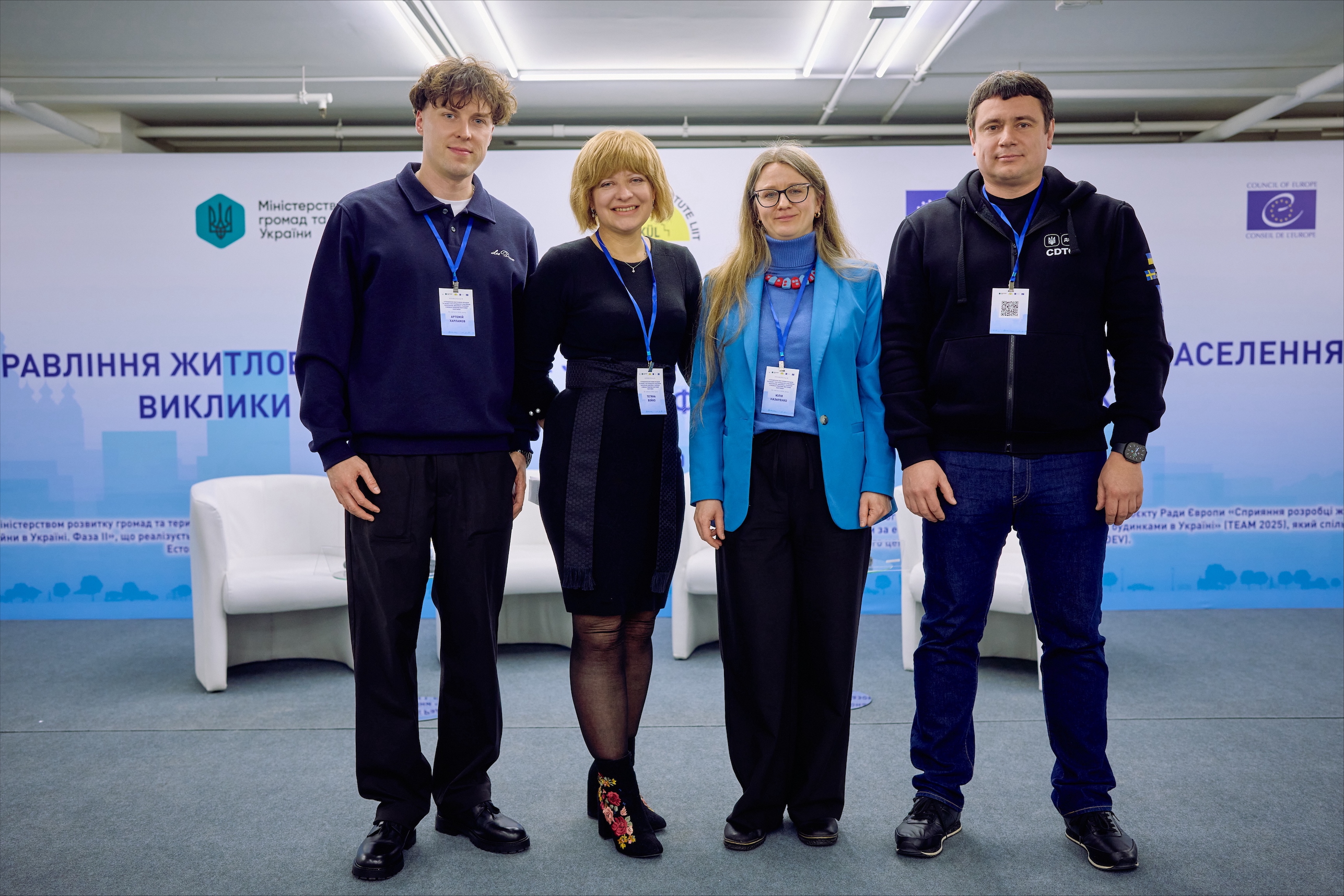
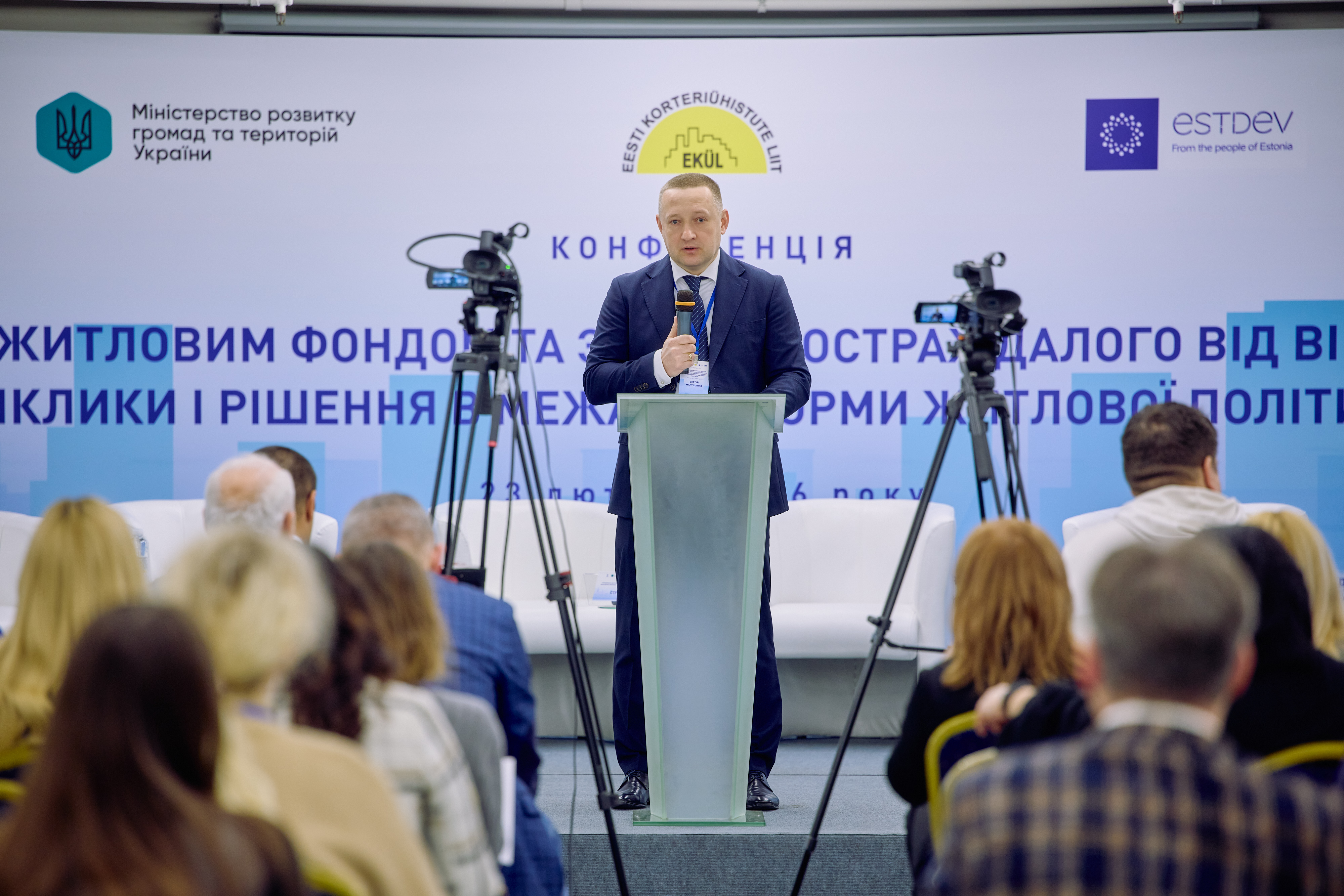
The conference “Management of the housing stock and protection of the war-affected population: challenges and solutions within the housing policy reform” took place on 23 February 2026 in Kyiv. The event served as an important platform for professional dialogue between state authorities, members of the Parliament of Ukraine, local self-government representatives, experts, and international partners on the next steps in reforming housing policy.
A central focus of the discussion was the concept of the draft Law of Ukraine “On housing stock management”, which may become a key element of a systemic reform of housing management.
Opening the event, Nataliia Kozlovska, Deputy Minister for Development of Communities and Territories of Ukraine underlined that «Housing management is a matter of everyday importance. There is a need for a shift in approach, not to piecemeal changes, but a transformation based on quality, responsibility, and a clear understanding of a building’s life cycle».
The draft law proposes a new institutional model for multi-apartment buildings: in each building (except where a condominium owners’ association already exists), a legal entity ─ a “simple partnership of co-owners of a multi-apartment building” would operate under a model statute and represent the interests of co-owners.
The practical rationale of this model is to bring into one framework what is currently fragmented among different actors: defining and registering elements of the building and adjoining infrastructure, accounting for “shared” utility services, making decisions on the form of management, and concluding a contract with a building manager.
A separate part of the discussion focused on establishing a state electronic system for managing multi-apartment buildings. Its purpose is to digitalise management, standardise and automate decision-making procedures, accumulate building-related data, enable interoperability with state registers, and publish information about certified professionals and certification bodies.
During the discussion, Olena Shuliak, Member of Parliament of Ukraine and Chair of the Verkhovna Rada Committee on the organisation of state power, local self-government, regional development and urban planning, emphasised the importance of support for the reform at the local level, as local self-government bodies are well placed to ensure the register is properly populated.
The discussion also addressed the issue of responsibility in managing multi-apartment buildings. The draft law extends responsibility not only to owners, but also to family members and/or users of housing. At the same time, condominium associations and building managers would be released from liability where an emergency situation was caused by actions or inaction of a co-owner (user) within an apartment or non-residential premises. The draft also distinguishes joint and subsidiary liability of co-owners for the obligations of the simple partnership, proportionate to floor area.
A notable update is the introduction of the term “housing user”, intended to replace an outdated notion and to provide responsibilities for users regarding the maintenance of the building (while excluding ownership-related rights, such as participation in general meetings).
Addressing conference participants, Lilja Gretarsdottir, Head of the Department for the implementation of human rights, justice and legal cooperation standards in the Council of Europe, emphasised: «Our support is not only about expertise or legal frameworks. It is about standing alongside a society that is rebuilding not only homes, but trust, stability, and democratic resilience. When we speak about systems and reforms, let us never lose sight of the person whose life depends on them».
The discussion highlighted a clear trend: the state aims to consolidate housing management reform into a single system ─ with new rules on co-owners’ responsibility, a clearer role for building managers, a digital register, and regulation of related land and utility issues. Investing in data accounting, strengthening institutional capacity, professionalising housing management and ensuring transparent rules are essential preconditions for effective recovery and for protecting citizens’ housing rights.
The conference was organised by the Ministry for Development of Communities and Territories of Ukraine in cooperation with the Verkhovna Rada Committee on the Organisation of State Power, Local Self-Government, Regional Development and Urban Planning, with the support of the Council of Europe Project Project “Facilitating housing solutions for the war-affected people in Ukraine. Phase II,” implemented under the Council of Europe Action Plan for Ukraine “Resilience, Recovery and Reconstruction” 2023–2026, and the Ukraine-Estonia project “Together for Effective Multi-Apartment Building Management in Ukraine” (TEAM 2025), jointly implemented by the Estonian Union of Co‑operative Housing Associations (EKYL) and the All- Ukrainian Public Organization “Housing Ukraine,” with the support of the Estonian Centre for International Development (ESTDEV).