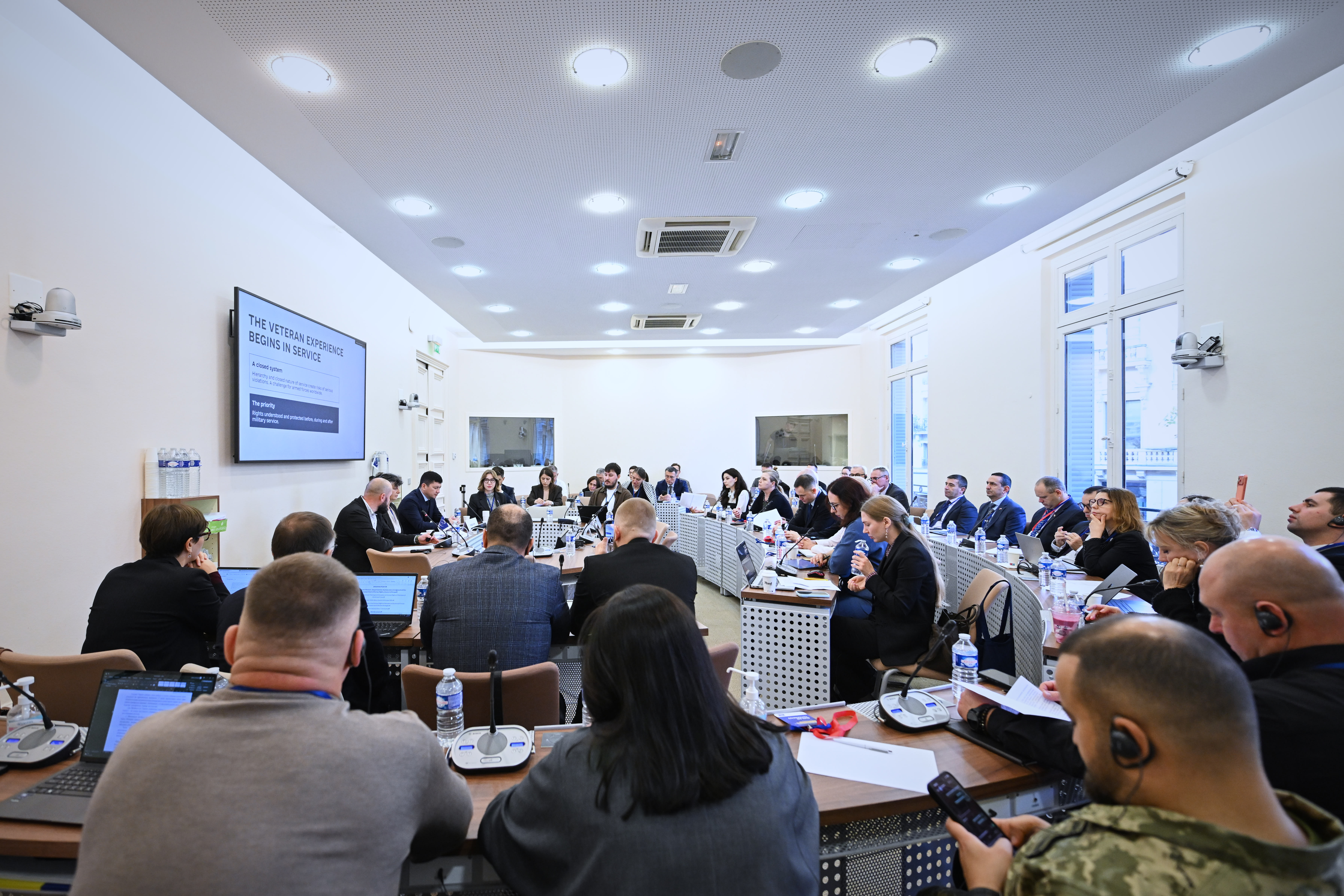
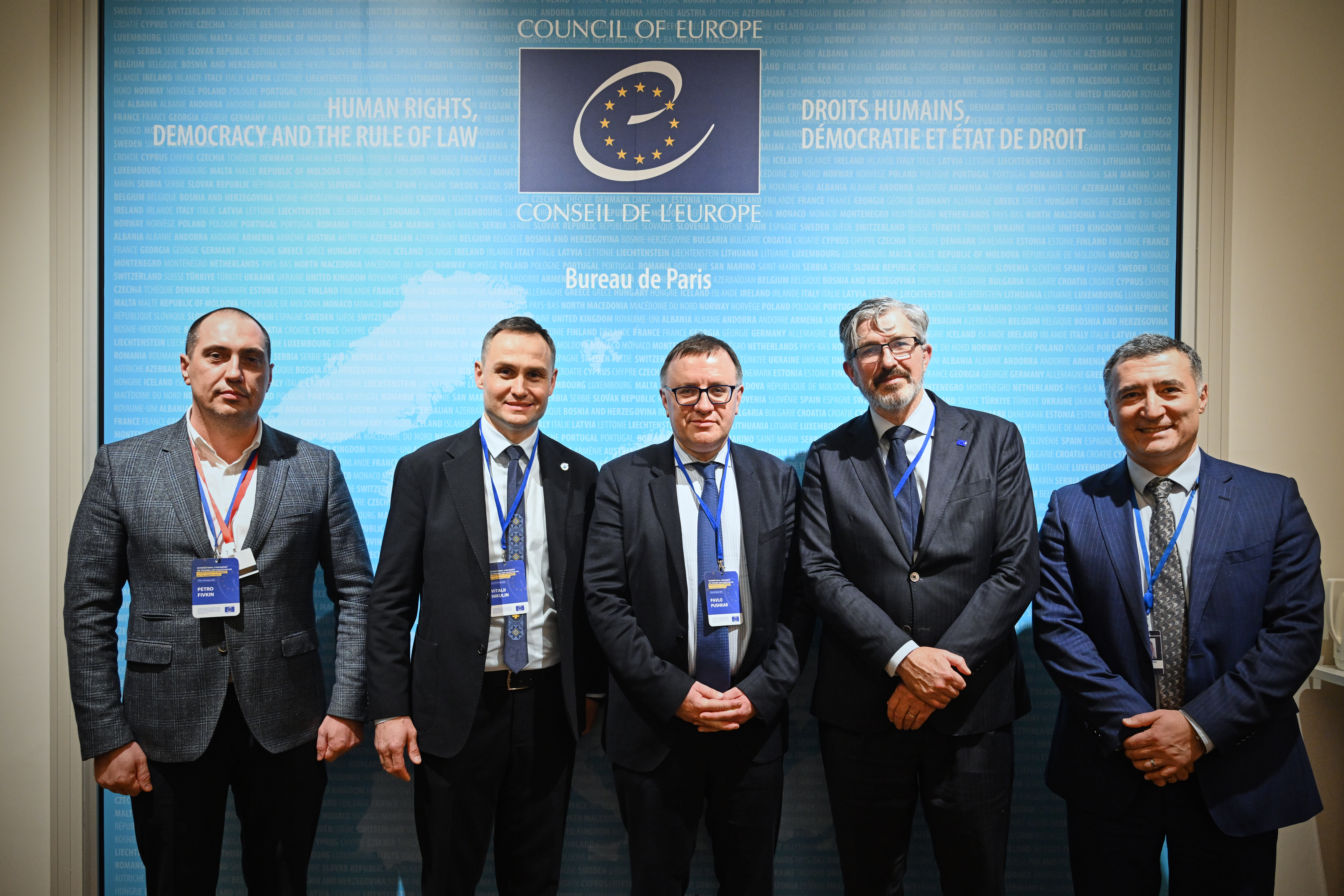
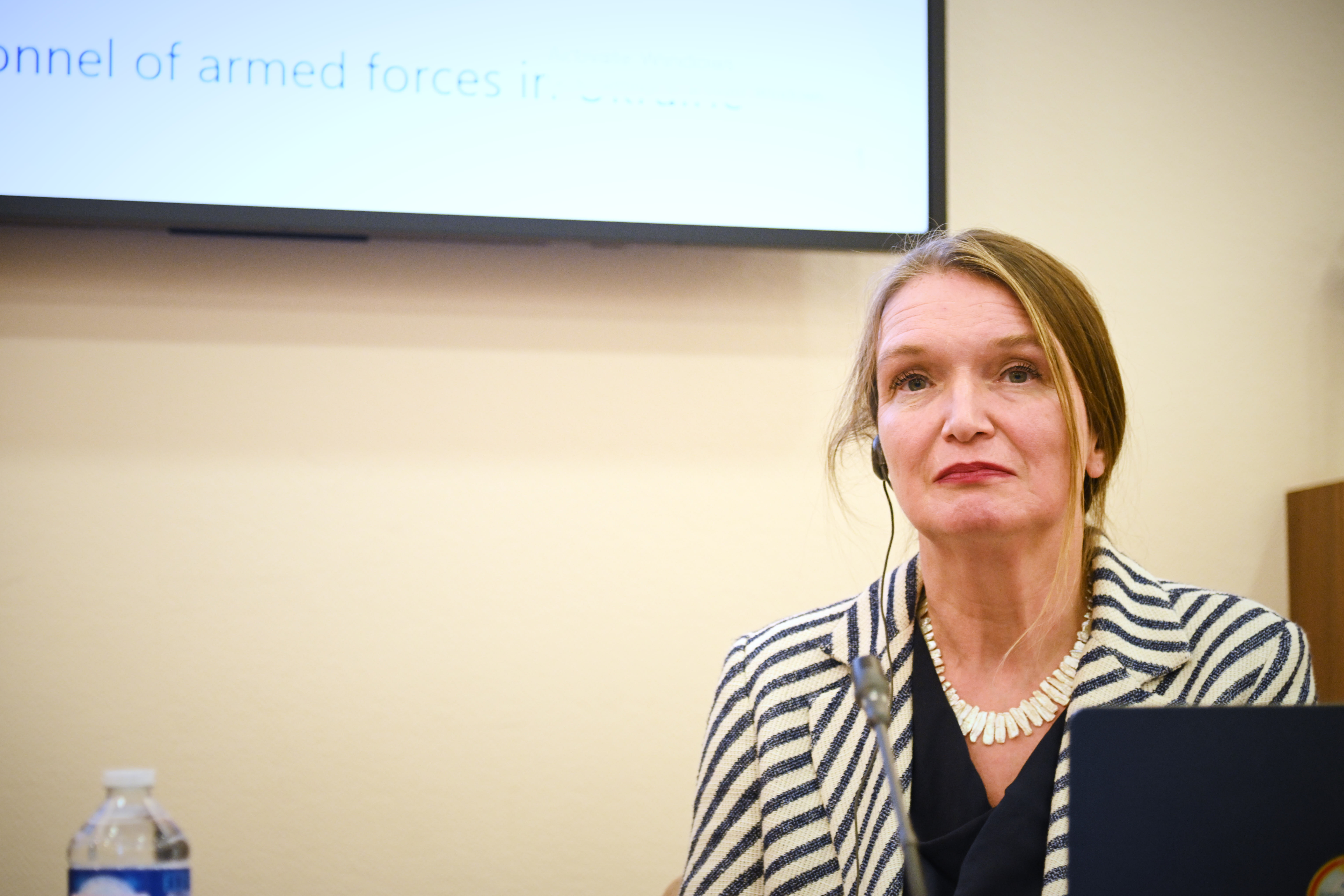
Human rights education should be integrated throughout military service — before, during and after service — to protect the rights of service personnel, support veterans’ transition to civilian life and strengthen the effectiveness of the armed forces. This was a key message of an international conference organised by the Council of Europe in Paris on 28 October 2026.
Human rights protection and military effectiveness reinforce each other, Council of Europe conference highlights
Held within the framework of the project “Rights of Veterans and Personnel of Armed Forces in Ukraine”, the conference brought together representatives of Ukrainian state institutions, military education and training establishments, human rights bodies, international organisations and 20 Council of Europe member states to exchange experiences and good practices in human rights education and training for members of the armed forces.
Clare Ovey, Director of Human Rights at the Council of Europe, highlighted the European standards underpinning the protection of military personnel’s rights:
“The Council of Europe has developed an important body of standards in this area. The European Convention on Human Rights, the case law of the European Court of Human Rights, the European Social Charter, as well as recommendations of the Parliamentary Assembly and the Committee of Ministers provide the foundation for the protection of the human rights of members of the armed forces. A fundamental principle reflected in these standards is that members of the armed forces remain ‘citizens in uniform’. Military service may entail particular duties and certain lawful restrictions, but it does not mean giving up fundamental rights and freedoms”.
Although the conference stems from the Council of Europe’s cooperation with Ukraine, Ms Ovey noted that the challenges discussed are shared by armed forces across Europe. She stressed the importance of exchanging experiences to integrate human rights standards into military education.
Protecting rights during service is essential for veterans’ reintegration
The transition from military service to civilian life begins before discharge. Ensuring that service personnel understand their rights and have those rights protected is therefore essential to effective veterans’ policy.
Vilatiy Kim, Minister for Veterans Affairs of Ukraine, underlined the scale of the challenge and the importance of raising awareness of veterans’ rights:
“Today, there are approximately 1.5 million veterans in Ukraine, and over time, this number could rise to 3 million. Including their families, this amounts to nearly 9 million people. Veterans are not a separate group; they are an integral part of our society. A service member of yesterday becomes a veteran today; for this reason, protecting the rights of those who serve is a top priority for our Ministry. How an individual is treated during their service, and how well-informed they are about their rights, largely determines how successfully they will transition back to civilian life”.
Liubov Halan, Deputy Minister of Defence of Ukraine, reinforced the need for a comprehensive approach that starts with the protection of active-duty personnel:
“We believe that the veteran experience begins during active military service. It is impossible to build a comprehensive veterans’ policy in Ukraine without first ensuring the systematic protection of the human rights of active-duty service personnel. Our priority is to ensure that human rights and fundamental freedoms are fully understood and protected before, during, and after military service”.
She also welcomed the growing recognition of this issue among international partners:
“For a long time, the protection of the human rights and fundamental freedoms of active military personnel remained outside the primary focus of international partners. I am deeply grateful to see this perspective shifting”.
Cooperation and practical education are key to lasting change
The Council of Europe’s project “Rights of Veterans and Personnel of Armed Forces in Ukraine”, launched in 2024, applies a systemic approach to human rights protection through cooperation with 10 partner institutions working on issues related to military personnel and veterans. It aims to ensure that human rights awareness begins before military service, continues throughout service and remains central after discharge, supporting veterans’ transition to civilian life and reintegration into society.
Summing up the discussions, Lilja Gretarsdottir, Head of the Human Rights and Justice Co-operation Department at the Council of Europe, highlighted three key conclusions:
“First, the protection of human rights and the effectiveness of the armed forces are not competing objectives. On the contrary, they reinforce one another. Another important point, that human rights in the military should be understood in a broad and practical sense. This also brings us to the question of what we teach about human rights, and whose rights are addressed in military education. Our discussions have also demonstrated that no single institution can address all these educational needs on its own. Therefore, the cooperation between institutions and countries is equally important”.
The conference provided a platform for exchanging national experiences and good practices in integrating human rights standards into military education, pre-service and in-service training, and the professional development of military personnel.
Contributions came from Ukrainian and European institutions, international organisations and NGOs, including the Geneva Centre for Security Sector Governance (DCAF), the Netherlands Defence Academy, the European Security and Defence College (ESDC), the Military Ombudsperson’s Office in Ukraine, the European Organisation of Military Associations and Trade Unions (EUROMIL), the Office of the Prosecutor General of the Republic of Armenia, the Council of Europe’s Steering Committee for Human Rights (CDDH) and the Council of Europe’s Department for the Execution of Judgments of the European Court of Human Rights.
Their contributions enriched discussions on how education, awareness-raising, effective communication and institutional mechanisms can strengthen the protection of service members’ rights and foster a culture of respect for human rights within the armed forces.
The event was organised under the Council of Europe project “Rights of Veterans and Personnel of Armed Forces in Ukraine”, implemented within the framework of the Council of Europe Action Plan for Ukraine 2023–2026, “Resilience, Recovery and Reconstruction”.