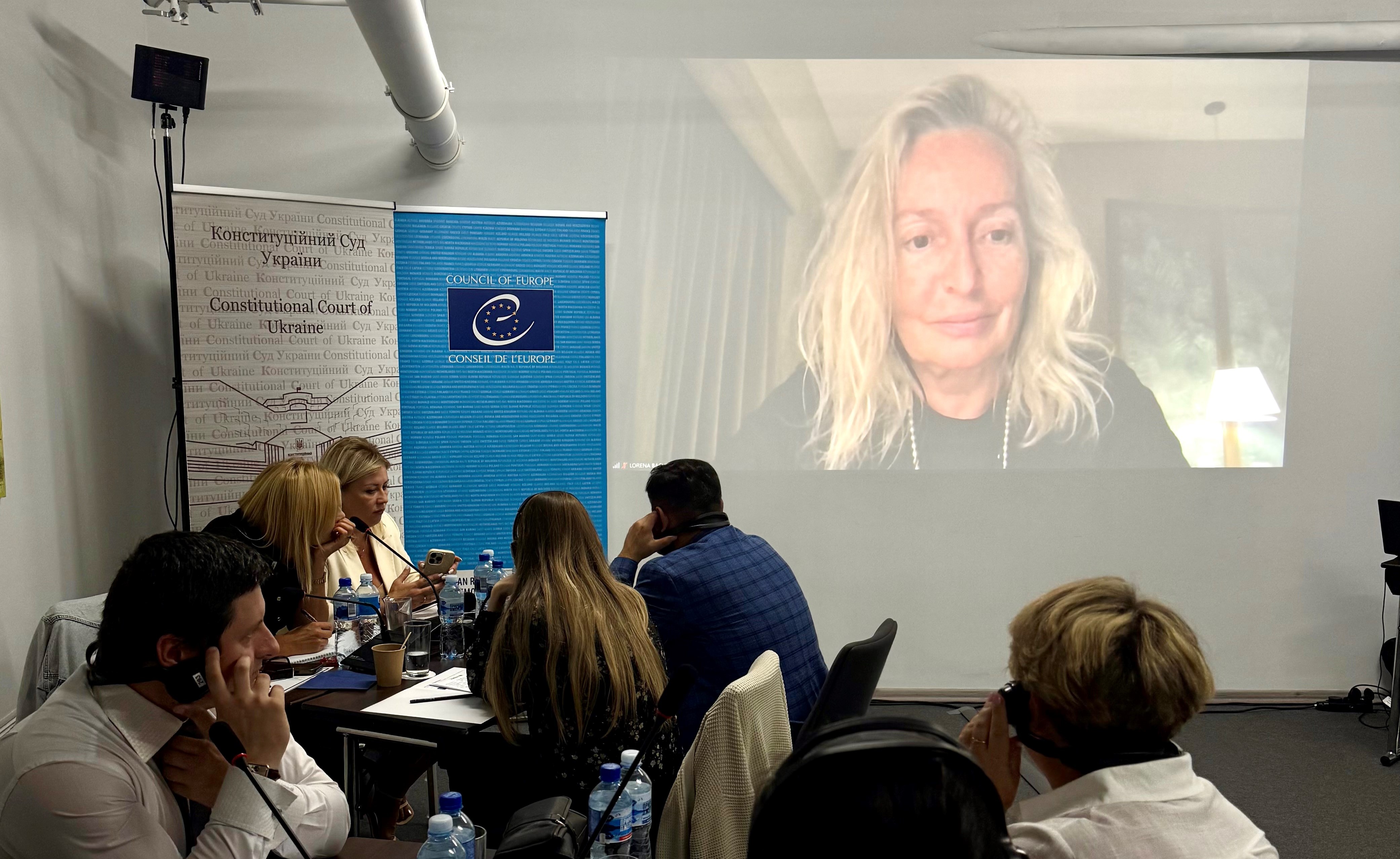
From 7 to 10 September 2026, the Council of Europe Project “Further Support to the Constitutional Justice Reforms in Ukraine” held a four-day series of professional seminars for staff of the Secretariat of the Constitutional Court of Ukraine, bringing together around 250 participants over the four days.
The programme covered four thematic areas of growing importance to modern constitutional justice: the application of European human rights standards in times of war and in the context of national security challenges; the use of artificial intelligence in constitutional justice; the right to housing and other social rights in the case law of the European Court of Human Rights and within the European Social Charter system; and the principles of equality and non-discrimination, together with a human rights-based approach to legal work.
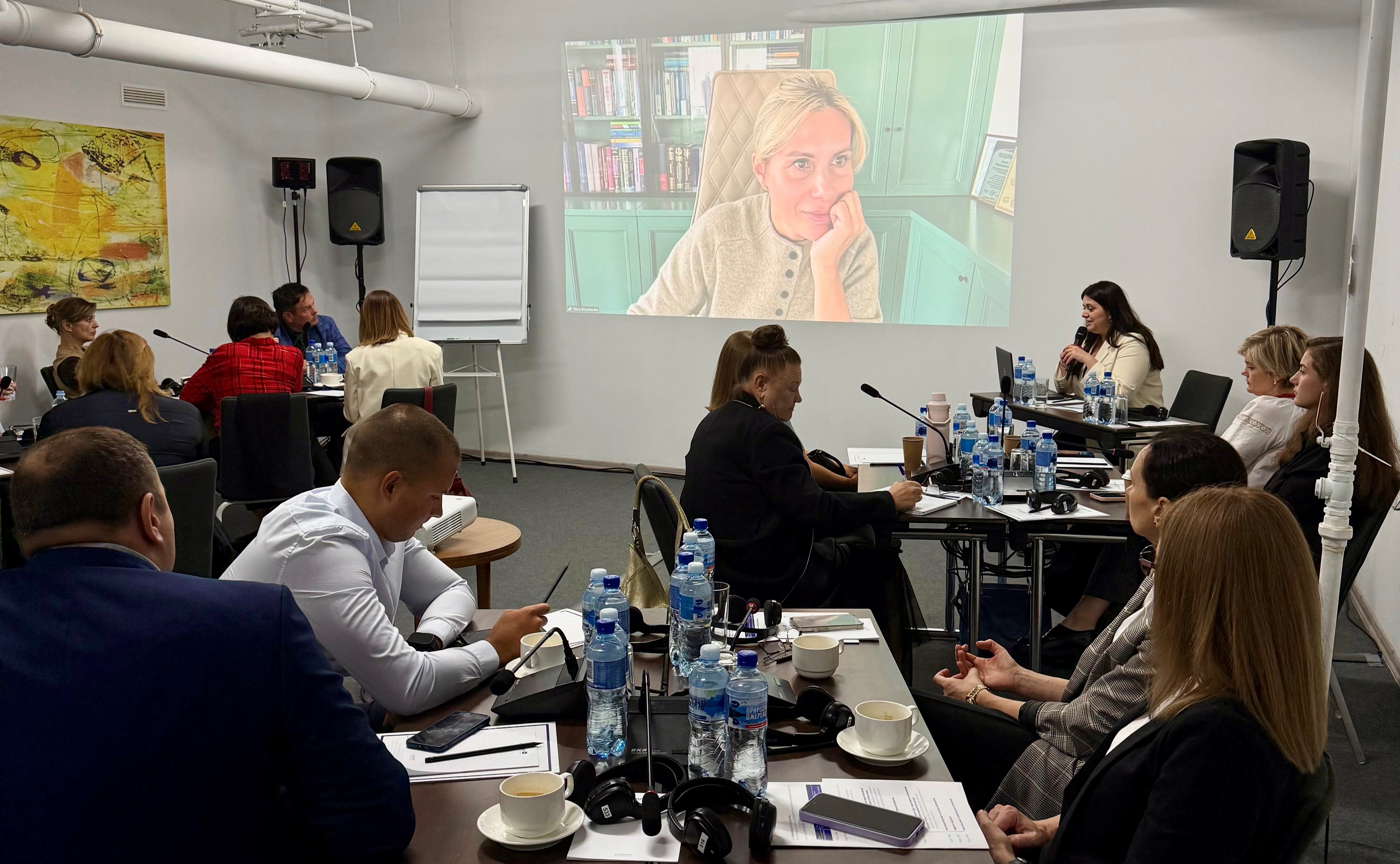
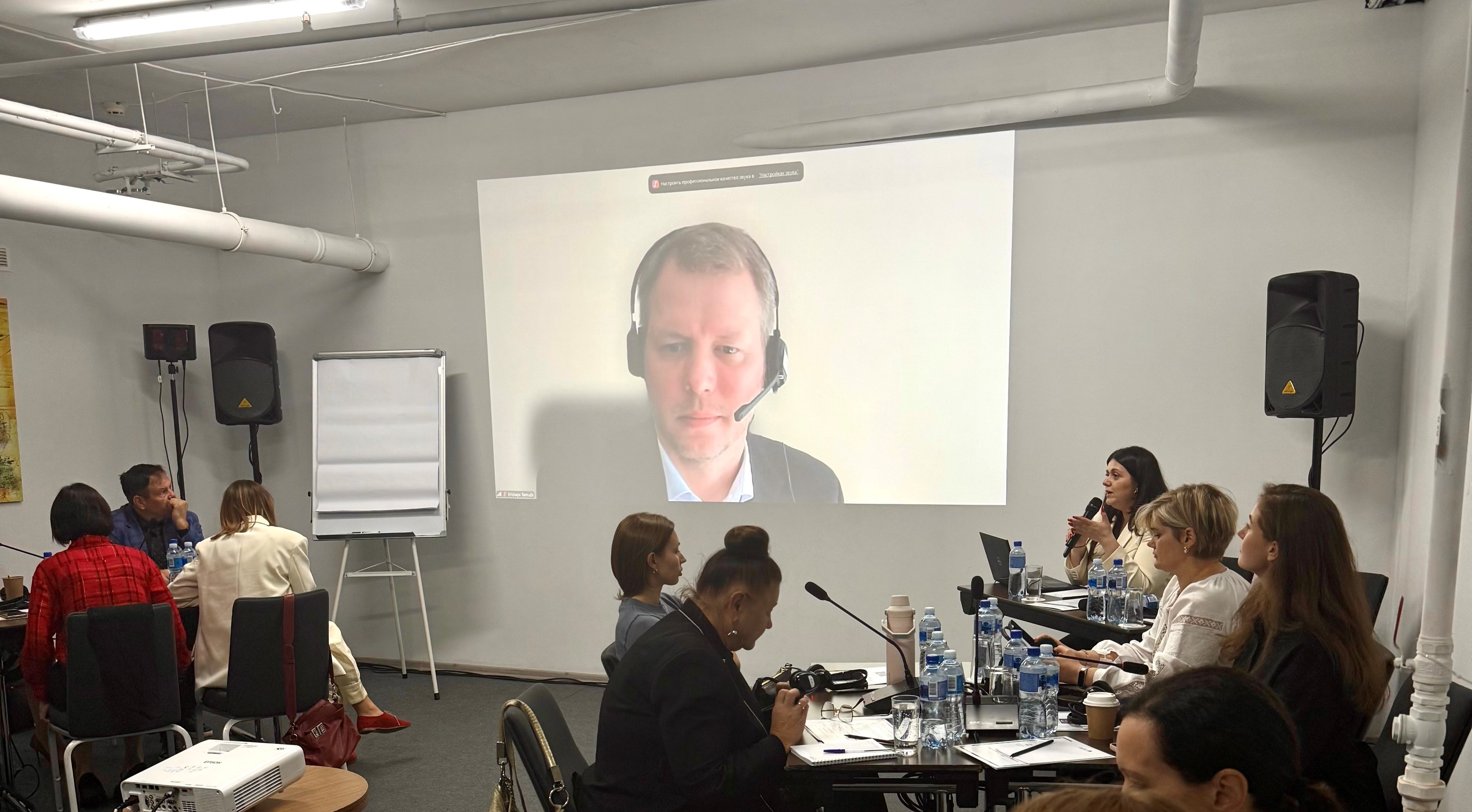
The first day focused on the complex balance between protecting national security and safeguarding fundamental rights in times of war and crisis. Olena Boryslavska, Head of the Department of Constitutional Law at the Faculty of Law of Ivan Franko National University of Lviv and Council of Europe national consultant, presented European approaches to the limits of state discretion, judicial review and permissible restrictions on human rights. Kristaps Tamužs, Head of the Legal Department of the Constitutional Court of the Republic of Latvia and Council of Europe international consultant, addressed the role of the case law of the European Court of Human Rights and European law in constitutional legal reasoning.
The second day was devoted to artificial intelligence, which is playing an increasingly prominent role in judicial systems while raising new questions concerning transparency, accountability, personal data protection and the limits of automation. Kristaps Tamužs presented relevant European standards and the experience of the Constitutional Court of the Republic of Latvia, while Lorena Bachmaier-Winter, Professor of Law at Complutense University of Madrid and Council of Europe international consultant, examined Council of Europe standards governing the use of artificial intelligence, accountability requirements and the importance of maintaining meaningful human oversight in judicial decision-making.
The third day focused on social rights and the right to housing. Olena Boryslavska examined European standards and the approaches of the Constitutional Court of Ukraine to the protection of social and housing rights. Alla Fedorova, member of the European Committee of Social Rights and Council of Europe consultant, presented approaches developed through the case law of the European Court of Human Rights and the European Committee of Social Rights, including the concept of “home”, housing affordability and the positive obligations of the state in the social sphere.
The final day was dedicated to the principles of equality and non-discrimination and their reflection in the legal reasoning of the Constitutional Court of Ukraine. Oleksandra Golub, legal expert with the European Equality Law Network and Council of Europe national consultant, presented practical approaches to the use of inclusive and non-discriminatory legal language. Alla Fedorova explored Council of Europe standards and the case law of the European Court of Human Rights concerning equality, differences in treatment and protection against discrimination.
The participants themselves highlighted the practical value of the topics addressed. According to the final feedback surveys conducted as part of the training cycle, between 79% and 100% of respondents considered the information received useful or very useful for their professional work, while 83% to 95% indicated that they were very likely to apply the knowledge and approaches acquired in their future work.
Despite the considerable challenges posed by the full-scale war, the continued strengthening of the professional capacity of the Secretariat of the Constitutional Court of Ukraine remains an important prerequisite for the effective functioning of constitutional justice. Addressing contemporary issues of constitutional law requires continuous engagement with developments in the case law of the European Court of Human Rights, emerging technological challenges, and European approaches to equality, non-discrimination and human rights protection. By supporting professional dialogue and the exchange of European experience in these areas, the Council of Europe contributes to strengthening the institutional capacity of the Constitutional Court of Ukraine, constitutional justice, the rule of law and the effective protection of human rights in Ukraine.