


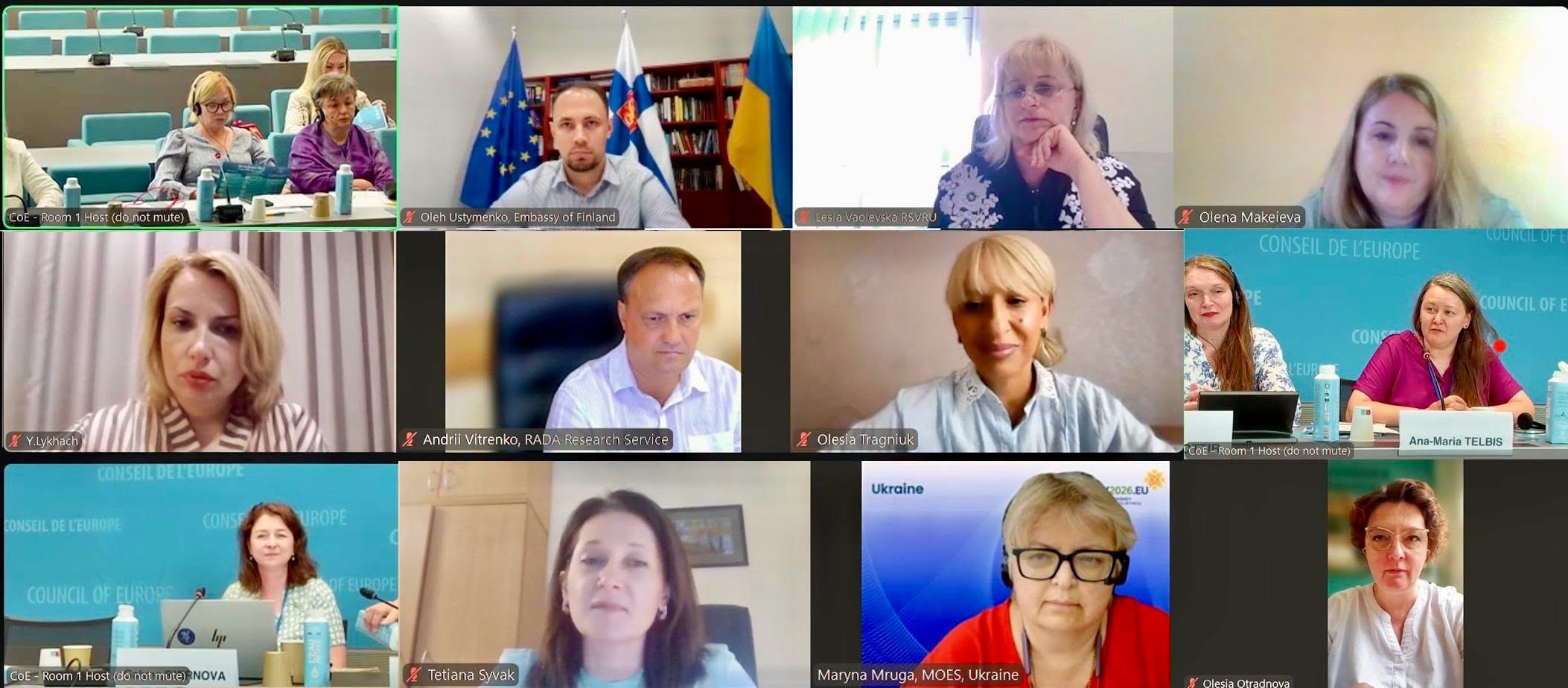
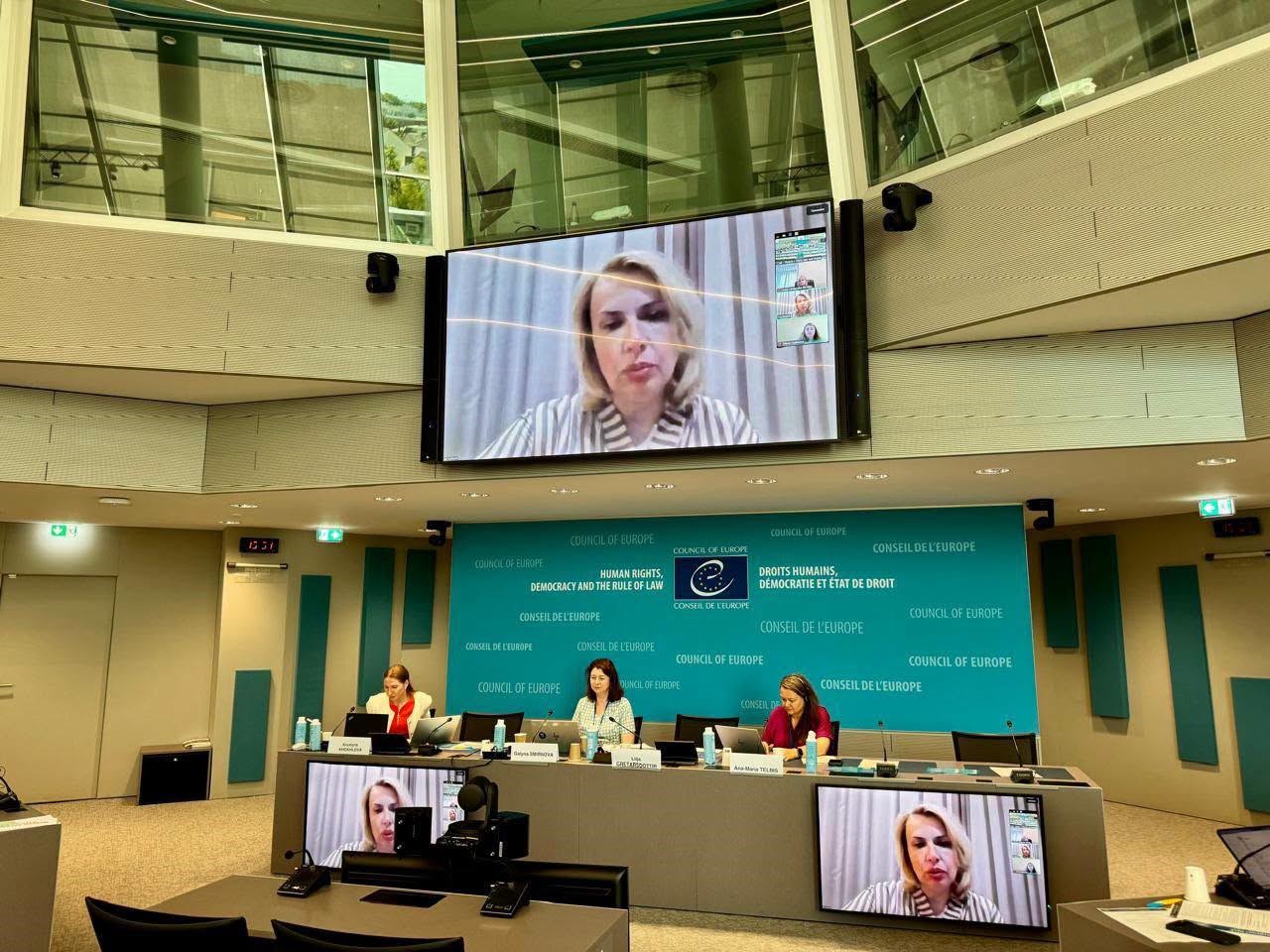
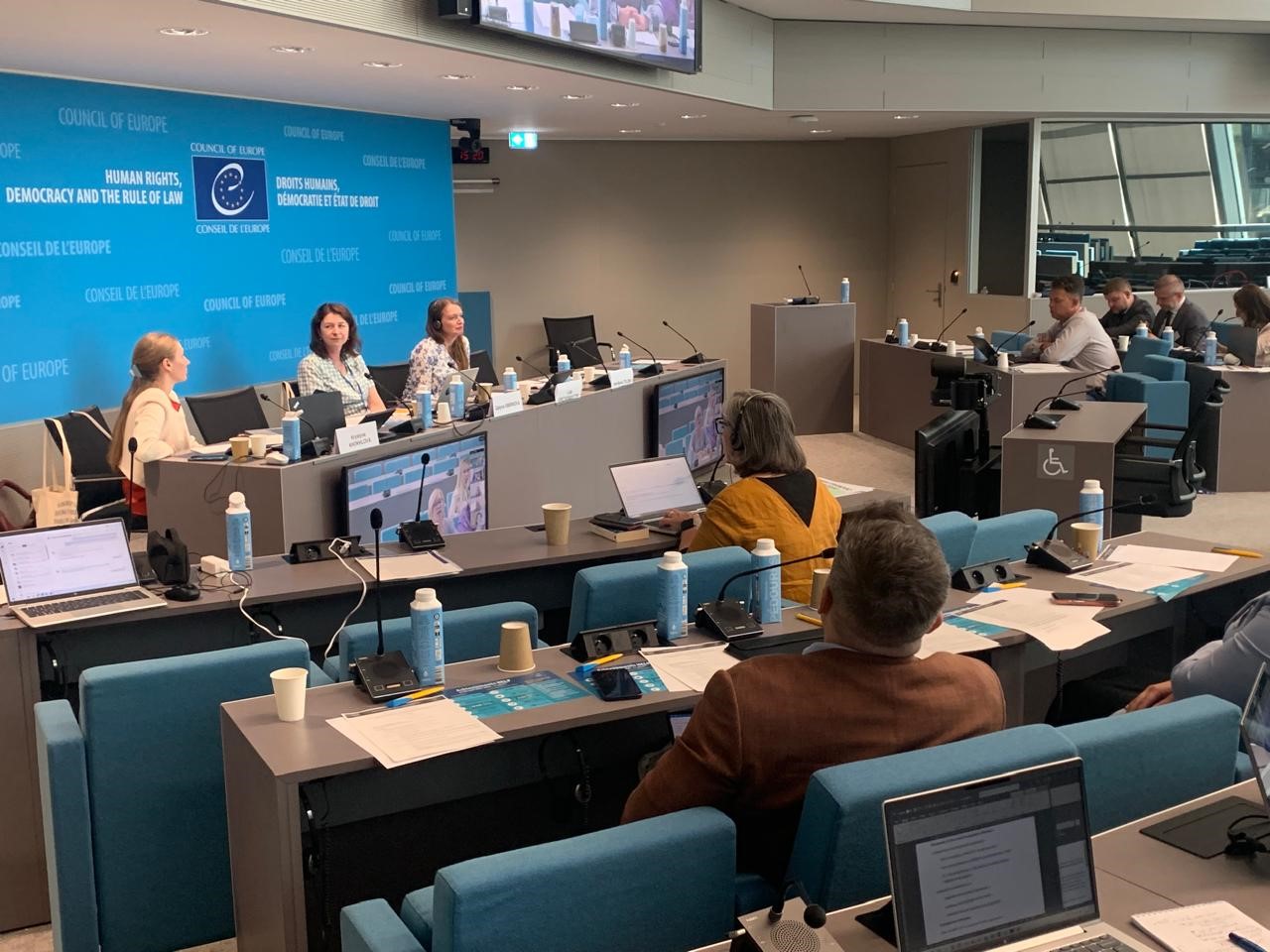
On 3 July, the Steering Committee meeting of the Council of Europe Project “HELP (Human Rights Education for Legal Professionals) for Ukraine, including during wartime", Phase II was held in a hybrid format at the Palais de l’Europe in Strasbourg.
The meeting brought together representatives of Ukrainian justice training institutions, public authorities, universities, professional legal communities, international partners and Council of Europe. Its main objectives were to present the results achieved by the Project, receive feedback from partner institutions, and discuss cooperation priorities for the remaining period of 2026.
Opening the meeting, Lilja Grétarsdóttir, Head of the Department for Human Rights and Justice Cooperation of the Council of Europe, thanked Ukrainian partners for their outstanding cooperation, commitment and co-leadership of the Project in extremely difficult wartime circumstances. She underlined that HELP has become one of the Council of Europe’s flagship tools for strengthening practical application of European human rights standards, and that its relevance for Ukraine has grown even further during the war.
Ana-Maria Telbis, Head of the Council of Europe HELP Programme, highlighted special importance of the HELP Project for Ukraine as the only country-based HELP project. She stressed its role in supporting Ukraine’s alignment with Council of Europe standards, responding to training needs arising from the war context, and contributing to Ukraine’s European integration path through human rights education and training resources.
The Project results presented during the meeting demonstrated significant progress. More than 28 000 Ukrainian legal professionals are now registered on the HELP platform, making Ukraine the leading Council of Europe member state in terms of HELP users. During the past year more than 6 400 certificates were issued through self-learning courses. The Project launched 23 tutored courses for over 800 legal professionals, reinforced a national network of more than 250 HELP tutors, and ensured that 47 HELP courses are translated and adapted into Ukrainian.
The tutored courses addressed Ukraine’s most pressing legal and human rights priorities, including war-related and post-war challenges, including artificial intelligence and human rights, anti-corruption, trafficking in human beings, deportation of children during armed conflicts, mental health and human rights, pre-trial investigation and the ECHR, the rights of persons with disabilities, and the interplay between the European Convention on Human Rights and the EU Charter of Fundamental Rights. These topics are directly relevant to justice sector reform, Ukraine’s EU accession process, and the daily work of judges, prosecutors, lawyers, civil servants and future legal professionals.
Partners welcomed the results and emphasised the practical value of HELP courses for institutional capacity-building. The National School of Judges of Ukraine highlighted the role of HELP courses in judicial training and constant demand among judges and court staff. The Prosecutor’s Training Center of Ukraine underlined the integration of HELP courses into initial and continuous training for prosecutors. Representatives of the Ministry of Education and Science of Ukraine stressed the importance of expanding HELP in university education and supporting the next generation of Ukrainian lawyers. Other partners, including the High School of Public Governance, the High School of Advocacy, the Coordination Center for Legal Aid Provision, the National Agency on Corruption Prevention, universities and other institutions, confirmed their interest in continued cooperation.
The meeting touched upon the institutionalisation of HELP courses through accreditation by partner institutions, integration into national training programmes, and synchronisation between partner learning platforms and the HELP platform. Participants also discussed synergies with other Council of Europe projects and the integration of HELP courses into thematic cooperation activities.
Looking ahead, the Project will continue launching tutored courses in 2026, including courses on combating trafficking in human beings, corruption prevention, reasoning of judicial decisions, freedom of expression, human rights in the penitentiary system, and key human rights principles in biomedicine. Cooperation with universities will also remain a strategic priority, with further activities planned to support lecturers, students, and the integration of HELP courses into legal education.
The Steering Committee confirmed strong partner ownership of the Project and the continued relevance of HELP as a practical, flexible and sustainable tool for strengthening human rights education in Ukraine during wartime and in the context of recovery, reconstruction and European integration.





.jpg/c5c40fd5-4596-b92e-a596-8929170c73d8?version=1.0)