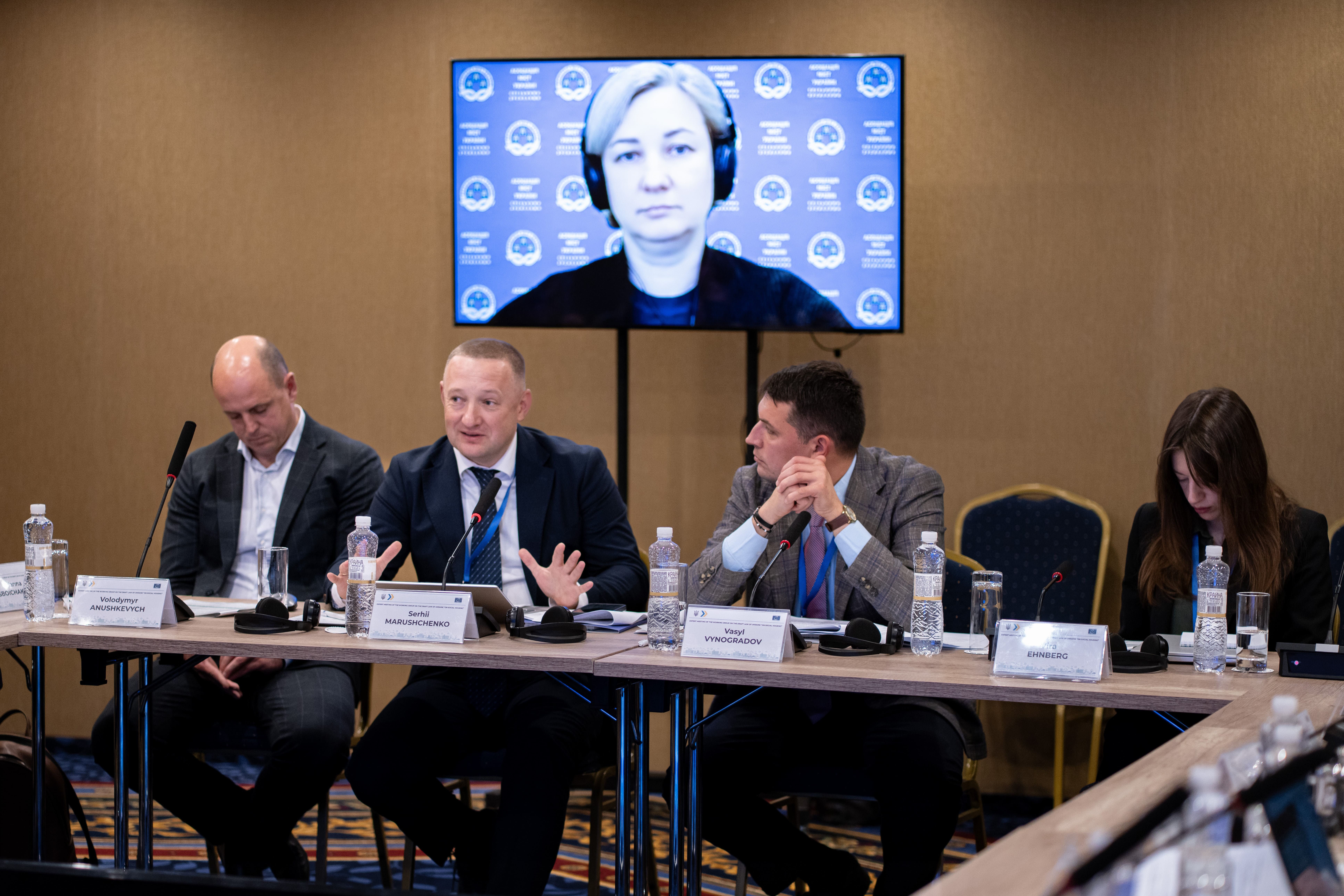
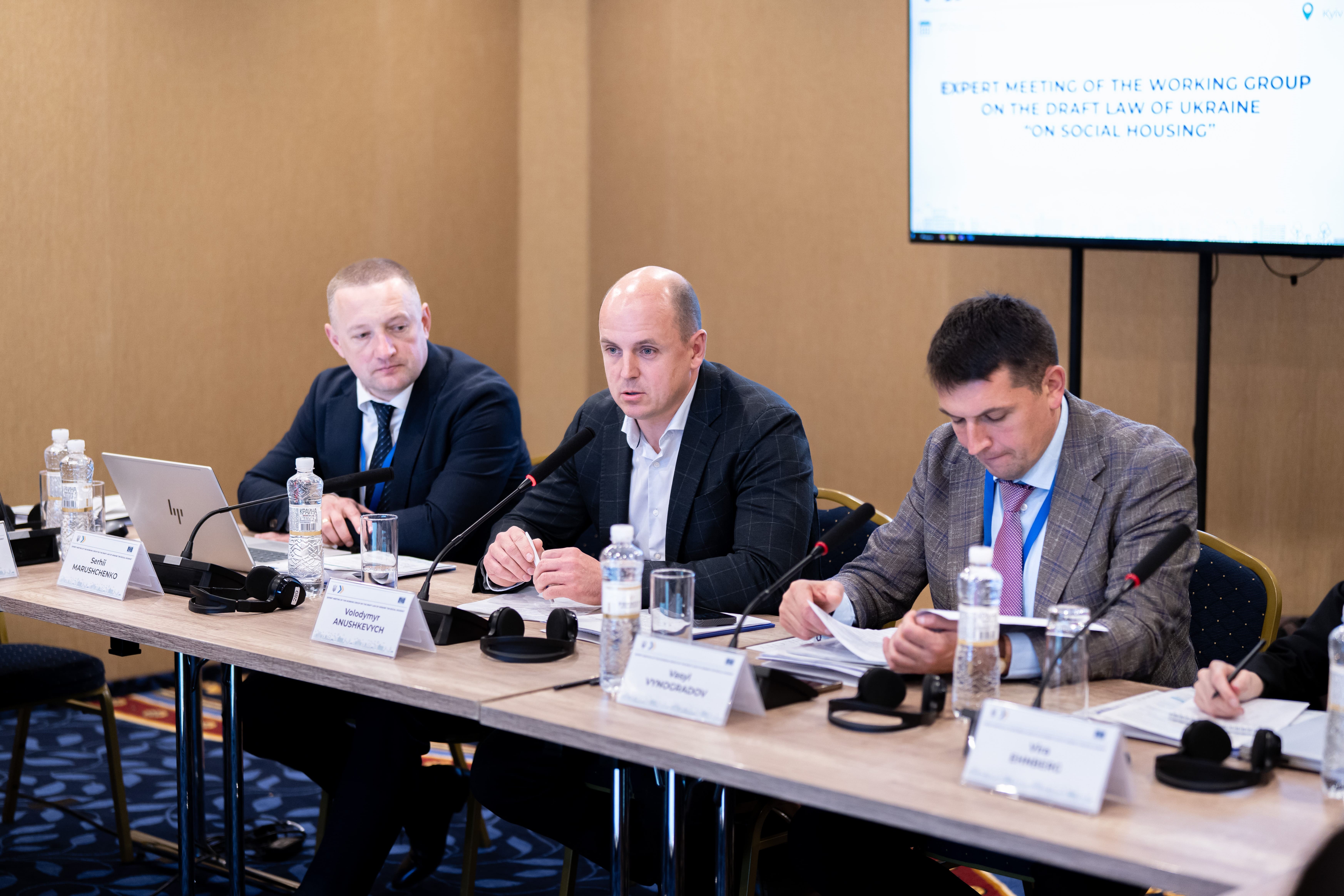
How can social housing be made available to those who need it most? Under what conditions can Ukraine’s social housing system become financially self-sufficient? And where do people and their needs fit into this system? These and other questions were at the heart of the Expert Meeting of the Working Group on the Draft Law of Ukraine “On Social Housing”, held in Kyiv on 27 October 2026.
The meeting brought together representatives of public authorities, international institutions, civil society organisations and housing policy experts. Participants examined comments and proposals on the draft law submitted by central executive authorities and other stakeholders, as well as the legal, financial and governance aspects of Ukraine’s future social (rental) housing system.
Work on the draft law is approaching its final stage, said Nataliia Kozlovska, Deputy Minister for Communities, Territories and Internally Displaced Persons of Ukraine, during the opening session. Key priorities include reconciling the positions of central executive authorities, identifying practical solutions to ensure the system’s effective operation, and mobilising additional funding, including from international partners.
The scale of Ukraine’s housing crisis makes this reform particularly urgent. According to the Fifth Rapid Damage and Needs Assessment (RDNA5), approximately 14% of Ukraine’s housing stock had been damaged or destroyed by the end of 2025, affecting more than three million households. Yet the challenge goes beyond addressing the consequences of the war. Ukraine needs a long-term housing policy capable of ensuring access to adequate housing for people who cannot meet their housing needs independently.
Housing accessibility also has a broader dimension, closely linked to human rights and social cohesion. Valentina Falco, Head of the Council of Europe Office in Ukraine, recalled the importance of European standards in guiding the reform, particularly the provisions of the European Social Charter concerning access to housing of an adequate standard and the prevention of homelessness.
Valentina Falco emphasised that “Adequate housing should be safe, habitable and accessible to people with different needs, and access to it should be fair, transparent and non-discriminatory.” “Through our Project, “Facilitating Housing Solutions for the War-Affected People in Ukraine. Phase II””, she continued, “the Council of Europe Office in Ukraine continues to provide legal and policy expertise, facilitating dialogue and supporting alignment with European standards.” “These standards”, she concluded, “do not prescribe a single model. They guide Ukraine in developing its own social housing system, adapted to national realities and firmly grounded in human rights.”
How can these principles be translated into concrete legislative mechanisms?
Over the course of two thematic sessions, participants examined comments and proposals on the draft law, addressing fundamental questions: who should be eligible for social housing and how should priority be determined? What constitutes affordable rent, and how can rent subsidies be provided to tenants?
A substantial part of the discussion focused on social housing operators — the entities responsible for developing, maintaining and managing the housing stock. Key issues included:
- Requirements governing their activities;
- Expanding the range of entities eligible to obtain social housing operator status;
- Ensuring financial self-sufficiency while preserving the social purpose of housing;
- Attracting extra-budgetary financing and introducing revolving funds.
Representatives of the European Commission, the European Investment Bank, the World Bank Group, UNHCR, Ukrainian public institutions, and international and civil society organisations contributed to the discussions and the search for practical solutions.
The Council of Europe will continue supporting the drafting process in Ukraine through legal and expert assistance, facilitating dialogue among stakeholders and promoting the integration of European human rights standards into housing policy.
The meeting was organised by the Ministry for Communities, Territories and Internally Displaced Persons of Ukraine with the support of the Council of Europe Project “Facilitating housing solutions for the war-affected people in Ukraine. Phase II”, implemented under the Council of Europe Action Plan for Ukraine “Resilience, Recovery and Reconstruction” 2023–2026.