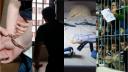
During this visit, the CPT visited 14 police and gendarmerie detention facilities, four prisons (Fleury-Mérogis, Fresnes, Marseille-Baumettes and Villefranche-sur-Saône) and the Valentine-Marseille detention centre for children.
Most persons recently apprehended by the law enforcement authorities did not allege having been subjected to ill-treatment. However, the CPT received several allegations of deliberate violence, including against children, particularly in the context of ground immobilisation techniques involving pressure on the chest, neck or face. The Committee stresses that such techniques present a high risk of postural asphyxia and calls for their review.
Material conditions observed in police premises remained extremely worrying, including dirty and dilapidated cells, defective sanitary facilities, the presence of cockroaches and foul odours, as well as the lack of clean mattresses or blankets. Visited premises of the gendarmerie were in much better physical condition, but people continued to spend the night alone in holding cells without a call system or any permanent physical presence of staff. The CPT calls on the French authorities to remedy these structural deficiencies without delay.
The visit to the four prisons took place against a backdrop of steadily worsening prison overcrowding. The threshold of 80 000 detained persons had been exceeded at the time of the visit with around 17 000 persons held above capacity and 3 810 individuals forced to sleep on mattresses on the floor. Overcrowding affected all aspects of prison life: intimacy, tensions, lack of activities and work opportunities, and difficulties in accessing healthcare. For the CPT, this situation can turn a prison into a human warehouse, seriously compromising human dignity.
Material conditions varied greatly. The prison of Marseille-Baumettes and certain sections of the prison of Fleury-Mérogis had new or renovated facilities. In contrast, conditions were very poor in Villefranche-sur-Saône and unacceptable in Fresnes. The Committee found cells that were overcrowded, damp, unsanitary and infested with rats, cockroaches and bedbugs.
Alan Mitchell, President of the CPT, notes that "overcrowding has increased since our visit in October 2024 – more than 86 000 persons were incarcerated in December 2025, including 6 446 sleeping on mattresses on the floor, and nearly 30 establishments were holding more than twice their capacity. We are therefore extremely concerned about prison conditions in France."
In addition, the establishments suffered from a lack of resources and their functioning was compromised by under-staffing. While most prisoners did not allege being subjected to ill-treatment, the CPT received credible allegations of physical violence by prison officers, mainly in the prisons of Fresnes and Villefranche-sur-Saône.
Inter-prisoner violence was much more widespread. Fights and extortion took place regularly, and the lack of intervention by staff in the exercise yards, or due to understaffing, created a climate of fear for many prisoners.
The range of activities on offer remained very limited. Most remand prisoners spent nearly 20 hours a day in their cells, and more at weekends, due to a lack of activities, training or work opportunities. The authorities should substantially increase the number of activities, including for women and in mother-and-baby units.
Access to healthcare was generally satisfactory at Fleury-Mérogis and Marseille-Baumettes but seriously deficient at Fresnes and Villefranche-sur-Saône: lack of healthcare staff, insufficient coordination, inadequate premises and very limited psychiatric care, in a context of high prevalence of mental health disorders.
In the units for children of Fleury-Mérogis and Marseille-Baumettes prisons and at the “Valentine-Marseille” children detention centre, the boys and girls interviewed reported that they were treated properly by staff. Nevertheless, the CPT noted allegations of ill-treatment in certain facilities, particularly at the Valentine-Marseille detention centre.
In all facilities visited children spent an excessive proportion of the day confined to their cells, owing to a clear lack of educational and recreational activities. Teaching typically amounted to only one to two hours per day and was generally interrupted during holiday periods. The Committee is particularly concerned about the situation at the children’s detention centre of Valentine-Marseille, where the number of out-of-cell activities was very low despite a high level of custodial and educational staff.
The Committee considers the location of the boys' unit at Fleury-Mérogis prison to be wholly unsuitable, as it is situated in the middle of the adult detention area. This proximity facilitates contact with adult male prisoners, complicates movements and restricts access to activities. The CPT calls for the unit to be relocated to a suitable environment, that is fully separate from adults.
In their response to the report, the French authorities provide details on the situations described in the report and recall the applicable regulatory framework. They indicate their intention to strengthen training programmes for law enforcement, prison, and healthcare personnel, and highlight both existing and planned measures to address prison overcrowding and improve conditions of detention. They also commit to carrying out renovations and material improvements in line with CPT recommendations.
- Read the report in French, in English
- Read the executive summary and observations
- Read the response
- Read the visit newsflash
- The CPT and France